Artwork
Parole d'honneur Mme. Frenouillet...
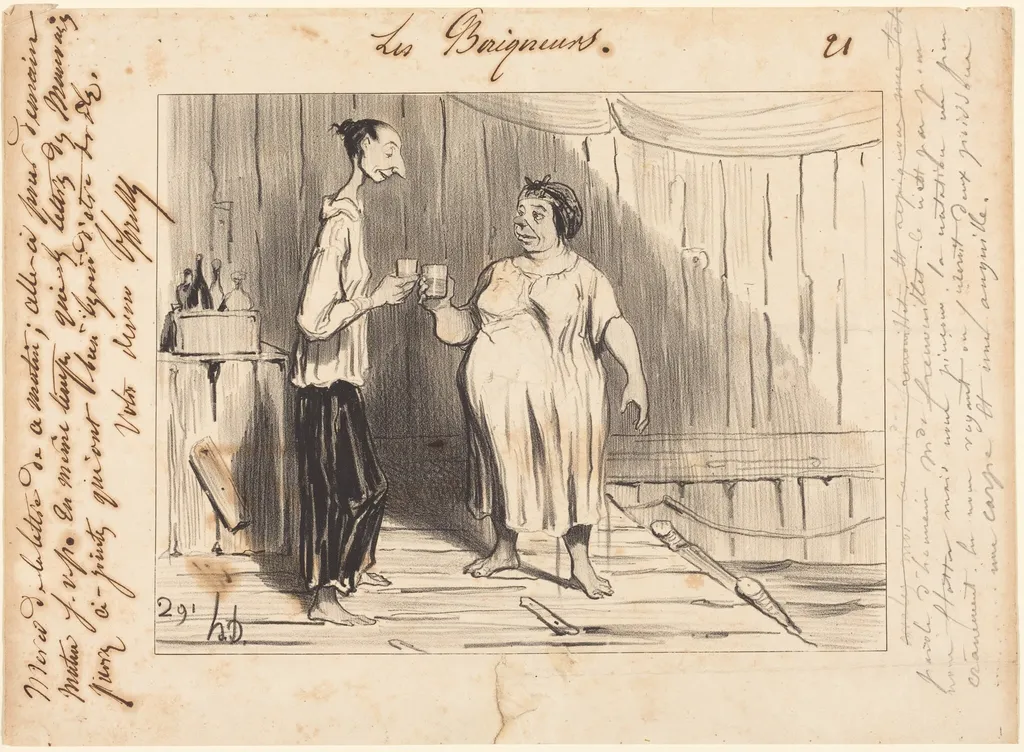
Parole d'honneur Mme. Frenouillet... is an ink print by the Romanticist artist Honoré Daumier. It dates from 1841 and is held in the collection of the National Gallery of Art.
About this work
Overview
One individual stands with a glass in hand, appearing uneasy, while the other leans against a table, arms crossed, conveying fatigue.
Created in 1841, this lithograph by Honoré Daumier presents a cramped interior where two figures occupy a modestly furnished space. One individual stands with a glass in hand, appearing uneasy, while the other leans against a table, arms crossed, conveying fatigue. The plain walls, a curtained window, and scattered objects give the scene a domestic, unembellished quality, suggesting a moment captured rather than a staged tableau.
Subject & Meaning
The work functions as a satirical commentary on everyday social interactions, reflecting Daumier’s republican perspective on the contradictions of French society. By depicting ordinary people in a modest setting, the artist hints at broader tensions between appearances and underlying anxieties, aligning with his broader critique of the era’s political and class structures.
Technique & Style
Executed in lithography, the image relies on swift, sketch‑like lines that emphasize expression over detail. Daumier’s handling of light and shadow is minimal, allowing the figures’ gestures and facial tension to dominate. The loose drawing quality underscores the immediacy of the scene, a hallmark of his caricature work for periodicals.
History & Provenance
Daumier produced the print during a prolific period of political satire, contributing regularly to publications such as La Caricature and Le Charivari. Though primarily known as a painter and sculptor, his prints circulated widely in the 1840s, reaching a readership attuned to republican ideas and criticism of the monarchy, aristocracy, and clergy.
Artist & collection
Artist
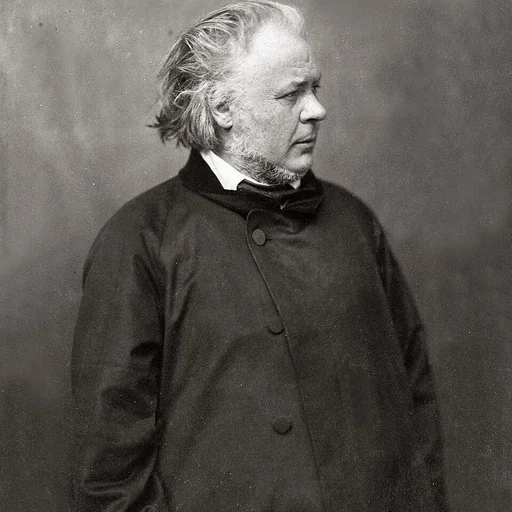
Honoré-Victorin Daumier was a French painter, sculptor, and printmaker, whose many works offer commentary on the social and political life in France, from the Revolution of 1830 to the fall of the Second French Empire in 1870.

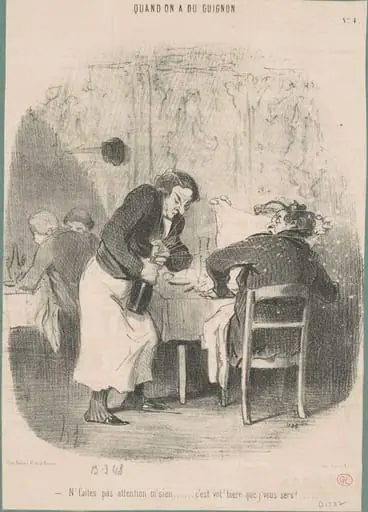 N'faites pas attention m'sieu ...
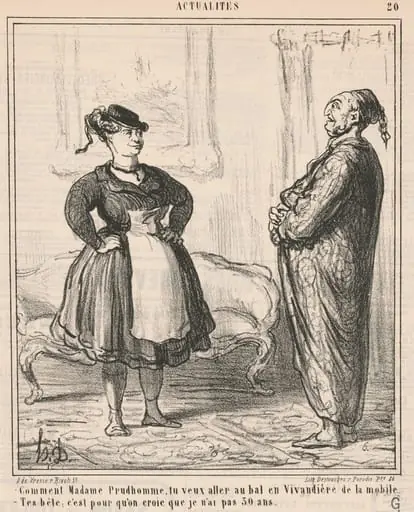 Comment Madame Prudhomme ... En vivandière ...
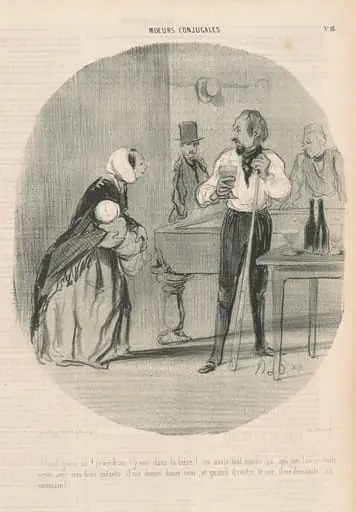 Grand Gueux va! je voudrais t'y voir
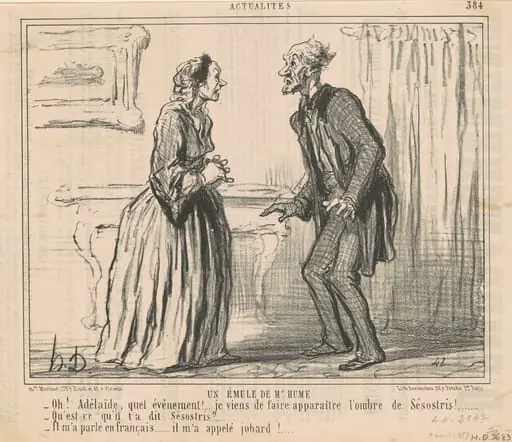 Un émule de Mr Hume
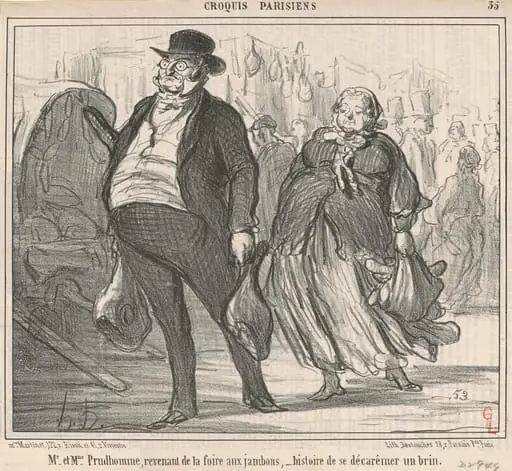 Mr et Mme Prudohomme revenant de la foire ...
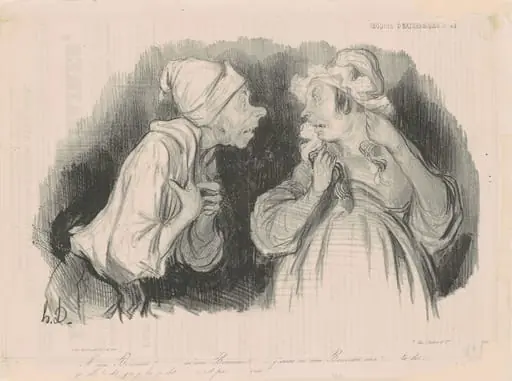 M'ame Bonneau... J'aime m'ame Bonneau moi!...
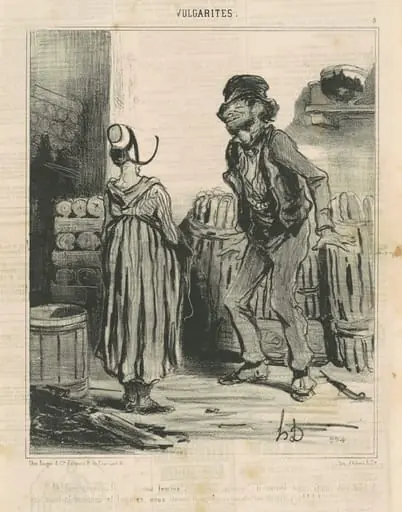 Ah! Fouchtrra! ... Ma femme ...
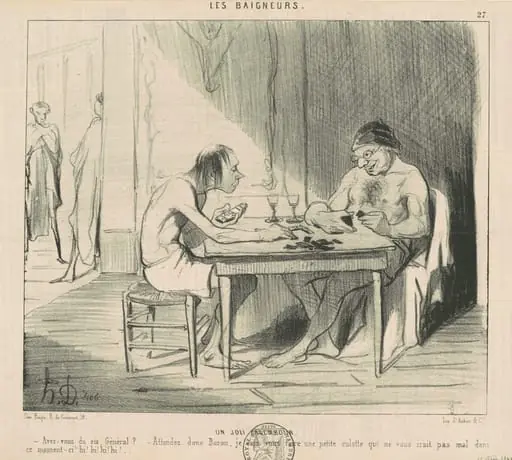 Un joli calembour
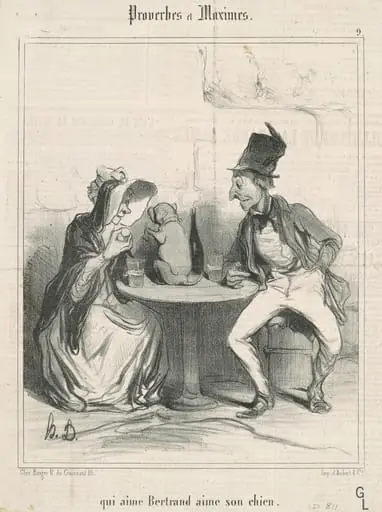 Qui aime Bertrand aime son chien
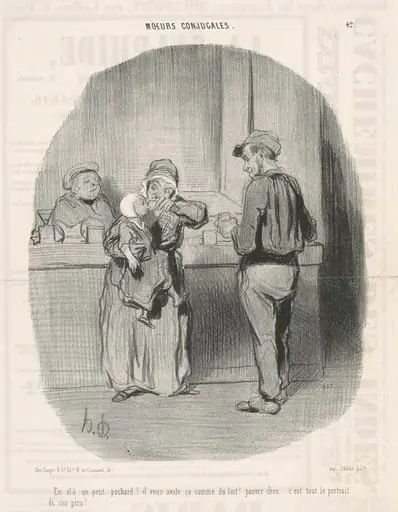 En v'là un petit pochard!
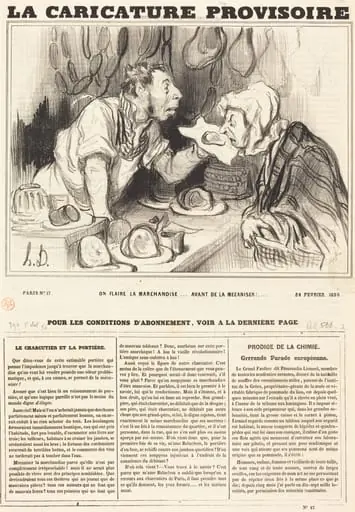 On flaire la marchandise... avant de la mécaniser!...
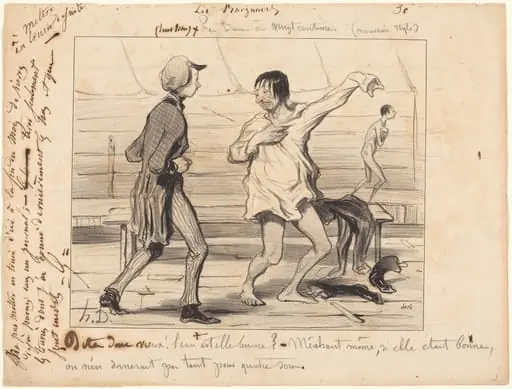 Les Bains a vingt centimes, nouveau style