Artwork
Un joli calembour
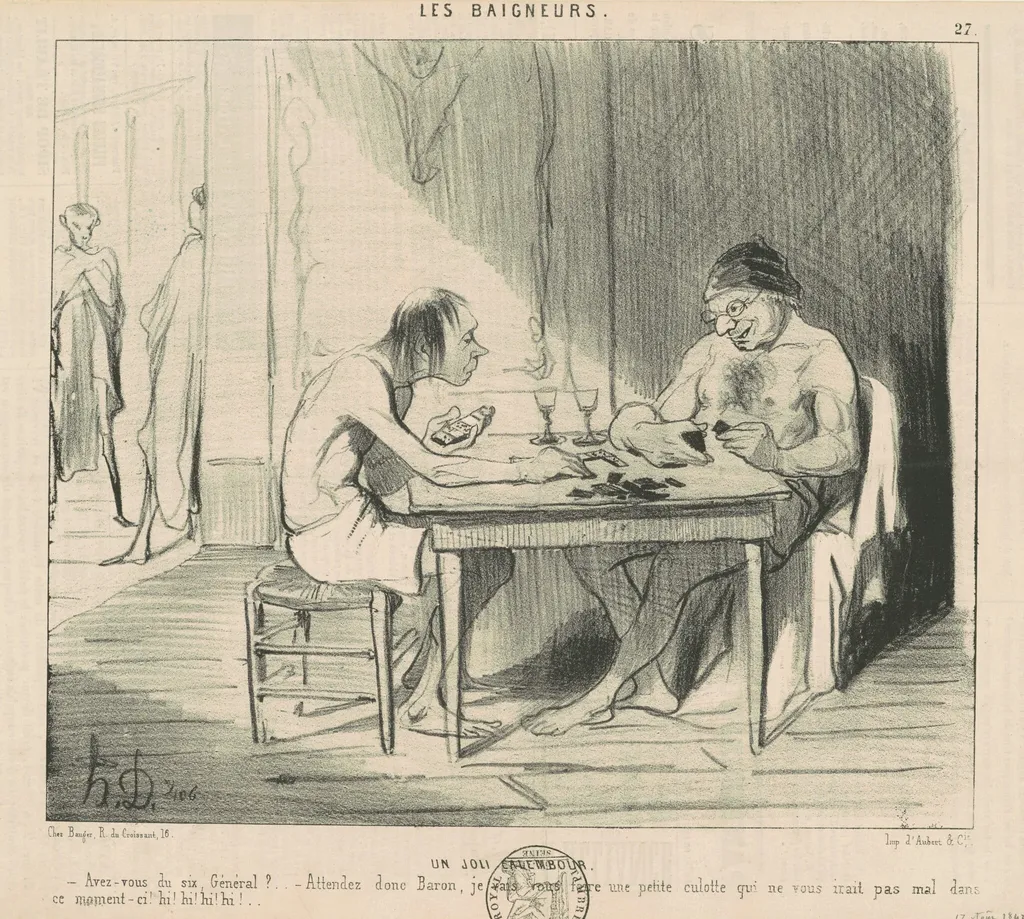
Un joli calembour is an ink print by the Romanticist artist Honoré Daumier. It dates from 1842 and is held in the collection of the National Gallery of Art.
About this work
Overview
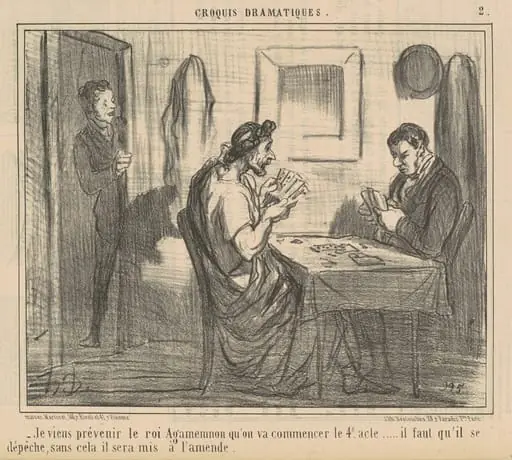
Honoré Daumier’s lithograph *Un joli calembour* depicts a modest interior where two men sit at a small wooden table engaged in a card game. A single lamp illuminates the scene, casting pronounced shadows across their faces and emphasizing the quiet, dimly lit atmosphere.
Subject & Meaning
One figure leans forward with a grin, while his companion gazes intently at his cards, creating a contrast between amusement and concentration. The composition suggests a subtle satire of private leisure, hinting at the ways people behave when they believe they are unobserved.
Technique & Style
Executed in lithography, Daumier employs stark chiaroscuro to model the figures, using the lamp’s light to generate sharp contrasts that heighten facial expressions. The line work remains loose yet precise, characteristic of his approach to capturing fleeting gestures and social nuance.
History & Provenance
Created during Daumier’s prolific period of social commentary, the print reflects his ongoing interest in everyday Parisian life. It has circulated among collectors of 19th‑century French prints and is documented in several museum holdings that specialize in graphic arts.
Context
Daumier’s oeuvre frequently lampooned the manners of Paris’s middle class, and this work continues that tradition by focusing on a private moment of recreation. The intimate setting and exaggerated expressions align with his broader critique of social pretensions and hidden behaviors.
Own this work as a print
Artist & collection
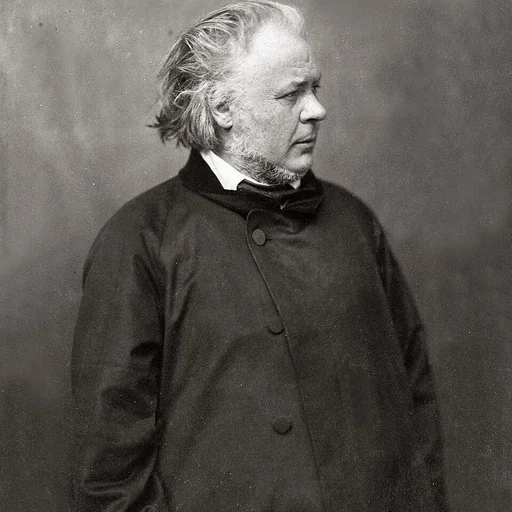
Artist
Honoré-Victorin Daumier was a French painter, sculptor, and printmaker, whose many works offer commentary on the social and political life in France, from the Revolution of 1830 to the fall of the Second French Empire in 1870.