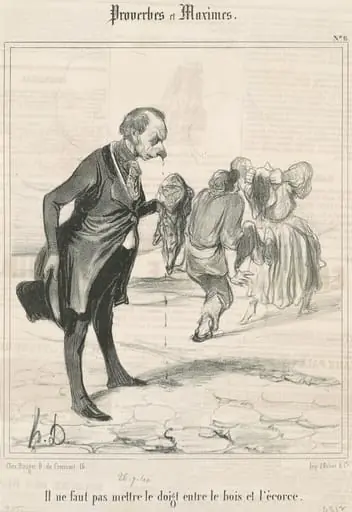
Artwork
Pauvre jeune homme!
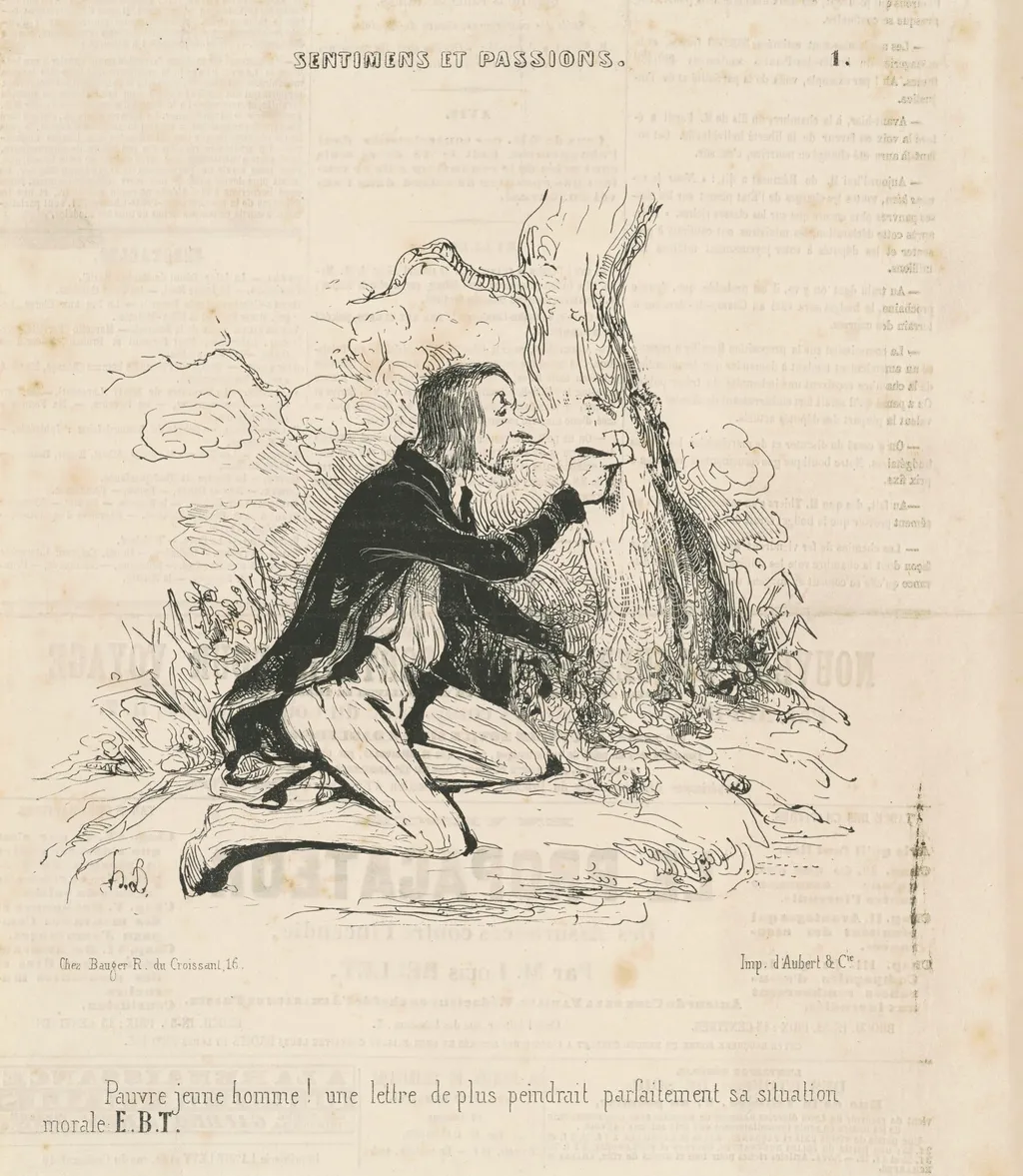
Pauvre jeune homme! is an ink print by the Romanticist artist Honoré Daumier. It dates from 1840 and is held in the collection of the National Gallery of Art.
About this work
A young man kneels at a tree, carving words into the bark. His face is hidden in shadow. The tree stands alone in a dark field.
Daumier made this with a greasy crayon on stone. He pressed the stone onto paper, printing many copies. This process is called lithography.
It’s a small but powerful image. Look for the date—1840—on the print. Find more like it at the National Gallery of Art, Washington.
Overview
Daumier produced multiple impressions from a single stone, allowing the work to circulate widely among the public during a time of social unrest in France.
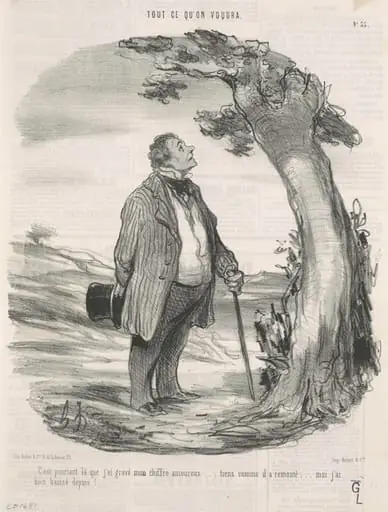
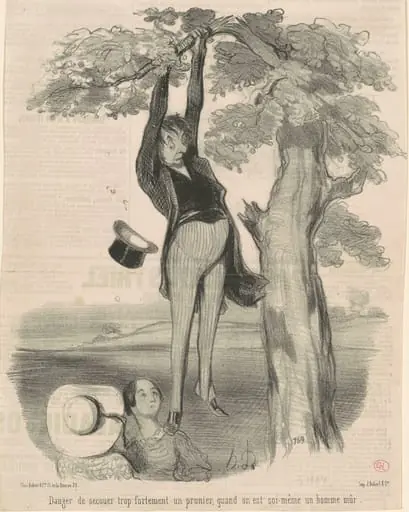
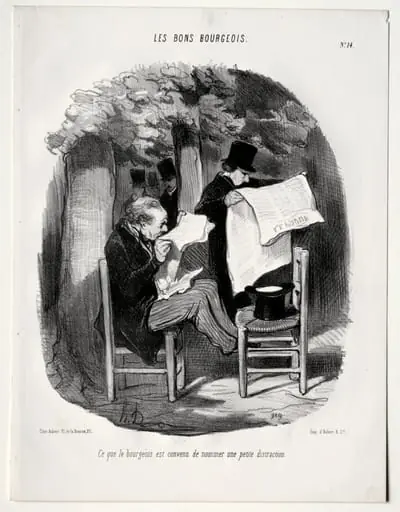
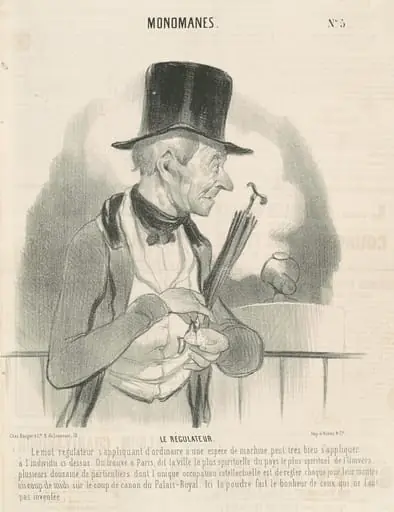
Pauvre jeune homme! is a lithograph created by Honoré Daumier in 1840. It portrays a solitary young man kneeling before a solitary tree, engaged in the act of carving into its bark. Rendered in the lithographic technique, the image is small in scale but carries emotional weight. Daumier produced multiple impressions from a single stone, allowing the work to circulate widely among the public during a time of social unrest in France.
Subject & Meaning
The figure, face obscured by shadow, appears absorbed in a quiet, repetitive act of inscription. The tree, isolated in a barren field, becomes both canvas and witness. The title, translating to 'Poor young man!', suggests sympathy for an individual burdened by unseen struggles. The work evokes themes of silent suffering, futile labor, and the search for meaning in a harsh social landscape, without offering explicit narrative resolution.
Technique & Style
Daumier employed lithography, using a greasy crayon to draw directly on a limestone slab. The image was then chemically treated and printed onto paper, preserving the spontaneity of his hand. The composition relies on stark contrasts between dark, textured forms and empty space. Minimal detail and strong tonal shifts emphasize mood over realism, aligning with Daumier’s expressive, economical approach to printmaking.
History & Provenance
Created in 1840, the print emerged during a period of political tension in France following the July Monarchy. Daumier frequently used lithography to critique social conditions, often publishing in satirical journals. While the exact original publication context of this image is unclear, it was likely part of a broader series of works addressing human vulnerability. Copies now reside in institutions such as the National Gallery of Art in Washington, D.C.
Context
In early 19th-century France, lithography enabled artists to reach a broad audience beyond elite collectors. Daumier, working amid rising class tensions and censorship, turned to prints to convey subtle social commentary. Pauvre jeune homme! reflects a shift from overt satire to poetic melancholy, mirroring a broader cultural mood of disillusionment and quiet resistance among the urban poor.
Legacy
The print endures as an example of Daumier’s ability to convey complex emotion through minimal means. Its influence extends to later artists drawn to the expressive potential of printmaking and the depiction of solitary, marginalized figures. Though not widely exhibited in his lifetime, it has become a touchstone for understanding how 19th-century artists used simple imagery to reflect deeper societal anxieties.
Artist & collection
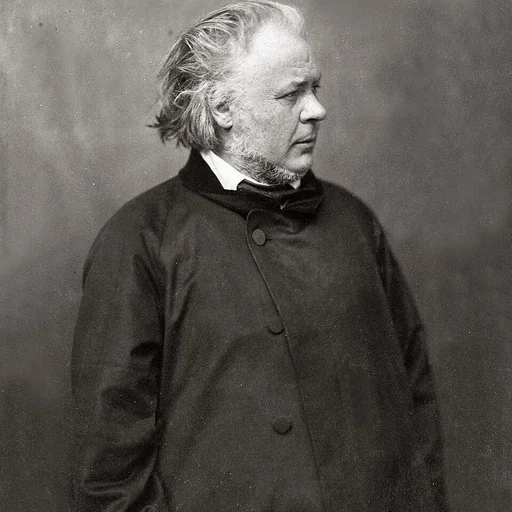
Artist
Honoré-Victorin Daumier was a French painter, sculptor, and printmaker, whose many works offer commentary on the social and political life in France, from the Revolution of 1830 to the fall of the Second French Empire in 1870.