Artwork
Rifolard ... oublie ... les inconvénients de la traversée
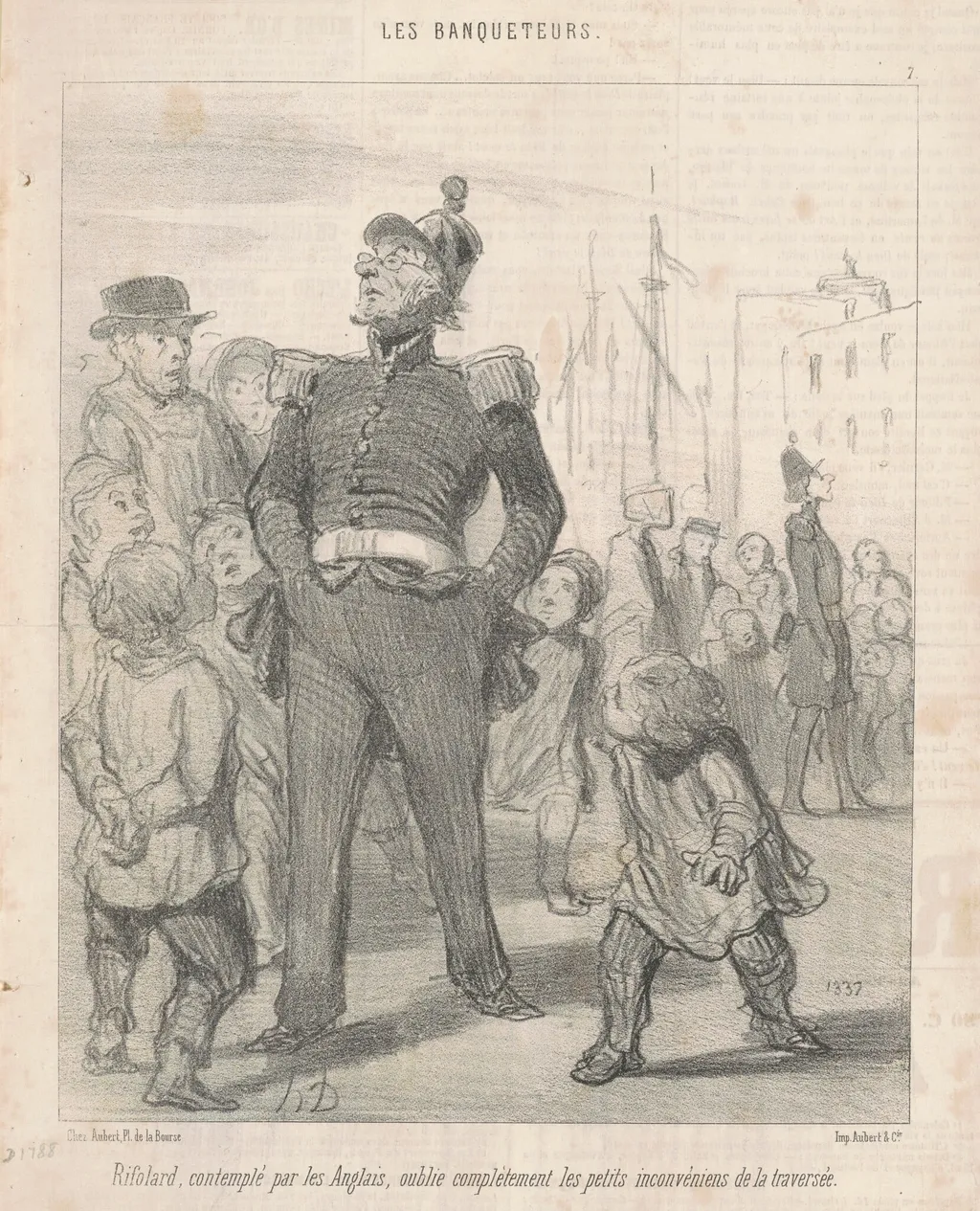
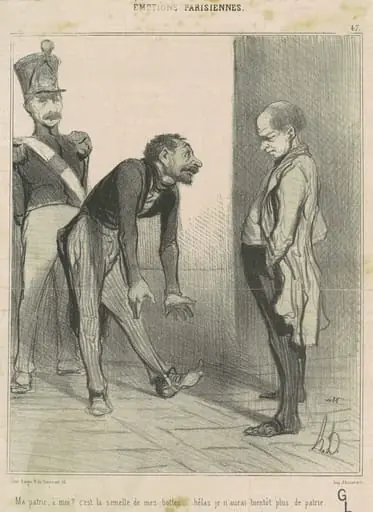
Rifolard ... oublie ... les inconvénients de la traversée is an ink print by the Romanticist artist Honoré Daumier. It dates from 1849 and is held in the collection of the National Gallery of Art.
About this work
Overview
Created in 1849, this lithograph by Honoré Daumier captures a moment of urban interaction in mid-19th century France.
Created in 1849, this lithograph by Honoré Daumier captures a moment of urban interaction in mid-19th century France. The print depicts a man in military-inspired clothing standing prominently amid a varied group of pedestrians. Rendered in the lithographic medium, the work reflects Daumier’s interest in everyday public life, using ink and stone to convey movement, posture, and social hierarchy with subtle precision.
Subject & Meaning
The central figure, dressed in a stylized military uniform, stands with assured posture, contrasting with the scattered, distracted figures around him. His presence suggests authority or pretension, while the crowd’s disjointed gazes and varied attire hint at the fragmented nature of urban society. Daumier does not idealize the scene; instead, he observes the quiet tensions between individual identity and collective anonymity in a rapidly modernizing city.
Technique & Style
Daumier employed lithography to achieve a range of tonal textures, using cross-hatching and varied line weight to define form and atmosphere. The figures are rendered with economical strokes, yet each gesture and facial expression carries psychological nuance. The composition avoids symmetry, favoring asymmetrical balance that mimics the unpredictability of street life. The medium’s capacity for rapid reproduction allowed Daumier to circulate his social commentary widely.
History & Provenance
The print was produced during a period of political unrest in France, shortly after the 1848 Revolution. Daumier, known for his satirical illustrations in journals like La Caricature and Le Charivari, often used lithographs to critique class and power. This work likely appeared in a periodical, though its original publication context remains unconfirmed. It entered museum collections in the 20th century as interest in Daumier’s social realism grew.
Context
Paris in the 1840s was undergoing rapid urban transformation, with new public spaces and increased social mixing. Daumier’s work responds to this shift, portraying crowds not as idealized masses but as complex, individualized entities. The military figure may reference the lingering influence of Napoleonic imagery or the rise of uniformed bureaucracy. His depiction avoids overt satire, instead offering a quiet, observational commentary on the era’s social fabric.
Legacy
Daumier’s lithographs, including this one, influenced later realist and modernist artists who sought to depict contemporary life without romanticization. His ability to convey psychological depth through minimal lines set a precedent for graphic storytelling. Though not widely known in his lifetime outside of periodicals, his prints gained recognition in the 20th century as foundational documents of modern visual culture.
Artist & collection

Artist
Honoré-Victorin Daumier was a French painter, sculptor, and printmaker, whose many works offer commentary on the social and political life in France, from the Revolution of 1830 to the fall of the Second French Empire in 1870.









![Aux Champs-Elysées, Ratapoil. Par suite d'une délibération philantropique [sic] du Comité du dix Décembre...à deux sous à club...deux sous..., by Honoré Daumier](https://artifactworldgallery.com/img/honore-daumier--aux-champs-elysees-ratapoil-par-suite-d-une-deliberation-phi--62ca0cc774af3945-w320.webp) Aux Champs-Elysées, Ratapoil. Par suite d'une délibération philantropique [sic] du Comité du dix Décembre...à deux sous à club...deux sous...
Aux Champs-Elysées, Ratapoil. Par suite d'une délibération philantropique [sic] du Comité du dix Décembre...à deux sous à club...deux sous...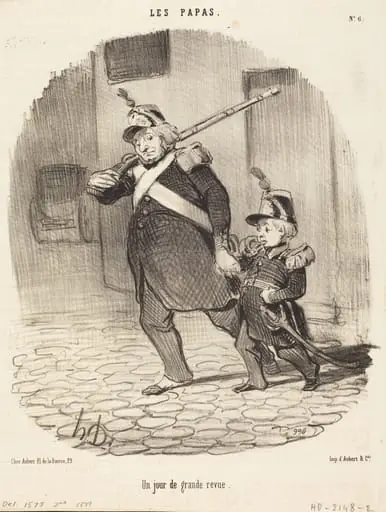 Un Jour de grande revue
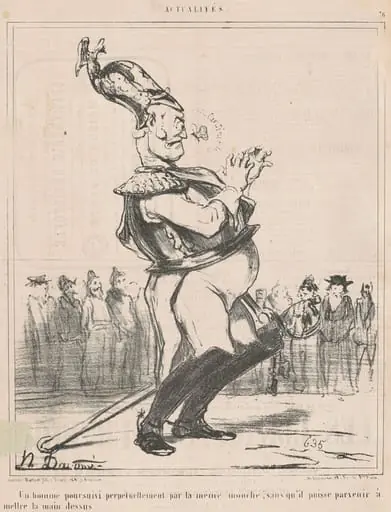 Un homme poursuivi ...
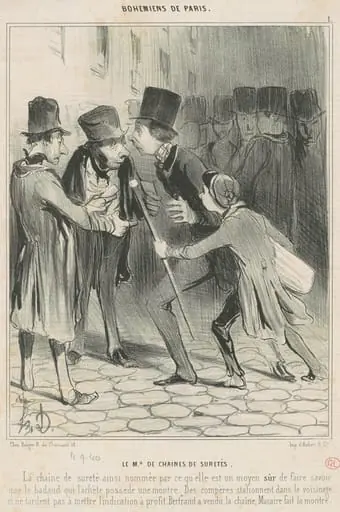 Le Md de Chaines de suretés
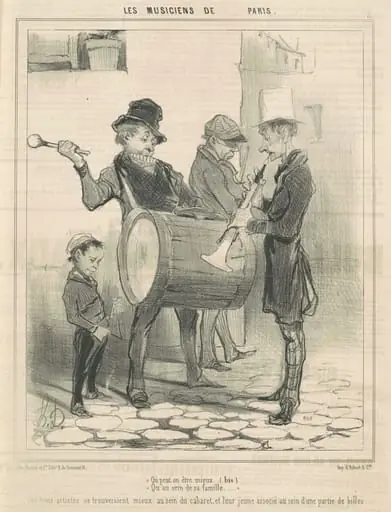 Ou peut on être mieux ...
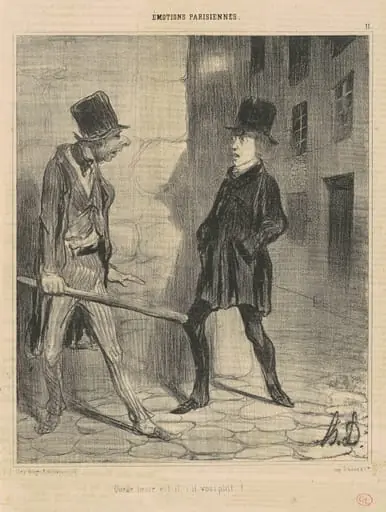 Quelle heure est'il, s'il vous plait?...
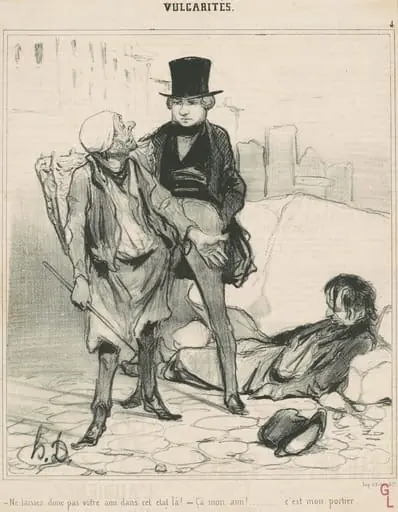 Ne laissez donc pas votre ami dans cet état la!
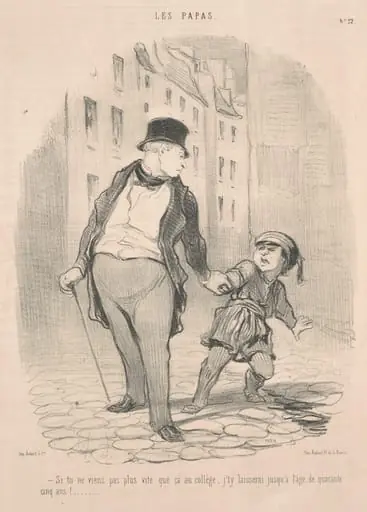 Si tu ne viens pas plus que ça au collège ...
 Ma patrie, a moi?...