Artwork
Je ne m'étonne plus si celui-la se tentaint tranquille ...
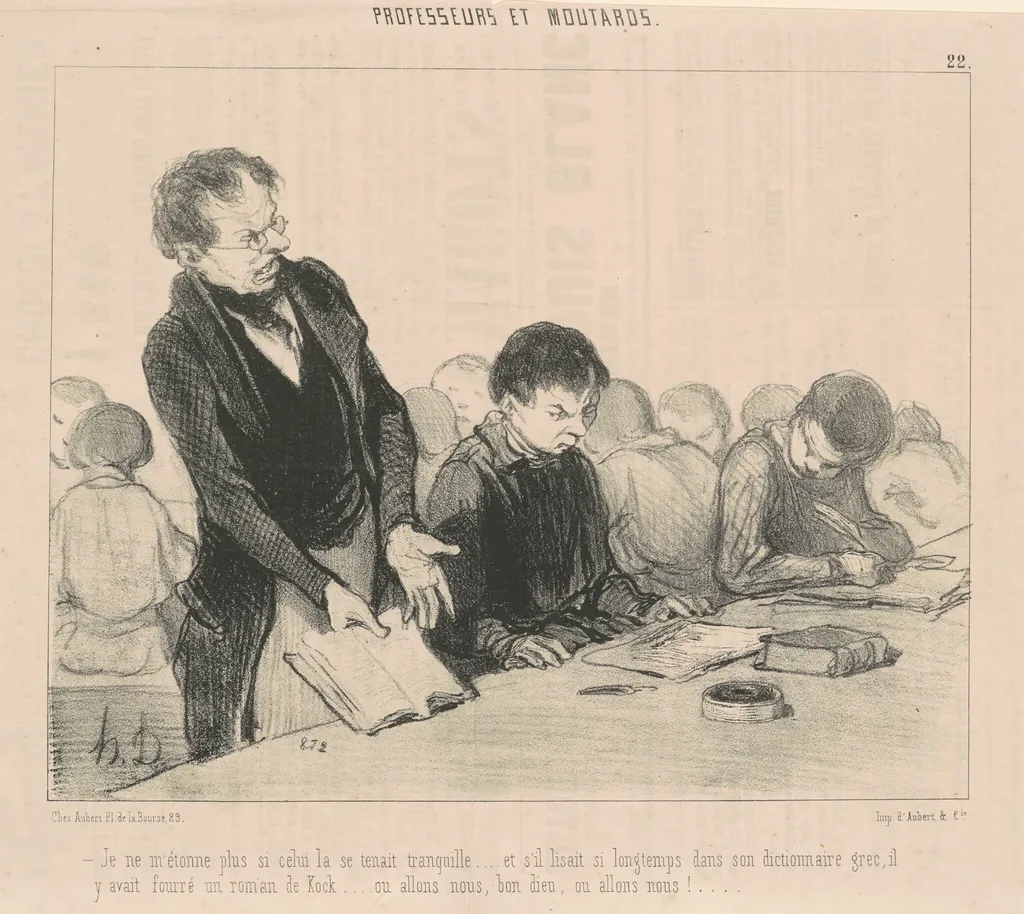
Je ne m'étonne plus si celui-la se tentaint tranquille ... is an ink print by the Romanticist artist Honoré Daumier. It dates from 1846 and is held in the collection of the National Gallery of Art.
About this work
Overview
This lithograph by Honoré Daumier captures three individuals absorbed in scholarly tasks—reading, writing, and consulting texts. The composition emphasizes quiet concentration rather than action, portraying intellectual labor as a private, contemplative act. The figures are rendered with minimal detail, focusing attention on posture and engagement rather than individual identity.
Subject & Meaning
The scene presents a quiet study in contrasting modes of intellectual engagement. The standing figure, holding an open book, appears to be consulting or referencing material, while the seated figures are immersed in writing or reading with intense focus. The title suggests a resigned observation of such behavior, hinting at societal norms around study and authority without overt satire.
Technique & Style
Executed in lithography, the work uses tonal contrasts and fluid line work to suggest form and mood. Daumier’s brushwork on stone creates soft gradations of gray, allowing the figures to emerge from a muted background. The lack of fine detail and the emphasis on silhouette reinforce the psychological weight of the moment over physical realism.
History & Provenance
Created during Daumier’s prolific period in the 1840s–1860s, this print likely appeared in a periodical or album of social observations. Though not part of his most famous political series, it aligns with his broader interest in documenting everyday intellectual life. Its provenance traces to private collections of French print enthusiasts in the late 19th century.
Context
In mid-19th century France, literacy and scholarly activity were expanding beyond elite circles, yet access to books and quiet study remained uneven. Daumier’s depiction reflects this shift, portraying intellectual labor as both dignified and solitary. The absence of institutional settings—libraries, desks, or classrooms—grounds the scene in domestic or informal spaces.
Legacy
This work contributes to Daumier’s reputation for observing the quiet rhythms of bourgeois life. While less known than his caricatures, it exemplifies his ability to convey psychological depth through subtle gesture and composition. Later artists and printmakers drew from his use of lithography to explore interiority and everyday ritual.
Own this work as a print
Artist & collection

Artist
Honoré-Victorin Daumier was a French painter, sculptor, and printmaker, whose many works offer commentary on the social and political life in France, from the Revolution of 1830 to the fall of the Second French Empire in 1870.









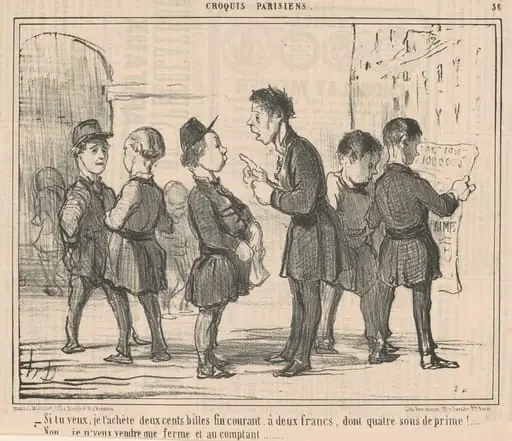 Si tu veux, je t'achète deux cents billes ...
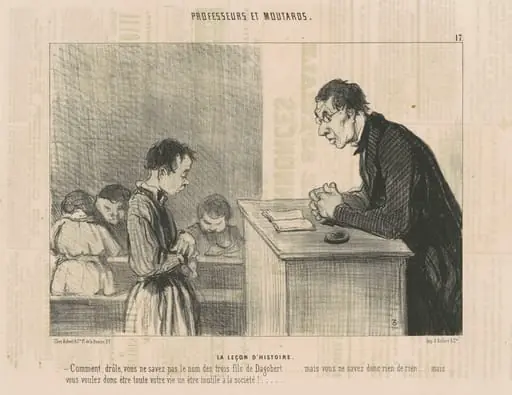 Le leçon d'histoire
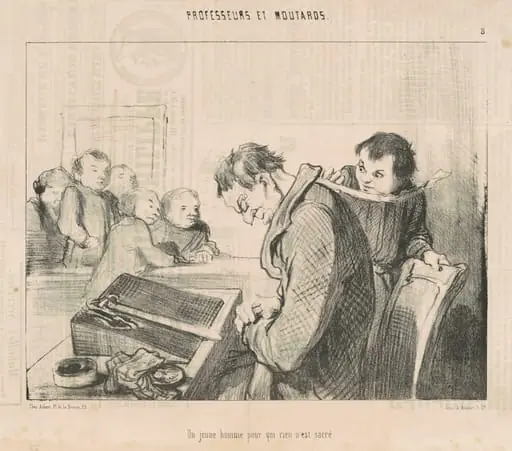 Un jeune homme pour qui rien n'est sacre
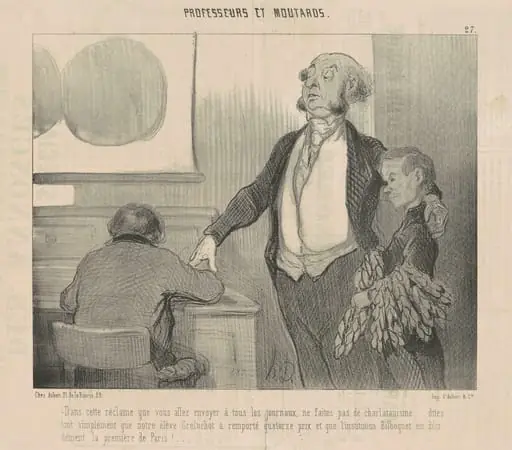 Dans cette réclame que vous allez envoyer ...
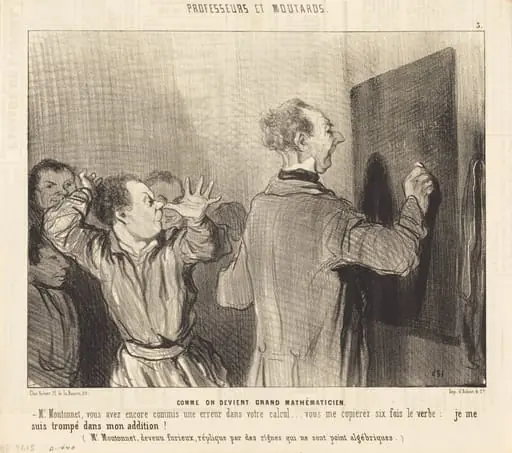 Comment on devient un grand mathématicien
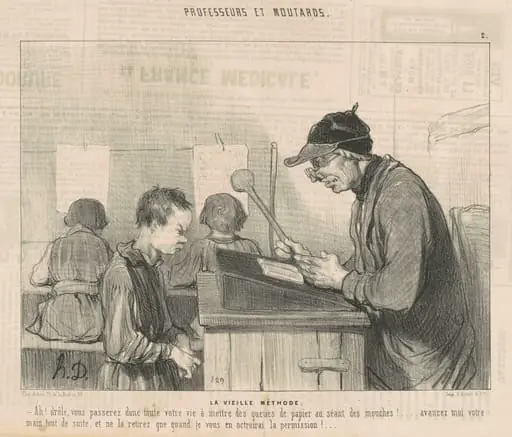 La vielle méthode
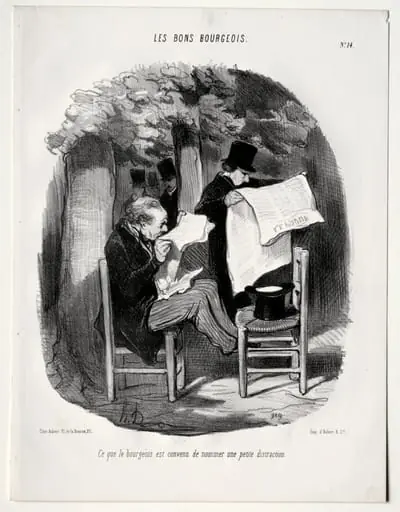 What the bourgeois calls a slight distraction
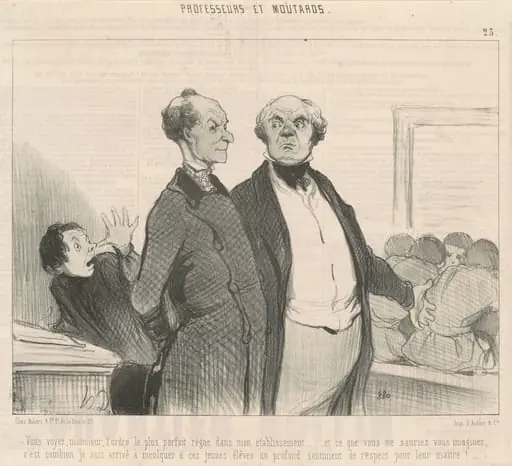 Vous voyez ... l'orde le plus parfait règne ...
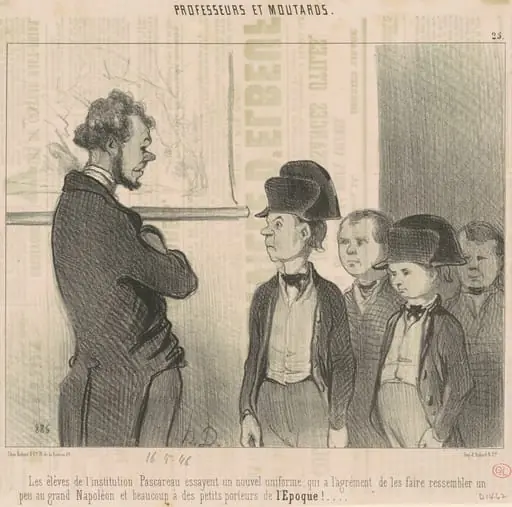 Les èleves de l'institution Pascareau essayent un nouvel uniforme ...
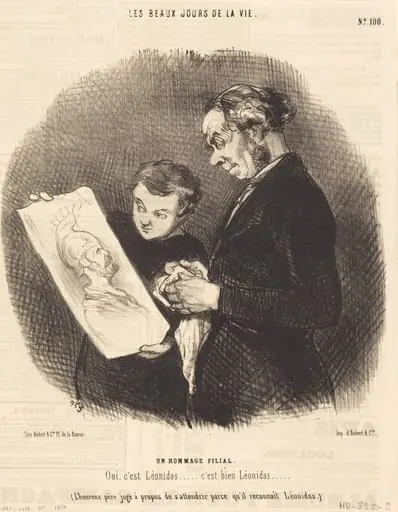 Un Hommage filial