Artwork
Six degrés au-dessous de zéro...
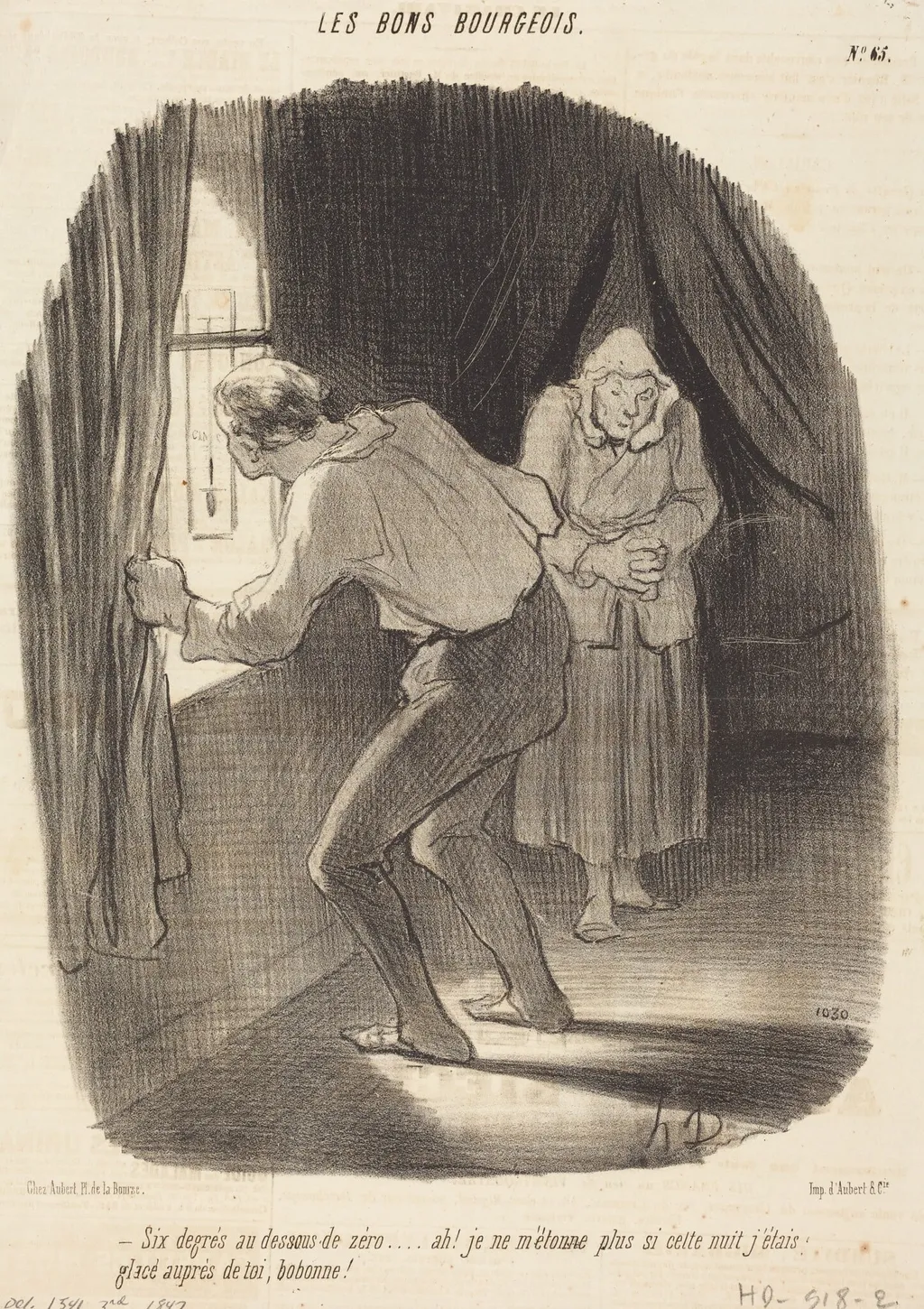
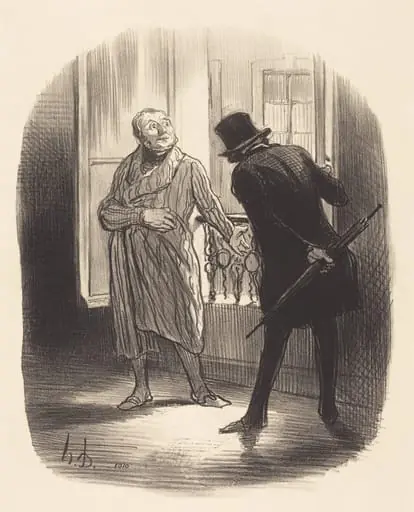
Six degrés au-dessous de zéro... is an ink print by the Romanticist artist Honoré Daumier. It dates from 1847 and is held in the collection of the National Gallery of Art.
About this work
Overview
Its crude paper and rapid linework signal its origin in a satirical newspaper, meant for immediate public consumption rather than long-term preservation.
Created in 1847, this lithograph on newsprint by Honoré Daumier captures a quiet, wintry interior scene with minimal detail and high emotional tension. Produced during a time of political unrest in France, the work reflects Daumier’s consistent focus on everyday life under economic hardship. Its crude paper and rapid linework signal its origin in a satirical newspaper, meant for immediate public consumption rather than long-term preservation.
Subject & Meaning
Two figures occupy the space: one hunched near a window, cane in hand; the other stands rigidly, bundled against the cold. Their postures suggest exhaustion and resignation. The title, *Les Bons Bourgeois*, is ironic, mocking the self-image of middle-class citizens who endure hardship without challenging its causes. The scene implies a quiet, unspoken suffering, contrasting the dignity they claim with their actual vulnerability.
Technique & Style
Daumier used lithography to achieve rapid, expressive lines that mimic the urgency of journalistic illustration. The dark, uneven tones and sparse shading evoke a biting chill, while the rough texture of newsprint amplifies the work’s rawness. No fine details distract; instead, the composition relies on posture, gesture, and contrast to convey mood. The light filtering from outside casts long, hollow shadows, deepening the sense of isolation.
History & Provenance
The print was likely published in *Le Charivari*, where Daumier regularly contributed political and social commentary between 1830 and 1851. Though not signed or dated on the sheet, its style and thematic concerns align with his known output from this period. Its survival on fragile newsprint suggests it was circulated widely but rarely preserved, making extant copies rare today.
Context
In 1847, France was nearing the end of the July Monarchy, with growing unrest over poverty, censorship, and inequality. Daumier’s work responded to these tensions by focusing on the quiet desperation of ordinary people, avoiding overt political symbols in favor of psychological realism. This print fits within a broader body of work that humanized the lower and middle classes, challenging romanticized portrayals of bourgeois life.
Legacy
Daumier’s use of lithography to document social conditions influenced later generations of realist and satirical artists. While not widely exhibited in his lifetime, this print exemplifies his ability to distill complex societal issues into a single, unadorned moment. Its endurance lies in its restraint—offering no resolution, only a stark observation of endurance under pressure.
Own this work as a print
Artist & collection
Artist
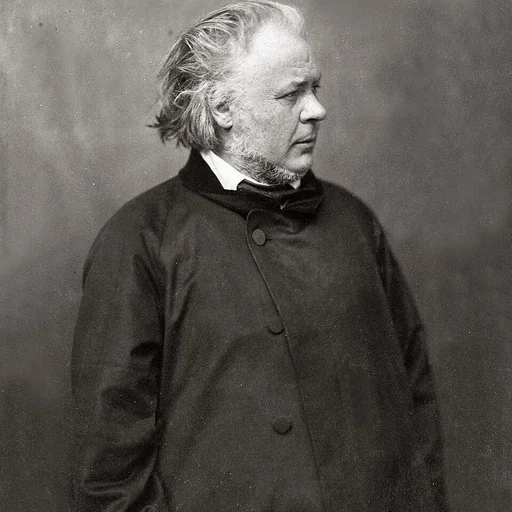
Honoré-Victorin Daumier was a French painter, sculptor, and printmaker, whose many works offer commentary on the social and political life in France, from the Revolution of 1830 to the fall of the Second French Empire in 1870.








 Inconvénient de visiter sans précaution un entresol...
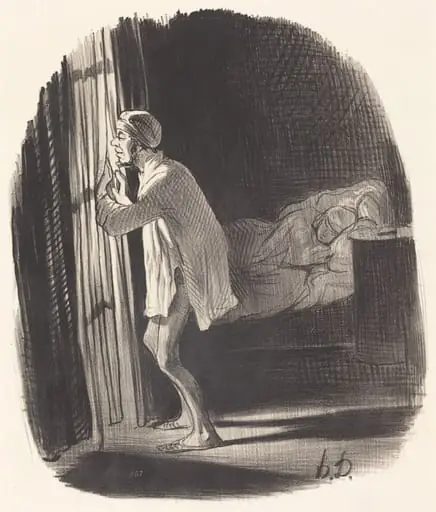 Je crois que j'ai entendu chanter un hibou...
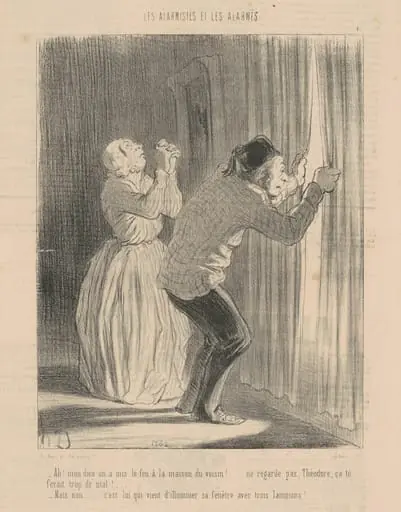 Ah! Mon dieu on a mis le feu a la maison du voisin ...
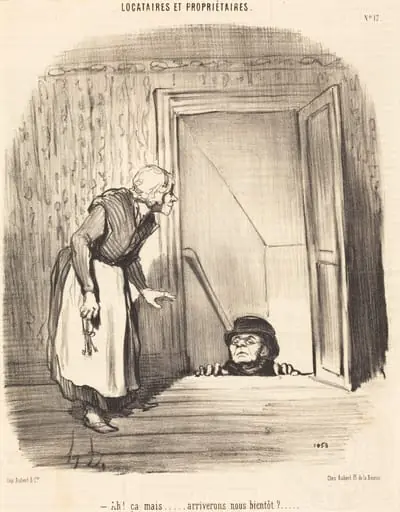 Ah! ça mais... arriverons-nous bientôt?
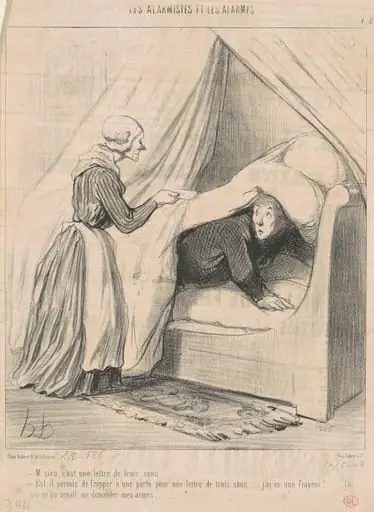 M'sieu, c'est une lettre de trois sous ...
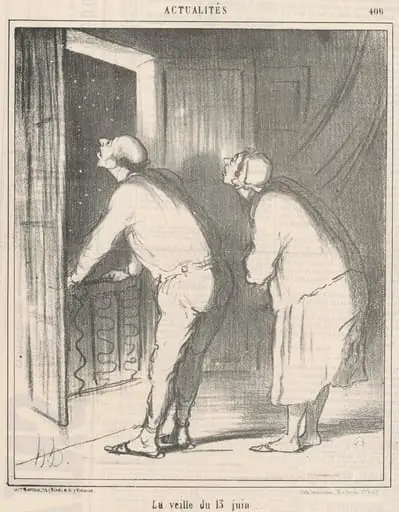 La veille du 13 Juin
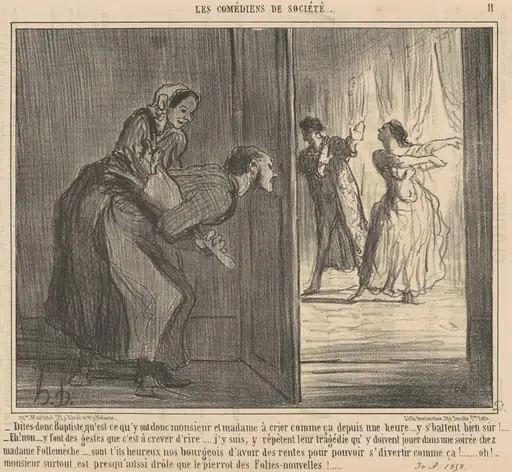 Dites-donc Baptiste ...
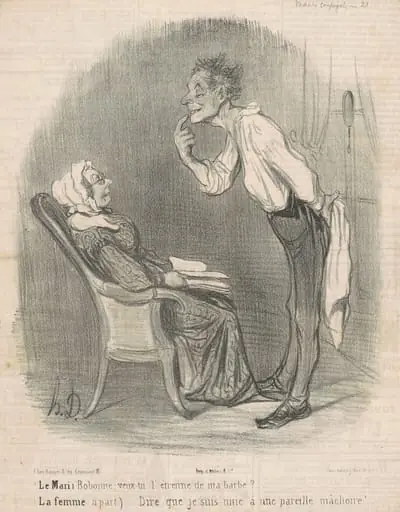 Le mari. Bobonne veux-tu l'étrenne de ma barbe?
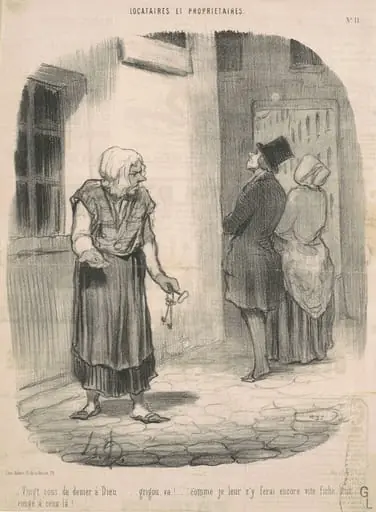 Vingt sous de denier a Dieu...
 Ce logement est un peu cher, pour la place Royale...
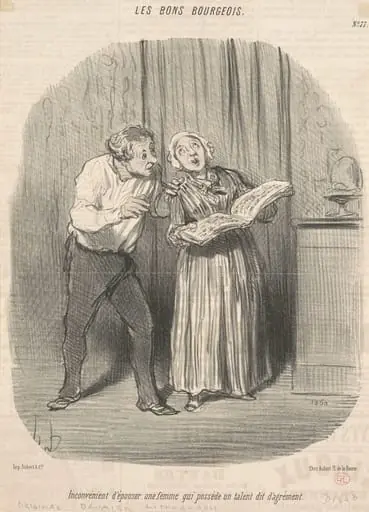 Inconvénient d'épouser une femme qui possède un talent d'agrément
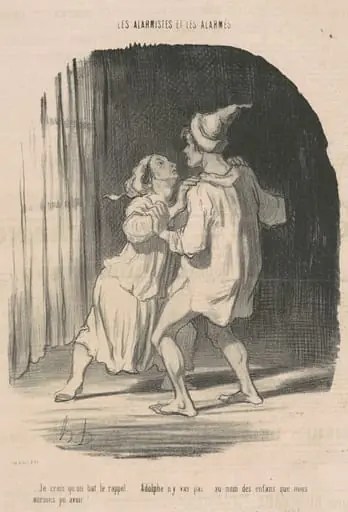 Je crois qu'on bat le rappel ...