Artwork
T'as tort de vouloir afficher cette ... annonce ...
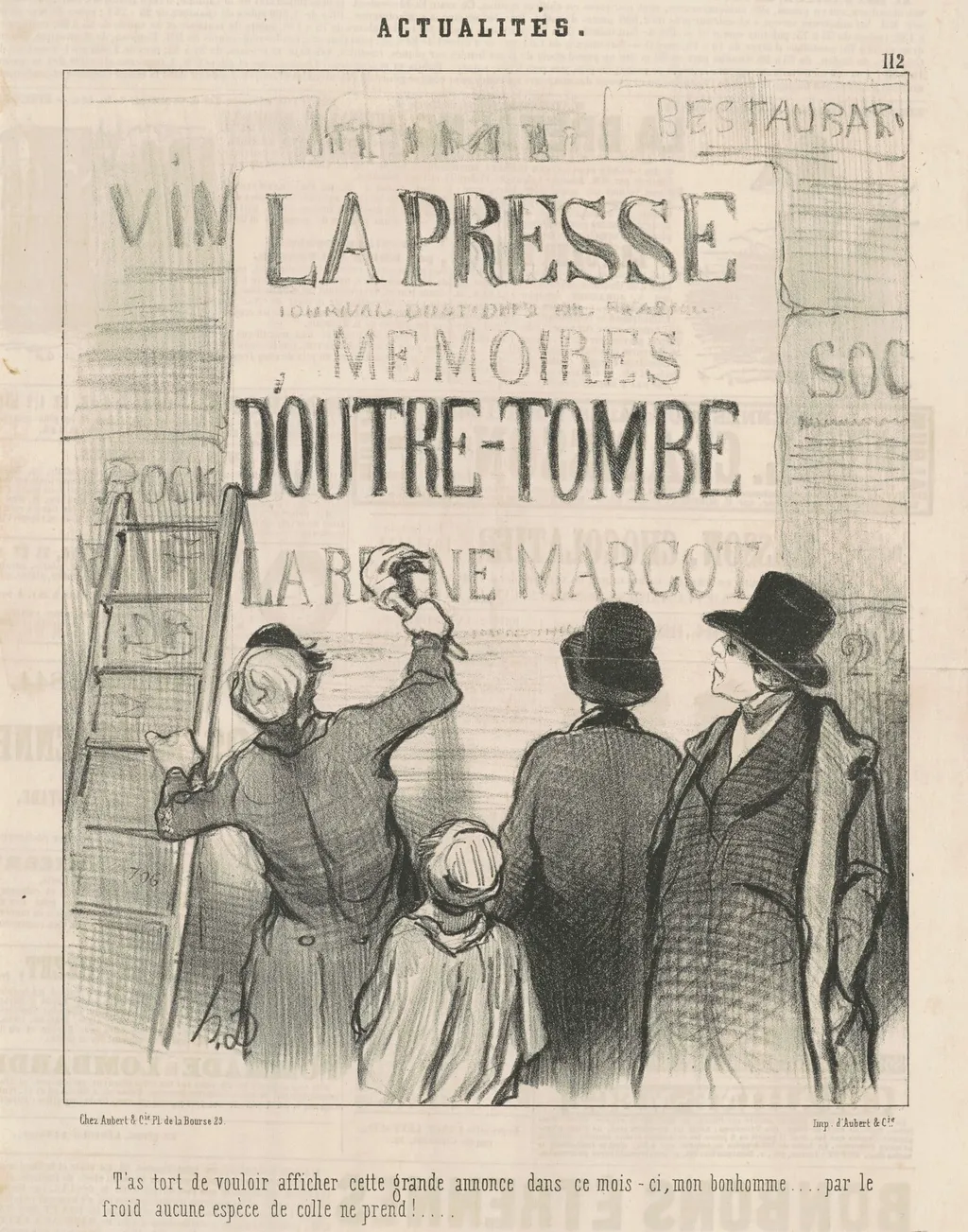
T'as tort de vouloir afficher cette ... annonce ... is an ink print by the Romanticist artist Honoré Daumier. It dates from 1844 and is held in the collection of the National Gallery of Art.
About this work
The poster says "LA PRESSE" and "D’OUTRE-TOMBE" in bold letters.
This lithograph shows a man on a ladder pasting a big poster. The poster says "LA PRESSE" and "D’OUTRE-TOMBE" in bold letters. The city around him is alive with shadows and street details.
Daumier made fun of ads even back in 1844. He used sharp lines to show how posters took over public space. The poster’s words hint at a famous writer’s last work.
It’s a quick snapshot of a changing city. If you like this, try another Daumier, Honoré.
Overview
Honoré Daumier’s 1844 lithograph captures a fleeting urban scene in which a laborer, perched on a ladder, affixes a large advertisement to a building façade. The poster prominently displays the words “LA PRESSE” and “D’OUTRE‑TOMBE,” anchoring the composition within the bustling visual culture of mid‑nineteenth‑century Paris.
Subject & Meaning
The work comments on the proliferation of street advertising, illustrating how printed notices increasingly dominate public spaces. By foregrounding the act of posting, Daumier highlights the growing power of the press and hints at contemporary literary references through the phrase “D’OUTRE‑TOMBE,” a title associated with a celebrated author’s posthumous publication.
Technique & Style
Executed in monochrome lithography, the image relies on precise, energetic line work to render the figure, ladder, and surrounding architecture. Daumier’s deft handling of contrast and texture conveys depth and movement, while the stark palette emphasizes the starkness of the urban environment and the immediacy of the advertising act.
History & Provenance
Created in 1844, the print belongs to Daumier’s early series that satirized Parisian life. It circulated among the artist’s contemporaries as a modestly sized lithograph, later entering museum collections and scholarly catalogues that trace its role in documenting the visual overload of the city’s streets during the July Monarchy.
Context
The lithograph emerges at a time when Paris was undergoing rapid modernization, with newspapers and posters proliferating across boulevards. Daumier, known for his social commentary, used this genre scene to reflect broader concerns about mass communication and the transformation of public visual space in the pre‑industrial metropolis.
Artist & collection

Artist
Honoré-Victorin Daumier was a French painter, sculptor, and printmaker, whose many works offer commentary on the social and political life in France, from the Revolution of 1830 to the fall of the Second French Empire in 1870.









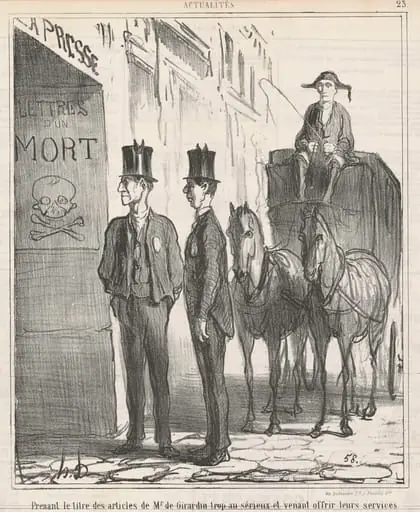 Prenant le titre ... de Mr de Girardin trop au sérieux ...
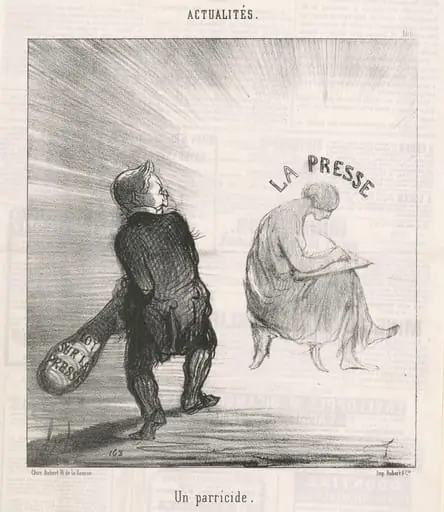 Un parricide
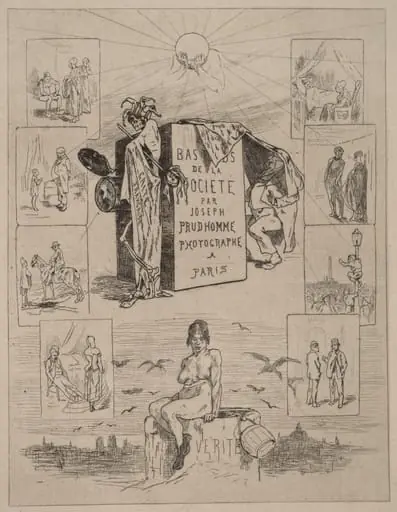 Frontispiece: The Dregs of Society (Las bas-fonds de la societe)
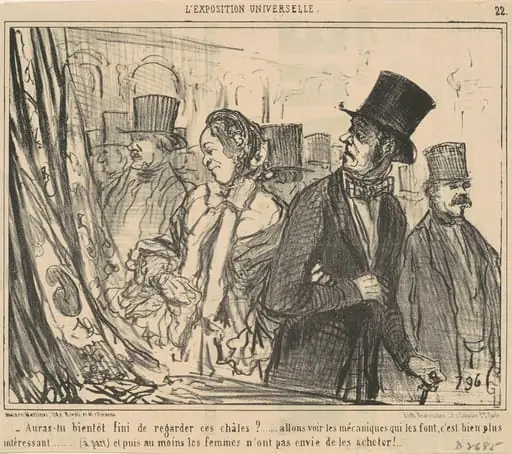 Auras-tu bientot fini de regarder ces chales?
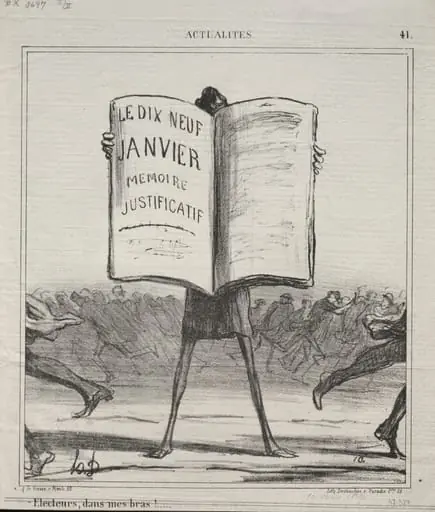 Voters, into my arms!...
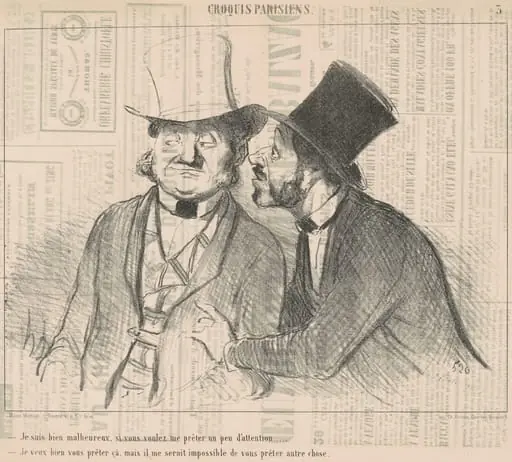 Je suis bien malheureux, si vous voulez ...
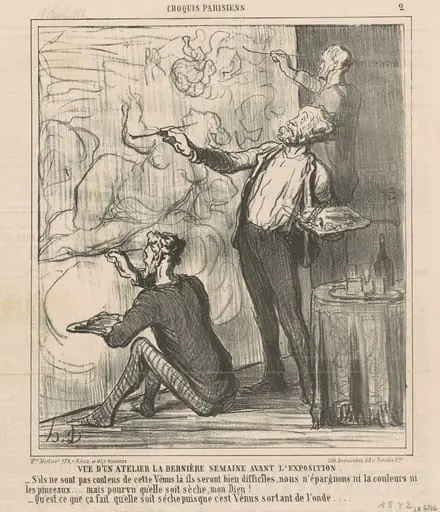 Vue d'un atelier ...
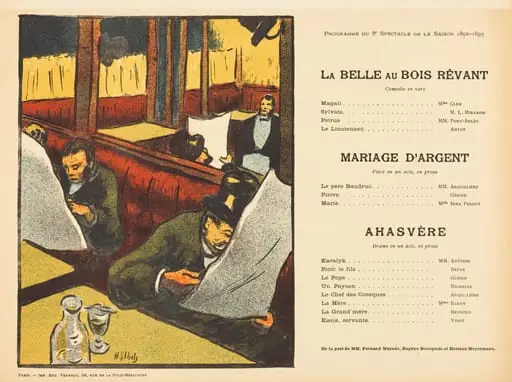 La Belle au bois rêvant; Mariage d'argent; Ahasvère
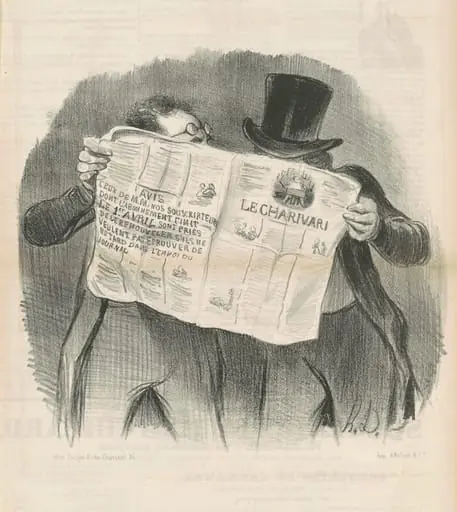 Le lecture du charivari
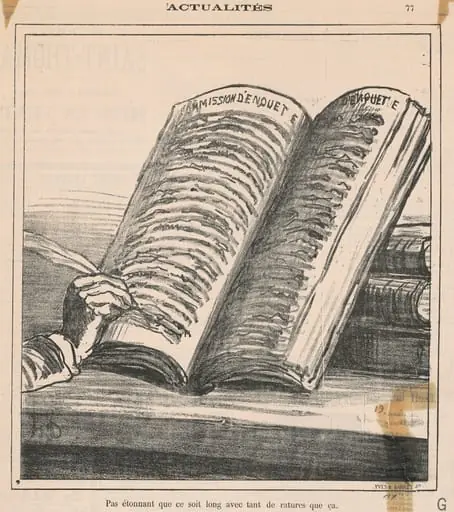 Pas étonnant que ce soit long ...
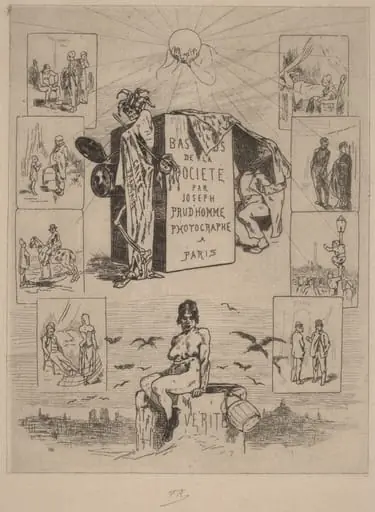 Frontispiece: The Dregs of Society (Les bas-fonds de la societe)
 Voyez, cette pièce est très grande ...