Artwork
Un parricide
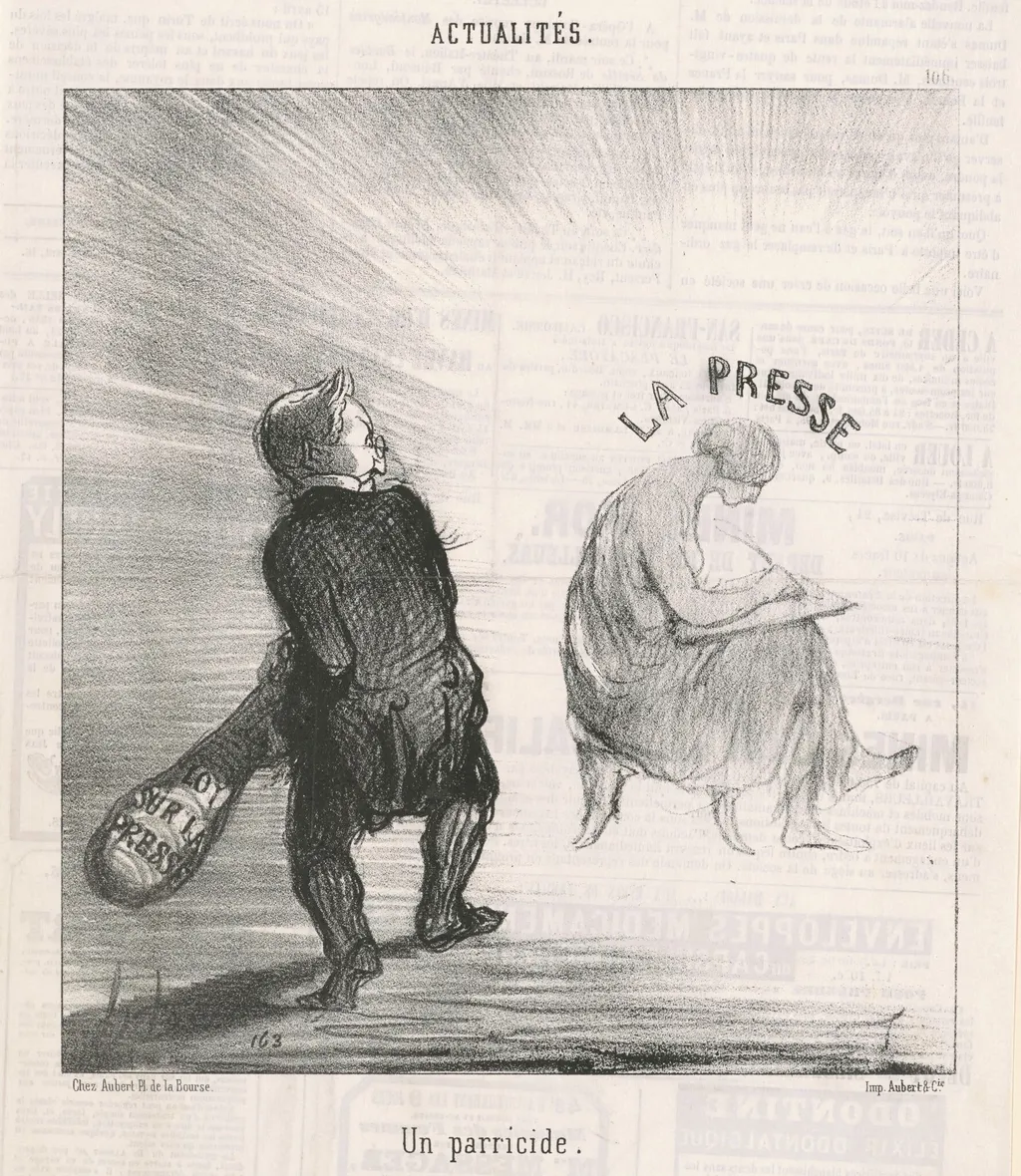
Un parricide is an ink print by the Impressionist artist Honoré Daumier. It dates from 1850 and is held in the collection of the National Gallery of Art.
About this work
Overview
Honoré Daumier’s 1850 lithograph titled “Un parricide” depicts a charged encounter between a muscular figure brandishing a club marked “Droit du travail” and a seated woman who stands for the press. Rendered in stark black‑and‑white, the image freezes a moment of confrontation that reflects contemporary debates over labor rights and journalistic freedom.
Subject & Meaning
The male character, armed with a club inscribed with the phrase “right to work,” embodies state or institutional authority seeking to enforce order. Opposite him, the woman personifies the press, her posture suggesting vulnerability yet resilience. Their opposing stances dramatize the clash between governmental control and the press’s claim to unrestricted expression.
Technique & Style
Executed as a lithograph, the work relies on the medium’s capacity for bold line work and high contrast. Daumier employs stark monochrome shading and vigorous, angular poses to amplify the tension, while the simplicity of the medium underscores the immediacy of the political message.
History & Provenance
Created in the midst of France’s turbulent 1850s, the print reflects Daumier’s engagement with social and political issues of his time. It was produced as part of his series of satirical prints that critiqued labor legislation and press regulation, circulating among reformist circles before entering museum collections in the early twentieth century.
Context
The image appears against the backdrop of the 1848 revolutions and subsequent labor reforms, when the French government grappled with the right to work and the role of a free press. Daumier’s choice of a club labeled “Droit du travail” directly references contemporary legislation, while the female figure alludes to the press’s emerging influence.
Legacy
“Un parricide” remains a reference point for studies of 19th‑century political lithography, illustrating how visual satire could comment on legislative battles. Its stark composition continues to inform discussions of how art mediates the relationship between authority and the media.
Artist & collection
Artist
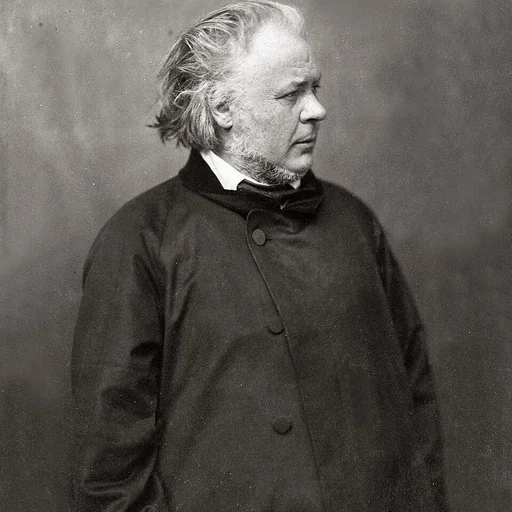
Honoré-Victorin Daumier was a French painter, sculptor, and printmaker, whose many works offer commentary on the social and political life in France, from the Revolution of 1830 to the fall of the Second French Empire in 1870.


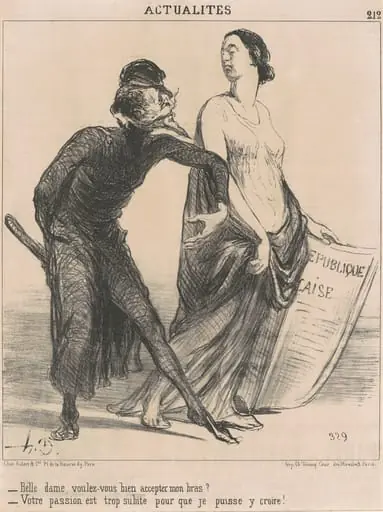 Belle dame voulez-vous ... accepter mon bras?
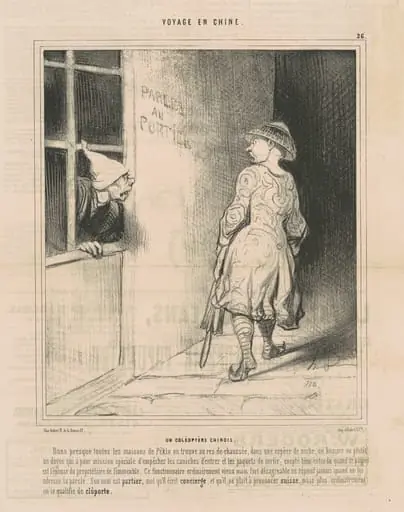 Un coléoptère chinois
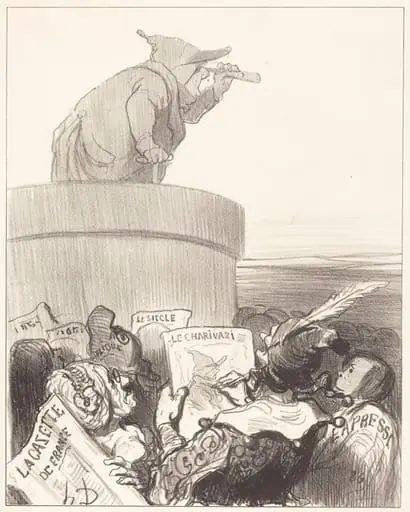 Le Constitutionnel contemplant l'horizon politique
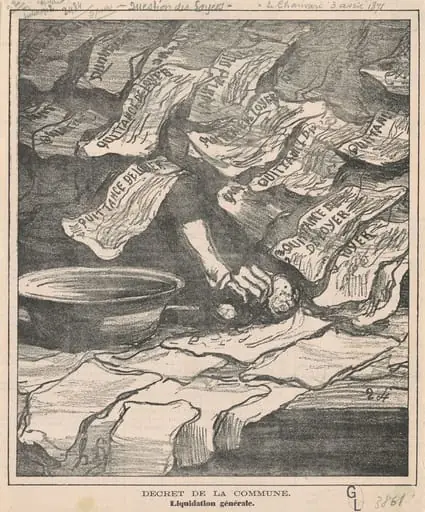 Décret de la commune
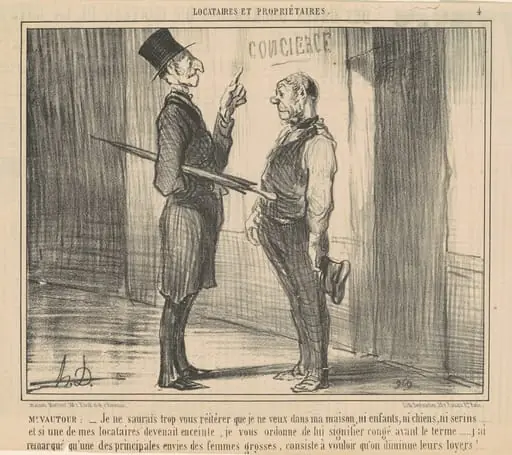 M. Vautour: Je ne saurais trop ...
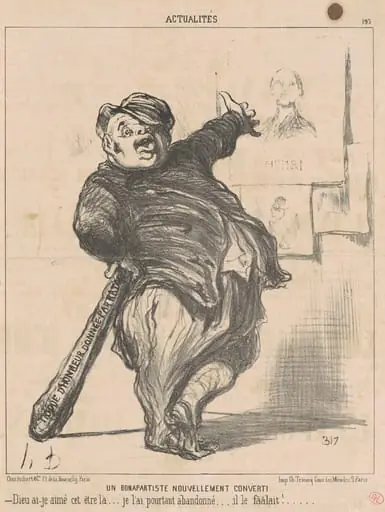 Un Bonapartiste nouvellement converti
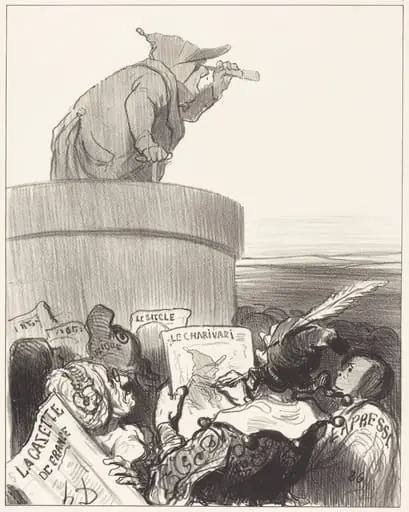 Le Constitutionnel contemplant l'horizon politique
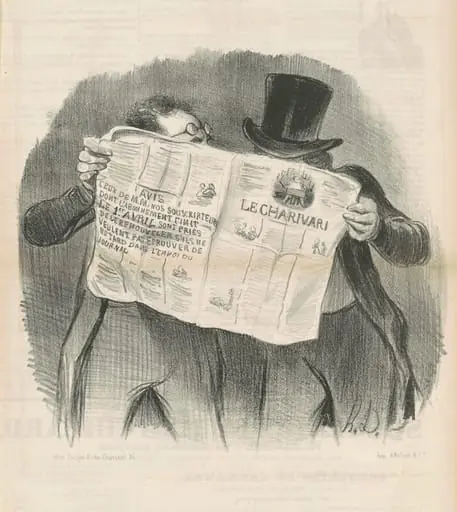 Le lecture du charivari
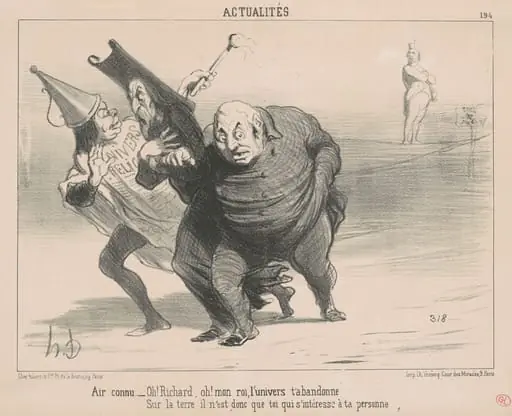 Air connu: Oh! Richard, Oh! Mon roi ...