Artwork
Tiens au milieu de ...bouleversemens ...
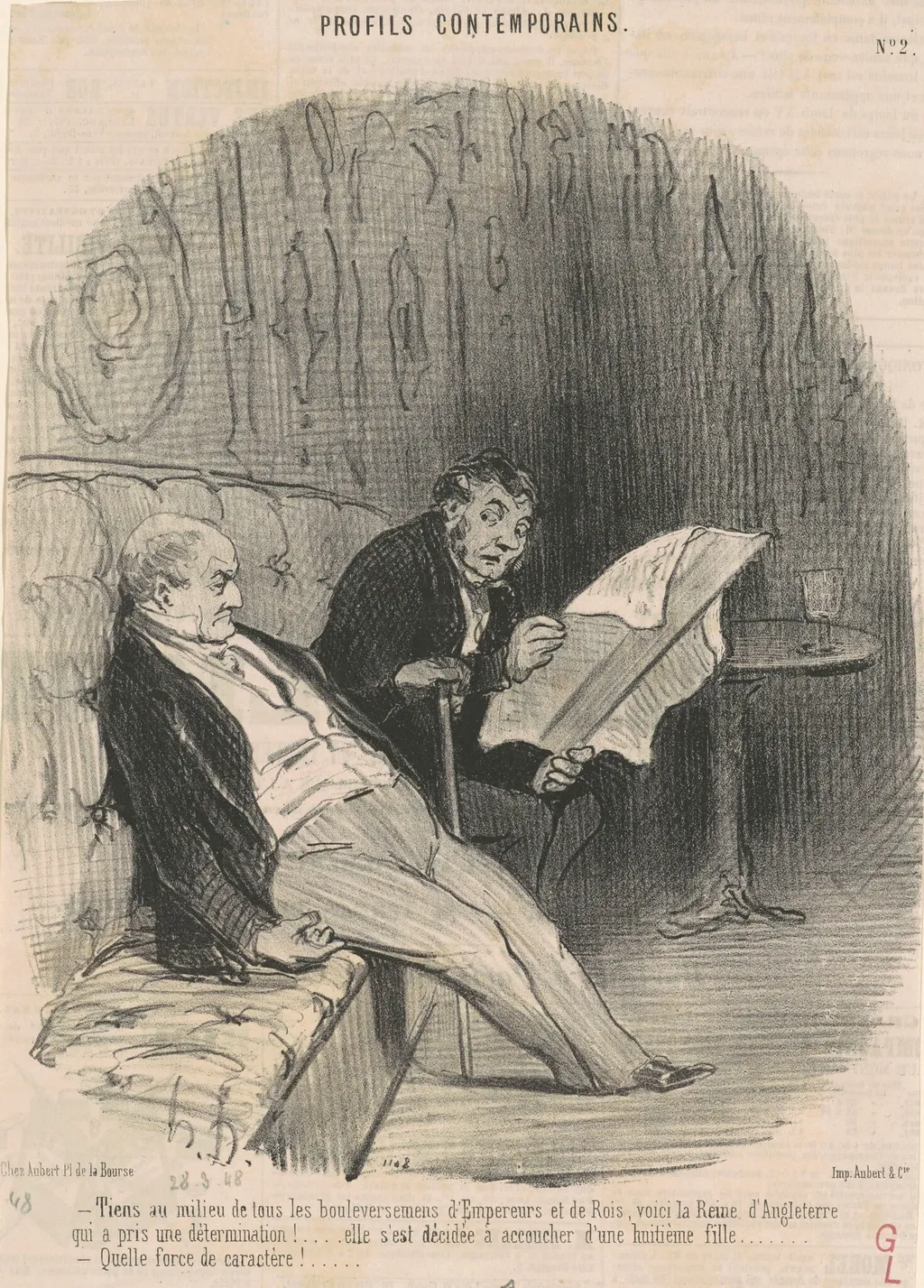
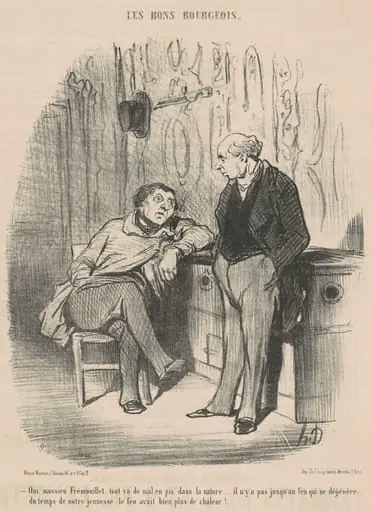
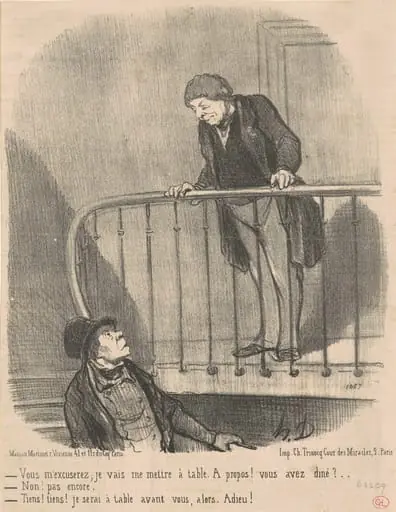
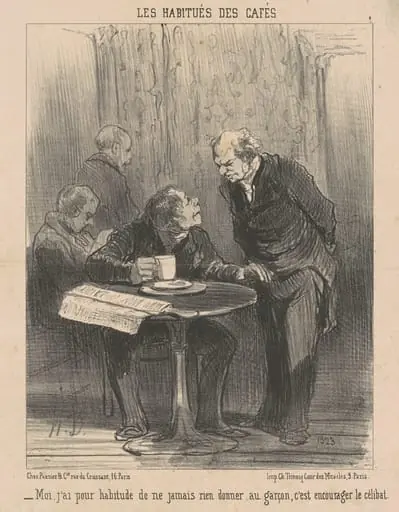
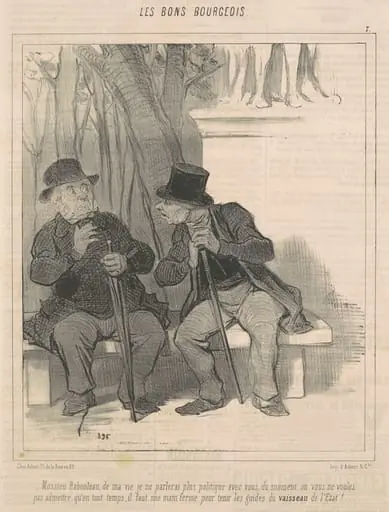
Tiens au milieu de ...bouleversemens ... is an ink print by the Romanticist artist Honoré Daumier. It dates from 1848 and is held in the collection of the National Gallery of Art.
About this work
Overview
Daumier’s focus on ordinary figures in a mundane setting underscores his interest in the rhythms of daily life amid political upheaval.
This lithograph by Honoré Daumier captures two men seated together on a padded bench, absorbed in a newspaper. Their physical positions— one reclining, the other leaning in—suggest differing responses to the news they read. The scene is quiet but charged, inviting reflection on how individuals internalize societal change. Daumier’s focus on ordinary figures in a mundane setting underscores his interest in the rhythms of daily life amid political upheaval.
Subject & Meaning
The two figures represent contrasting attitudes toward the turbulent social climate of mid-19th century France. The man leaning forward, intently reading, may symbolize engagement or anxiety, while the lounging figure suggests detachment or resignation. Their shared focus on the newspaper implies a collective awareness of events, yet their postures reveal divergent emotional responses. The work does not narrate a specific event but evokes the psychological weight of living through constant transformation.
Technique & Style
Daumier employed lithography to achieve rapid, expressive lines and tonal contrasts. His use of ink washes and minimal detail allows the figures’ gestures and facial expressions to carry emotional weight. The background is left largely undefined, directing attention to the men’s interaction. The medium’s accessibility suited Daumier’s goal of reaching a broad audience, and his style prioritizes immediacy over polish, aligning with the urgency of his social commentary.
History & Provenance
Created during a period of political instability in France, the print likely appeared in a periodical or broadside, common venues for Daumier’s satirical work. Though exact publication details are uncertain, its production aligns with his output in the 1840s–1850s, when he frequently critiqued bourgeois behavior and public sentiment. The work entered museum collections in the 20th century as interest grew in Daumier’s role as a visual chronicler of his age.
Context
Daumier worked amid revolutions, press censorship, and the rise of the urban middle class. Newspapers were both sources of information and tools of political influence. His lithographs often depicted ordinary citizens reacting to these forces, avoiding grand narratives in favor of intimate, telling moments. This piece reflects a society in flux, where personal demeanor became a subtle indicator of broader ideological divides.
Legacy
Daumier’s ability to convey complex social dynamics through simple, observed gestures influenced generations of realist and satirical artists. This lithograph exemplifies his enduring contribution: transforming the everyday into a mirror of collective experience. Unlike overt political cartoons, his work invites quiet contemplation, making its critique more enduring and less tied to fleeting events.
Artist & collection

Artist
Honoré-Victorin Daumier was a French painter, sculptor, and printmaker, whose many works offer commentary on the social and political life in France, from the Revolution of 1830 to the fall of the Second French Empire in 1870.