Artwork
Tiens v'la peut-etre une pratique
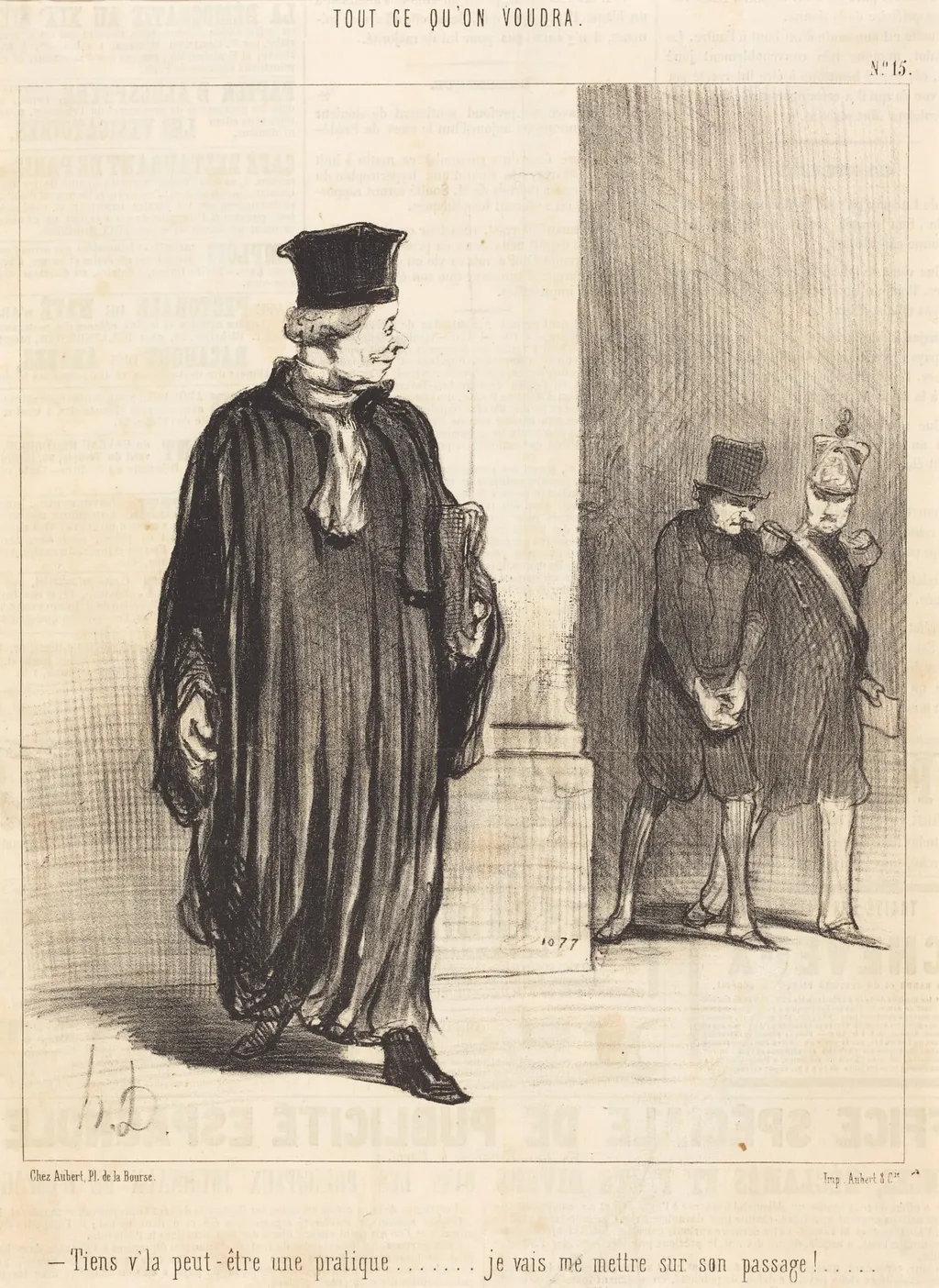
Tiens v'la peut-etre une pratique is an ink print by the Romanticist artist Honoré Daumier. It dates from 1847 and is held in the collection of the National Gallery of Art. Created in 1847, this lithograph on wove paper bears the French title *Tiens v'la peut-être une pratique*.
About this work
Overview
Created in 1847, this lithograph on wove paper bears the French title *Tiens v'la peut-être une pratique*. It presents a compact, satirical scene typical of Honoré Daumier’s print work, combining visual gag with a textual punchline. The composition is framed by a headline at the top and a humorous caption below, inviting viewers to read the image as both illustration and commentary.
Subject & Meaning
The picture depicts three men dressed in period attire: a figure in a long black robe and tall hat holds an object, while two gentlemen in suits and top hats stand near a doorway, one adjusting his hat. The accompanying French phrases—*Tout ce qu’on voudra* (“whatever you want”) and a bottom-line joke about obstructing a path—underscore Daumier’s critique of social pretensions and the arbitrariness of authority in mid‑century France.
Technique & Style
Executed as a lithograph, the work relies on the stone‑based printing process that allowed Daumier to produce multiple copies with fine line work and tonal variation. His characteristic caricatural exaggeration is evident in the figures’ gestures and attire, while the crisp lettering integrates text and image, a hallmark of his satirical prints for popular journals.
History & Provenance
Daumier produced this print during his prolific period of contributions to the satirical newspapers *La Caricature* and *Le Charivari*. Though originally circulated as a newspaper illustration, the lithograph later entered private collections and museum holdings, reflecting its role as both a political pamphlet and an artwork.
Context
The mid‑1800s in France were marked by tension between monarchical power, the aristocracy, and emerging republican ideas. Daumier, a self‑identified republican democrat, used his prints to lampoon the clergy, nobility, and bureaucratic excesses, aligning his visual humor with broader calls for social reform.
Legacy
Daumier’s integration of text, caricature, and social critique set a precedent for modern political cartooning. His lithographs, including this piece, continue to be studied for their incisive commentary on class dynamics and their influence on the development of visual satire in the public sphere.
Artist & collection

Artist
Honoré-Victorin Daumier was a French painter, sculptor, and printmaker, whose many works offer commentary on the social and political life in France, from the Revolution of 1830 to the fall of the Second French Empire in 1870.









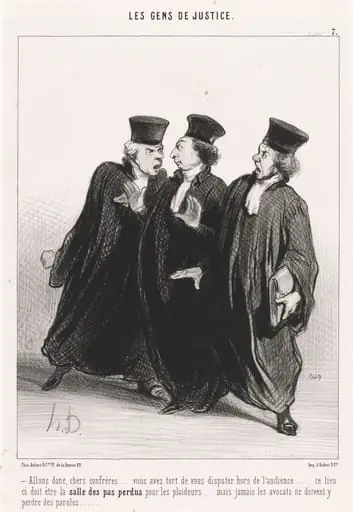 Allons donc, chers confrères...
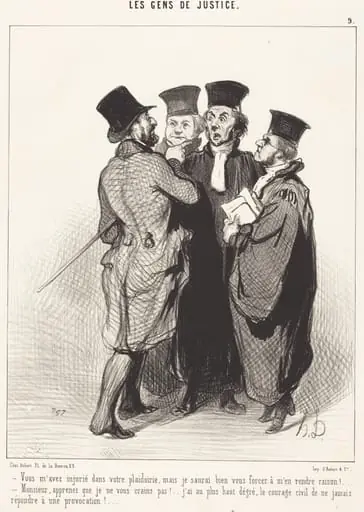 Vous m'avez injurié dans votre plaidoirie...
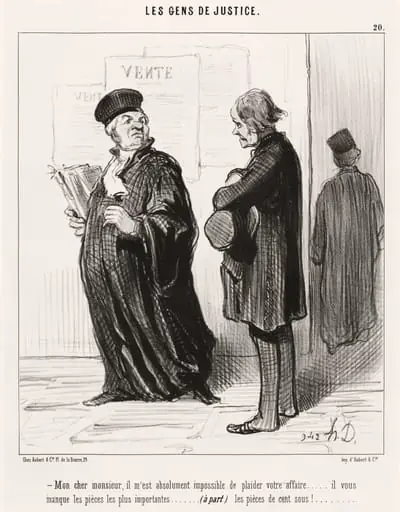 Mon cher monsieur... impossible de plaider votre affaire
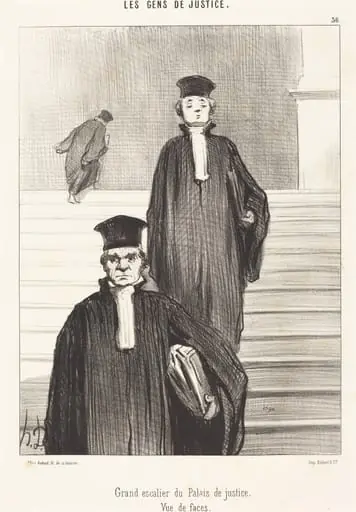 Grand escalier du Palais de justice. Vue de face
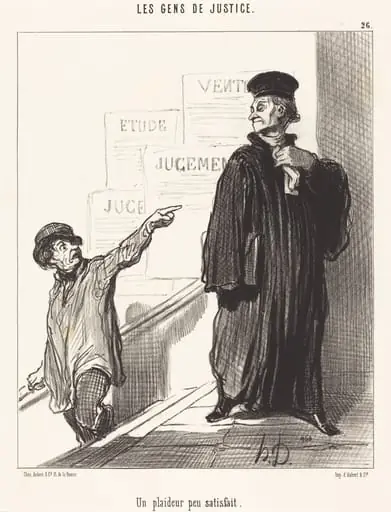 Un Plaideur peu satisfait
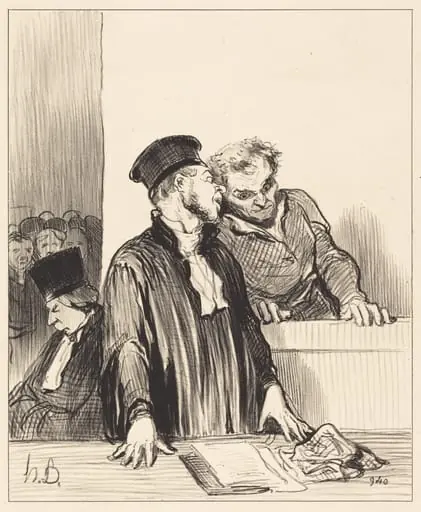 Voila le ministère public qui vous dit des choses... désagréables...
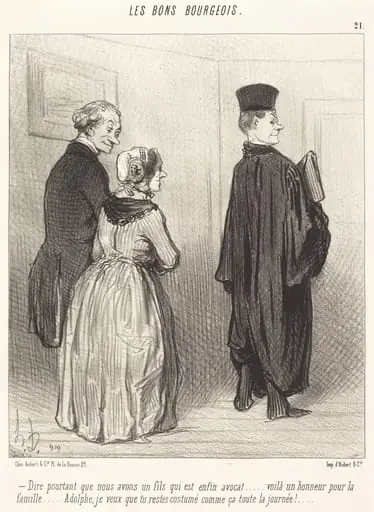 Dire... que nous avons un fils qui est... avocat...
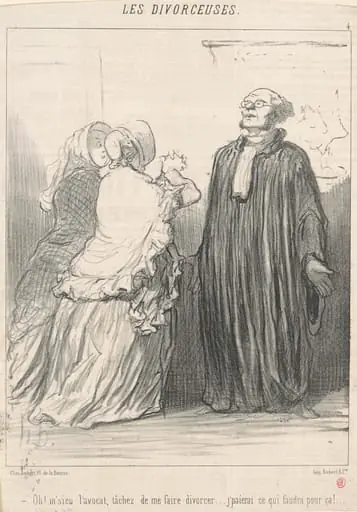 Oh! M'sieu l'avocat, tachez de ...