Artwork
Tiens vous v'la, què que vous avez donc la
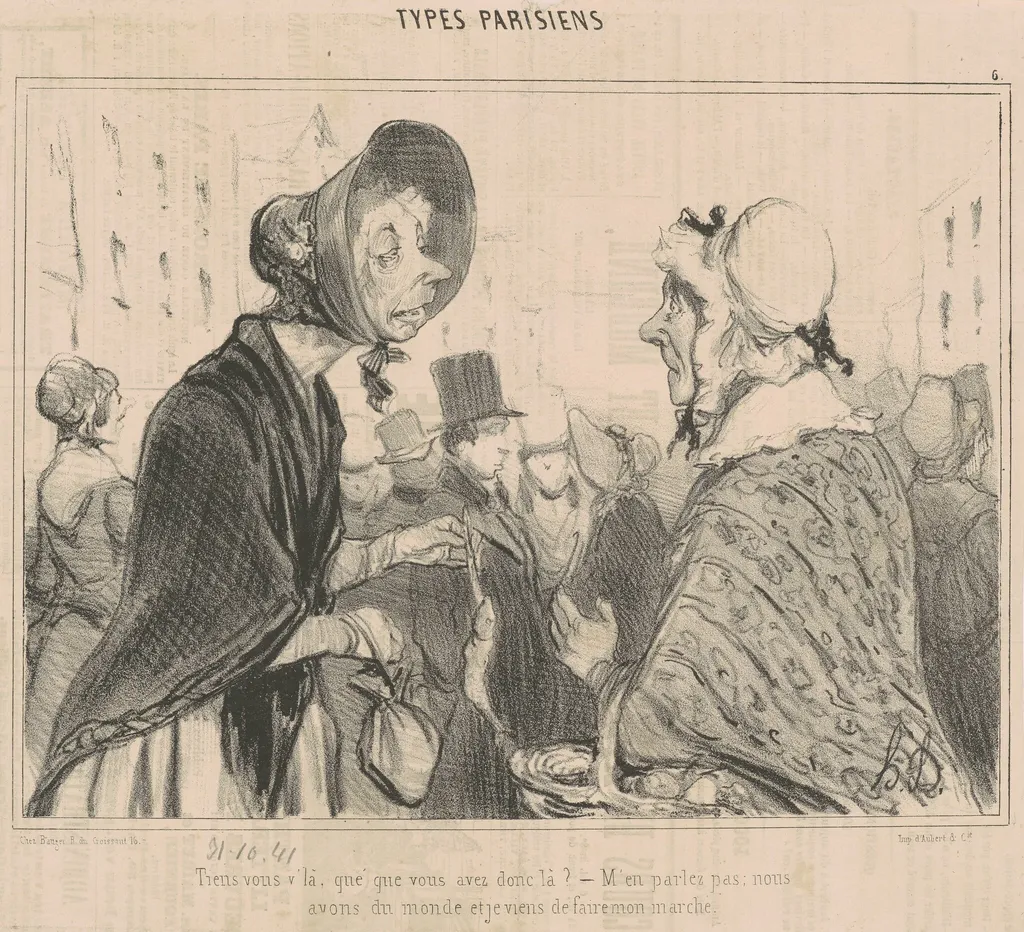
Tiens vous v'la, què que vous avez donc la is an ink print by the Romanticist artist Honoré Daumier. It dates from 1839 and is held in the collection of the National Gallery of Art.
About this work
Overview
Tiens vous v'la, què que vous avez donc la is a lithograph by Honoré Daumier depicting an everyday street encounter between two women, set against the vibrant backdrop of a crowded urban scene.
Subject & Meaning
The print focuses on the interaction between two women of potentially different social standings (indicated by a dark dress and a light shawl), commenting on the social hierarchies and class attitudes prevalent during Daumier's time. The scene subtly critiques class pretensions by portraying ordinary individuals asserting their presence in public space.
Technique & Style
Executed in lithography, a medium suited for mass production and social commentary, Daumier's work features expressive, unposed figures and a dynamic crowd in the background, balancing energy with compositional clarity. The technique of drawing on stone (lithography) allowed for the vivid, immediate quality of the scene.
History & Provenance
Originally created as a political cartoon, this lithograph reflects Daumier's practice of using satire to address social issues of his era. Specific provenance details (ownership history, exact date) are not provided in the available information.
Context
This work is characteristic of Daumier's observations of 19th-century urban life, aligning with his broader body of work that critiques social class and promotes empathy for the everyday person.
Legacy
While specific legacy details of this piece are not outlined, it contributes to Daumier's reputation as a keen social observer and a master of lithographic satire, influencing subsequent generations of artists engaged in social commentary.
Artist & collection

Artist
Honoré-Victorin Daumier was a French painter, sculptor, and printmaker, whose many works offer commentary on the social and political life in France, from the Revolution of 1830 to the fall of the Second French Empire in 1870.









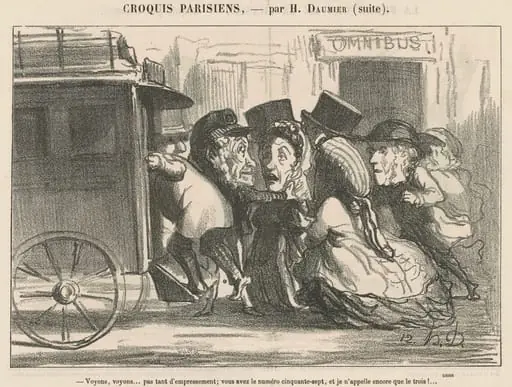 Voyons, voyons ... pas tant d'empressement ...
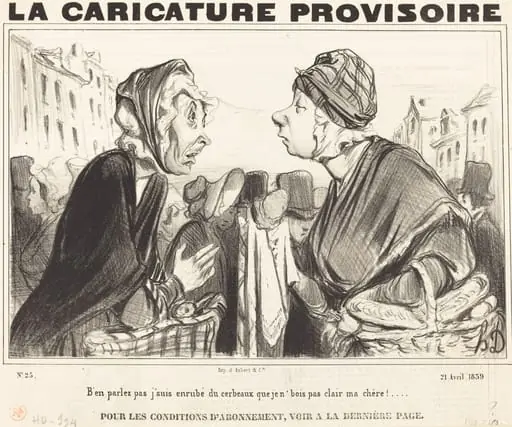 B'en parlez pas j'suis enrubé du cerbeaux...
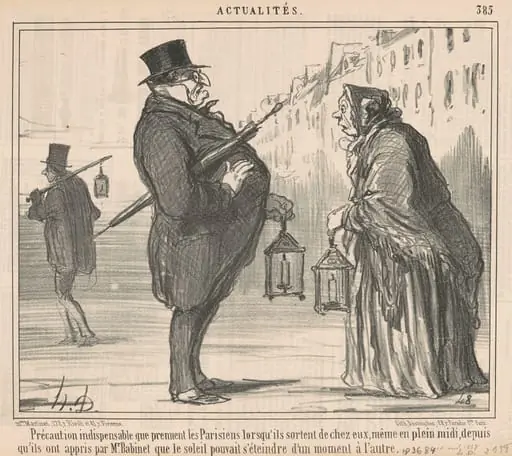 Précaution indispensable que prennent les Parisiens ...
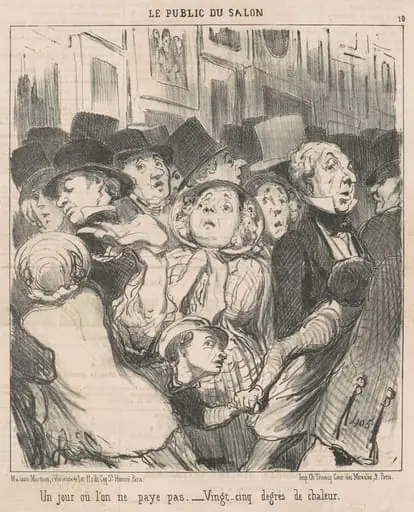 Un jour ou l'on ne paye pas
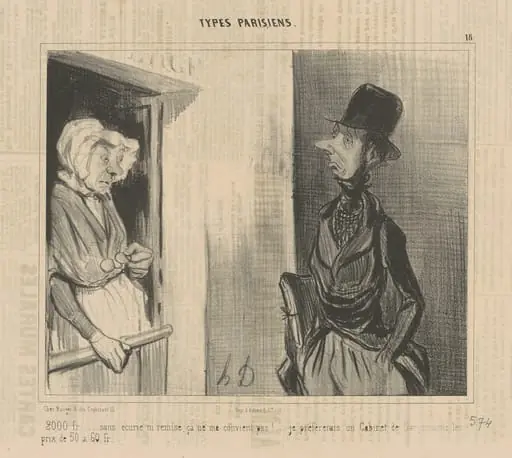 2.000 fr...sans écurie...ça ne me convient pas!
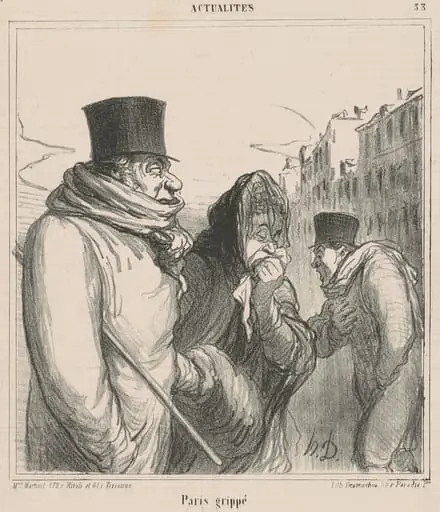 Paris grippé
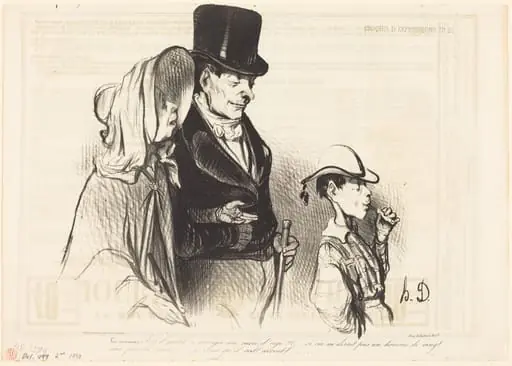 La Maman - Est-il gentil a manger son sucre d'orge!...
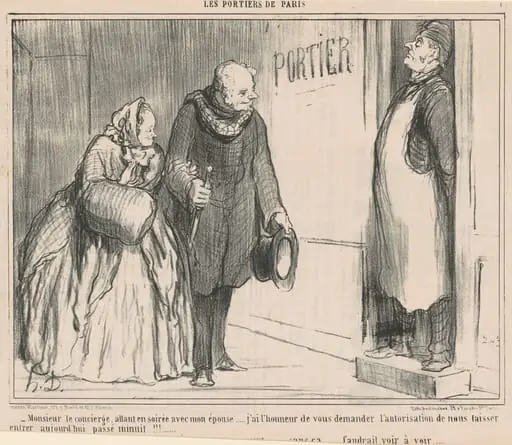 Monsieur le concierge, allant en soirée
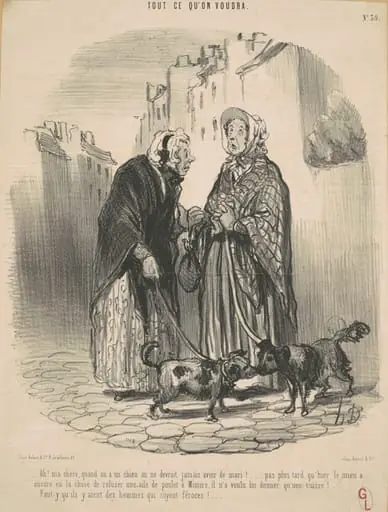 Ah! Ma chère, quand on a un chien ...