Artwork
Tout est payé? Nous n'avons fait...salut
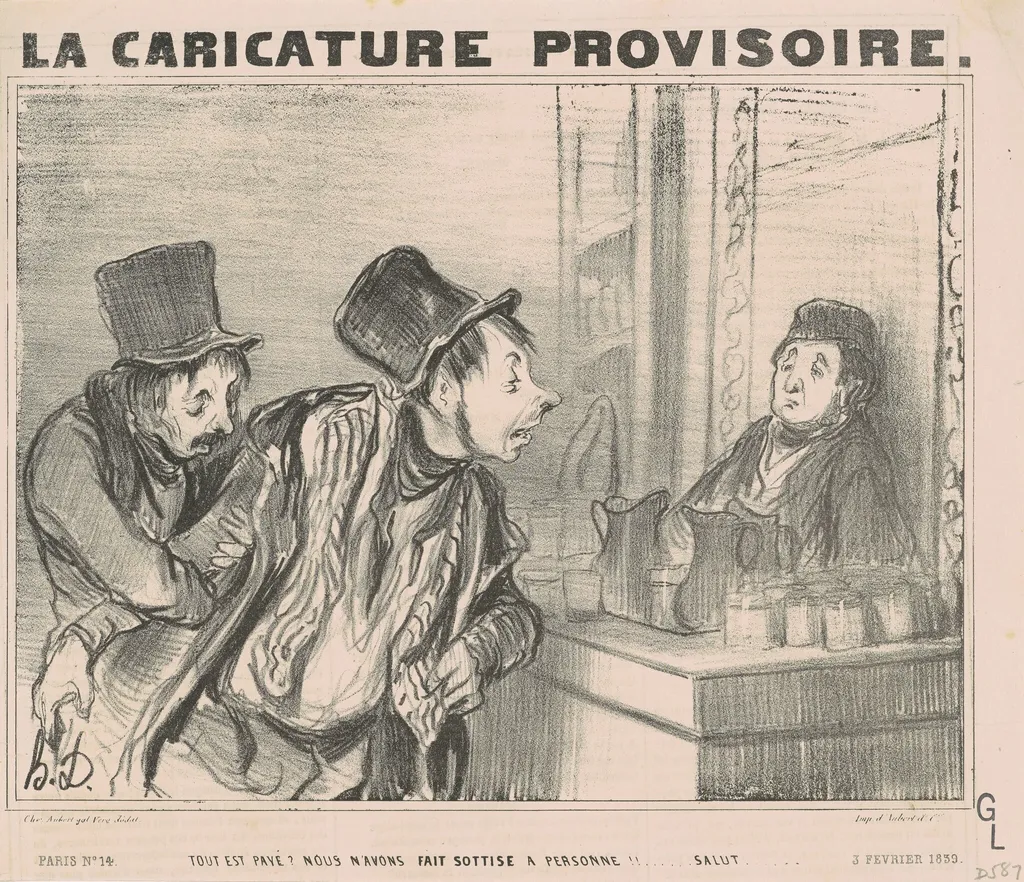
Tout est payé? Nous n'avons fait...salut is an ink print by the Romanticist artist Honoré Daumier. It dates from 1839 and is held in the collection of the National Gallery of Art. Honoré Daumée’s lithograph titled “Tout est payé?
About this work
Overview
Honoré Daumée’s lithograph titled “Tout est payé? Nous n'avons fait…salut” depicts a cramped shop interior populated by three men. The composition is dominated by exaggerated, almost caricatural facial features, with one figure gesturing energetically while another reacts with a startled expression, creating a vivid snapshot of a tense exchange.
Subject & Meaning
The work satirizes the fraught nature of commercial negotiations, suggesting a moment when a transaction has gone awry. By amplifying the participants’ expressions, Daumée highlights the absurdity and anxiety that can accompany business dealings, inviting viewers to reflect on the performative aspects of social interaction.
Technique & Style
Executed in lithography, Daumée drew directly onto a limestone slab with greasy crayons, a method that captures fluid lines and bold contrasts. The medium permits the production of multiple impressions, and the artist’s rapid, gestural approach yields the work’s characteristic looseness and exaggerated caricature.
Context
Created during Daumée’s prolific period of social commentary, the print aligns with his broader oeuvre that scrutinized everyday life in 19th‑century France. The shop scene reflects contemporary urban settings where merchants and patrons regularly navigated the complexities of trade and reputation.
Legacy
While specific provenance details are scarce, the lithograph exemplifies Daumée’s influence on later satirical illustrators and the development of print culture. Its accessible format and incisive humor continue to inform studies of visual criticism and the role of caricature in public discourse.
Own this work as a print
Artist & collection
Artist
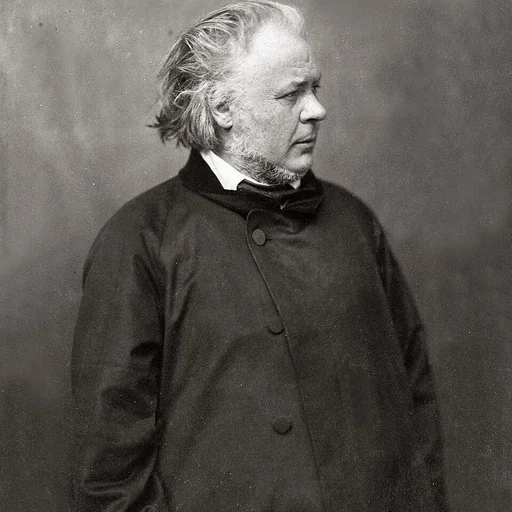
Honoré-Victorin Daumier was a French painter, sculptor, and printmaker, whose many works offer commentary on the social and political life in France, from the Revolution of 1830 to the fall of the Second French Empire in 1870.


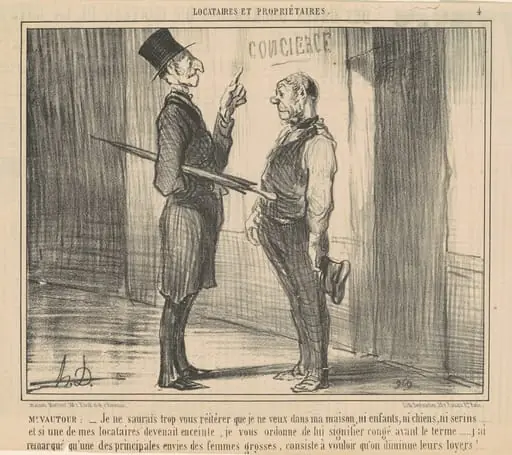 M. Vautour: Je ne saurais trop ...
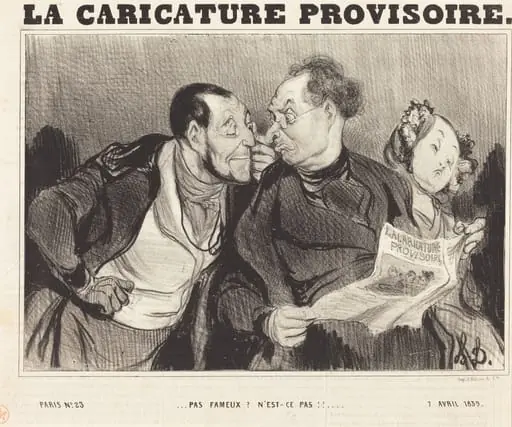 Pas fameux? N'est-ce pas!!...
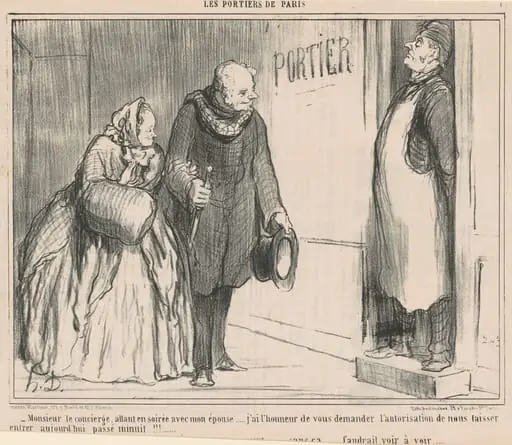 Monsieur le concierge, allant en soirée
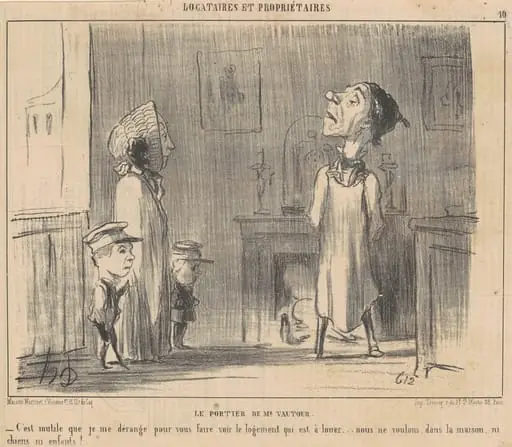 Le portier de Mr Vautour
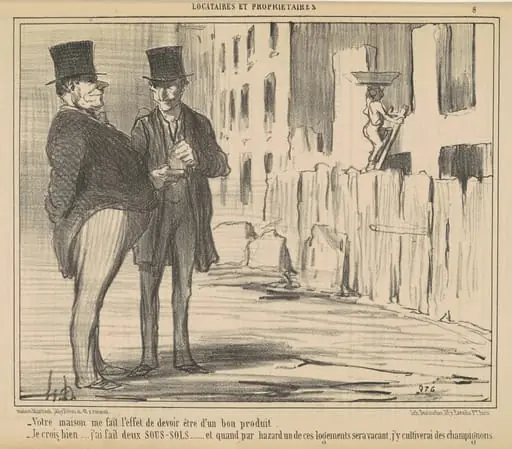 Votre maison me fait l'effet de devoir ...
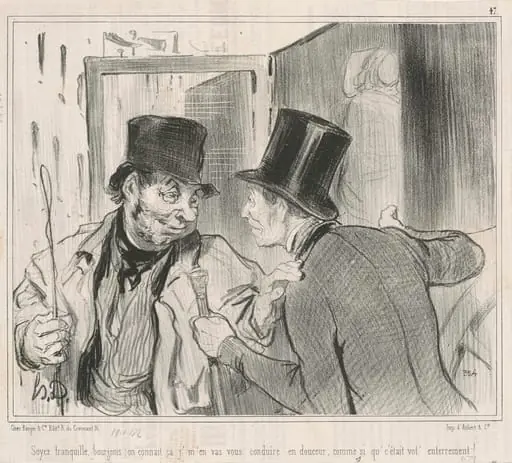 Soyez tranquille bourgeois, on connait
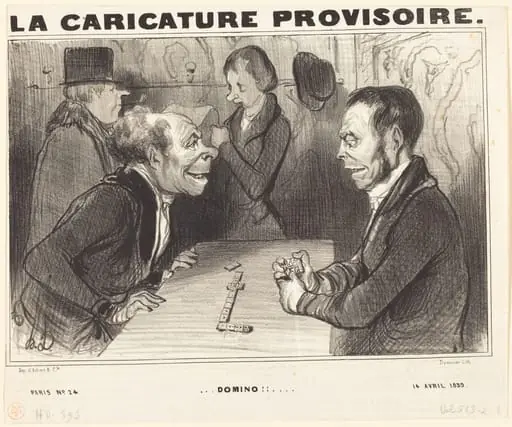 Domino!!
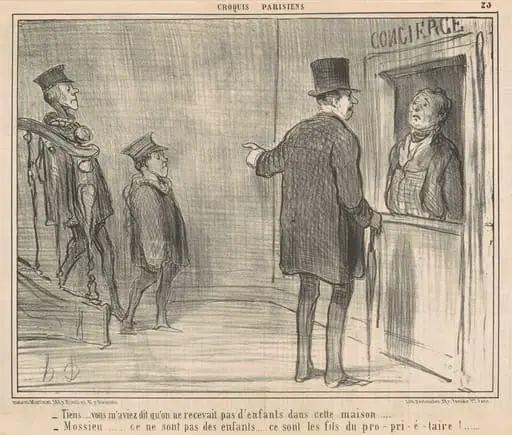 Tiens ... vous m'aviez dit ...
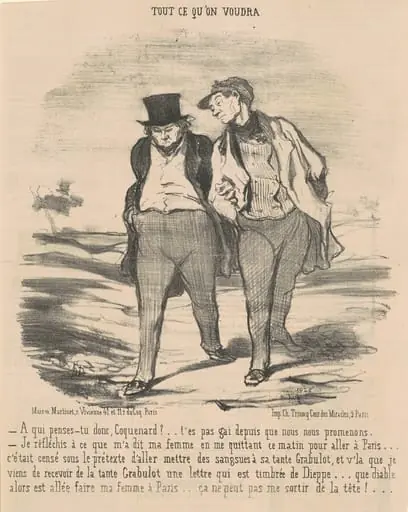 A qui penses-tu donc, coquenard? ...
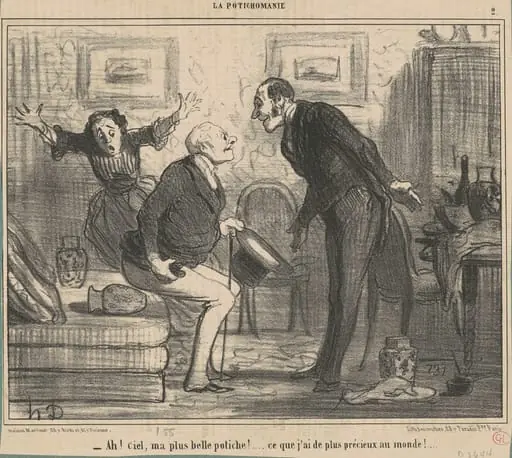 Ah! Ciel, ma plus belle potiche! ...