Artwork
Trois demoiselles à marier (recto); Famille bourgeoise convaincue ... (verso)
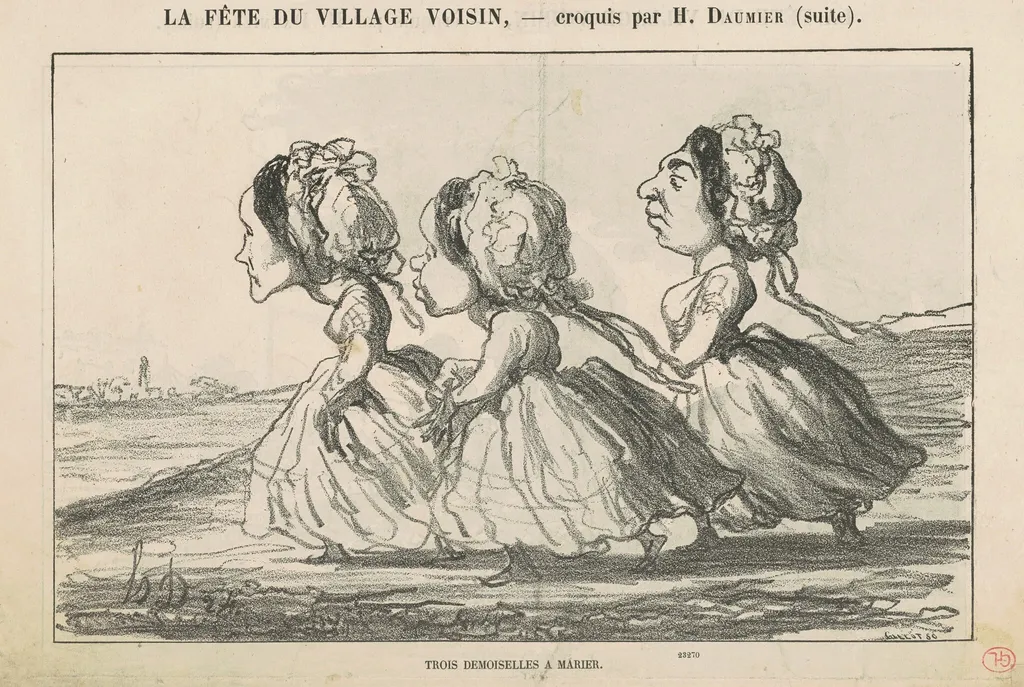
Trois demoiselles à marier (recto); Famille bourgeoise convaincue ... (verso) is an ink print by the Impressionist artist Honoré Daumier. It dates from 1865 and is held in the collection of the National Gallery of Art.
About this work
Overview
Honoré Daumier’s lithograph, titled “Trois demoiselles à marier (recto); Famille bourgeoise convaincue … (verso),” presents a satirical scene of three young women seated side by side and turned toward the left. Rendered in a single, uncomplicated background, the image juxtaposes the figures’ elaborate attire with a modest setting, drawing attention to the social ritual of marriage in mid‑19th‑century France.
Subject & Meaning
The three women, rendered with exaggerated facial expressions and voluminous dresses, embody the pressure placed on unmarried women to secure a suitable match. Daumier’s caricature amplifies their anticipation, hinting at the commodification of marriage and the bourgeois preoccupation with propriety and status.
Technique & Style
Executed as a lithograph, the work relies on bold line work and stark contrast to emphasize the figures’ contours and the satirical tone. Daumier’s use of simplified scenery isolates the subjects, while the exaggerated proportions align with his broader practice of social caricature.
History & Provenance
Created during Daumier’s prolific period of social commentary, the print was produced in the 1850s and circulated among the French press and private collectors. Its dual‑sided title indicates a common practice of pairing related themes on the recto and verso of a single sheet.
Context
The image reflects the mid‑century French bourgeois milieu, where marriage functioned as both a personal and economic contract. Daumier’s work aligns with contemporary satirists who critiqued everyday life, offering a visual counterpart to the period’s literary and journalistic critiques of social conventions.
Artist & collection

Artist
Honoré-Victorin Daumier was a French painter, sculptor, and printmaker, whose many works offer commentary on the social and political life in France, from the Revolution of 1830 to the fall of the Second French Empire in 1870.









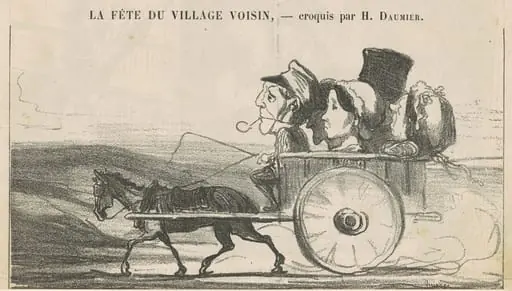 A la campagne, pas de grèves de cochers ... (recto); Villageois économes se contentant ... (verso)
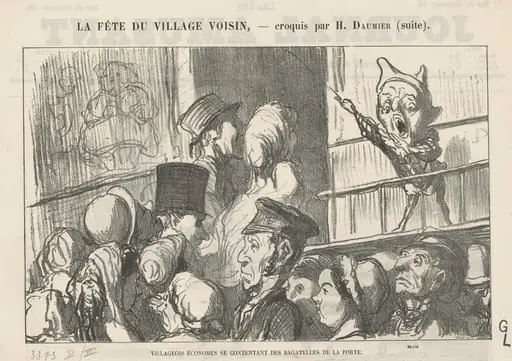 Villageois économes se contentant ... (recto); A la campagne, pas de grèves de cochers ... (verso)
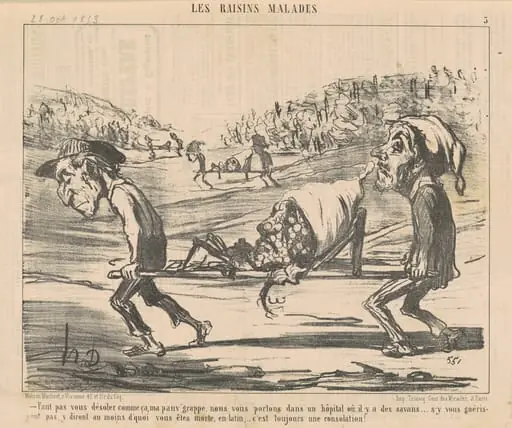 Faut pas vous désoler comme ca ...
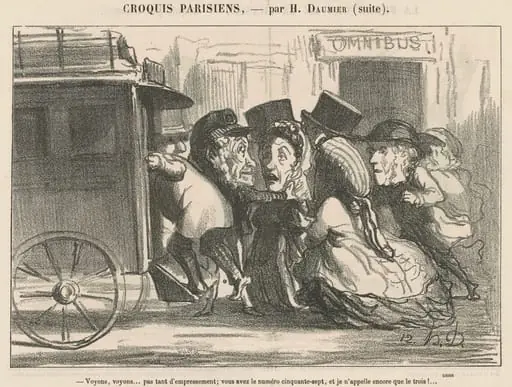 Voyons, voyons ... pas tant d'empressement ...
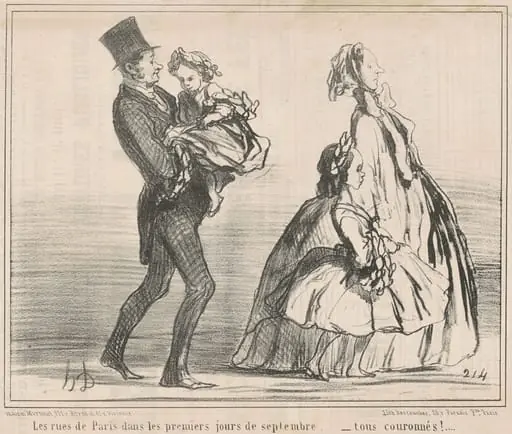 Le rues de Paris dans les premiers jours de Septembre ...
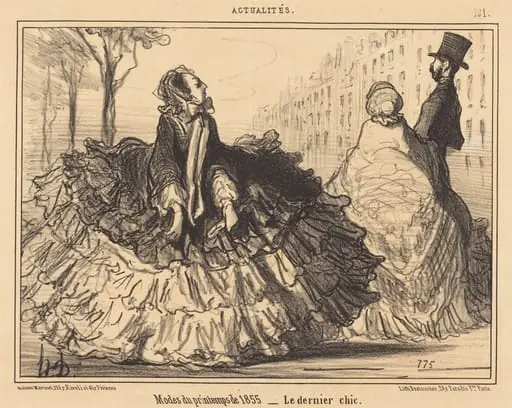 Modes du printemps de 1855
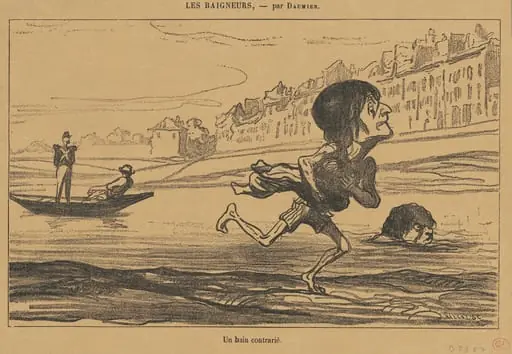 Un bain contrarié
 Les Parisiens ayant trouvé le moyen de circuler ...