Artwork
Trois Pauvres aveugles
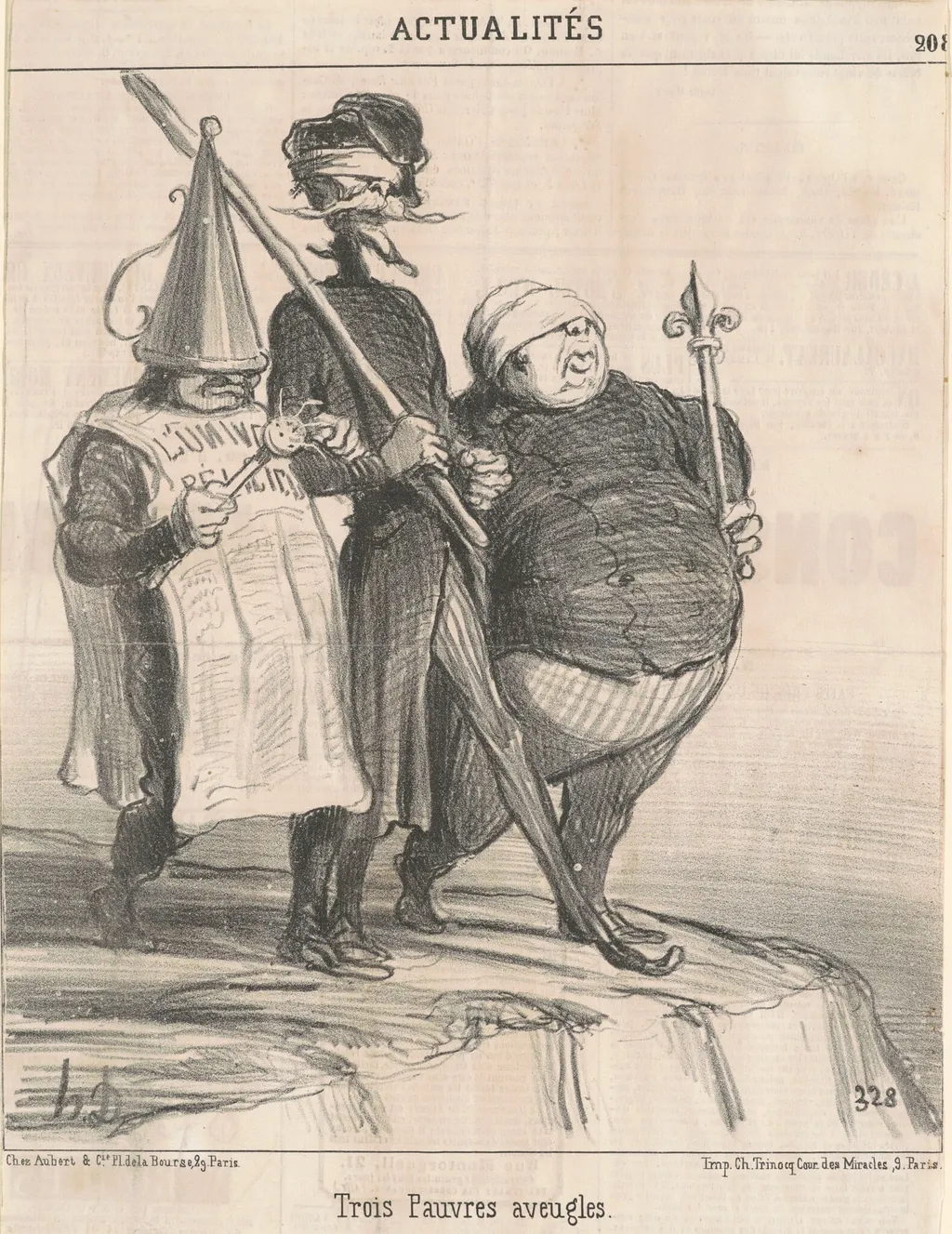
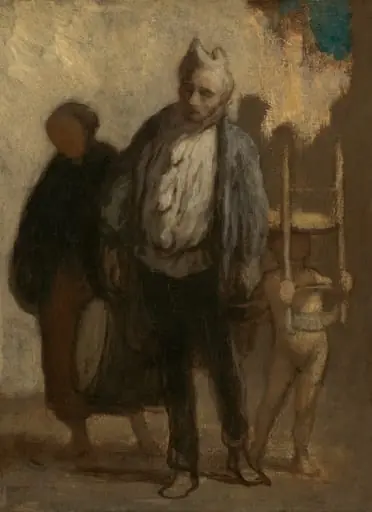
Trois Pauvres aveugles is an ink print by the Impressionist artist Honoré Daumier. It dates from 1851 and is held in the collection of the National Gallery of Art.
About this work
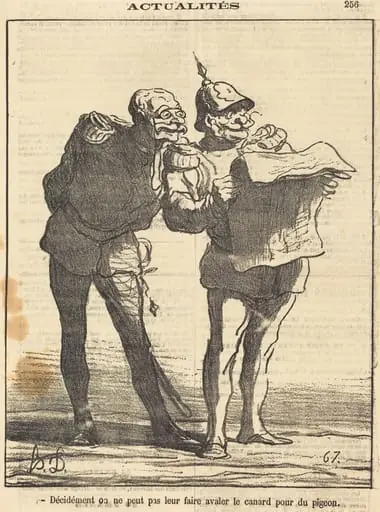
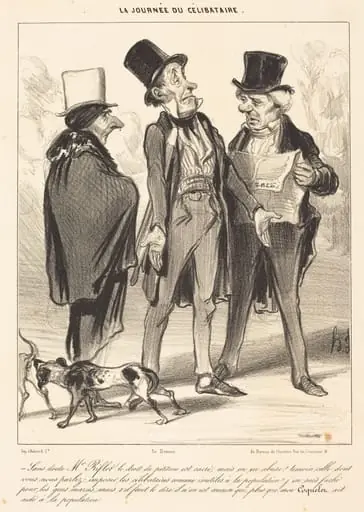
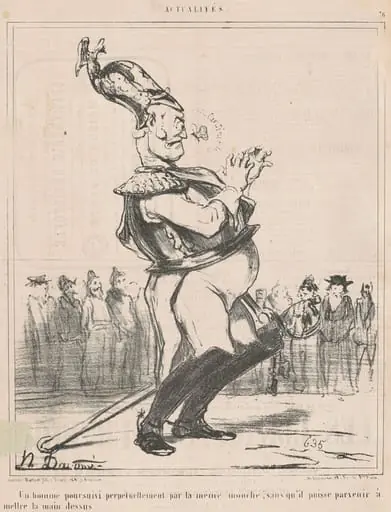
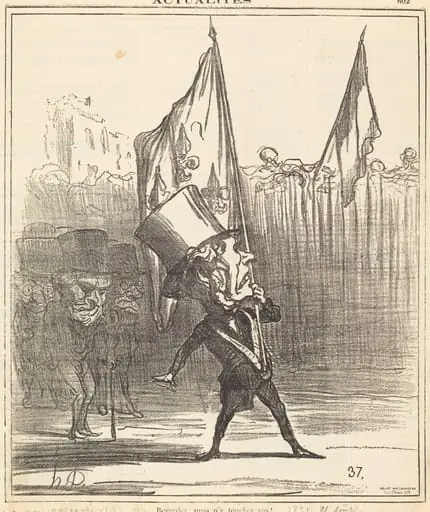
This style of art was common in the 19th century, often used to comment on social issues.
You see three blind men standing near a cliff in this lithograph.
They're wearing different hats, which highlights their blindness.
The scene is humorous and a bit sad at the same time.
The men are shown in a precarious situation, which adds to the humor.
This style of art was common in the 19th century, often used to comment on social issues.
The artist uses satire to make a point about society.
Check out the work of artist: Daumier, Honoré, to see more examples of this style.
Overview
'Trois Pauvres aveugles' is a lithograph by Honoré Daumier, presenting a poignant and humorous scene.
Subject & Meaning
The print depicts three blind men standing at the edge of a cliff, their distinct headwear emphasizing their condition. The precarious situation highlights the challenges faced by the visually impaired.
Technique & Style
The composition showcases Daumier's satirical style, characteristic of 19th-century art used to comment on social issues. The use of satire allows the artist to critique societal norms.
Context
The work reflects the prevalent satirical style of 19th-century art, often employed to address social concerns.
Artist & collection
Artist
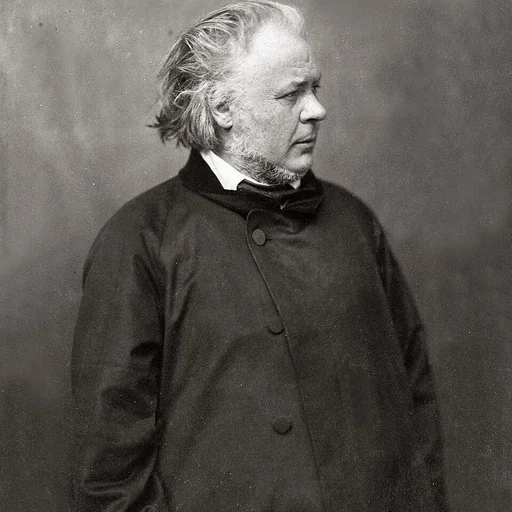
Honoré-Victorin Daumier was a French painter, sculptor, and printmaker, whose many works offer commentary on the social and political life in France, from the Revolution of 1830 to the fall of the Second French Empire in 1870.