Artwork
Un amateur
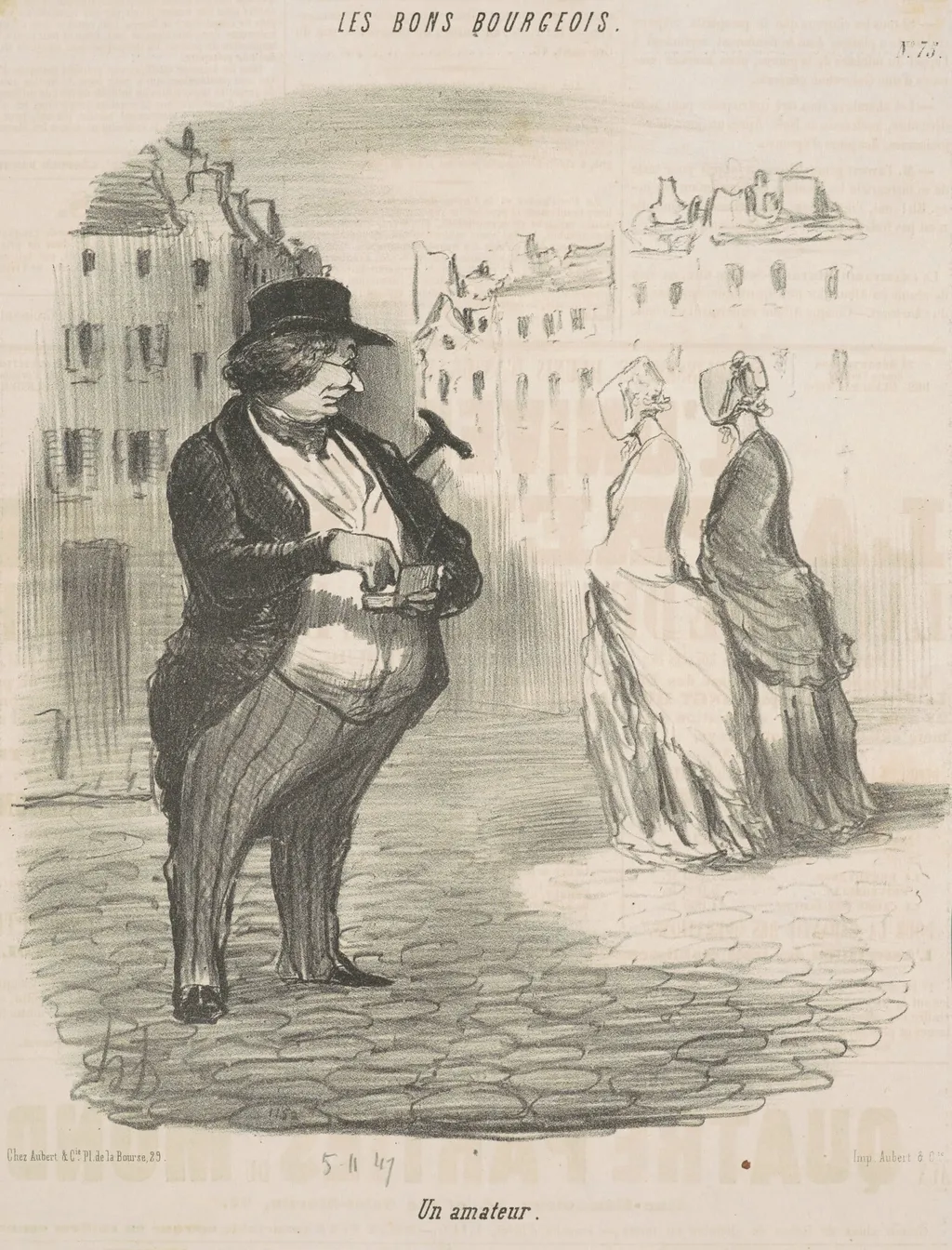
Un amateur is an ink print by the Romanticist artist Honoré Daumier. It dates from 1847 and is held in the collection of the National Gallery of Art.
About this work
Overview
Created in 1847, 'Un amateur' is a lithograph by Honoré Daumier that captures a middle-aged man in formal attire, standing before an urban landscape.
Created in 1847, 'Un amateur' is a lithograph by Honoré Daumier that captures a middle-aged man in formal attire, standing before an urban landscape. The work belongs to a series of prints Daumier produced for periodicals, using the accessibility of lithography to reach a broad audience. Its monochromatic palette and precise linework reflect the technical constraints and expressive potential of the medium.
Subject & Meaning
The figure, dressed in a top hat and suit, peers through a magnifying glass at the city beyond, suggesting an obsessive or superficial engagement with urban life. Daumier uses this gesture to mock the pretensions of the bourgeois class—those who adopt the trappings of connoisseurship without genuine understanding. The magnifying glass becomes a symbol of misplaced scrutiny, reducing the complexity of the city to a mere spectacle.
Technique & Style
Daumier employed lithography to achieve fine, expressive lines and tonal gradations using stone and ink. The image relies on cross-hatching and stippling to model form and texture, with no color beyond shades of gray. His hand is deliberate yet fluid, balancing caricature with observation. The technique allowed for mass reproduction, aligning with his intent to critique society through widely distributed imagery.
History & Provenance
The print was originally published in the French satirical journal Le Charivari, where Daumier regularly contributed social commentary. It was part of a broader body of work produced during the July Monarchy, a period marked by rising middle-class influence and political tension. The print’s circulation among urban readers helped cement Daumier’s reputation as a sharp observer of contemporary life.
Context
In 1840s Paris, lithography became a dominant medium for political and social satire due to its speed and affordability. Daumier’s work responded to the growing cultural anxiety around class performance and the illusion of refinement. His subjects—often ordinary citizens adopting aristocratic mannerisms—highlighted the disconnect between appearance and substance in an era of rapid social change.
Legacy
Daumier’s lithographs, including 'Un amateur,' influenced later generations of illustrators and cartoonists by demonstrating how graphic art could convey complex social critique. His ability to merge observational realism with biting irony set a precedent for visual journalism. Though created for ephemeral publication, these works are now recognized for their enduring insight into the psychology of modern urban life.
Artist & collection

Artist
Honoré-Victorin Daumier was a French painter, sculptor, and printmaker, whose many works offer commentary on the social and political life in France, from the Revolution of 1830 to the fall of the Second French Empire in 1870.









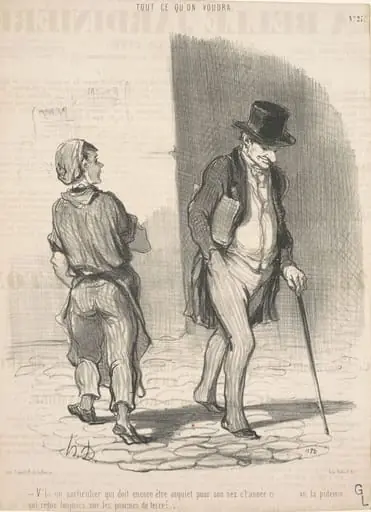 V'la un particulier qui doit ...être inquiet ...
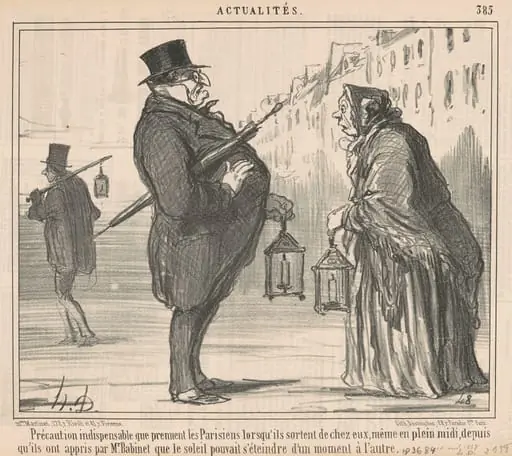 Précaution indispensable que prennent les Parisiens ...
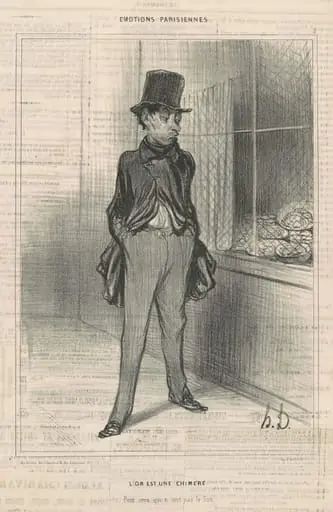 L'or est une chimère
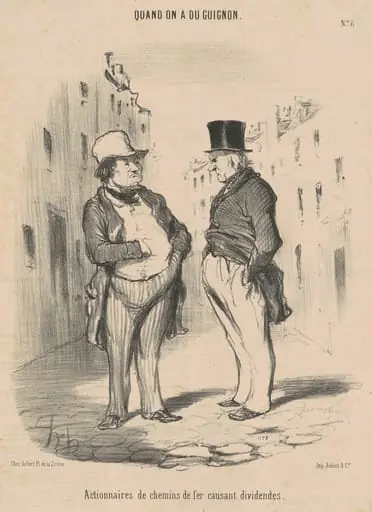 Actionnaires de chemins de fer causant dividendes
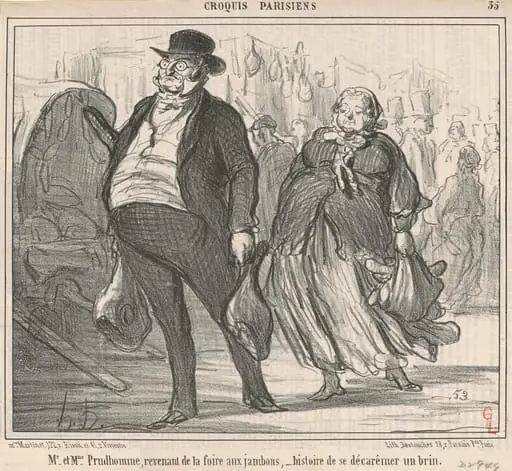 Mr et Mme Prudohomme revenant de la foire ...
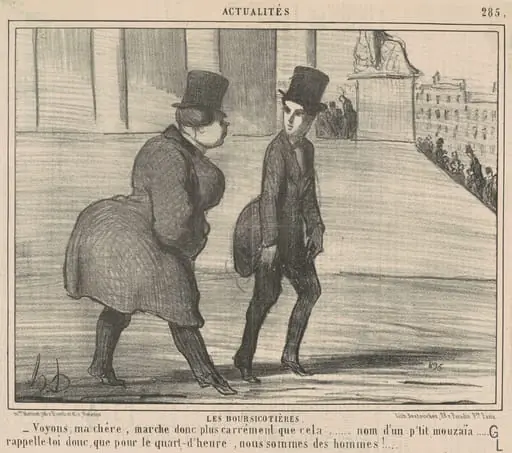 Le boursicotières ... Voyons, ma chère ...
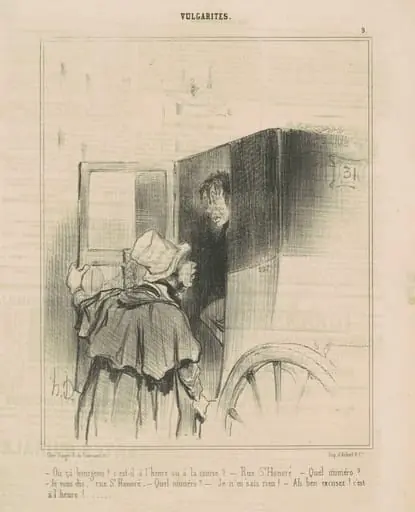 Ou ça bourgeois? C'est-il a l'heure ou ...
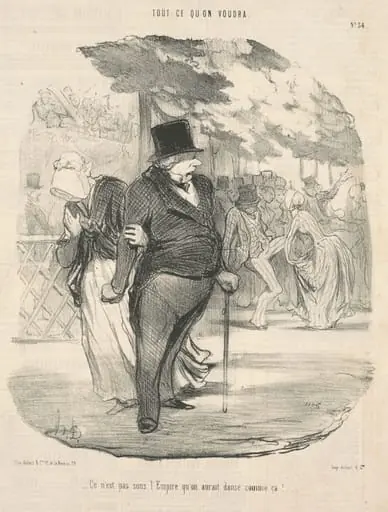 Ce n'est pas sous l"empire qu'on aurait dansé comme ca! ...
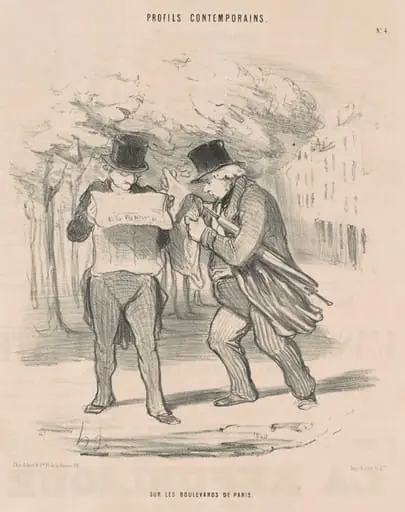 Sur les boulevards de Paris
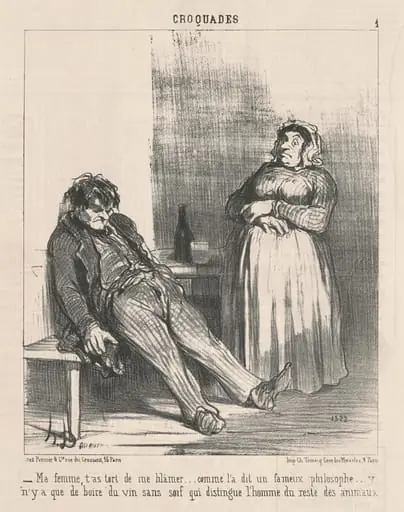 Ma femme, t'as tort de me blamer ...