Artwork
Un Bonapartiste nouvellement converti
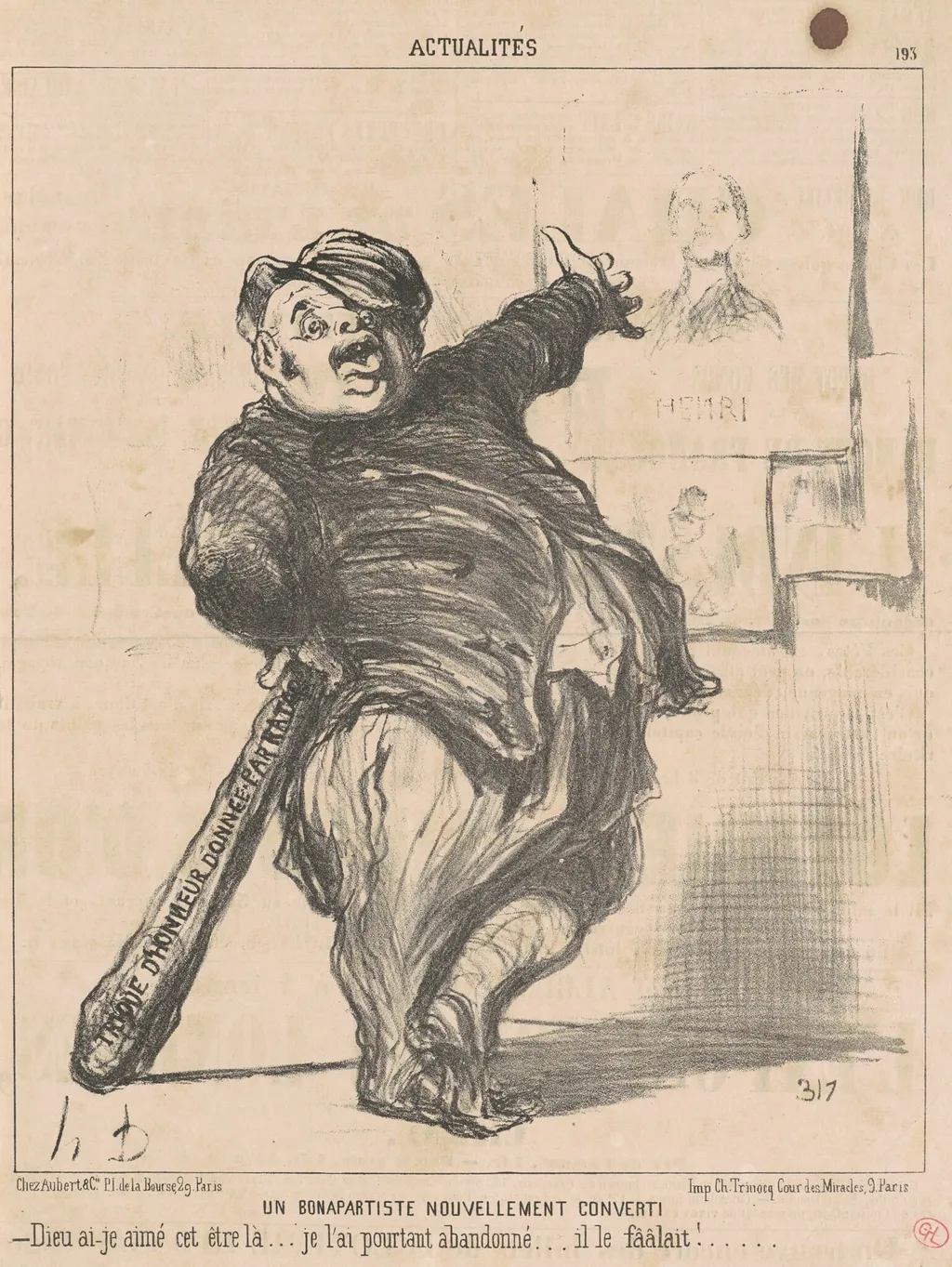
Un Bonapartiste nouvellement converti is an ink print by the Impressionist artist Honoré Daumier. It dates from 1851 and is held in the collection of the National Gallery of Art.
About this work
Overview
The composition is set against a loosely rendered backdrop populated with faint portrait sketches, underscoring the work’s satirical tone.
Honoré Daumée’s lithograph titled *Un Bonapartiste nouvellement converti* presents a solitary figure caught mid‑gesture, his arm extended as he addresses the viewer. The man clutches a staff bearing a mock‑inscription that reads “RUMESSON D’HONNEUR, BONNE ETAT MA,” a playful jab at notions of honor. The composition is set against a loosely rendered backdrop populated with faint portrait sketches, underscoring the work’s satirical tone.
Subject & Meaning
The central character embodies a newly converted Bonapartist, a reference to the shifting political allegiances of mid‑19th‑century France. By exaggerating the figure’s pose and attaching a tongue‑in‑cheek label to his staff, Daumier critiques the superficiality of such conversions and the pretensions of honor that often accompanied them, inviting viewers to question the sincerity of political loyalty.
Technique & Style
Executed as a lithograph, the image relies on bold, gestural lines and a limited tonal range to convey immediacy. Daumier’s characteristic sketchy handling is evident in the background portraits, which remain indistinct, allowing the main figure to dominate the visual field. The use of text on the staff integrates graphic and textual satire, a hallmark of his printmaking practice.
Context
Created during a period of intense political turbulence following the 1848 revolutions, the print reflects Daumier’s ongoing engagement with contemporary French politics. The reference to Bonapartism points to the lingering influence of Napoleon’s legacy, while the satirical treatment aligns with the artist’s broader body of work that lampooned public figures and shifting regimes.
Legacy
While not among Daumier’s most widely reproduced works, this lithograph exemplifies his skill in merging caricature with social commentary. It continues to be cited in studies of 19th‑century political satire, illustrating how visual humor served as a vehicle for critique in an era of rapid ideological change.
Artist & collection
Artist
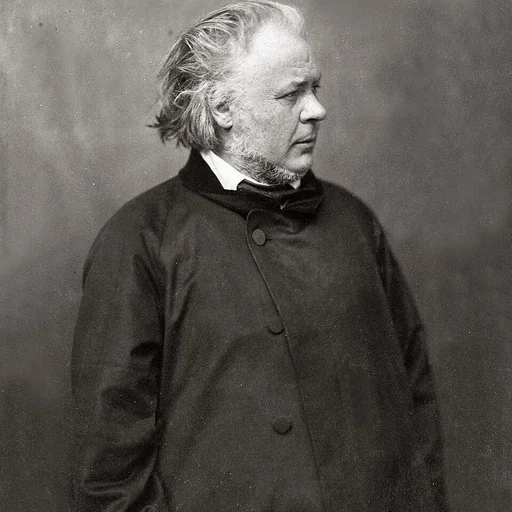
Honoré-Victorin Daumier was a French painter, sculptor, and printmaker, whose many works offer commentary on the social and political life in France, from the Revolution of 1830 to the fall of the Second French Empire in 1870.

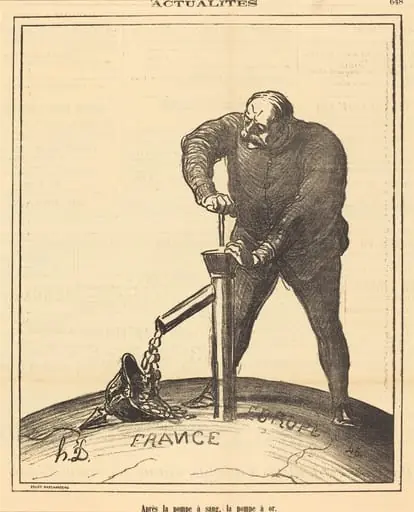 Après la pompe a sang, la pompe à or
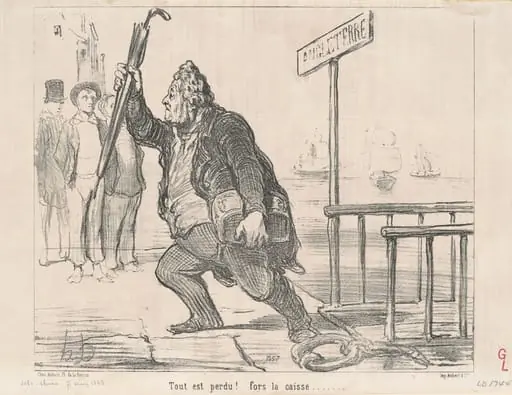 Tout est perdu! Fors la caisse
![Aux Champs-Elysées, Ratapoil. Par suite d'une délibération philantropique [sic] du Comité du dix Décembre...à deux sous à club...deux sous..., by Honoré Daumier](https://artifactworldgallery.com/img/honore-daumier--aux-champs-elysees-ratapoil-par-suite-d-une-deliberation-phi--62ca0cc774af3945-w320.webp) Aux Champs-Elysées, Ratapoil. Par suite d'une délibération philantropique [sic] du Comité du dix Décembre...à deux sous à club...deux sous...
Aux Champs-Elysées, Ratapoil. Par suite d'une délibération philantropique [sic] du Comité du dix Décembre...à deux sous à club...deux sous...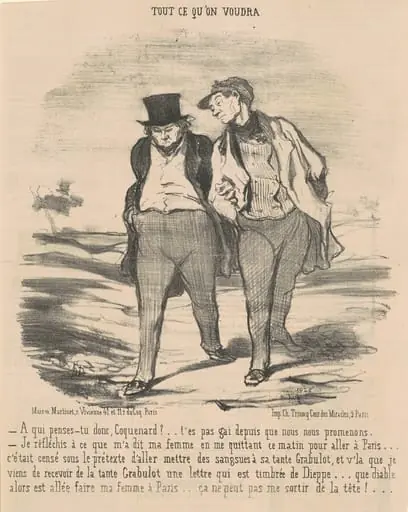 A qui penses-tu donc, coquenard? ...
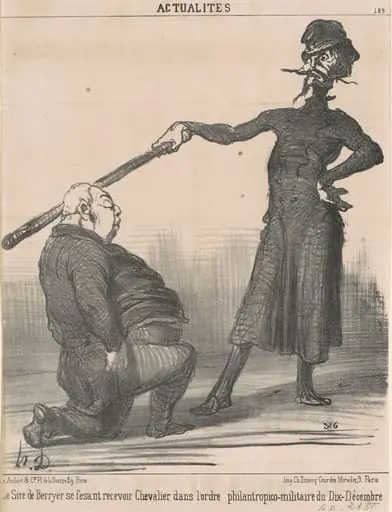 Le sire de Berryer ...Chevalier ...
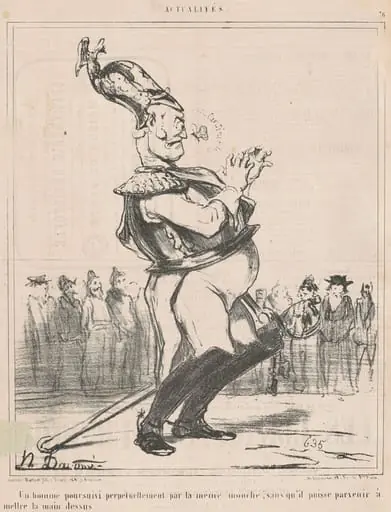 Un homme poursuivi ...
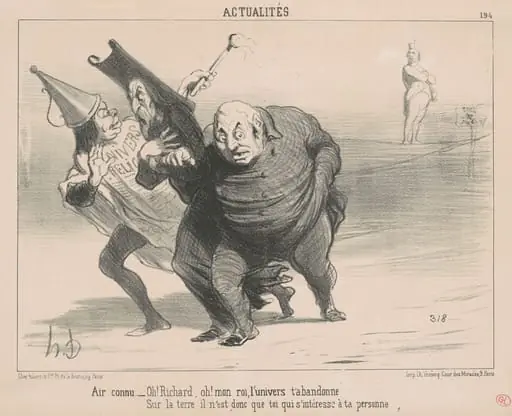 Air connu: Oh! Richard, Oh! Mon roi ...
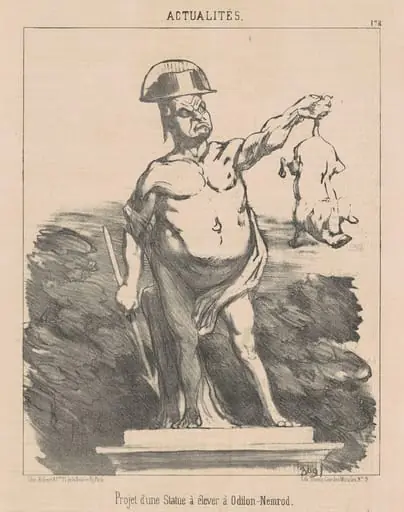 Projet d'une statue ... a Odilon-Nemrod
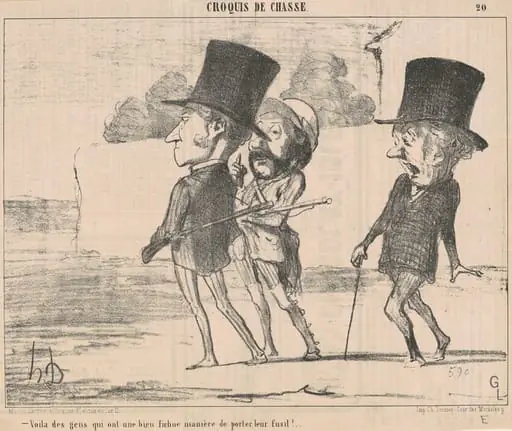 Voila des gens ont une ... fichue maniére ...