Artwork
Après la pompe a sang, la pompe à or
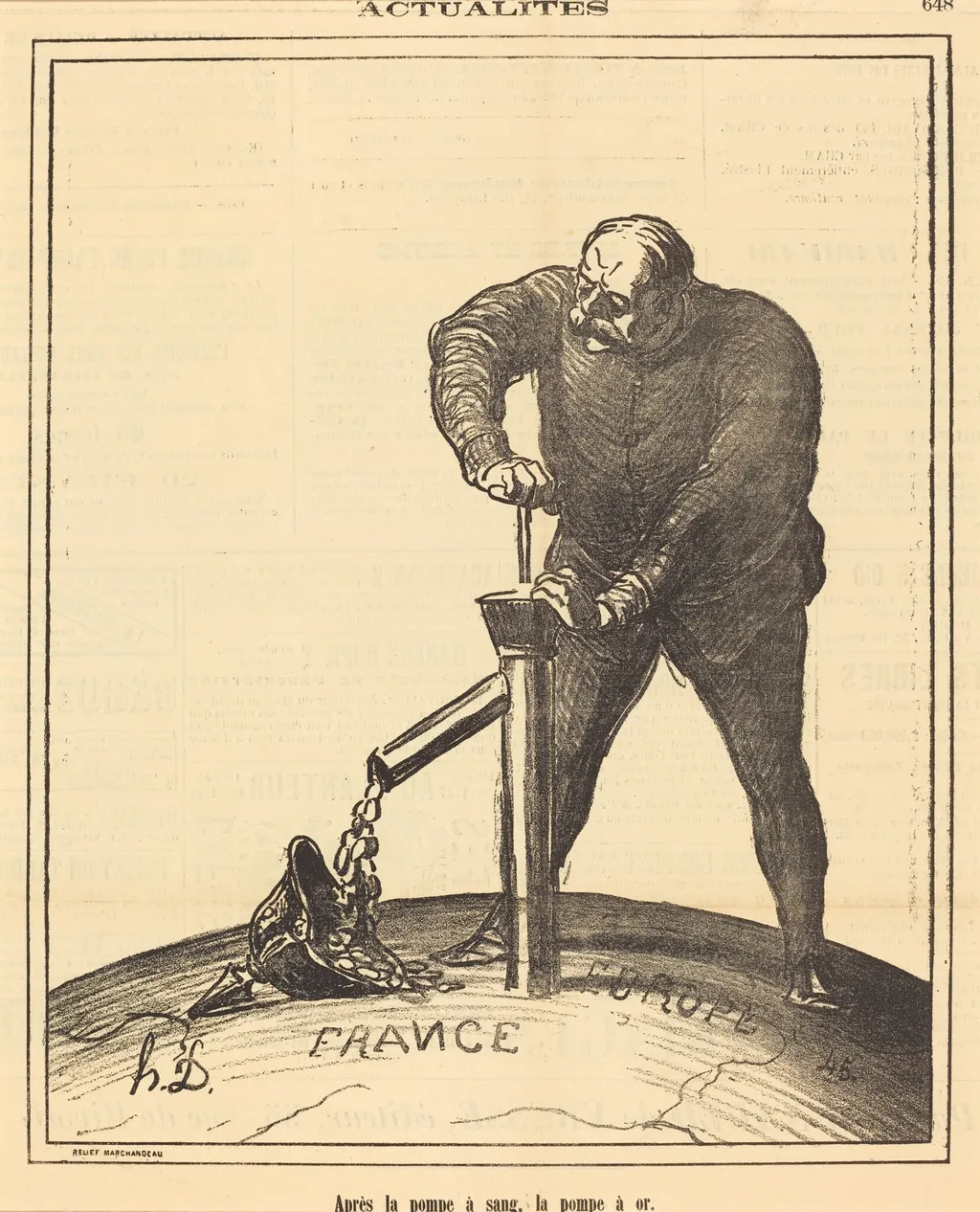
Après la pompe a sang, la pompe à or is a print by the Impressionist artist Honoré Daumier. It dates from 1871 and is held in the collection of the National Gallery of Art.
About this work
Overview
Its modest materials and ephemeral format reflect its origin in daily journalism, intended for immediate public consumption rather than long-term preservation.
Created in 1871, this gillotage on newsprint by Honoré Daumier is a political satire responding to the turbulent aftermath of the Franco-Prussian War and the collapse of the Second Empire. Executed in a rapid, ink-based technique common to newspaper illustration, the print targets the shift from violent political upheaval to financial exploitation. Its modest materials and ephemeral format reflect its origin in daily journalism, intended for immediate public consumption rather than long-term preservation.
Subject & Meaning
The image depicts a weary man operating a pump whose bucket, instead of water, draws up a boot labeled 'France.' The boot is chained to the earth, suggesting the nation is being drained of its substance—its people, resources, or sovereignty. The title, 'After the Blood Pump, the Gold Pump,' implies a transition from revolutionary violence to systemic economic extraction. The label 'Actualités' frames the scene as current news, reinforcing its urgency and topicality.
Technique & Style
Daumier employed gillotage, a print process using hand-drawn lithographic plates transferred to newsprint, allowing for swift reproduction in newspapers. The lines are loose and expressive, capturing movement and fatigue with minimal detail. The composition is stark and symbolic, relying on visual metaphor rather than realism. The use of cheap paper and rapid execution underscores the work’s journalistic purpose and its accessibility to a broad, non-elite audience.
History & Provenance
Produced during the early days of the Paris Commune, the print emerged from a climate of political instability and public disillusionment. Daumier, long associated with *Le Charivari*, had spent decades using print media to critique authority. Though the exact publication context of this piece remains uncertain, its style and themes align with his late-period work, which grew increasingly somber as his political hopes faded. Few original impressions survive, reflecting the disposable nature of such satirical prints.
Context
Daumier’s career spanned revolutions, empires, and republics, each reshaping France’s social order. By 1871, the promise of democratic reform had given way to economic inequality and elite consolidation of power. His imagery consistently exposed the hypocrisy of those in authority, whether monarchs, lawyers, or financiers. This print fits within a broader tradition of French caricature that used humor and grotesque symbolism to challenge power, especially when direct political speech was suppressed.
Legacy
Though created for immediate circulation, Daumier’s prints like this one gained retrospective significance as documents of social critique. His ability to distill complex political realities into single, resonant images influenced later generations of cartoonists and social realists. The work remains a quiet testament to the power of visual satire in times of crisis—unadorned, unflinching, and rooted in the lived experience of ordinary people under strain.
Artist & collection
Artist
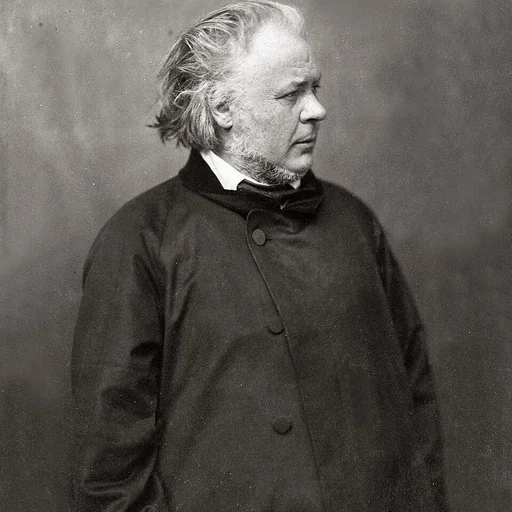
Honoré-Victorin Daumier was a French painter, sculptor, and printmaker, whose many works offer commentary on the social and political life in France, from the Revolution of 1830 to the fall of the Second French Empire in 1870.

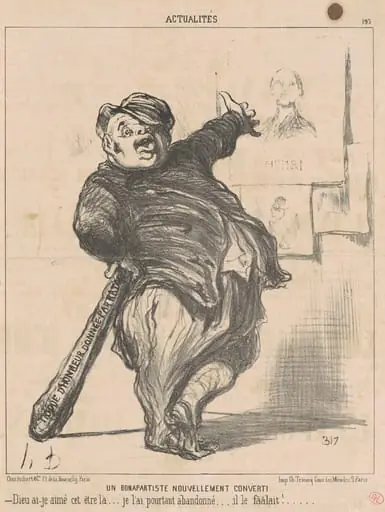 Un Bonapartiste nouvellement converti
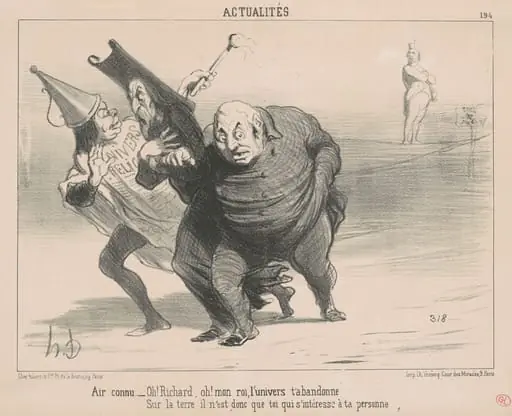 Air connu: Oh! Richard, Oh! Mon roi ...
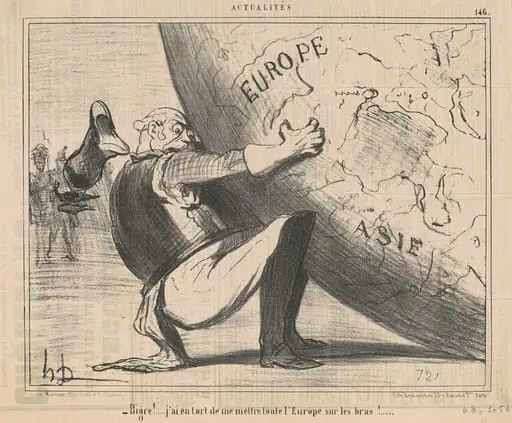 Bigre! ... j'ai eu tort de me mettre ...
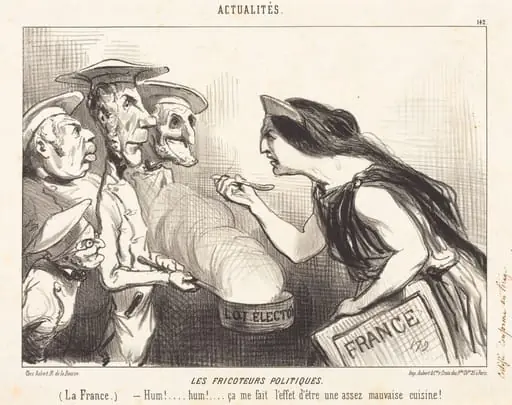 Les Fricoteurs politiques
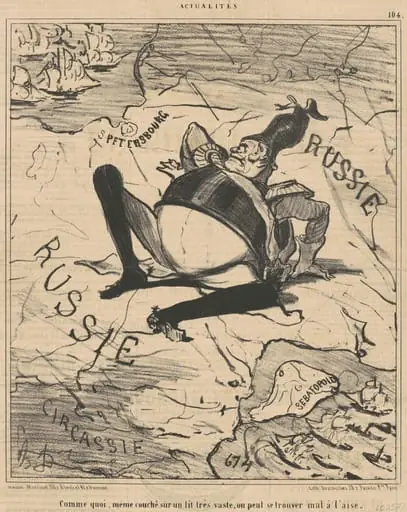 Comme quoi ... sur un lit três vaste ,,,
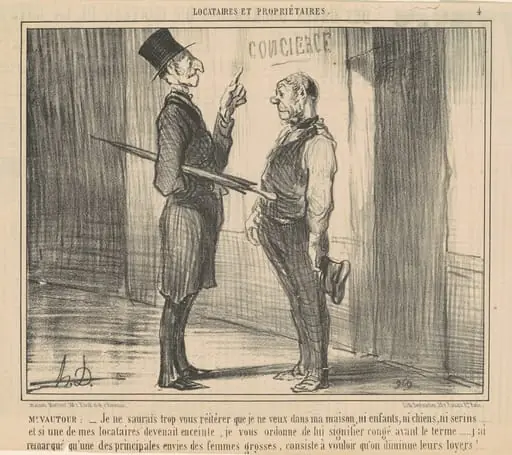 M. Vautour: Je ne saurais trop ...
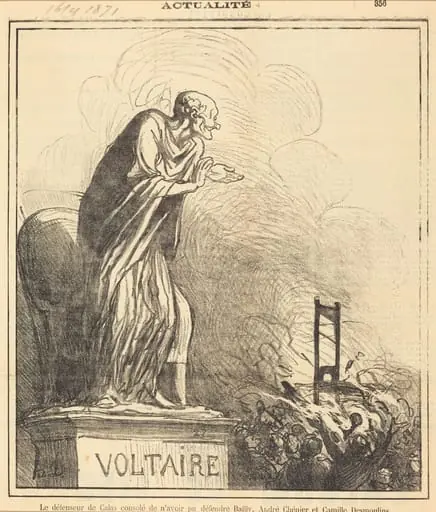 Le défenseur de Calas consolé...
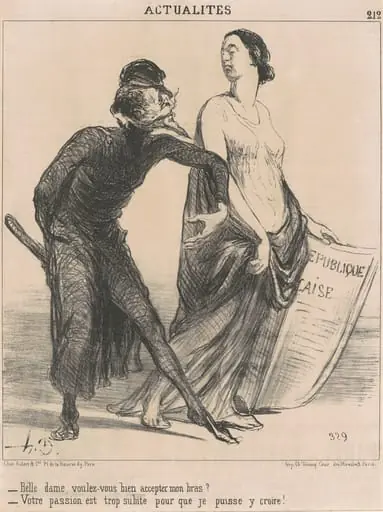 Belle dame voulez-vous ... accepter mon bras?
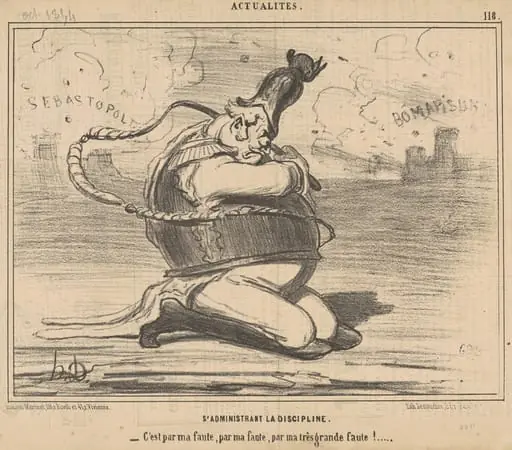 S'administrant la discipline ...
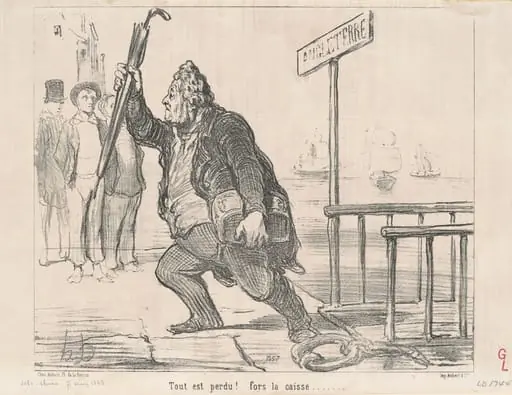 Tout est perdu! Fors la caisse
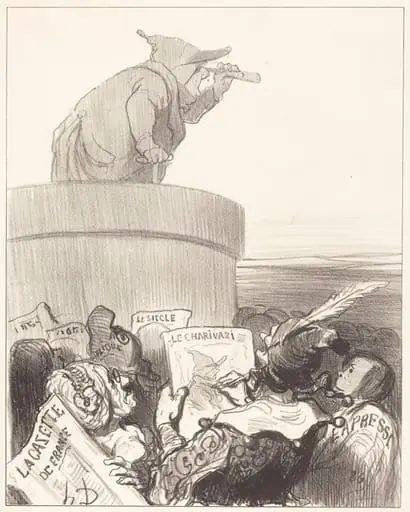 Le Constitutionnel contemplant l'horizon politique
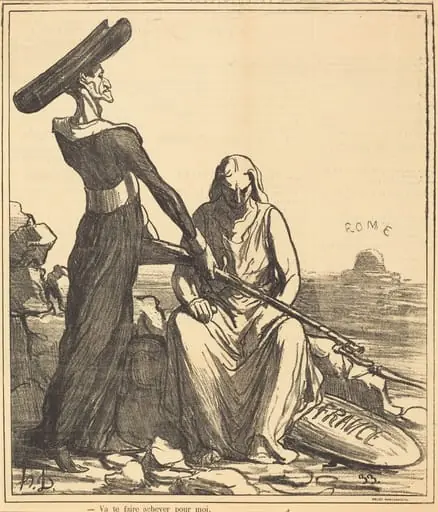 Va te faire achever pour moi