Artwork
Un cabriolet ayant une facheuse ressemblance ...
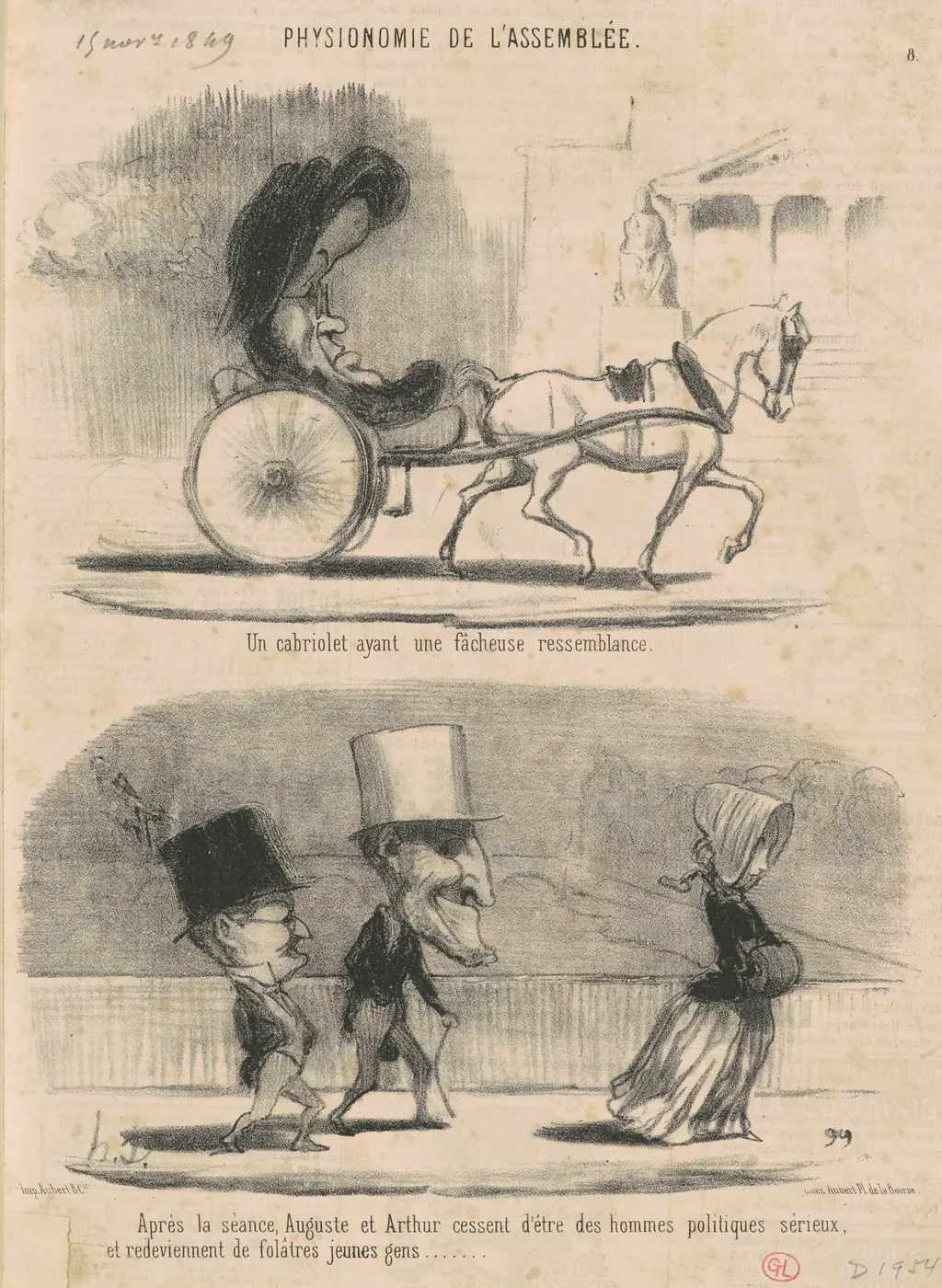
Un cabriolet ayant une facheuse ressemblance ... is an ink print by the Romanticist artist Honoré Daumier. It dates from 1849 and is held in the collection of the National Gallery of Art.
About this work
The print shows a funny cabriolet (a light carriage) with three people inside.
The print shows a funny cabriolet (a light carriage) with three people inside. One man’s head looks like the horse pulling the cart. The woman beside him leans away, as if she’s surprised.
Daumier loved poking fun at society. This 1849 lithograph laughs at the awkward mix of people and carriages. The exaggerated shapes and faces make the joke clear.
If you like this style, try another Daumier, Honoré.
Overview
This 1849 lithograph by Honoré Daumier presents a humorous scene of a cabriolet (a light carriage) with three occupants, characterized by exaggerated caricatures that highlight their distinctive features and playful interactions.
Subject & Meaning
The print humorously observes a comedic similarity between a man's head and the horse pulling the carriage, while a woman's surprised reaction adds to the lighthearted satire, poking fun at the societal norms of the time.
Technique & Style
Daumier employs his signature use of exaggerated shapes and facial expressions to convey the comedic effect, ensuring the satire is immediately discernible.
History & Provenance
Created in 1849, this lithograph is a product of Daumier's prolific period of social commentary through caricature.
Context
Part of Daumier's broader body of work critiquing 19th-century French society, this piece reflects his penchant for using humor to comment on everyday life and the people in it.
Legacy
This lithograph remains representative of Daumier's influential caricature style, often cited as an example of his ability to blend social commentary with accessible humor.
Artist & collection

Artist
Honoré-Victorin Daumier was a French painter, sculptor, and printmaker, whose many works offer commentary on the social and political life in France, from the Revolution of 1830 to the fall of the Second French Empire in 1870.









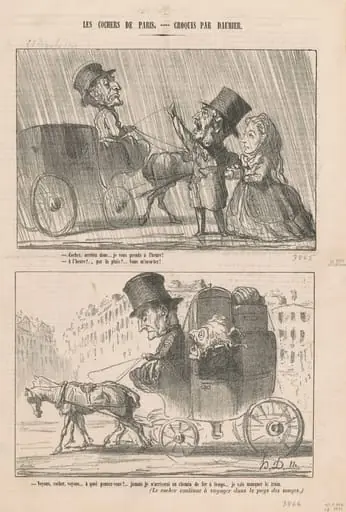 Cocher, arrêtez donc
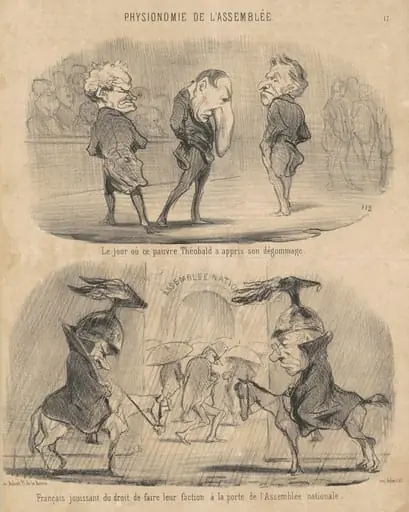 Le jour ou ... Théobald a appris son dégommage
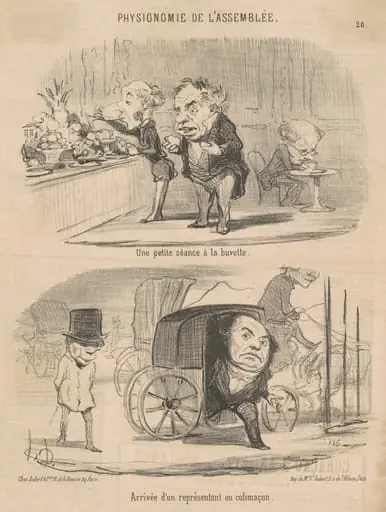 Une petite séance a la buvette
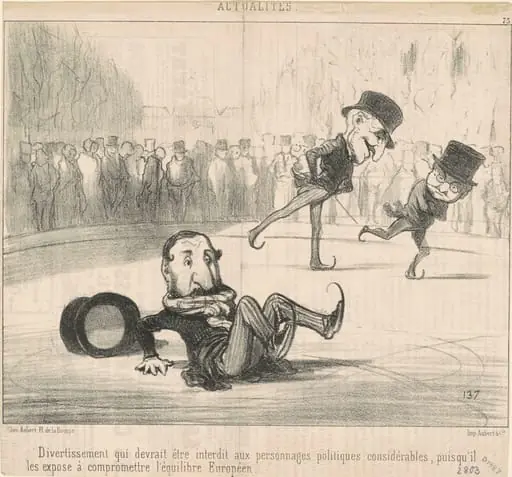 Divertissement qui devrait être interdit ...
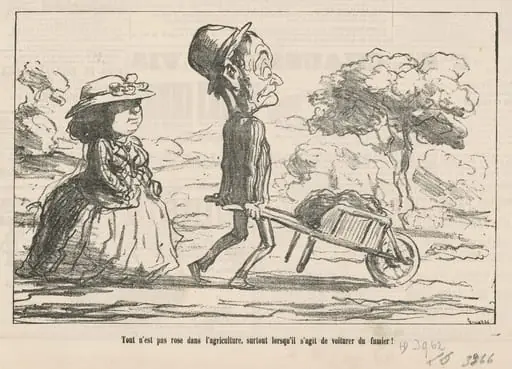 Tout n'est pas rose dans l'agriculture ...
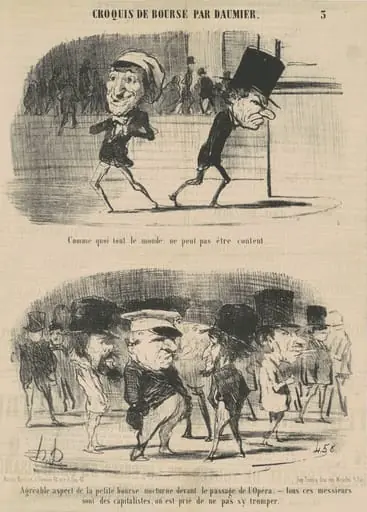 Comme quoi tout le monde de peut ...
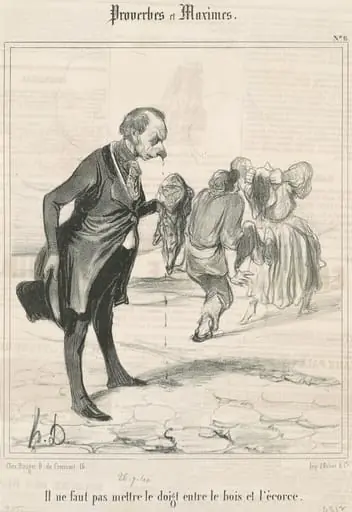 Il ne faut pas mettre le doigt ...
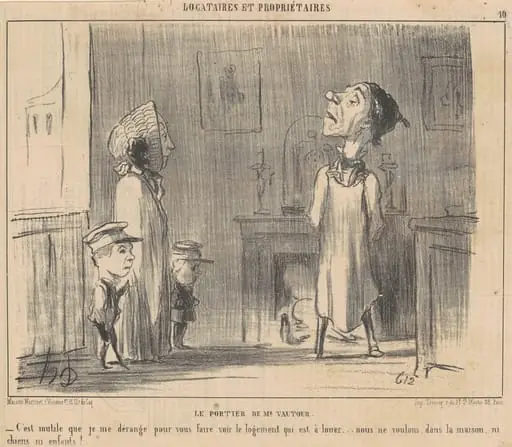 Le portier de Mr Vautour
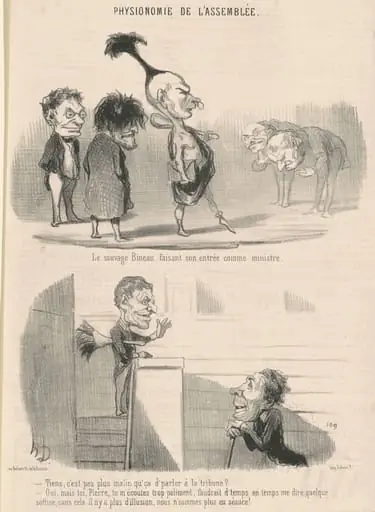 Le sauvage bineau faisant son entrée