Artwork
Un jour de fête et de bretelles
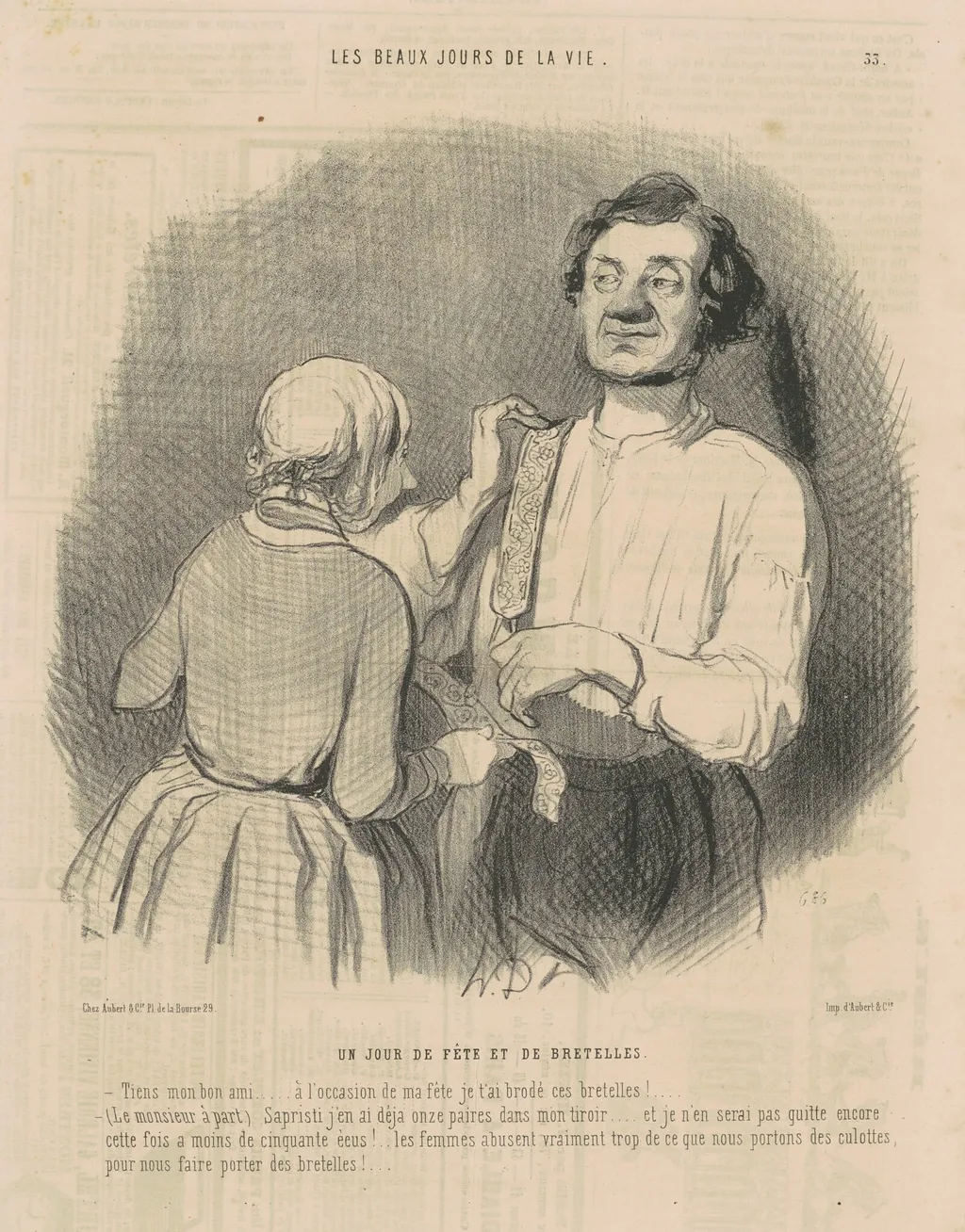
Un jour de fête et de bretelles is an ink print by the Romanticist artist Honoré Daumier. It dates from 1844 and is held in the collection of the National Gallery of Art.
About this work
Overview
Honoré Daumier’s 1844 lithograph titled *Un jour de fête et de bretelles* captures a brief, intimate exchange between two men. One figure is seen adjusting the embroidered suspenders of the other, their proximity suggesting a quiet, personal moment drawn from everyday life in mid‑nineteenth‑century France.
Subject & Meaning
The work foregrounds a simple act of assistance, emphasizing the subtle bonds that link ordinary people. By focusing on a private gesture rather than public spectacle, Daumée highlights the tenderness and mutual care that can exist within the routine interactions of the period’s urban populace.
Technique & Style
Executed in lithography, the image relies on delicate line work and nuanced shading to convey texture—particularly the embroidered detail of the suspenders—and to model the figures’ forms. The soft gradations of tone lend the scene a naturalistic quality, steering away from the caricatured exaggeration common in many of Daumier’s satirical prints.
History & Provenance
Created in 1844, the lithograph belongs to a prolific phase in Daumier’s career when he explored the lives of common citizens. While the piece was not part of a larger series, it reflects his broader interest in documenting contemporary social scenes, and it has since been held in several public collections dedicated to 19th‑century French art.
Context
During the 1840s, French society was undergoing rapid urbanization and shifting class relations. Daumier’s focus on a modest, domestic interaction offers a counterpoint to the grand historical narratives of the era, aligning his work with a growing realist impulse to depict the lived experience of the working and middle classes.
Artist & collection
Artist
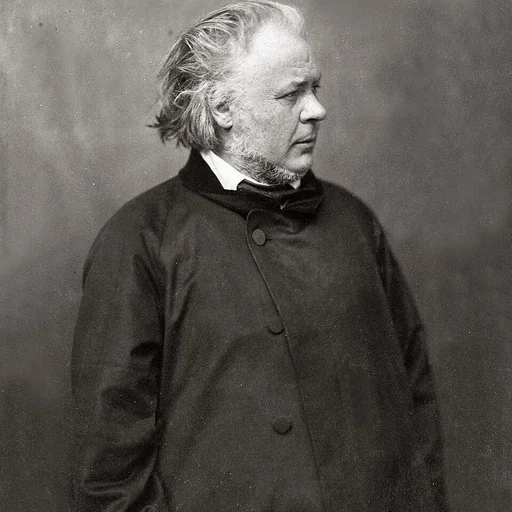
Honoré-Victorin Daumier was a French painter, sculptor, and printmaker, whose many works offer commentary on the social and political life in France, from the Revolution of 1830 to the fall of the Second French Empire in 1870.