Artwork
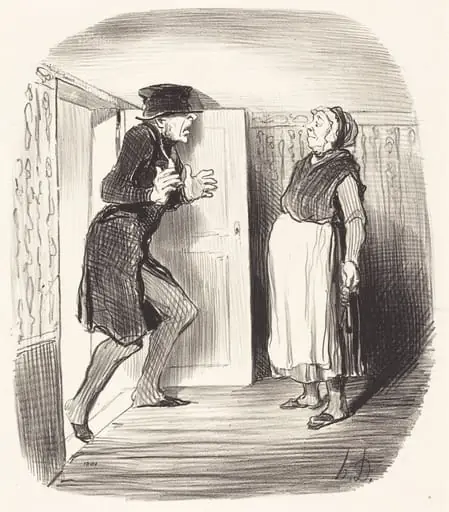
Un Locataire qui paie exactement son terme
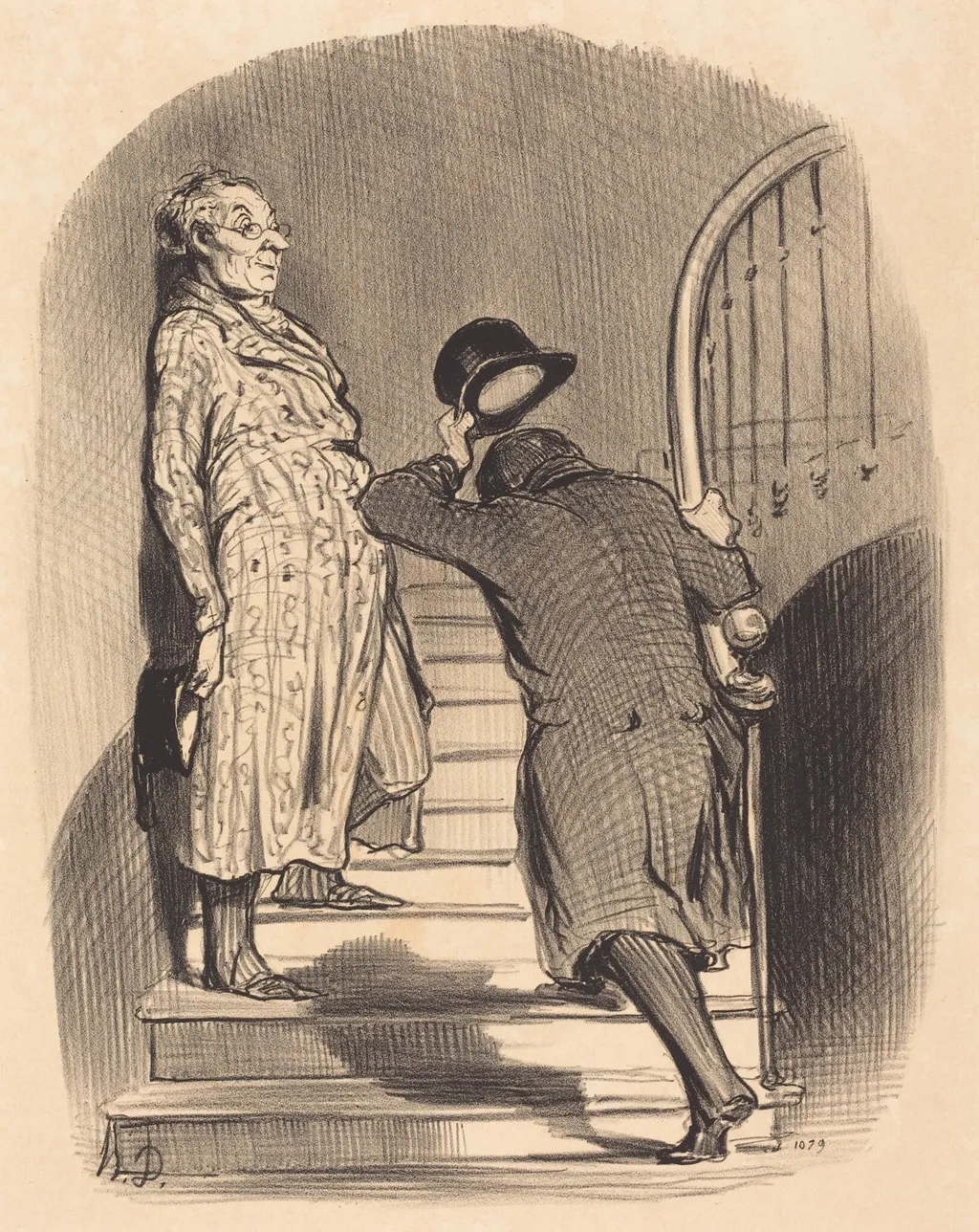
Un Locataire qui paie exactement son terme is an ink print by the Romanticist artist Honoré Daumier. It dates from 1847 and is held in the collection of the National Gallery of Art.
About this work
Overview
Created in 1847, this lithograph by Honoré Daumier captures a brief encounter between two men on a staircase. One, dressed in a long coat and top hat, grips the railing while the other, in a flowing robe, stands on the landing. The composition is lit by a subtle glow that isolates the figures against a darker backdrop, emphasizing the moment of exchange.
Subject & Meaning
The work portrays a tense, perhaps contractual, interaction: the formally attired gentleman appears to be paying his rent or settling a debt, as suggested by his focused gaze toward the robed figure. Daumier’s choice of everyday characters reflects his interest in the ordinary financial obligations and social negotiations of Parisian life.
Technique & Style
Executed in lithography, the print exploits the medium’s capacity for fine line work and tonal variation. Daumier renders the textures of fabric and the architectural steps with meticulous detail, while the contrast between illuminated steps and surrounding shadow creates a sense of depth uncommon in many of his caricatures.
History & Provenance
The image belongs to Daumier’s prolific series of satirical prints produced for periodicals such as *La Caricature* and *Le Charivari*. Though originally published as a newspaper illustration, the lithograph entered the art market in the late 19th century and has since been held in several European public collections.
Context
Mid‑19th‑century France was marked by political upheaval and the rise of a bourgeois class confronting new fiscal responsibilities. Daumier, a self‑identified republican, used his prints to comment on these social shifts, often focusing on the mundane yet telling moments of civic life that revealed broader economic pressures.
Artist & collection

Artist
Honoré-Victorin Daumier was a French painter, sculptor, and printmaker, whose many works offer commentary on the social and political life in France, from the Revolution of 1830 to the fall of the Second French Empire in 1870.









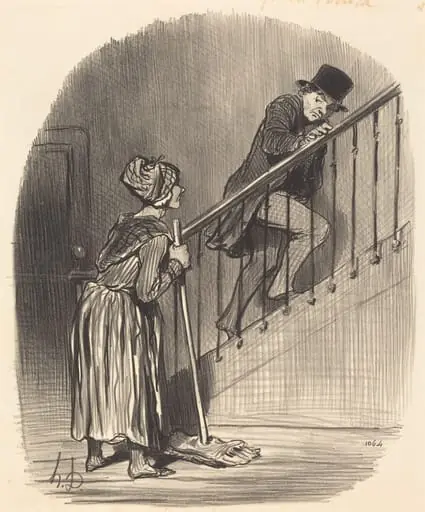 Ma femme est-elle a la maison?
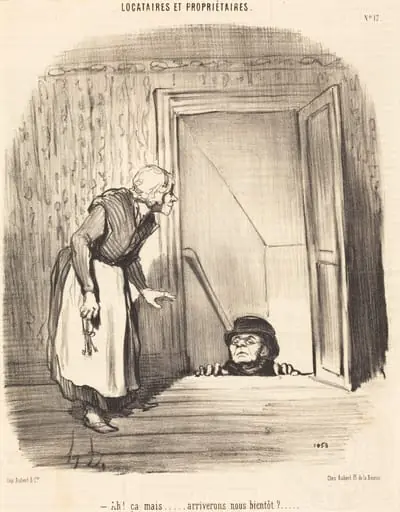 Ah! ça mais... arriverons-nous bientôt?
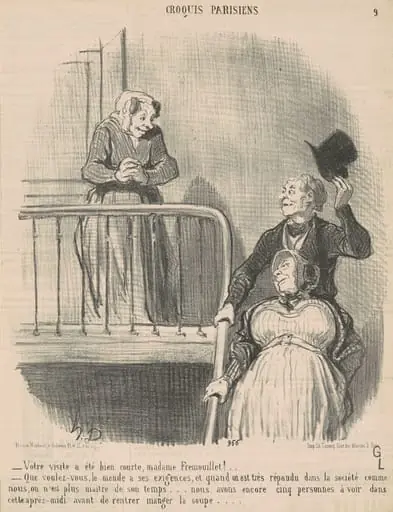 Votre visite a été bien courte ...
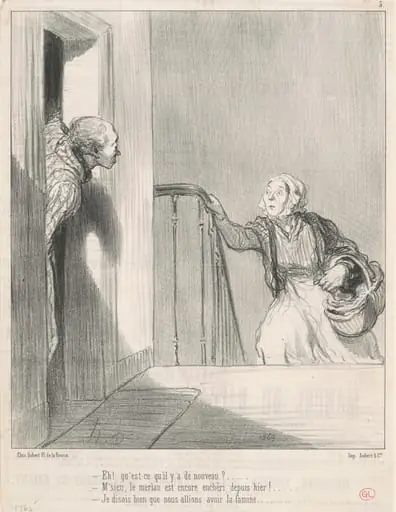 Eh! Qu'est-ce qu'il y a de nouveau? ...
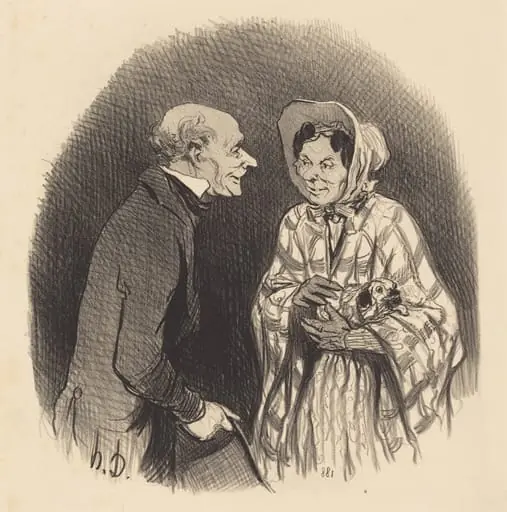 Une Nouvelle connaissance
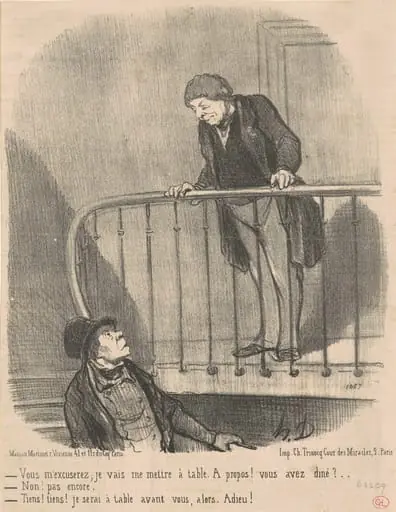 Vous m'excuserez: je vais me mettre a table ...
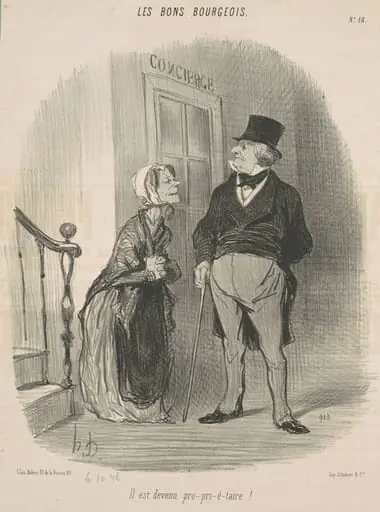 Il est devenu pro-pri-é-taire!
 Inconvénient de visiter sans précaution un entresol...
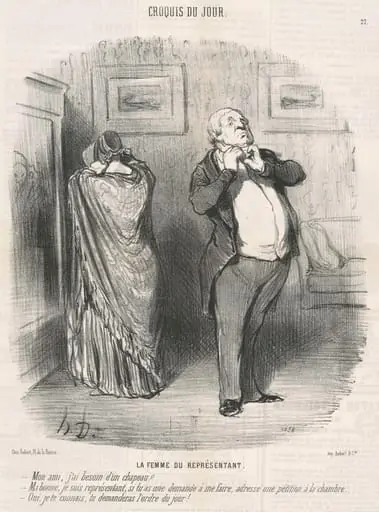 La femme du représentant
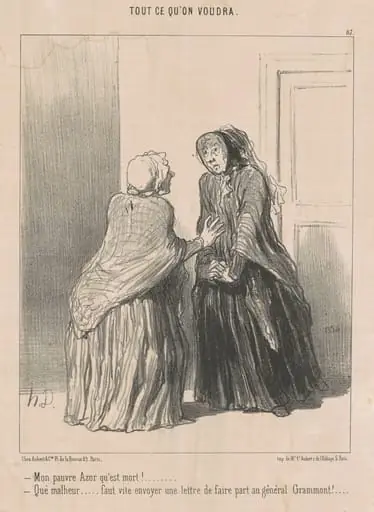 Mon pauvre azor qu'est mort! ...