Artwork
Ma femme est-elle a la maison?
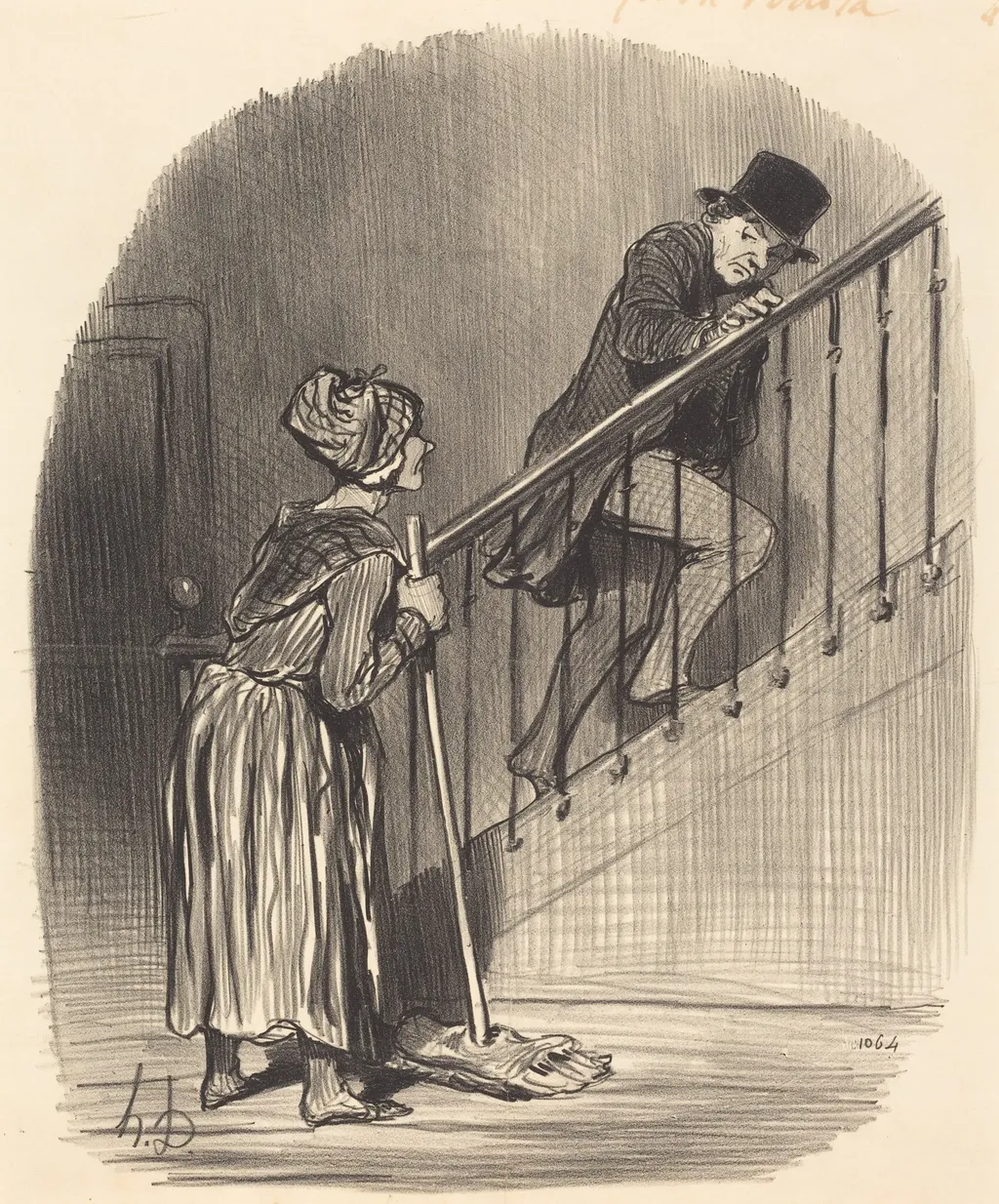
Ma femme est-elle a la maison? is an ink print by the Romanticist artist Honoré Daumier. It dates from 1847 and is held in the collection of the National Gallery of Art.
About this work
Overview
Ma femme est-elle a la maison? is a lithograph created by Honoré Daumier in 1847, exemplifying his use of printmaking for social and political satire.
Subject & Meaning
The print depicts a brief, enigmatic scene: a woman outside a building looks up at a man in a window, who hands her an item via a long pole. Interpretation of the specific narrative is open, but it aligns with Daumier's broader critique of mid-19th-century French society.
Technique & Style
Executed in lithography, the work features Daumier's characteristic rough, sketchy lines, suitable for rapid production and dissemination through publications like *La Caricature* and *Le Charivari*. The technique allowed for wide circulation of his satirical commentary.
History & Provenance
Created in 1847, the lithograph was part of Daumier's ongoing output for French satirical journals, reflecting his republican democrat stance against the monarchy, aristocracy, and clergy.
Context
This work is set against the backdrop of mid-19th-century France, where Daumier's satirical prints contributed to public discourse, criticizing social and political structures.
Artist & collection

Artist
Honoré-Victorin Daumier was a French painter, sculptor, and printmaker, whose many works offer commentary on the social and political life in France, from the Revolution of 1830 to the fall of the Second French Empire in 1870.









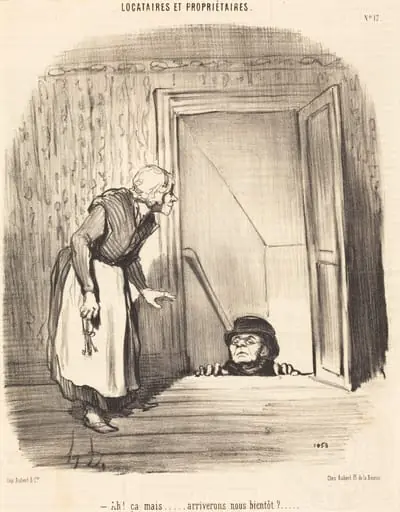 Ah! ça mais... arriverons-nous bientôt?
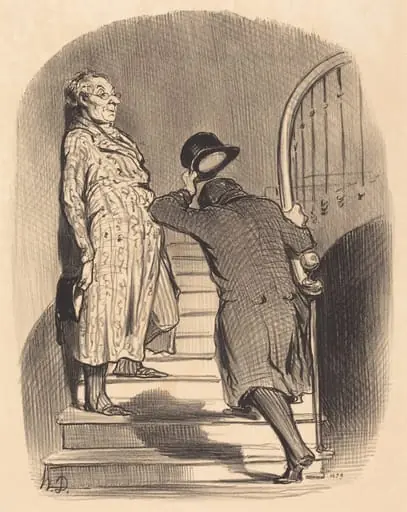 Un Locataire qui paie exactement son terme
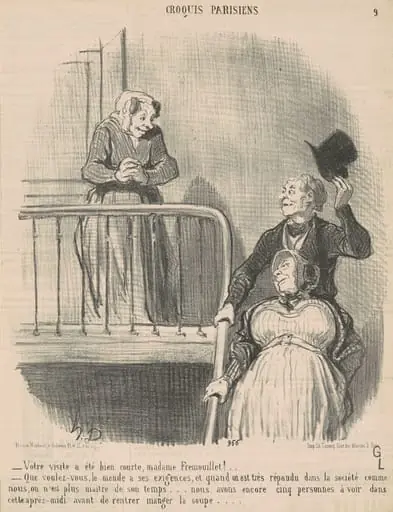 Votre visite a été bien courte ...
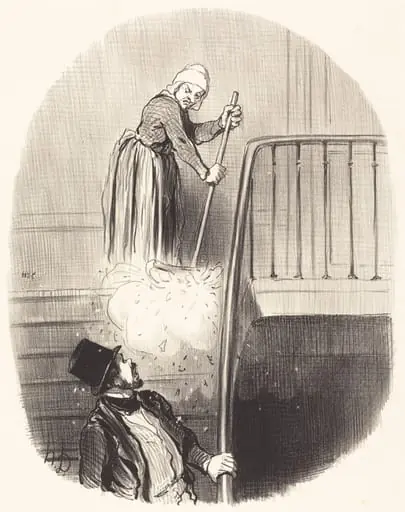 Un Locataire qui a eu un oubli le 1er janvier
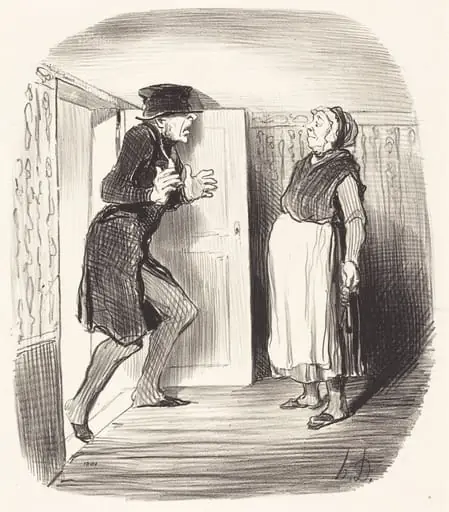 Inconvénient de visiter sans précaution un entresol...
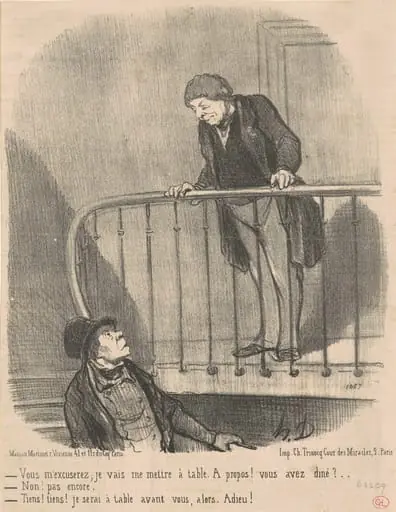 Vous m'excuserez: je vais me mettre a table ...
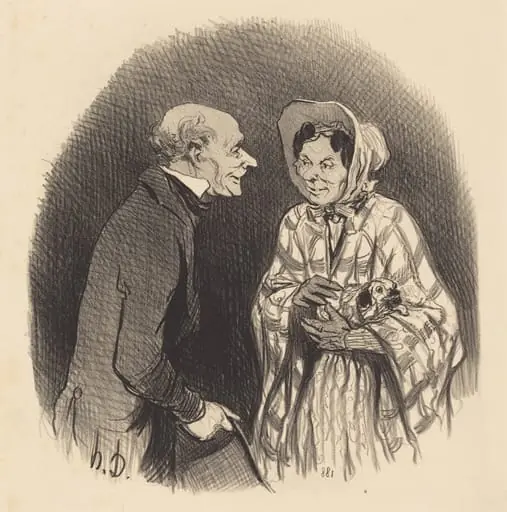 Une Nouvelle connaissance
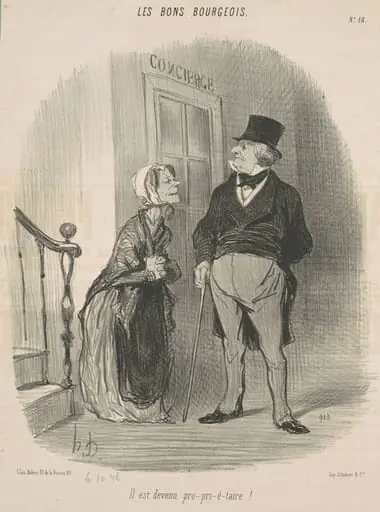 Il est devenu pro-pri-é-taire!
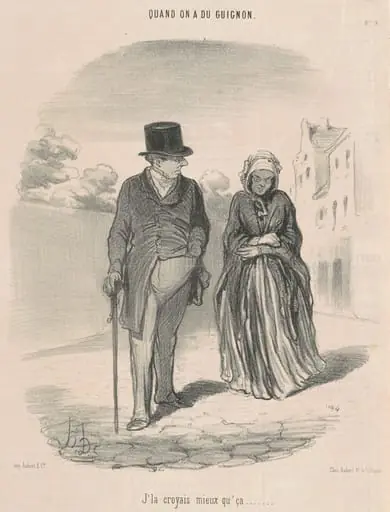 J'la croyais mieux qu'ça ...
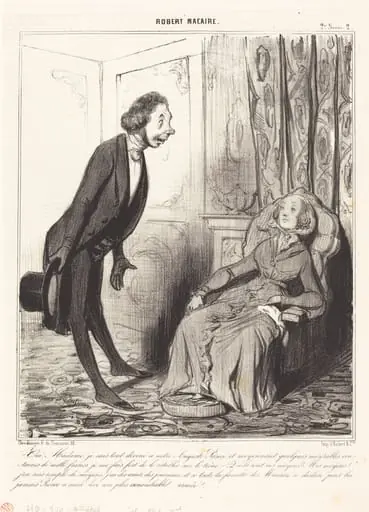 Oui, Madame, je suis tout dévoué a notre... Prince...