Artwork
Un Mari brûlé du feu de la jalousie
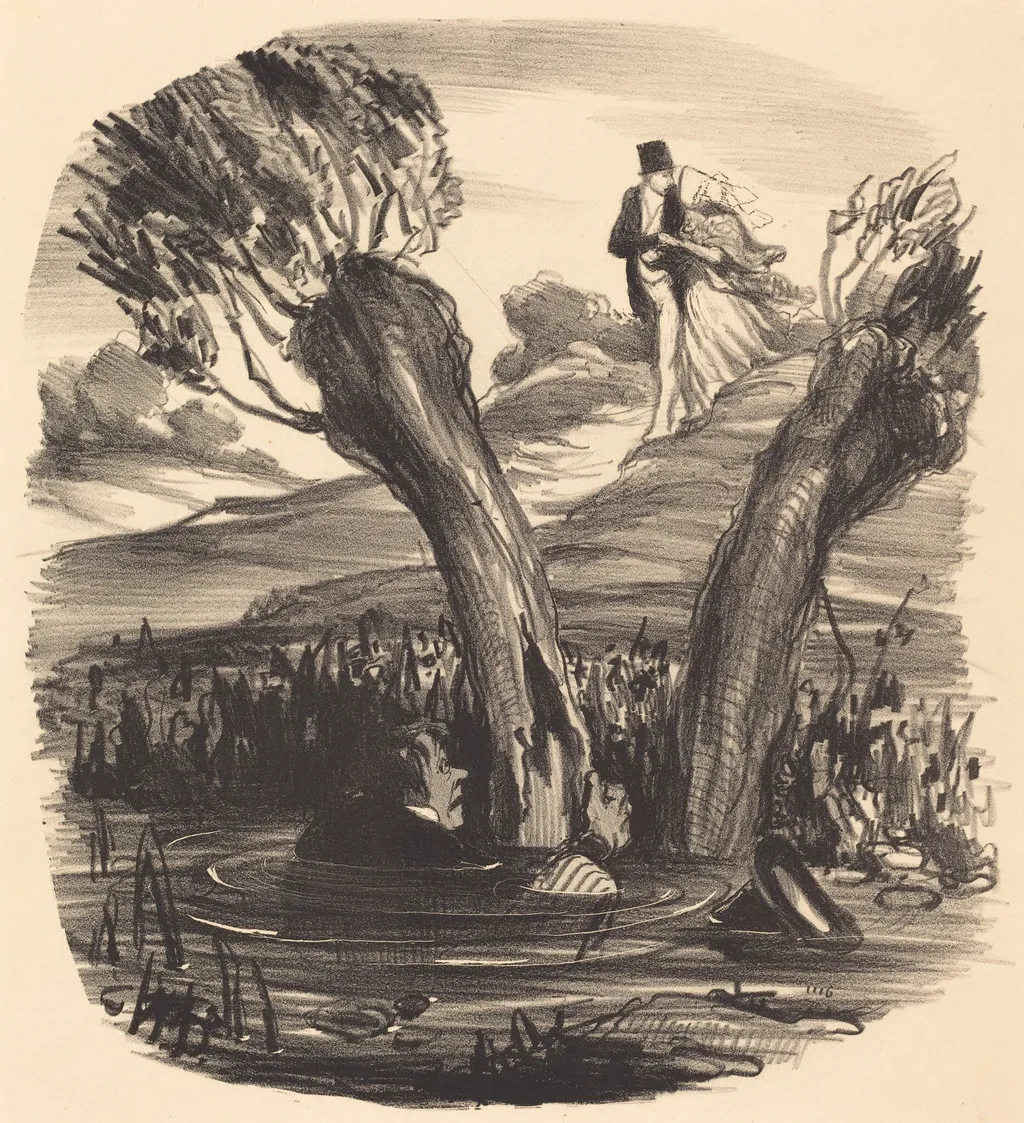
Un Mari brûlé du feu de la jalousie is an ink print by the Romanticist artist Honoré Daumier. It dates from 1847 and is held in the collection of the National Gallery of Art.
About this work
Overview
Unlike his more overt political cartoons, this piece turns inward, capturing a private moment of emotional turmoil.
Created in 1847, *Un Mari brûlé du feu de la jalousie* is a lithograph by Honoré Daumier, part of his extensive body of graphic work produced for French periodicals. Unlike his more overt political cartoons, this piece turns inward, capturing a private moment of emotional turmoil. Daumier’s skill in lithography allowed him to translate psychological tension into stark, expressive lines, reflecting his deep engagement with human behavior beyond mere satire.
Subject & Meaning
The image depicts a man standing over his seated companion on a desolate shore, suggesting a moment of marital conflict. The standing figure’s rigid posture and clenched hat imply suppressed rage, while the seated figure, head in hands, conveys defeat or despair. The title, translating to 'A Husband Burned by the Fire of Jealousy,' frames the scene as an intimate tragedy, not a public spectacle. Daumier uses minimal detail to evoke complex emotional dynamics within domestic life.
Technique & Style
Daumier employed lithography to achieve a range of tonal contrasts, using rough, gestural lines and dense shading to heighten emotional impact. The dark, uneven textures of the rocks and the looming tree amplify the scene’s melancholy atmosphere. His loose, almost sketch-like execution avoids polish, prioritizing immediacy and psychological truth. The limited palette of ink on paper enhances the sense of isolation, focusing attention on the figures’ body language.
History & Provenance
The print was produced during Daumier’s most prolific period for *Le Charivari*, where he regularly published social commentary in graphic form. Though not as widely circulated as his political caricatures, this image was likely part of a series exploring domestic themes. Its survival in museum collections suggests early recognition of its emotional depth, even as it diverged from his more overtly satirical output.
Context
In mid-19th century France, the family unit was increasingly scrutinized as a microcosm of societal values. Daumier’s focus on private anguish reflected broader cultural anxieties about marriage, gender roles, and emotional repression. While other artists idealized domestic harmony, Daumier revealed its fractures, aligning his work with a growing literary and artistic interest in psychological realism.
Legacy
Daumier’s lithographs, including this one, influenced later generations of artists seeking to convey inner states through simplified form and expressive line. His ability to distill complex emotions into minimal compositions prefigured modern graphic storytelling. Though less celebrated than his political works, pieces like this reveal his enduring sensitivity to the quiet tragedies of everyday life.
Artist & collection

Artist
Honoré-Victorin Daumier was a French painter, sculptor, and printmaker, whose many works offer commentary on the social and political life in France, from the Revolution of 1830 to the fall of the Second French Empire in 1870.









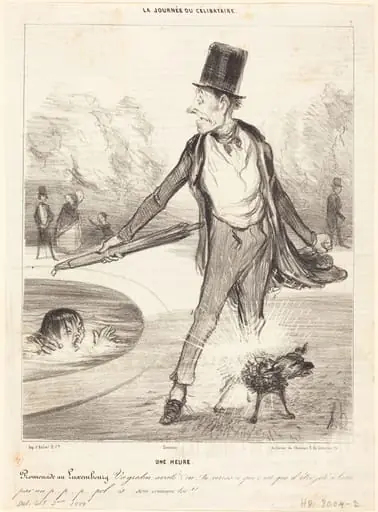 Une heure - Promenade au Luxembourg
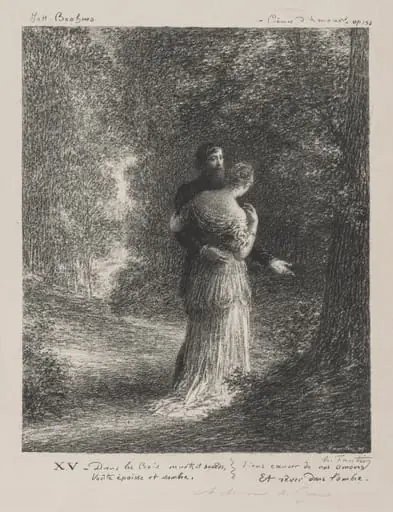 Love Poems (Third Plate)
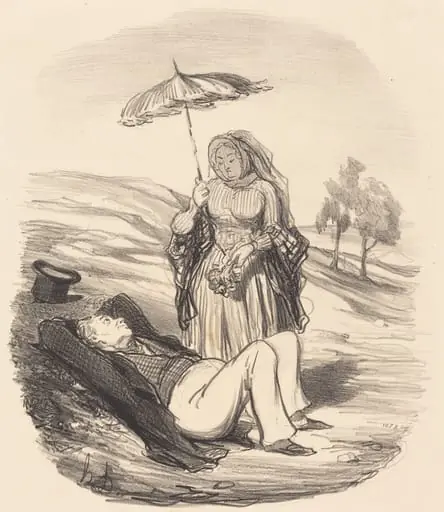 Une Promenade conjugale
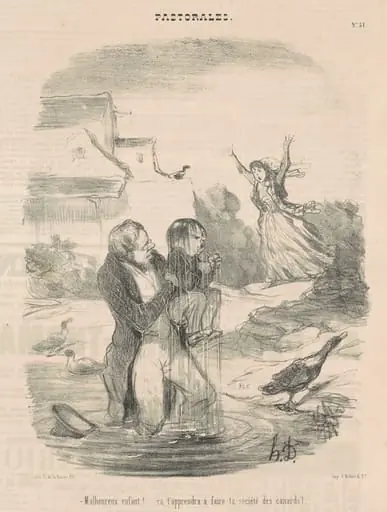 Malheureux enfant! ... Ca t'appendra a faire ...
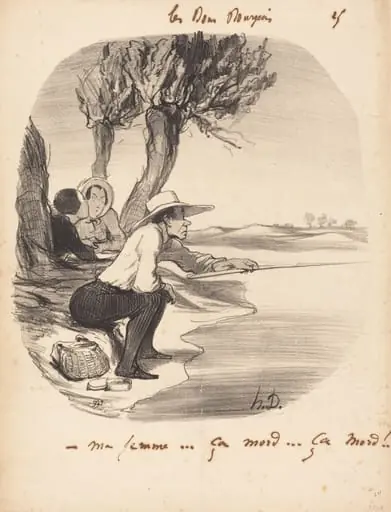 Ma femme... ça mord... ça mord!
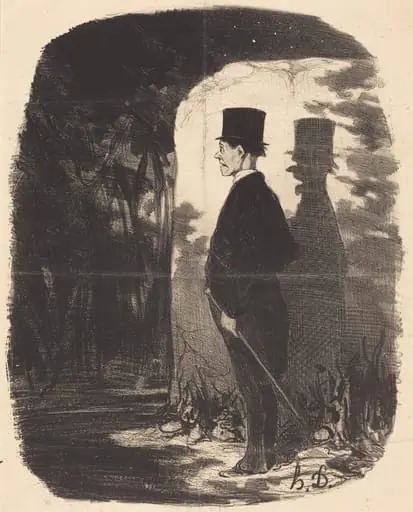 Il n'y a pas a dire, il faut que je traverse ce... bois...
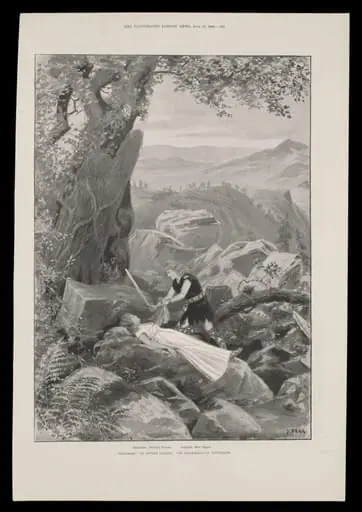 H Beard Print Collection
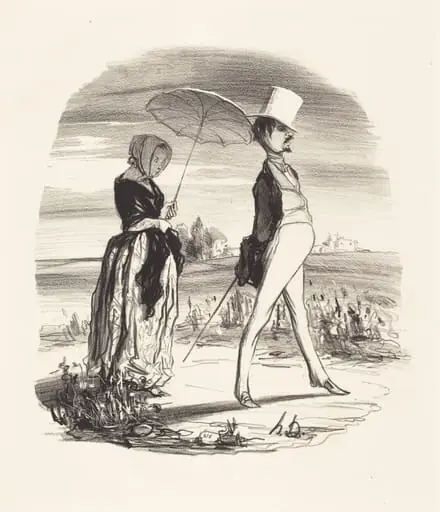 Et on appelle ça descendre le fleuve de la vie...
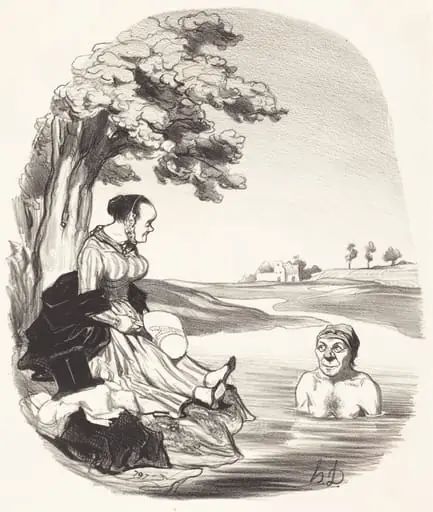 L'Eau est délicieuse... je t'assure...
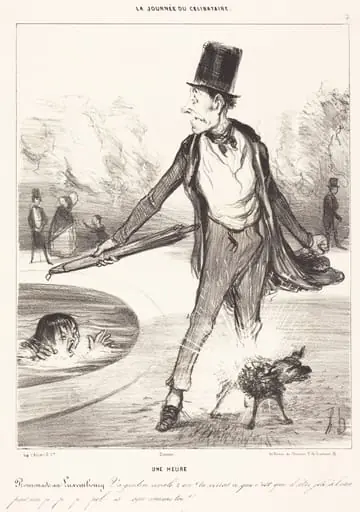 Une heure
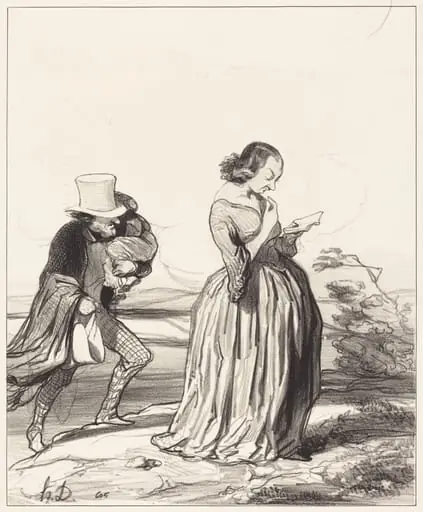 Saperlotte!... que je voudrais... que ma femme ait fini...
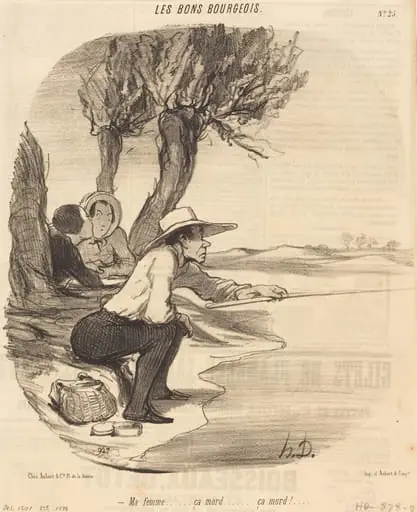 Ma femme... ça mord... ça mord!