Artwork
Il n'y a pas a dire, il faut que je traverse ce... bois...
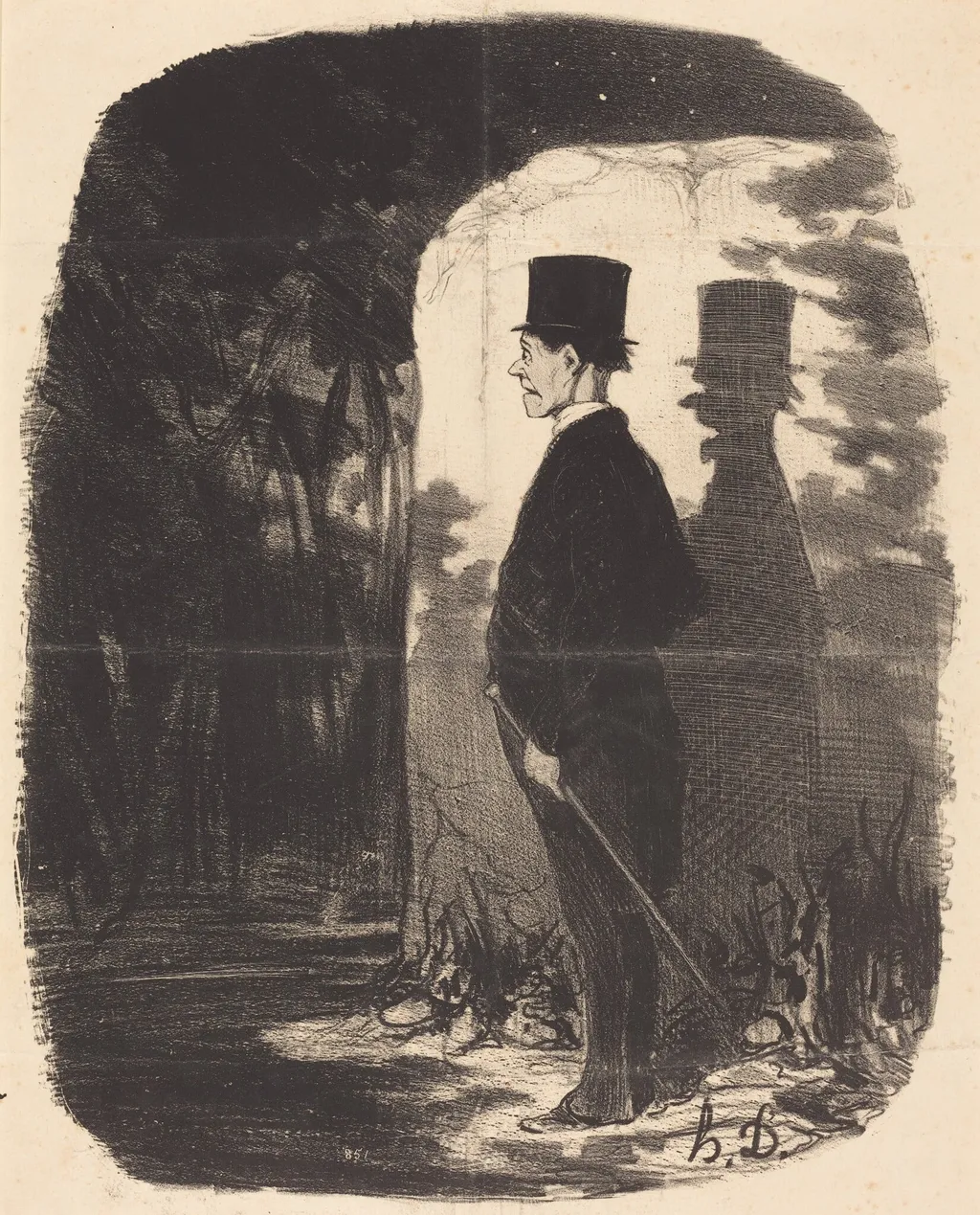
Il n'y a pas a dire, il faut que je traverse ce... bois... is an ink print by the Romanticist artist Honoré Daumier. It dates from 1845 and is held in the collection of the National Gallery of Art.
About this work
Overview
Created in 1845, this lithograph by Honoré Daumier is part of a series of satirical prints published in French periodicals. Unlike his more overt political cartoons, this piece adopts a quieter, atmospheric tone, using minimal detail to evoke psychological tension. It reflects Daumier’s skill in conveying complex social moods through understated imagery rather than explicit satire.
Subject & Meaning
The figure, dressed in formal urban attire, stands hesitantly at the edge of a dense woodland, cane in hand. His blurred face and turned posture suggest internal conflict or reluctance. The title, a hesitant French phrase, implies an unavoidable duty. The scene may symbolize the individual’s uneasy confrontation with the unknown—perhaps the shifting social landscape of post-revolutionary France.
Technique & Style
The forest is rendered with loose, gestural lines, while the figure’s form is simplified and partially obscured, creating ambiguity.
Daumier employed lithography to achieve subtle gradations of tone and texture. The forest is rendered with loose, gestural lines, while the figure’s form is simplified and partially obscured, creating ambiguity. The contrast between the sharply defined clothing and the indistinct face heightens the sense of anonymity and unease, aligning with Daumier’s interest in psychological realism over literal representation.
History & Provenance
The print was originally published in *Le Charivari*, a widely circulated satirical journal where Daumier regularly contributed. It was not intended as a standalone artwork but as part of a daily commentary on contemporary life. Its survival in museum collections reflects later recognition of Daumier’s broader artistic significance beyond political caricature.
Context
Produced during the July Monarchy, this work emerged amid rising tensions between the bourgeoisie and the remnants of aristocratic power. While Daumier often targeted political figures directly, here he turns inward, capturing the psychological weight of social transition. The forest may allude to the unpredictable, uncharted nature of democratic ideals in a society still grappling with revolution’s aftermath.
Legacy
Though less overt than his political cartoons, this lithograph exemplifies Daumier’s ability to convey existential unease through minimal means. Later artists, including those in the Expressionist tradition, drew from his use of ambiguity and emotional resonance. The work remains a quiet but potent example of how printmaking could extend beyond satire into the realm of human introspection.
Artist & collection
Artist
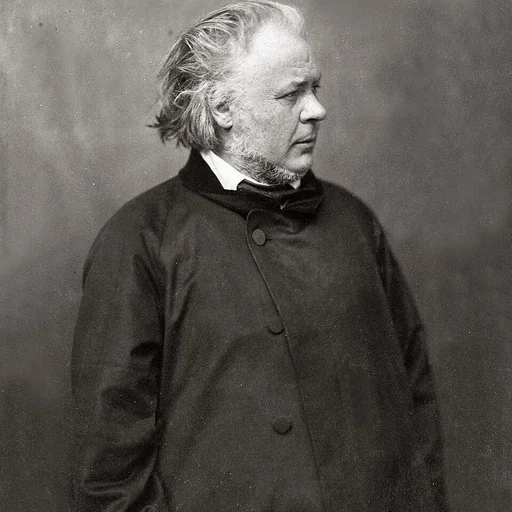
Honoré-Victorin Daumier was a French painter, sculptor, and printmaker, whose many works offer commentary on the social and political life in France, from the Revolution of 1830 to the fall of the Second French Empire in 1870.