Artwork
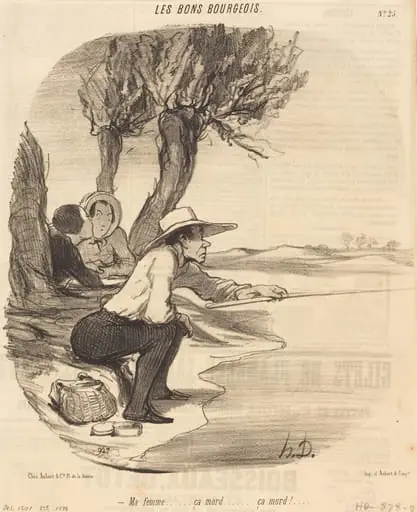
Ma femme... ça mord... ça mord!
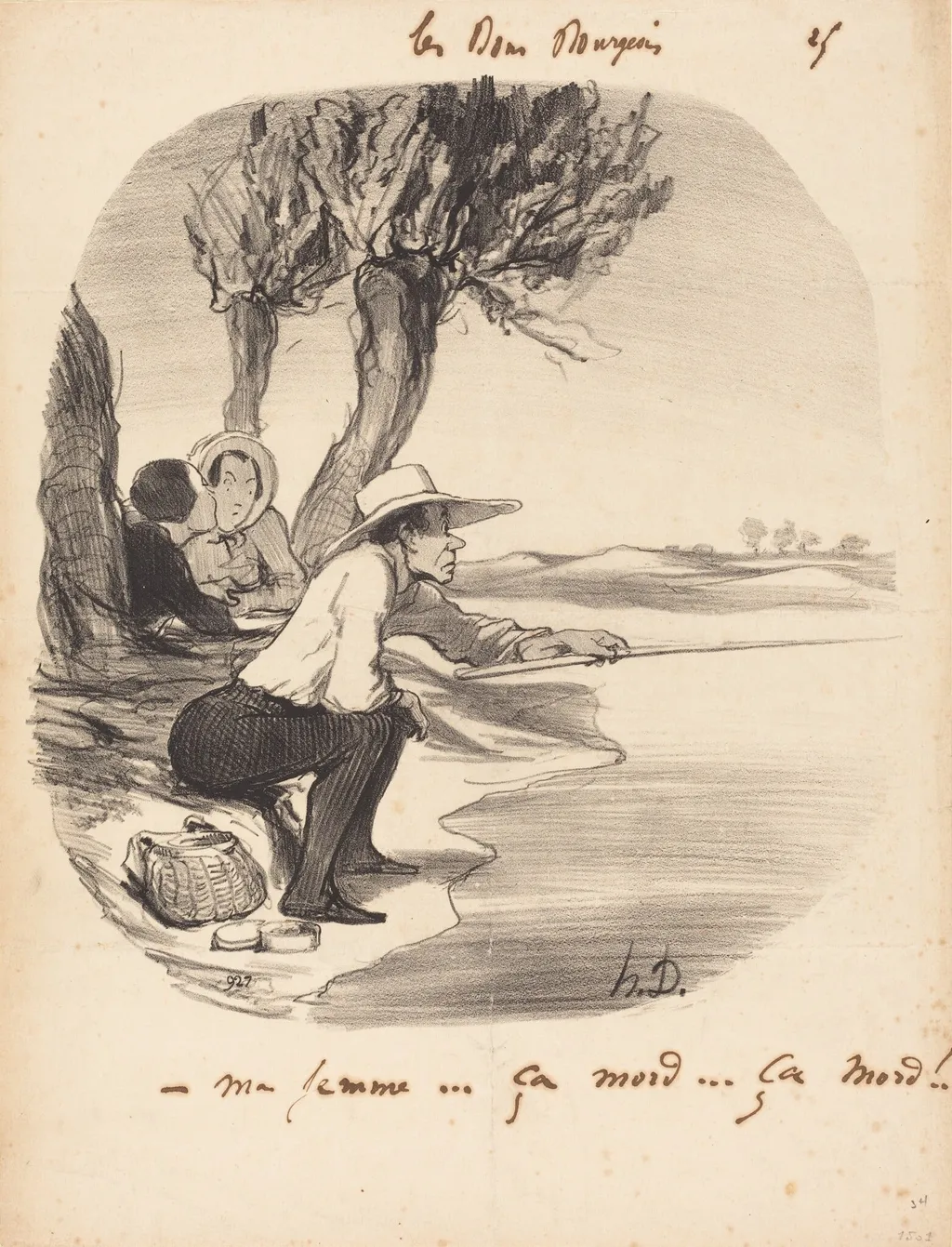
Ma femme... ça mord... ça mord! is an ink print by the Romanticist artist Honoré Daumier. It dates from 1846 and is held in the collection of the National Gallery of Art.
About this work
Overview
Daumier’s work often used everyday situations to expose social tensions, and this print exemplifies his talent for blending observation with wit.
Created in 1846, this lithograph by Honoré Daumier captures a quiet, humorous moment of domestic irony disguised as a fishing scene. Though visually serene, the title subverts the image’s calm, suggesting the man’s fishing rod is not the source of trouble—it’s his wife. Daumier’s work often used everyday situations to expose social tensions, and this print exemplifies his talent for blending observation with wit.
Subject & Meaning
The scene depicts a man fishing alone, seemingly absorbed in his activity, while the title implies a domestic conflict. The phrase 'My wife... it bites... it bites!' plays on the double meaning of 'bites'—referring both to a fish taking the hook and a spouse’s sharp temper. Daumier uses this wordplay to poke fun at marital dynamics, turning a mundane pastime into a commentary on the burdens and absurdities of domestic life.
Technique & Style
Daumier employed rapid, expressive linework typical of his lithographic practice, allowing for spontaneity and emotional immediacy. The background is rendered with loose, atmospheric strokes, while the figures are defined by minimal yet precise contours. The contrast between the detailed foreground and hazy distance enhances the focus on the man’s solitary, slightly absurd posture, reinforcing the humor through visual economy.
History & Provenance
This print emerged during Daumier’s most prolific period as a satirist for Parisian periodicals like *Le Charivari*. Though not tied to a specific political event, it aligns with his broader output of social commentary during the July Monarchy. Its survival in public collections reflects its recognition as a representative example of 19th-century French graphic satire, valued for its insight rather than its rarity.
Context
In 1840s France, political instability and rising middle-class influence reshaped social norms. Daumier’s prints often targeted authority figures, but he also turned his lens inward, examining domestic life with the same critical eye. This lithograph reflects a cultural moment when humor became a tool for navigating the tensions between public ideals and private realities, especially in the expanding bourgeois household.
Legacy
Daumier’s ability to distill complex social observations into single, witty images influenced generations of illustrators and cartoonists. This work, though modest in scale, exemplifies his enduring contribution to visual satire: using simplicity to reveal psychological depth. Its continued presence in museum collections underscores its role as a quiet but persistent voice in the history of print-based social critique.
Artist & collection
Artist
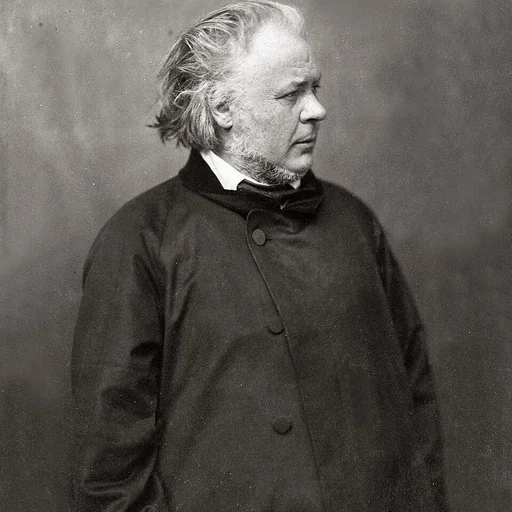
Honoré-Victorin Daumier was a French painter, sculptor, and printmaker, whose many works offer commentary on the social and political life in France, from the Revolution of 1830 to the fall of the Second French Empire in 1870.

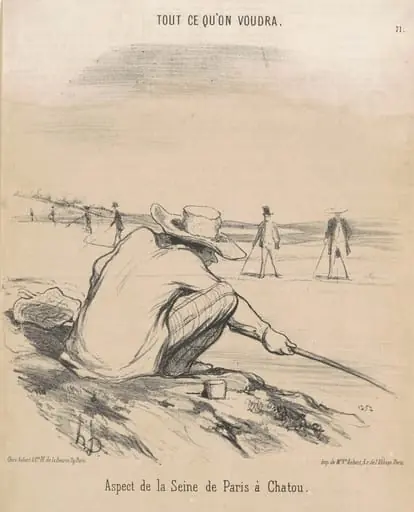 Aspect de la Seine de Paris a chatou
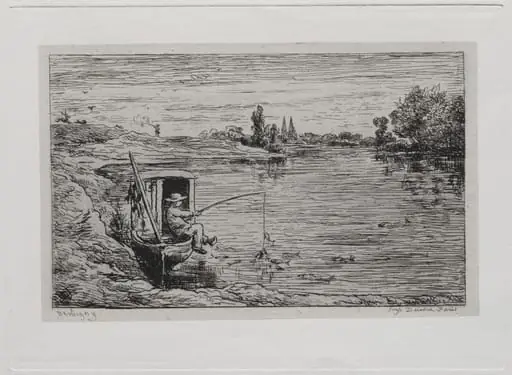 The Boat Trip: The Cabin Boy Fishing (Line Fishing)
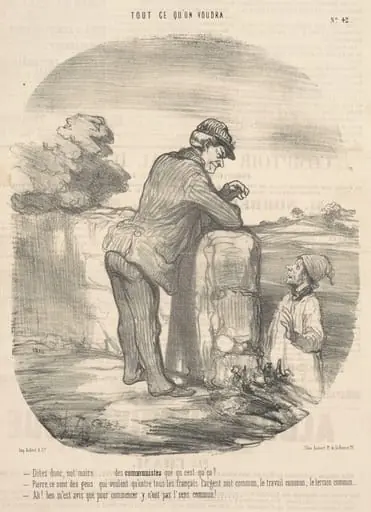 Dites donc, not'maire ... des communistes qué qu'c'est ça?
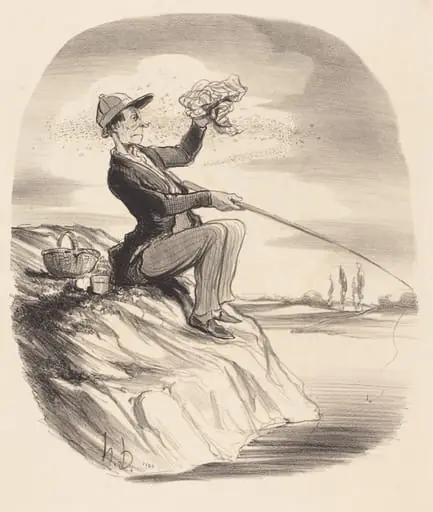 Désagrément d'aller a la pêche...
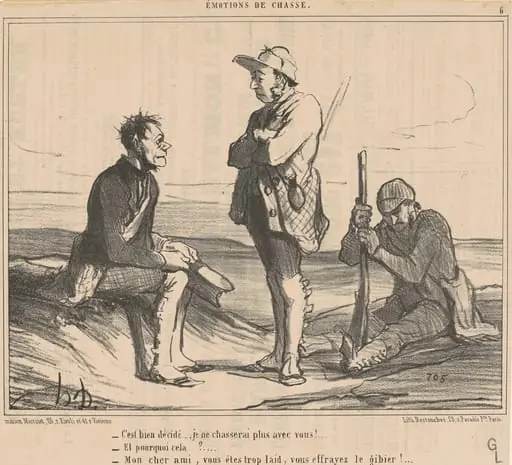 C'est bien décidé ... Je ne chasserai plus avec vous! ...
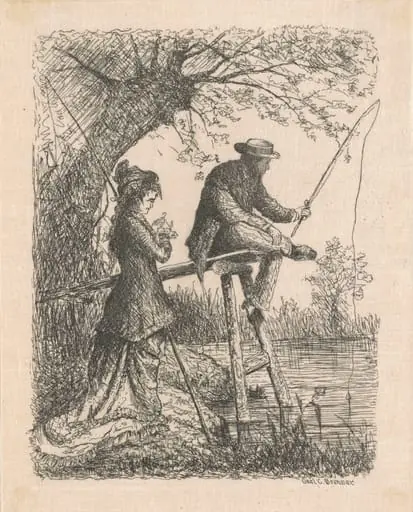 Fishing
 Woman Sitting by a Pond
 Reviens y donc encore ... grand enjeoleu! ...
 J'ai vu un lièvre... il y a huit jours!
 François, qui est-ce qui a bu mon vin ...
 Ohé! ... Combien votre lievre? ...
 Ma femme... ça mord... ça mord!