Artwork
La jarretière
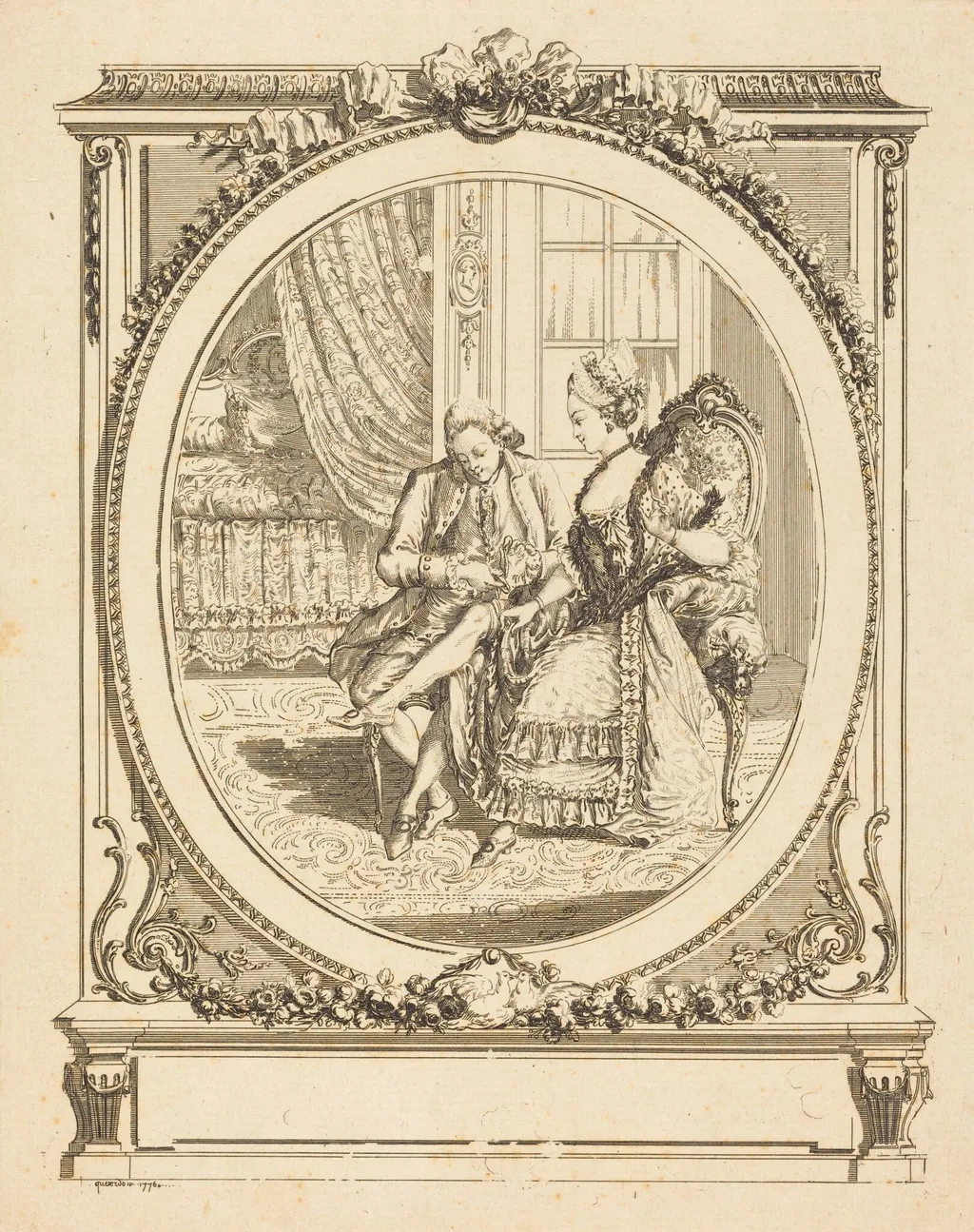
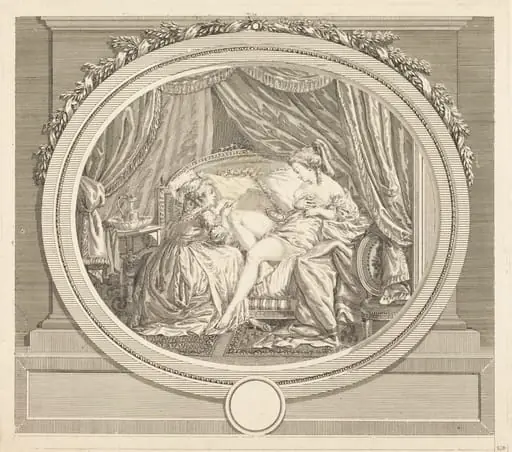
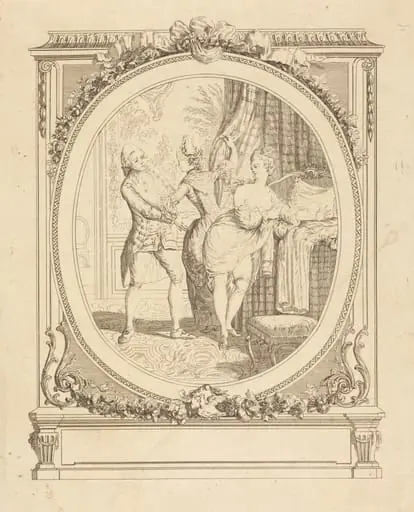
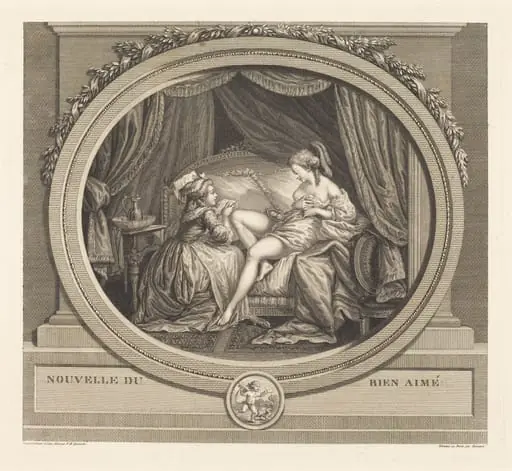
La jarretière is an ink print by the Romanticist artist François Marie Isidore Queverdo. It dates from 1776 and is held in the collection of the National Gallery of Art.
About this work
Overview
La jarretière is an etching produced in 1776 by François Marie Isidore Queverdo. As a print made through incised lines on a metal plate, it captures a quiet domestic moment with precision. The work belongs to a tradition of intimate genre scenes popular in late 18th-century France, where private life was rendered with subtle emotional nuance rather than grand narrative.
Subject & Meaning
The act, though physically modest, carries social weight—garters were personal items tied to intimacy and daily ritual.
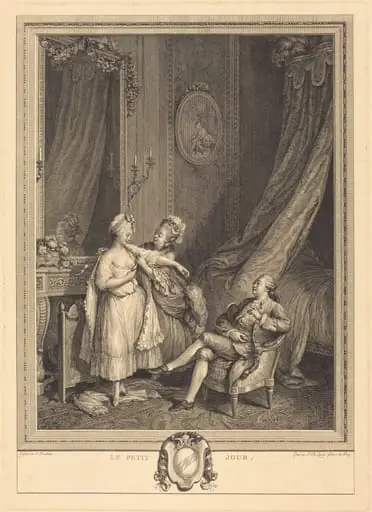
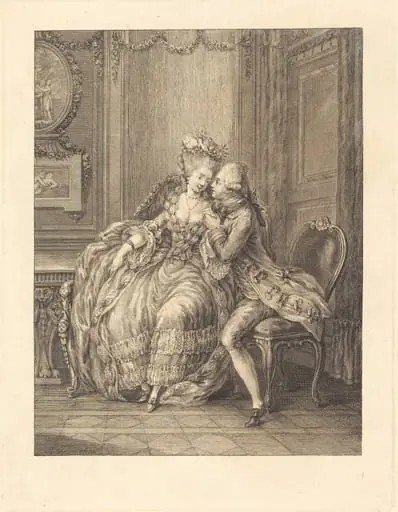
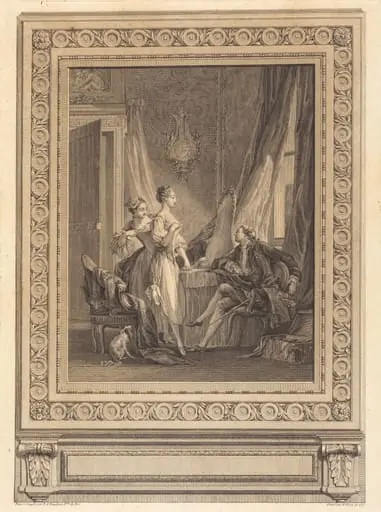
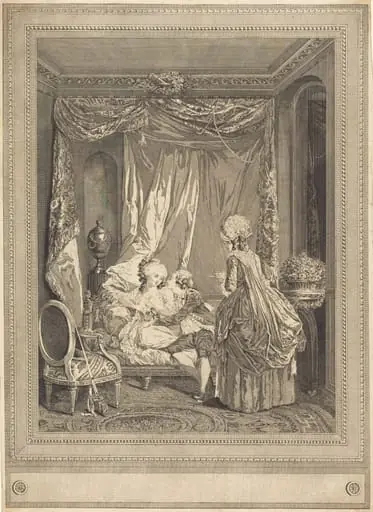
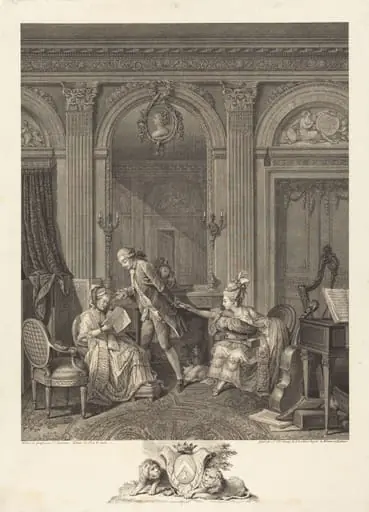
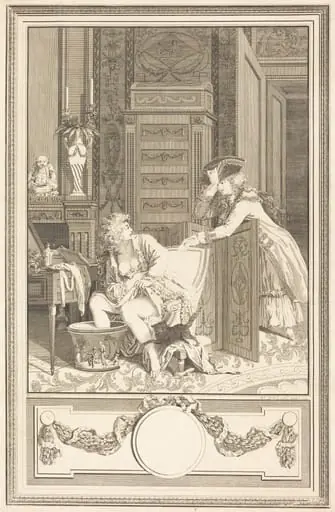
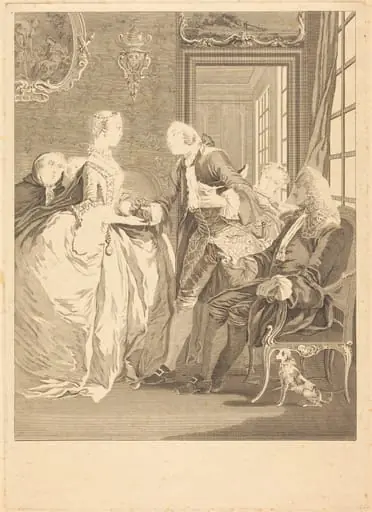
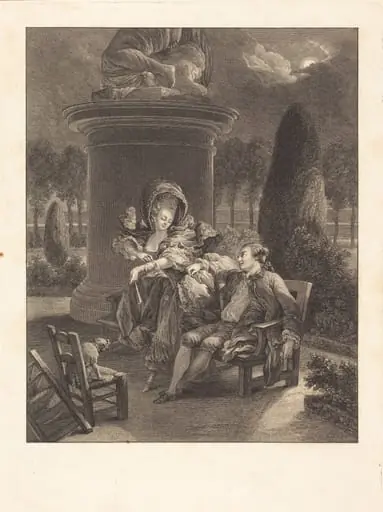
The scene portrays a man kneeling to fasten a woman’s garter as she sits in a chair. Their posture and the enclosed setting suggest familiarity and tenderness, not theatricality. The act, though physically modest, carries social weight—garters were personal items tied to intimacy and daily ritual. The absence of overt symbolism invites interpretation rooted in private, rather than public, human connection.
Technique & Style
Queverdo employs fine, controlled lines to model form and texture, using hatching and cross-hatching to suggest light and fabric. The delicate rendering of the woman’s dress, the wooden chair, and the bed’s drapery demonstrates mastery of etching’s capacity for detail. The composition is tightly framed, focusing attention on the figures’ interaction, while the background elements—window, bed—hint at context without distraction.
History & Provenance
Created in 1776, the etching emerged during a period when printmaking flourished as a medium for accessible art. Queverdo, active in Paris, produced works often circulated among private collectors. La jarretière likely entered private collections soon after its creation, reflecting the era’s appetite for intimate, morally neutral domestic scenes. Its survival suggests continued interest in such imagery beyond its initial publication.
Context
In the decades before the French Revolution, French art increasingly turned toward scenes of everyday life, especially those involving domestic intimacy. While not overtly political, works like La jarretière reflect a cultural shift toward valuing personal relationships and private emotion. This trend paralleled literary developments and the rise of the novel, both of which explored inner lives with greater psychological depth.
Legacy
Queverdo’s etching remains a quiet example of pre-Revolutionary French printmaking, valued for its restraint and observational clarity. It does not align with the dramatic intensity of later Romanticism but instead anticipates its focus on personal emotion through understated gesture. The work endures as a record of how ordinary moments were rendered with dignity in 18th-century visual culture.
Artist & collection