Artwork
Un rendez-vous
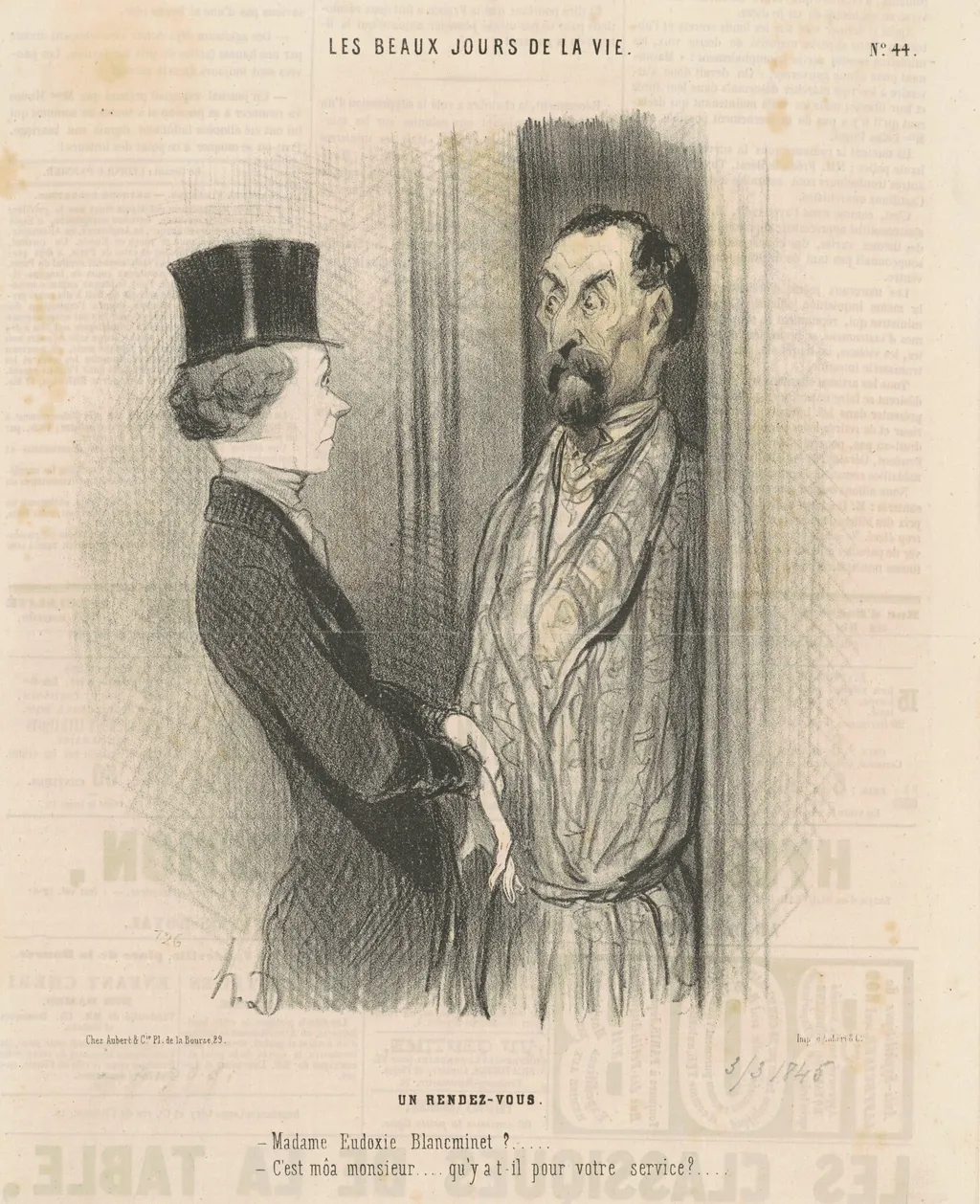
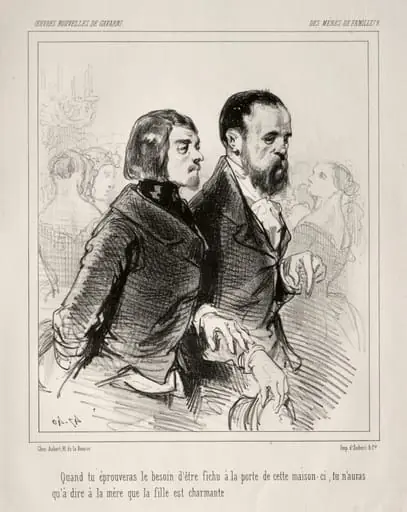
Un rendez-vous is an ink print by the Romanticist artist Honoré Daumier. It dates from 1845 and is held in the collection of the National Gallery of Art.
About this work
Overview
Rendered in ink on stone and transferred to paper, the work exemplifies Daumier’s mastery of lithography—a technique allowing rapid, expressive line work.
Created in 1845, 'Un rendez-vous' is a lithograph by Honoré Daumier that captures a brief, tense encounter between two men on a Parisian street. Rendered in ink on stone and transferred to paper, the work exemplifies Daumier’s mastery of lithography—a technique allowing rapid, expressive line work. The image distills a moment of social tension into a single, quiet composition, free of narrative embellishment.
Subject & Meaning
The two figures—one in a polished top hat and formal attire, the other in a worn, loose coat—stand in silent confrontation. Their contrasting appearances suggest a divide in social standing, yet neither expresses overt hostility or deference. The scene invites reflection on urban anonymity and the unspoken hierarchies of 19th-century Paris, where class distinctions were embedded in dress and demeanor.
Technique & Style
Daumier employed lithography to achieve sharp, fluid lines with minimal detail, emphasizing gesture and silhouette over texture. The ink work is economical yet precise, using contrast and posture to convey character. His style avoids sentimentality; the figures are rendered with a dry, observational tone, characteristic of his approach to social critique through printmaking.
History & Provenance
Produced during Daumier’s most active period as a political cartoonist, this print likely appeared in a periodical or as a standalone image circulated among Parisian intellectuals. Though its original publication context is unconfirmed, it aligns with his broader body of work critiquing bourgeois society. The print survives in multiple institutional collections, testament to its enduring resonance.
Context
In mid-19th century Paris, lithography became a vital medium for public discourse, especially under censorship. Daumier used it to observe daily life with subtle irony. 'Un rendez-vous' reflects a society increasingly defined by visible class markers, where public spaces became stages for silent social judgments, captured without overt satire but with unmistakable clarity.
Legacy
The print endures as a quiet example of Daumier’s ability to distill complex social dynamics into minimal visual terms. It influenced later realist and modernist printmakers who valued economy of form and psychological depth. Unlike overtly political cartoons, this work’s power lies in its restraint, offering a lasting record of urban alienation and class coexistence.
Artist & collection
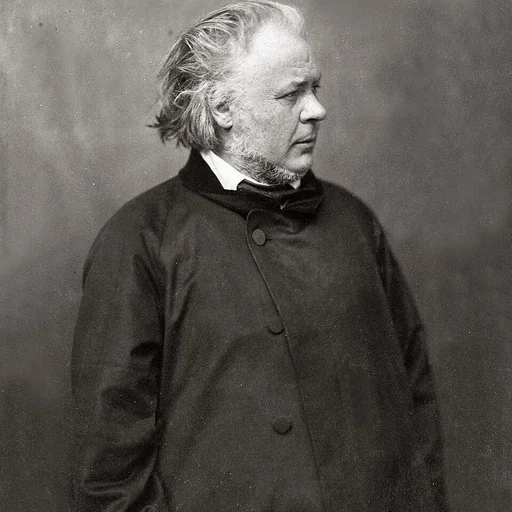
Artist
Honoré-Victorin Daumier was a French painter, sculptor, and printmaker, whose many works offer commentary on the social and political life in France, from the Revolution of 1830 to the fall of the Second French Empire in 1870.