Artwork
Un jour de représentation a benéfice
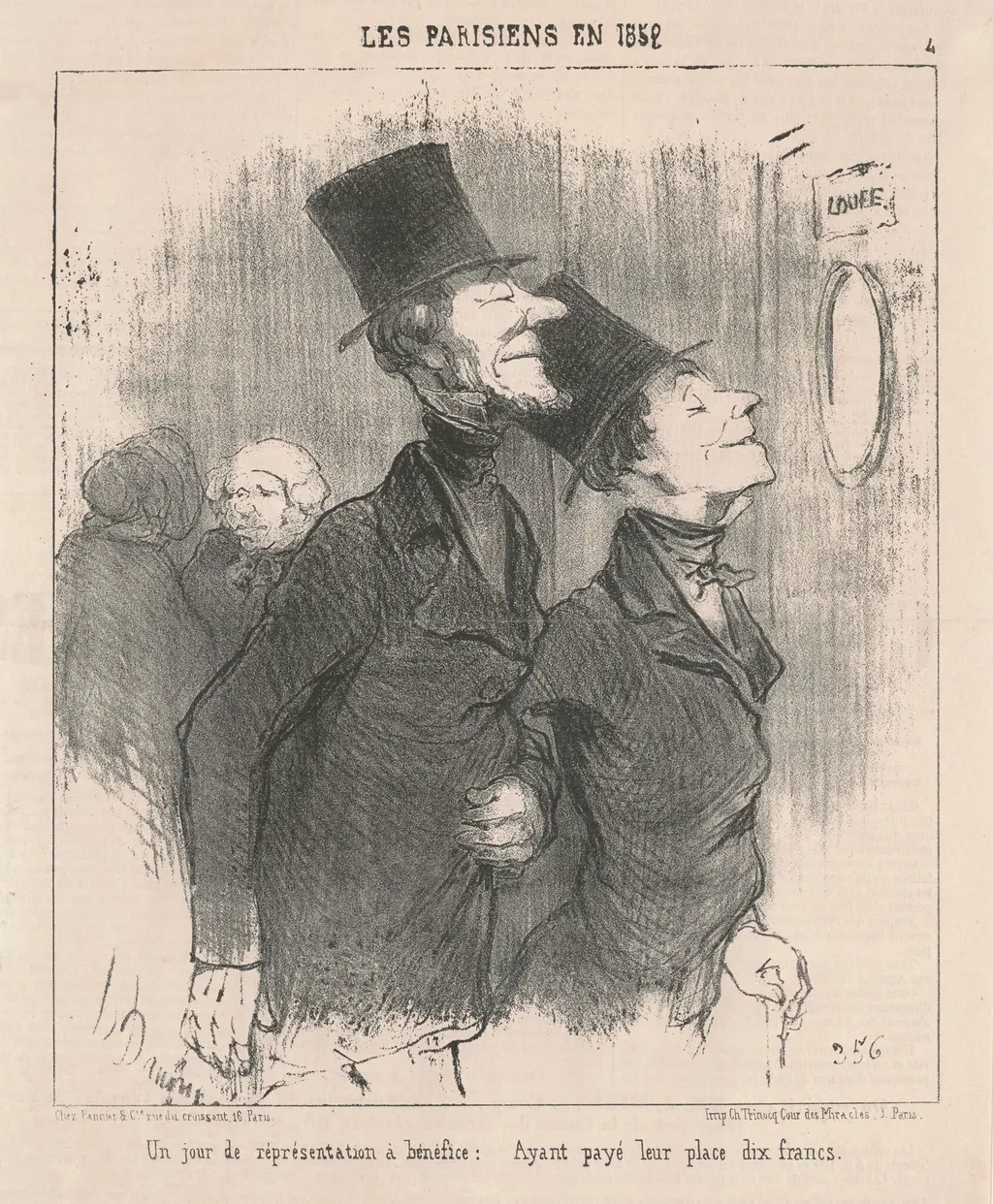
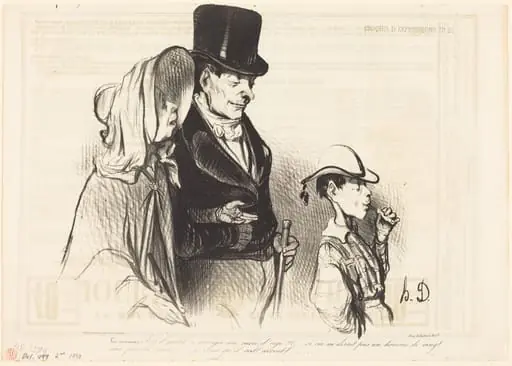
Un jour de représentation a benéfice is an ink print by the Impressionist artist Honoré Daumier. It dates from 1852 and is held in the collection of the National Gallery of Art.
About this work
Overview
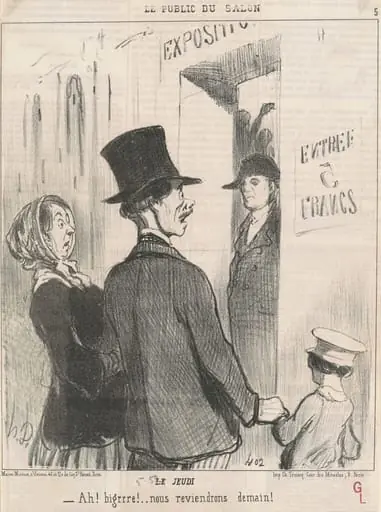
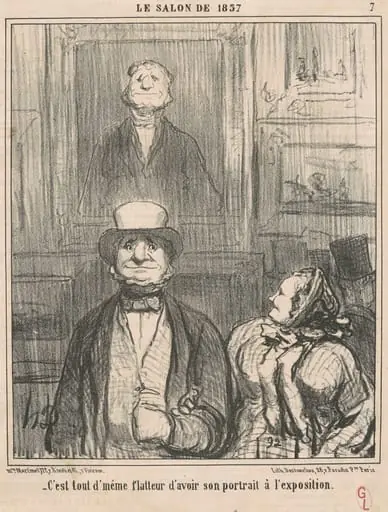
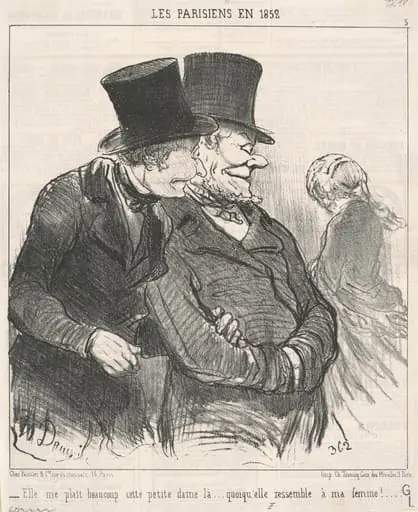
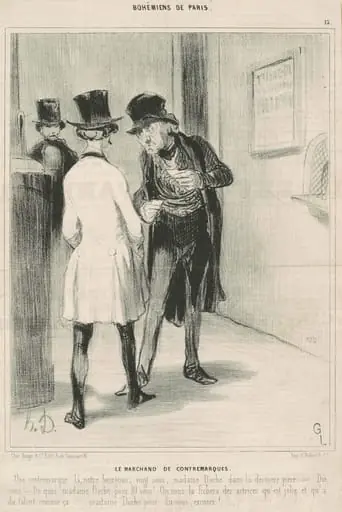
Honoré Daumier’s 1852 lithograph titled *Un jour de représentation à bénéfice* presents a brief, staged encounter between two men in formal attire. Rendered in a light, sketch‑like manner, the print captures a moment of polite exchange on a Parisian street, offering a glimpse into the manners and visual culture of mid‑nineteenth‑century France.
Subject & Meaning
The composition centers on a pair of elegantly dressed gentlemen, each sporting a tall top hat and a broad smile. Their posture and expressions suggest a courteous, perhaps slightly strained, social interaction, reflecting the performative aspects of public life where appearance and decorum were paramount.
Technique & Style
Executed in lithography, Daumier employs a delicate, textured background that contrasts with the crisp delineation of the figures’ clothing and hats. The medium allows for subtle tonal variations, enabling the artist to suggest atmospheric depth while maintaining the immediacy of a drawn sketch.
Context
Created during a period when Paris was rapidly modernizing, the print mirrors the burgeoning bourgeois class and its preoccupation with status symbols such as expensive garments and accessories. Daumier’s choice to depict this scene aligns with his broader interest in the social rituals of the city’s inhabitants.
Legacy
While not among Daumier’s most widely reproduced works, this lithograph contributes to the understanding of his observational style and his engagement with everyday urban life. It remains a valuable example of how print media documented and critiqued contemporary social conventions.
Artist & collection

Artist
Honoré-Victorin Daumier was a French painter, sculptor, and printmaker, whose many works offer commentary on the social and political life in France, from the Revolution of 1830 to the fall of the Second French Empire in 1870.