Artwork
Un soir de première représentation
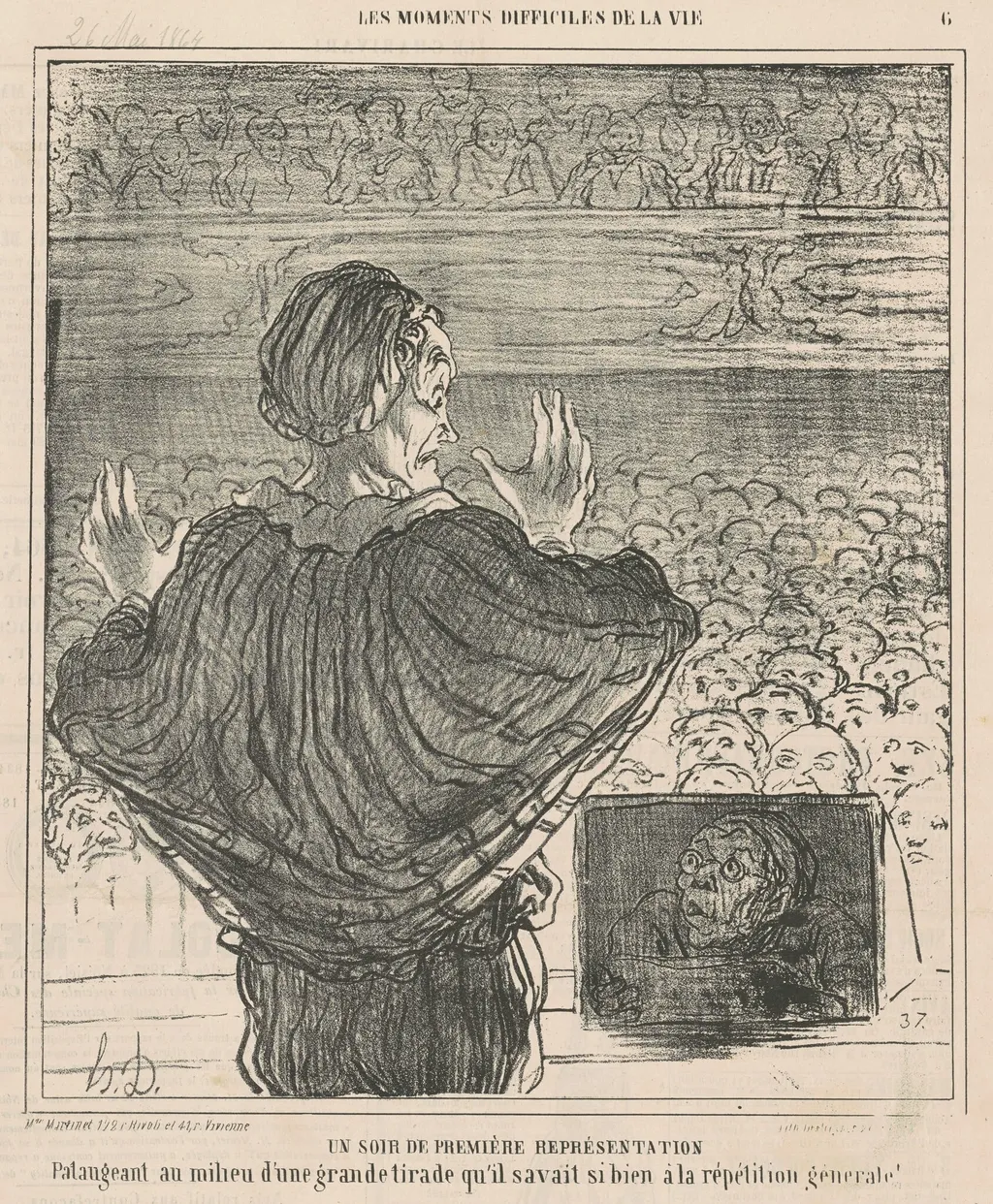
Un soir de première représentation is an ink print by the Impressionist artist Honoré Daumier. It dates from 1864 and is held in the collection of the National Gallery of Art.
About this work
Overview
The composition isolates the figure against the implied darkness of the auditorium, focusing attention on the physical expression of drama.
Honoré Daumier’s 1864 lithograph *Un soir de première représentation* presents a theatrical moment captured from behind the stage. A lone performer, back turned toward the viewer, lifts both arms in an emphatic gesture, suggesting the climax of a debut performance. The composition isolates the figure against the implied darkness of the auditorium, focusing attention on the physical expression of drama.
Subject & Meaning
The work foregrounds the tension between performer and unseen audience, emphasizing the intensity of a first appearance on stage. By omitting the actor’s face, Daumier directs the viewer’s focus to bodily language as a conduit for emotion, inviting contemplation of the public’s role in theatrical spectacle and the vulnerability inherent in public presentation.
Technique & Style
Executed in lithography, the image relies on the medium’s capacity for bold contrasts and fluid lines. Daumier’s handling of the stone surface yields stark black silhouettes against lighter areas, accentuating the gestural pose. The limited tonal range underscores the immediacy of the scene, while the print’s texture conveys a sense of movement within a static medium.
History & Provenance
Created in 1864, the lithograph belongs to Daumier’s series of works that document contemporary social life and entertainment. Produced during a period when the artist frequently explored the theater as a microcosm of society, the piece was likely circulated among collectors of his prints in the late nineteenth century, later entering museum collections devoted to nineteenth‑century French graphic art.
Artist & collection

Artist
Honoré-Victorin Daumier was a French painter, sculptor, and printmaker, whose many works offer commentary on the social and political life in France, from the Revolution of 1830 to the fall of the Second French Empire in 1870.









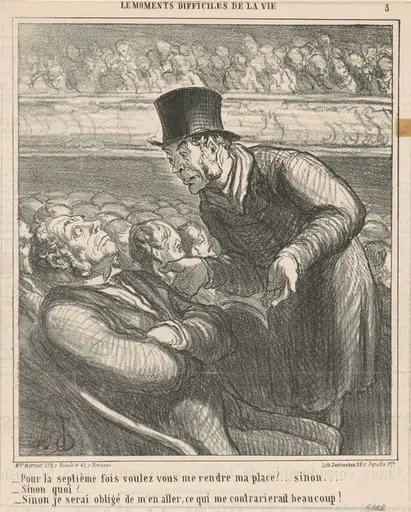 Pour la septième fois voulez-vous me rendre ...
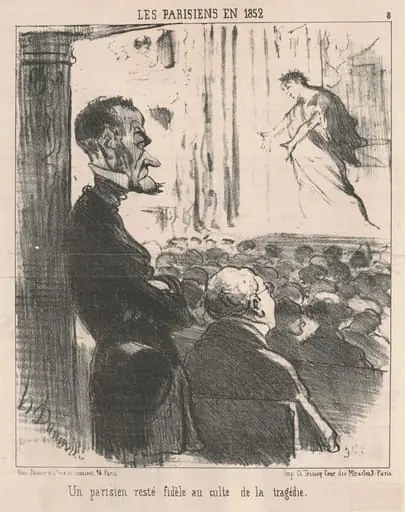 Un parisien resté fidèle ...
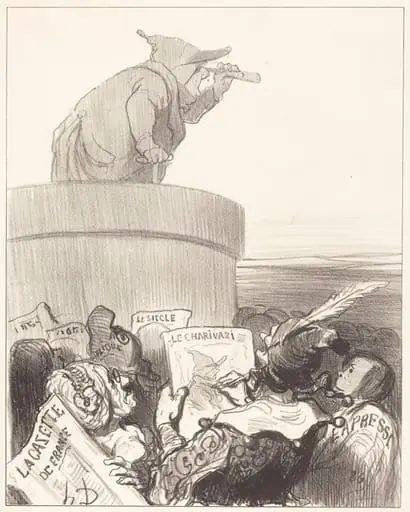 Le Constitutionnel contemplant l'horizon politique
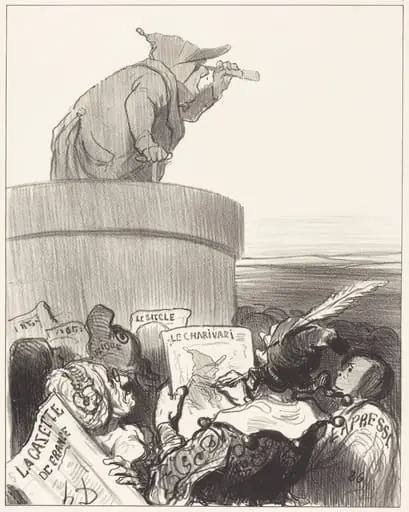 Le Constitutionnel contemplant l'horizon politique
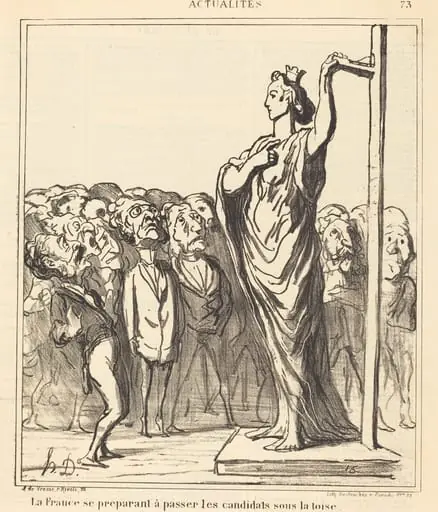 La France se préparant a passer...
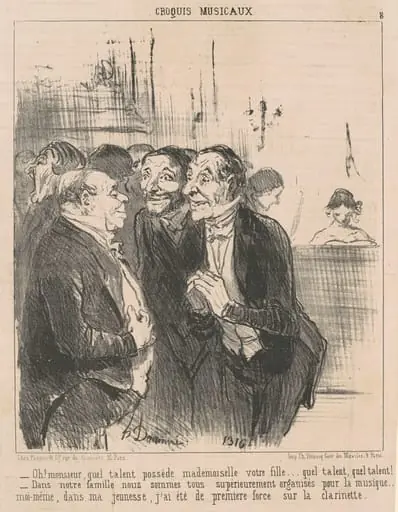 Oh! Monsieur, quel talent possède ...
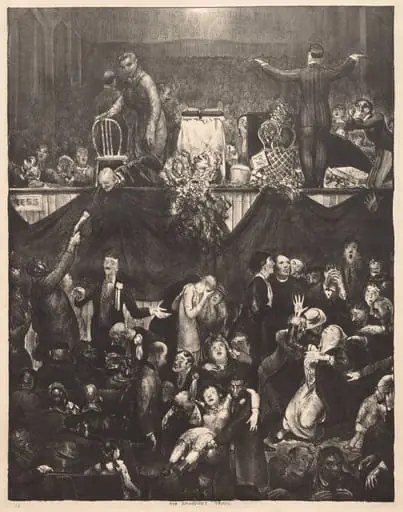 The Sawdust Trail
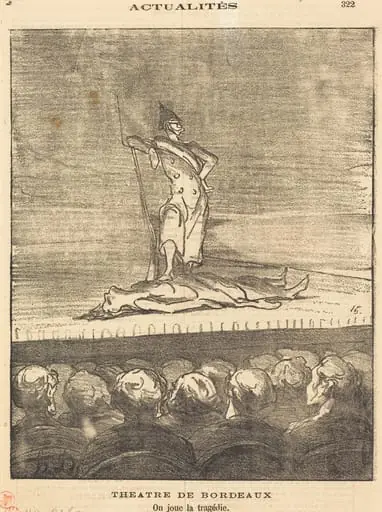 Théâtre de Bordeaux - on joue la tragédie
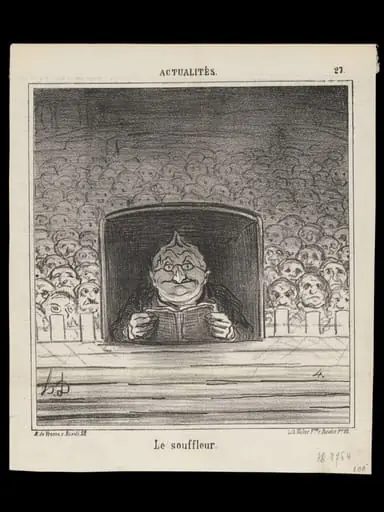 H Beard Print Collection
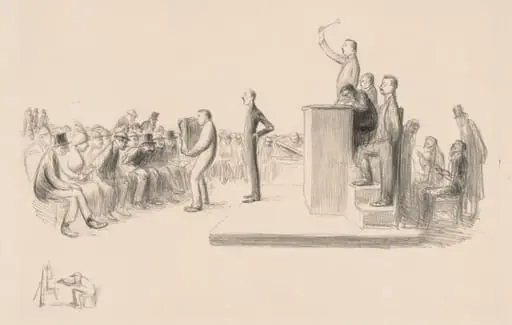 The Rouart Sale
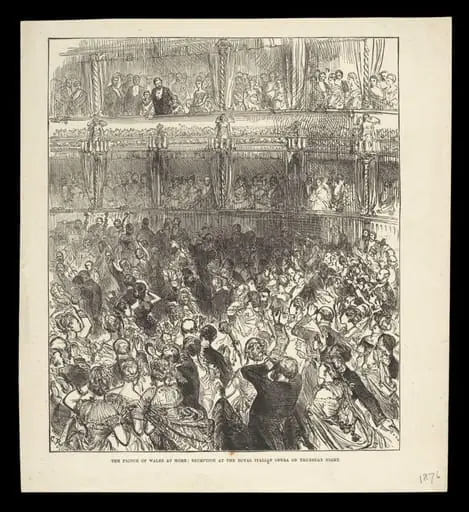 H Beard Print Collection
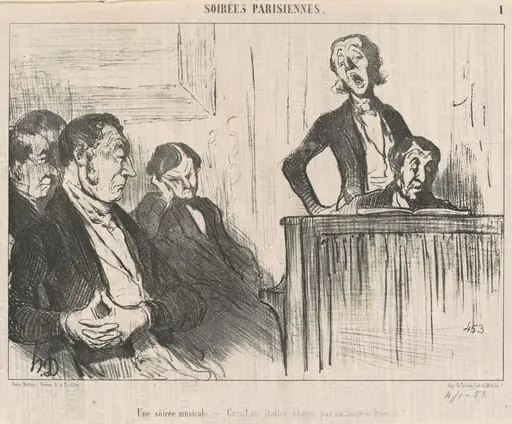 Une soirées musicale