Artwork
Théâtre de Bordeaux - on joue la tragédie
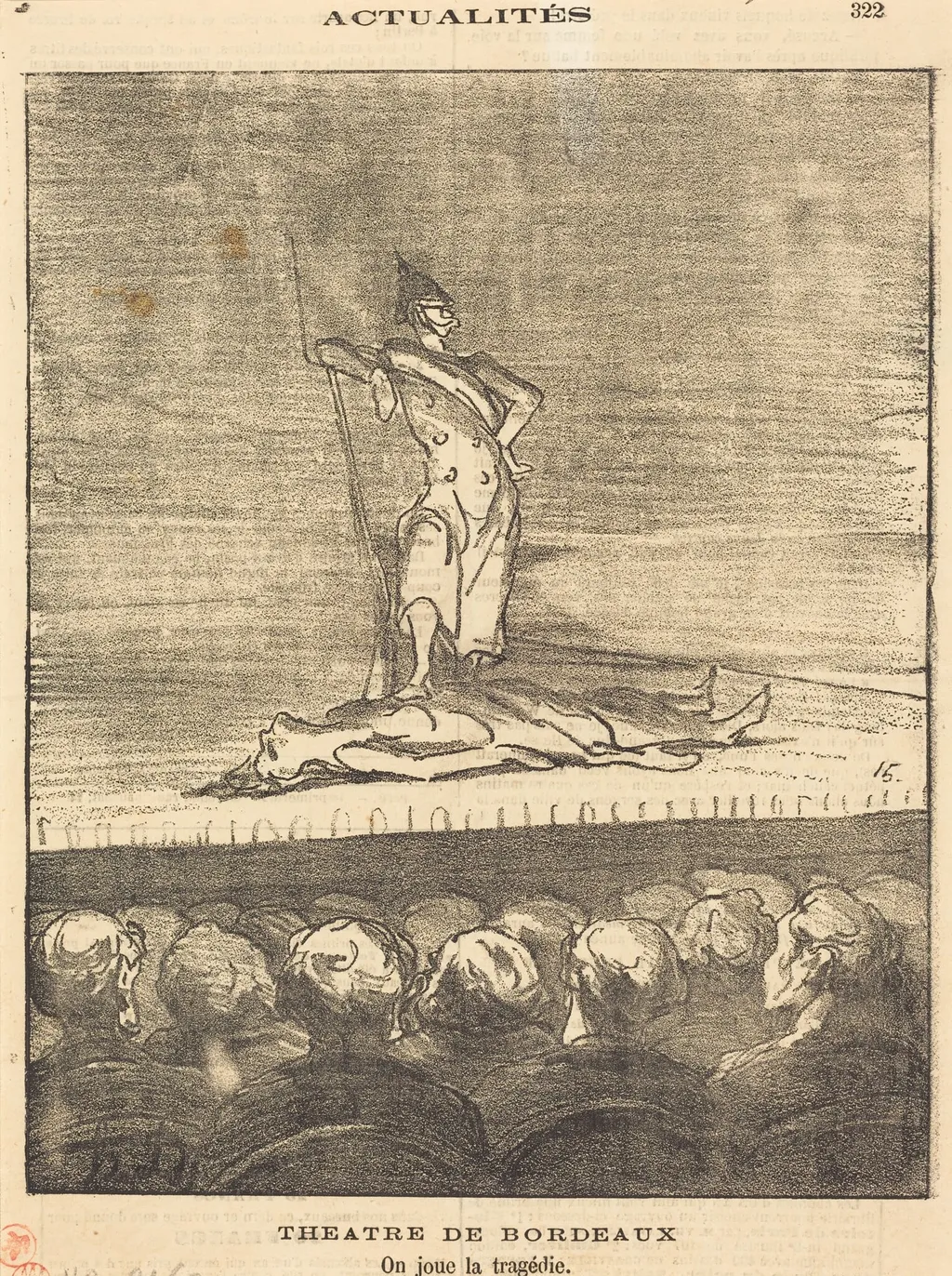
Théâtre de Bordeaux - on joue la tragédie is a print by the Impressionist artist Honoré Daumier. It dates from 1871 and is held in the collection of the National Gallery of Art.
About this work
Overview
Produced during a period of social upheaval in France, the work reflects Daumier’s sustained interest in using print media to observe public life.
Created in 1871, this gillotype on newsprint by Honoré Daumier captures a moment of theatrical drama with political undertones. Produced during a period of social upheaval in France, the work reflects Daumier’s sustained interest in using print media to observe public life. Its modest materials—ink on cheap paper—mirror the accessibility of his commentary, intended for a broad audience rather than elite collectors.
Subject & Meaning
The scene depicts a lone figure on stage, gesturing with a stick, while a covered body lies at his feet. The contrast between the performer’s theatrical posture and the stillness of the corpse suggests a metaphor for public spectacle masking hidden violence or loss. Daumier often used theater as a lens to critique societal hypocrisy; here, the tragedy on stage may symbolize the unacknowledged casualties of political turmoil.
Technique & Style
Daumier employed gillotype, a photomechanical process that allowed for rapid reproduction, aligning with his commitment to mass circulation. His rendering uses stark contrasts of light and shadow, with minimal detail to emphasize emotional weight. The figures are simplified yet expressive, their forms emerging from dense ink washes that evoke both realism and theatricality, reinforcing the work’s somber mood.
History & Provenance
The print was made during the final years of the Second Empire and the early days of the Third Republic, a time when Daumier’s political satire had become increasingly subdued due to censorship. Though less overtly combative than his earlier works, this piece retains his critical eye. It likely appeared in a periodical, though its original publication context remains unconfirmed, as many of his prints circulated anonymously.
Context
Daumier’s career spanned decades of French political instability, from the July Monarchy to the fall of Napoleon III. His prints often responded to current events, using allegory to evade direct censorship. This work fits within a broader body of imagery that equated public performance with national identity, where the stage became a mirror for collective grief and institutional failure.
Legacy
Though not widely exhibited in his lifetime, Daumier’s prints gained recognition in the 20th century as precursors to modern visual journalism. His ability to distill complex social tensions into single, potent images influenced later generations of cartoonists and realist artists. This work exemplifies his enduring contribution: transforming everyday media into a quiet but persistent form of historical witness.
Artist & collection
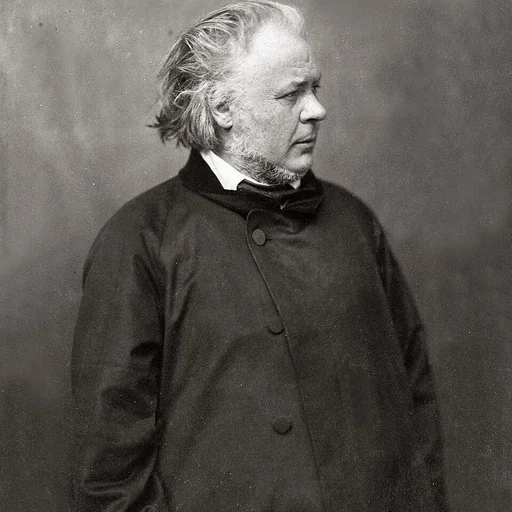
Artist
Honoré-Victorin Daumier was a French painter, sculptor, and printmaker, whose many works offer commentary on the social and political life in France, from the Revolution of 1830 to the fall of the Second French Empire in 1870.

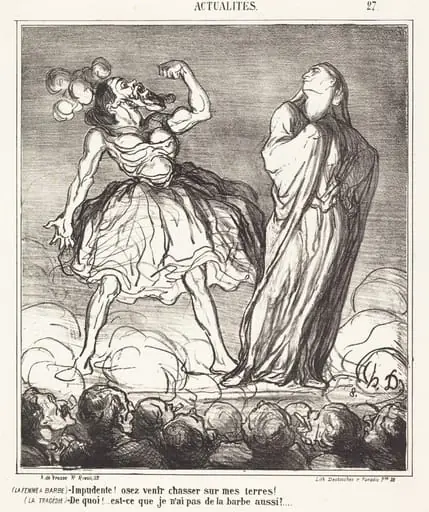 La Femme a barbe
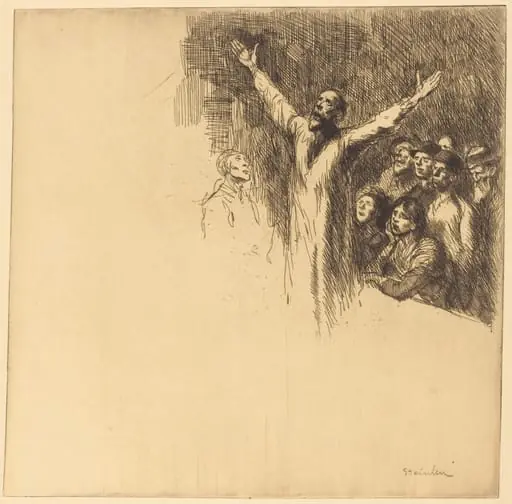 Prophet (Le prophete)
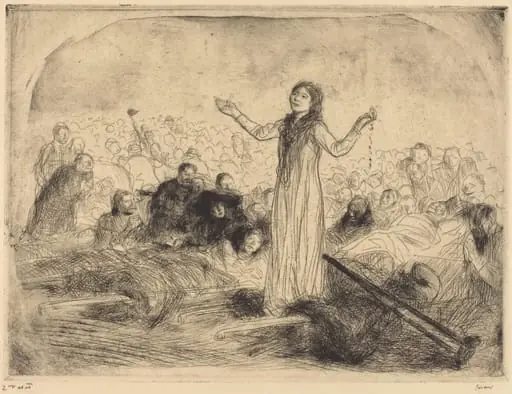 Lourdes, la miraculée (2e planche) (Lourdes, the Miracle) (second plate)
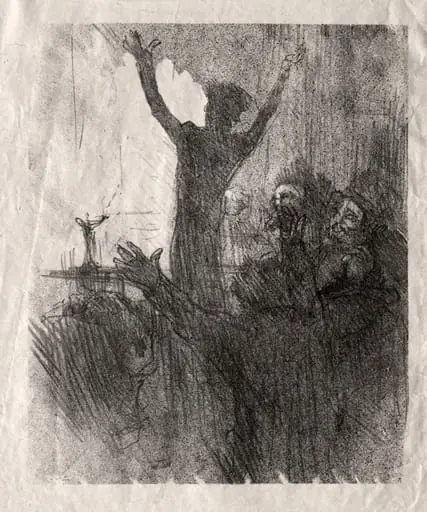 Schlomé Fuss à la Synagogue
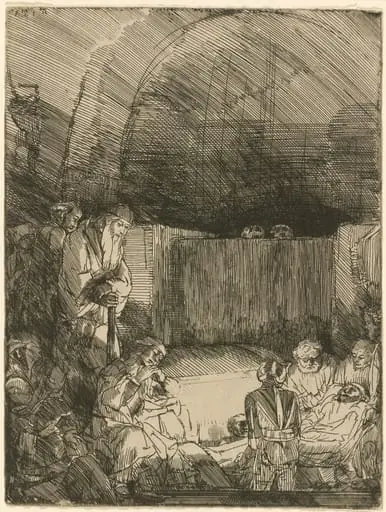 The Entombment
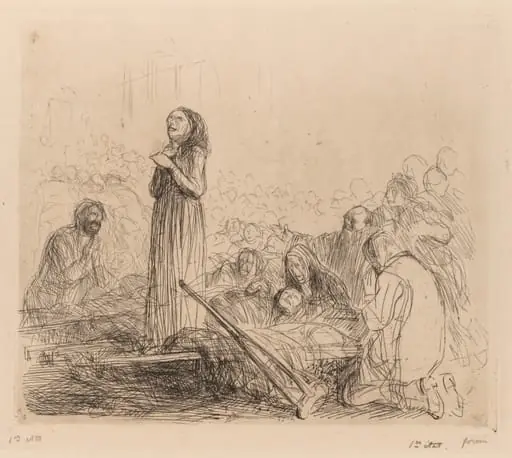 The Miracle before the Blessed Sacrament
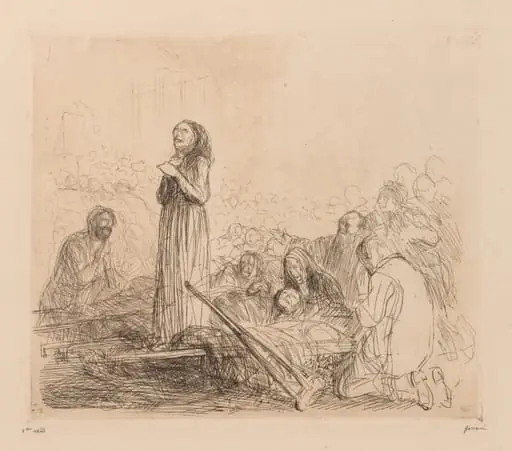 The Miracle at Lourdes
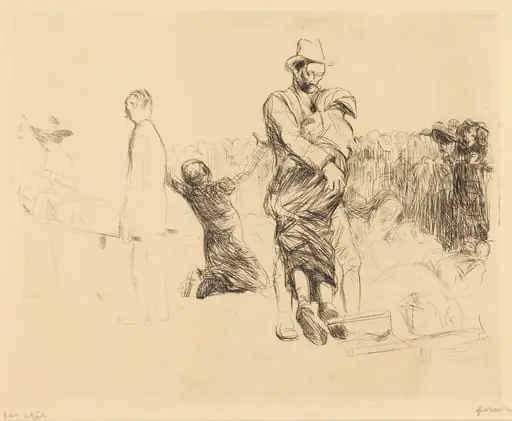 Lourdes, transport des paralysées (Lourdes, Transport of the Paralyzed)
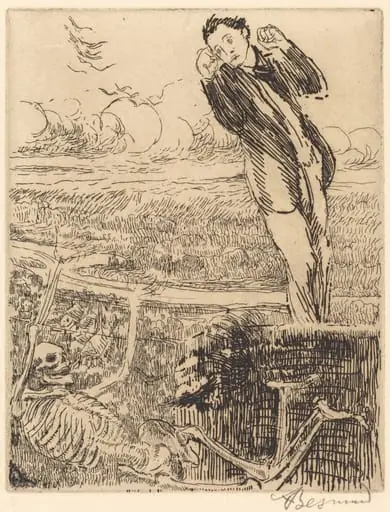 Vertigo (Le vertige)
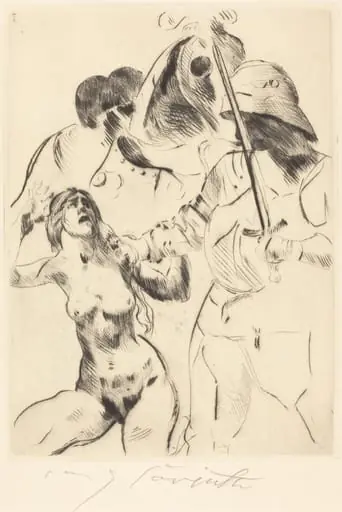 Frauenraub III (Abduction III)
 Le Théâtre d'Eau
 The Triumph of Death: Proclamation (Le triomphe de la mort: La proclamation)