Artwork
Un terrible cauchemar
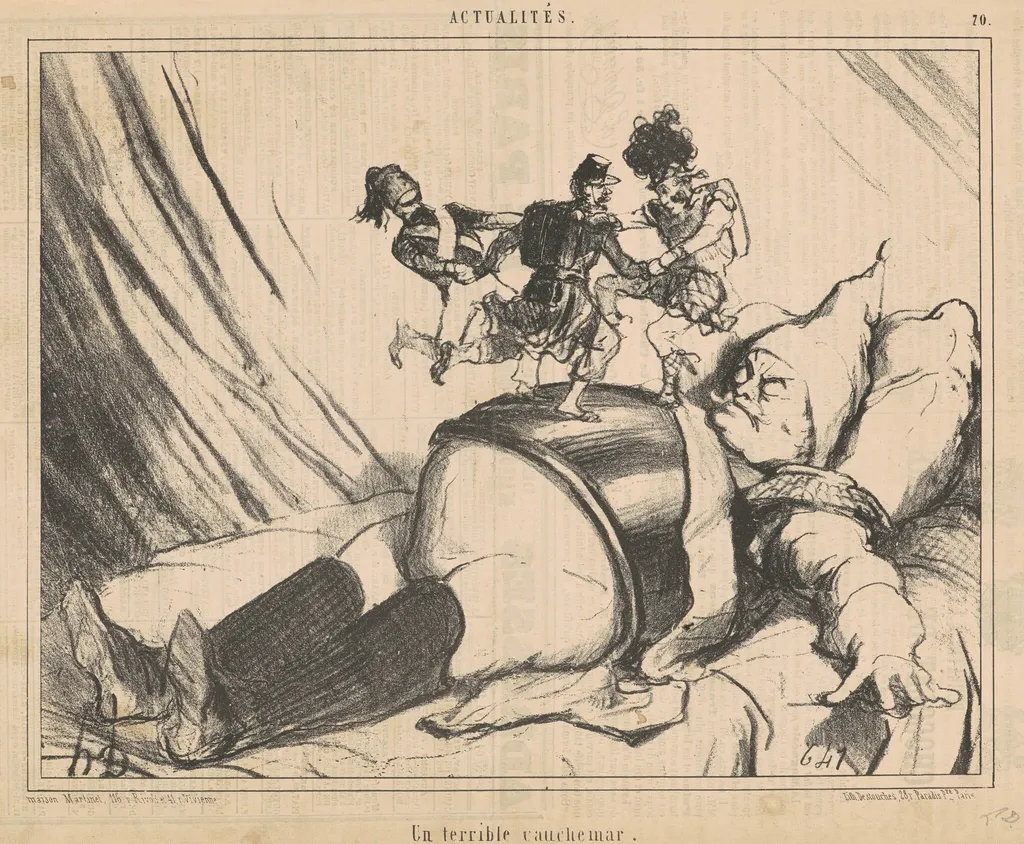
Un terrible cauchemar is an ink print by the Impressionist artist Honoré Daumier. It dates from 1854 and is held in the collection of the National Gallery of Art.
About this work
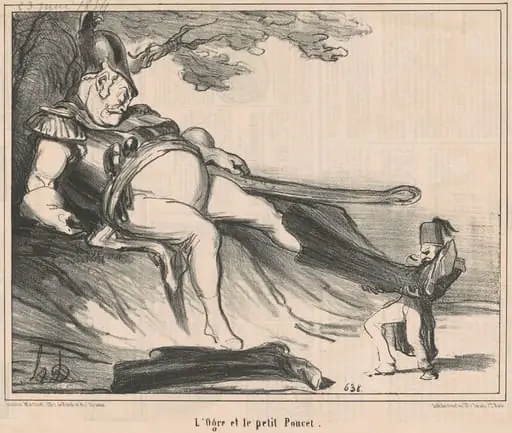
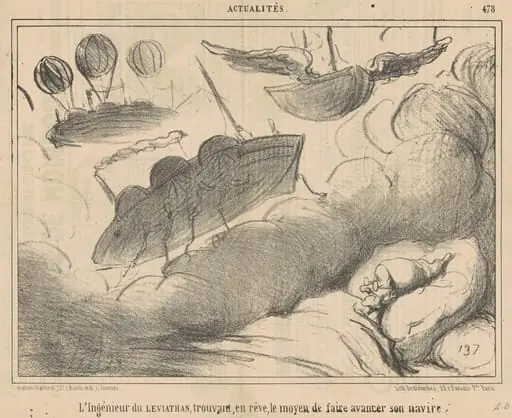
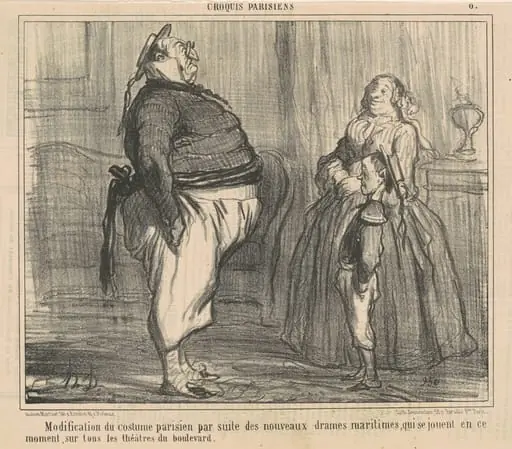
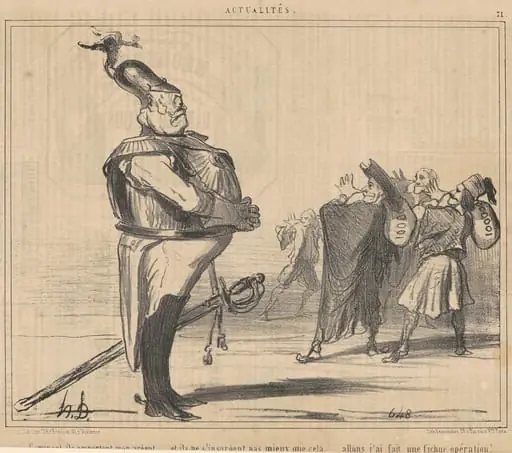
This lithograph shows a huge sleeping man with tiny, dancing figures on his belly. The man looks peaceful. The little figures wear bright costumes and move fast.
It’s funny but also weird. Daumier made this in 1854, before cartoons were common. The scene feels like a dream you can’t control.
See a real one at the National Gallery of Art, Washington.
Overview
The contrast between the sleeper’s stillness and the dancers’ motion generates a quiet tension, blending humor with unease.
Created in 1854, this lithograph by Honoré Daumier presents a surreal nocturnal scene: a massive, slumbering man lies still while a group of diminutive figures perform energetically across his abdomen. The contrast between the sleeper’s stillness and the dancers’ motion generates a quiet tension, blending humor with unease. As a print made before the rise of modern comics, it stands as an early visual exploration of subconscious imagery.
Subject & Meaning
The sleeping giant symbolizes passivity or unconsciousness, while the agile figures on his belly suggest intrusive thoughts, fears, or whimsical impulses rising from within. Their lively gestures and exaggerated costumes evoke theatrical or carnival archetypes, implying dreams as performances beyond the dreamer’s control. The scene captures the irrational logic of sleep, where scale and agency are distorted by the mind’s inner workings.
Technique & Style
Daumier employed lithography to achieve fluid, rapid linework that conveys movement and texture with minimal detail. The sleeping figure is rendered in broad, soft contours, while the dancers are defined by sharp, energetic strokes and vivid costume accents. The absence of shading heightens the flat, stage-like quality, reinforcing the dream’s artificiality and emphasizing the contrast between stillness and motion.
History & Provenance
Produced during Daumier’s mature period, this print was part of a series exploring psychological and social themes through fantasy. It was likely distributed as a standalone image or in periodicals, reaching a broad public. The work is now held in the collection of the National Gallery of Art in Washington, D.C., where it remains a key example of 19th-century graphic satire infused with psychological depth.
Context
In mid-19th-century France, lithography allowed artists to circulate images widely beyond elite audiences. Daumier, known for political caricatures, turned here to the realm of the subconscious, reflecting growing interest in dreams and the unconscious. This work predates Freudian theory but anticipates its themes, using visual metaphor to probe inner life without explicit narrative.
Legacy
Though not widely reproduced in its time, 'Un terrible cauchemar' influenced later surrealists and cartoonists through its imaginative distortion of scale and its quiet, unsettling humor. Its ability to convey psychological states through simple, bold forms helped establish printmaking as a vehicle for exploring the mind’s hidden landscapes, long before the visual language of animation became common.
Artist & collection

Artist
Honoré-Victorin Daumier was a French painter, sculptor, and printmaker, whose many works offer commentary on the social and political life in France, from the Revolution of 1830 to the fall of the Second French Empire in 1870.