Artwork
Un train de plaisir aérien
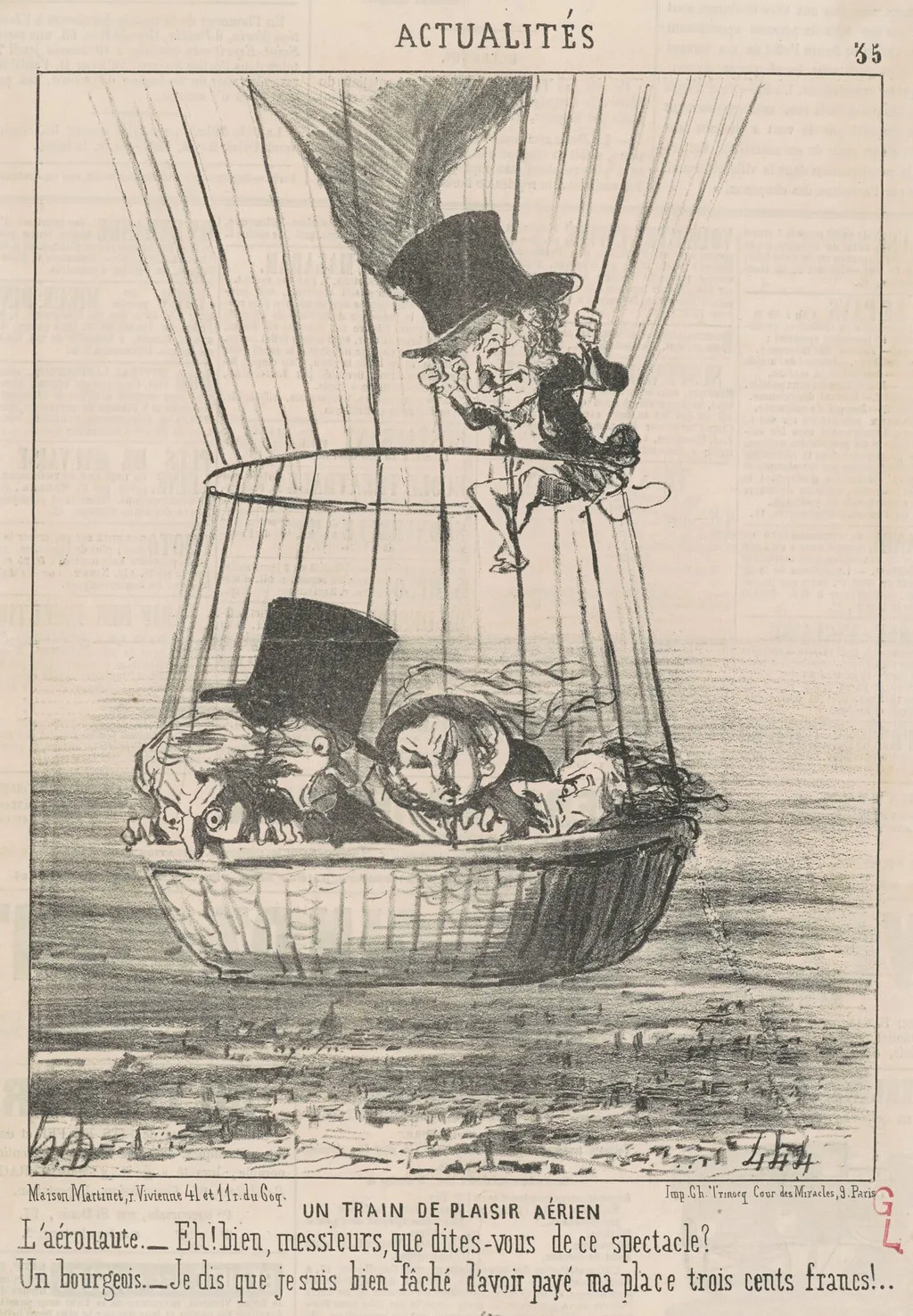
Un train de plaisir aérien is an ink print by the Impressionist artist Honoré Daumier. It dates from 1852 and is held in the collection of the National Gallery of Art.
About this work
Overview
Honoré Daumier’s 1852 lithograph titled *Un train de plaisir aérien* depicts a hot‑air balloon occupied by four figures. The composition is rendered in black‑and‑white line work, typical of the medium, and presents a light‑hearted scene that draws the viewer’s eye to the exaggerated gestures and costumes of the passengers.
Subject & Meaning
The four occupants are rendered with caricatured faces and flamboyant dress, suggesting a satirical take on the pretensions of the upper classes. By placing these ostentatious characters in a precarious aerial setting, Daumier hints at the fragility of social status and invites a humorous critique of contemporary elite frivolity.
Technique & Style
Executed as a lithograph, the work relies on the artist’s direct drawing on a stone surface, allowing for bold, fluid lines and stark contrasts. Daumier’s use of exaggerated physiognomy and exaggerated attire aligns with his broader practice of social satire, while the medium enables rapid production and wide dissemination.
Context
Created during a period of economic hardship for many in mid‑19th‑century France, the image juxtaposes the carefree leisure of the affluent with the broader societal struggles. Daumier’s choice to lampoon the wealthy through a popular print format reflects his engagement with contemporary political and social discourse.
Artist & collection

Artist
Honoré-Victorin Daumier was a French painter, sculptor, and printmaker, whose many works offer commentary on the social and political life in France, from the Revolution of 1830 to the fall of the Second French Empire in 1870.