Artwork
What a stupid idea we had...
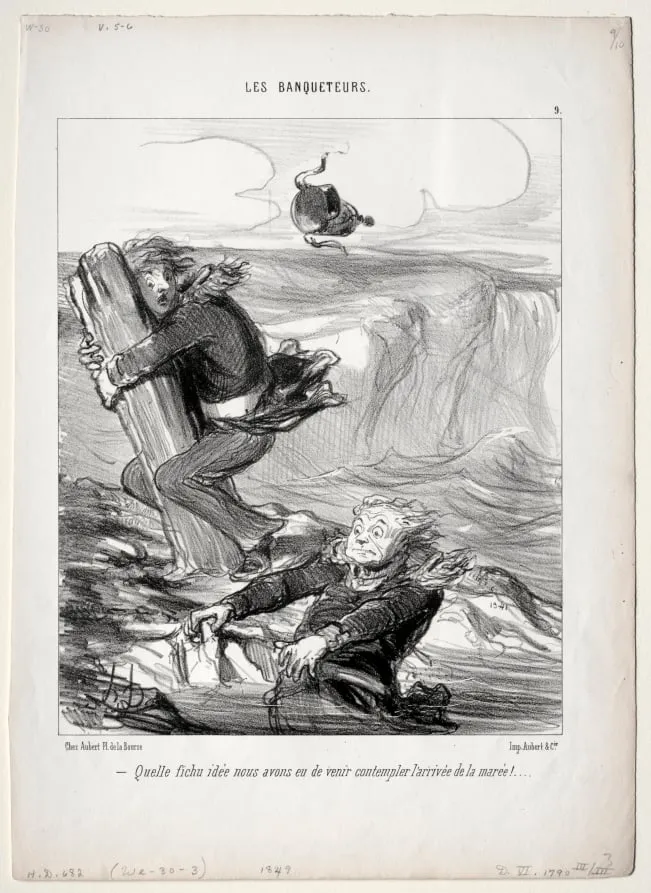
What a stupid idea we had... is a print by the Romanticist artist Honoré Daumier. It dates from 1849 and is held in the collection of the Cleveland Museum of Art.
About this work
The interesting thing about this work is that it seems to be making a point about something, but it's not clear what.
You see a group of people sitting around a table, looking unhappy.
They're dressed in old-fashioned clothes.
The interesting thing about this work is that it seems to be making a point about something, but it's not clear what.
It might be commenting on the people or the situation they're in.
To learn more about the artist who created this, check out the work of artist: Honoré Daumier (French, 1808–1879).
Overview
This print is the ninth plate from the series The Banqueters, created by French artist Honoré Daumier in the mid-19th century. It depicts a group of individuals seated at a formal dining table, their expressions marked by discomfort or disillusionment. Rendered in lithography, the work belongs to a larger body of social commentary that critiques bourgeois customs through satirical observation.
Subject & Meaning
The figures, dressed in period attire, appear detached and weary, their postures suggesting unease rather than conviviality. The scene evokes a sense of ritualistic emptiness, hinting at the hollowness of social performances among the middle class. Daumier does not offer clear moral judgment but invites reflection on the tension between outward propriety and inner dissatisfaction.
Technique & Style
Executed in lithography, the print employs bold, expressive lines and stark contrasts to emphasize emotional tension. Daumier’s loose, gestural strokes convey movement and psychological weight without detailed realism. The composition is tightly framed, focusing attention on the group’s collective stillness, enhancing the sense of quiet unease.
History & Provenance
Created around 1860, this print was part of a series published in a French periodical, intended for a broad readership. Daumier regularly contributed to satirical journals, using print media to reach audiences beyond elite art circles. The Banqueters series was among his later works, reflecting his enduring interest in class behavior and social pretense.
Context
Daumier worked during a period of political instability and rising bourgeois influence in France. His prints often targeted the hypocrisy and monotony of middle-class life, contrasting with the grand narratives of academic art. The Banqueters series emerged as a quiet counterpoint to celebratory depictions of dining and leisure, revealing the strain beneath social rituals.
Legacy
Though not widely exhibited in his lifetime, Daumier’s prints gained recognition in the 20th century for their psychological depth and formal innovation. The Banqueters series influenced later realist and satirical artists, particularly those interested in the emotional undercurrents of everyday life. His use of print as a vehicle for social critique remains a significant contribution to modern visual culture.
Artist & collection

Artist
Honoré-Victorin Daumier was a French painter, sculptor, and printmaker, whose many works offer commentary on the social and political life in France, from the Revolution of 1830 to the fall of the Second French Empire in 1870.









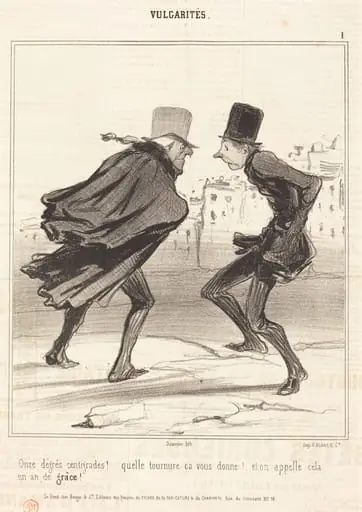 Onze degrés centigrades!
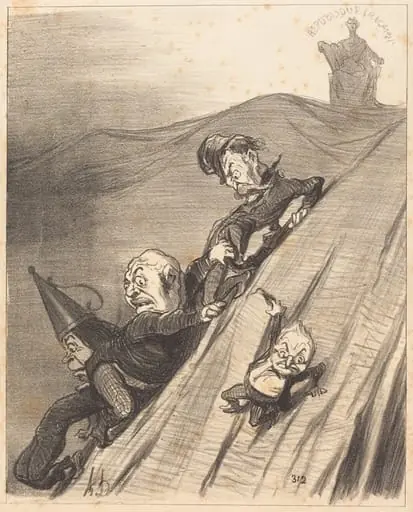 Un Chemin dangereux
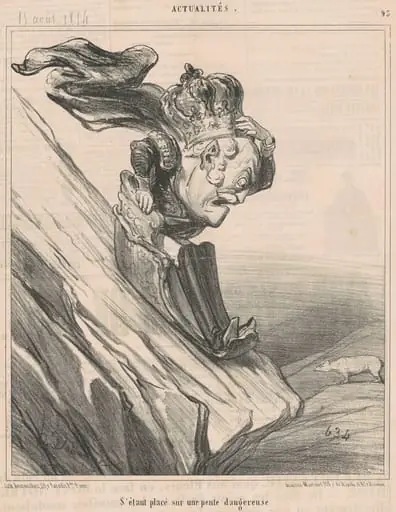 S'étant placé sur une pente dangereuse
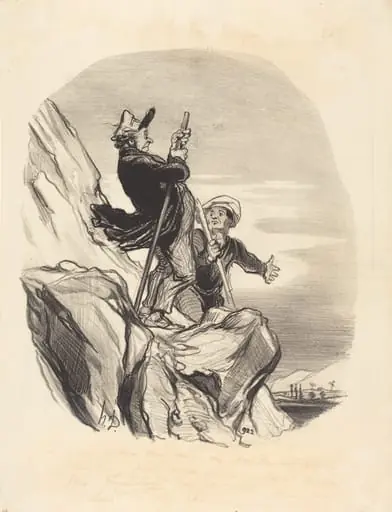 Guide, allons-nous-en... au nom du ciel...
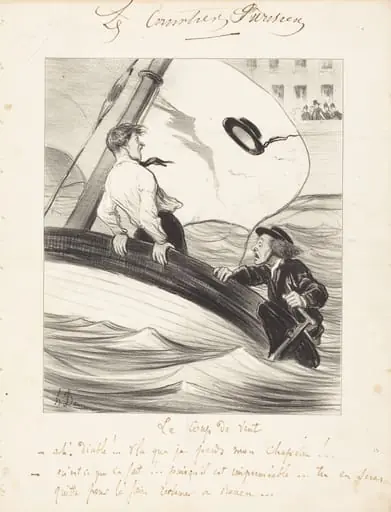 Le Coup de vent
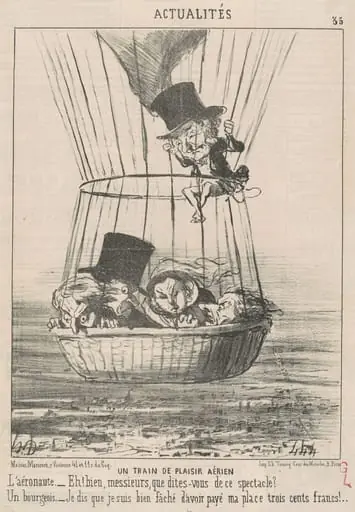 Un train de plaisir aérien
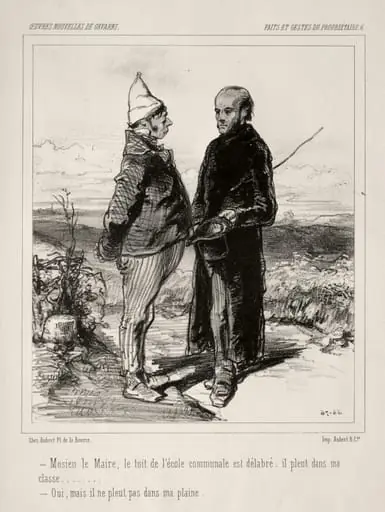 Les Martyrs
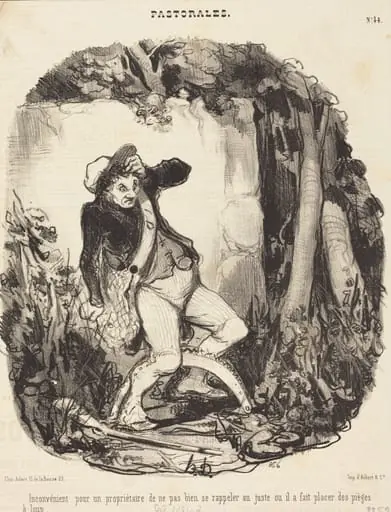 Inconvénient pour un propriétaire de ne pas...
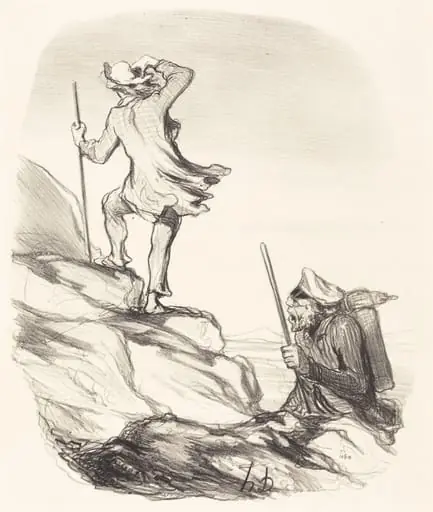 Aperçois-tu un lieu civilisé...
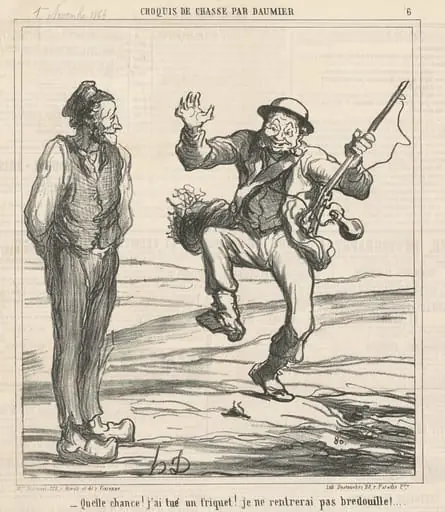 Quelle chance! J'ai tué un frquet!
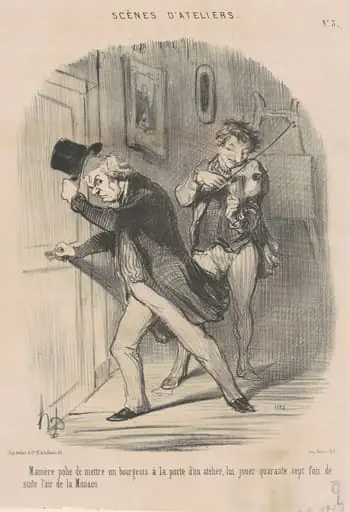 Manière polie de mettre ... a la porte ...
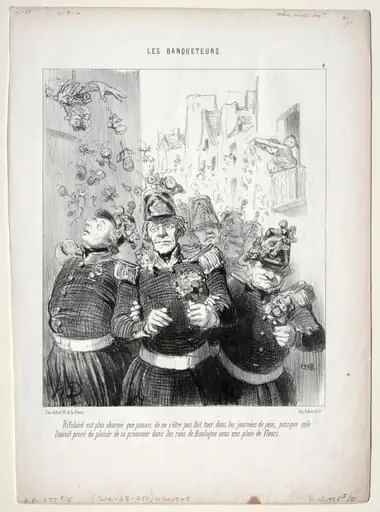 Rifolard is more delighted than ever...