Artwork
Un Train de plaisir un peu trop gai
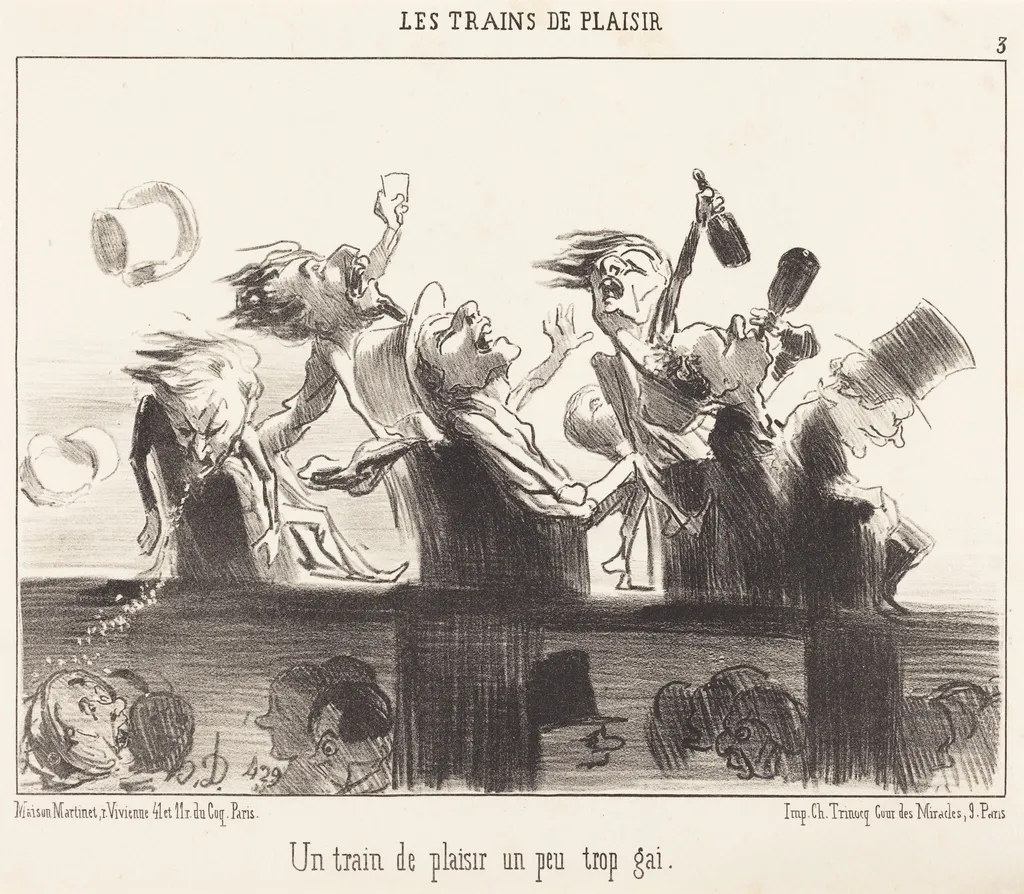
Un Train de plaisir un peu trop gai is an ink print by the Impressionist artist Honoré Daumier. It dates from 1852 and is held in the collection of the National Gallery of Art.
About this work
Overview
Honoré Daumier’s 1852 lithograph titled *Un Train de plaisir un peu trop gai* presents a bustling interior of a railway carriage where passengers indulge in music, dance, and drinking. The composition centers on a group of men, some holding bottles or glasses, others playing instruments, conveying a scene of unrestrained merriment.
Subject & Meaning
The work captures a moment of collective revelry, suggesting a critique of the carefree excesses of contemporary leisure. By emphasizing the boisterous behavior of the passengers, Daumier hints at social commentary on the indulgent attitudes emerging in mid‑nineteenth‑century France.
Technique & Style
Executed in lithography, the image relies on bold, fluid lines and vigorous brush‑like strokes that heighten the sense of movement. Daumier’s characteristic exaggeration of gestures and facial expressions amplifies the energetic atmosphere of the scene.
History & Provenance
Created during Daumier’s prolific period of political and social caricature, the print aligns with his contributions to satirical journals such as *La Caricature* and *Le Charivari*. It forms part of his extensive output of prints that addressed French society from a republican perspective.
Context
The lithograph reflects the broader cultural fascination with railway travel in the 1850s, a symbol of modernity and social mixing. Daumier situates the train as a microcosm where diverse behaviors converge, offering a snapshot of contemporary urban life.
Artist & collection
Artist
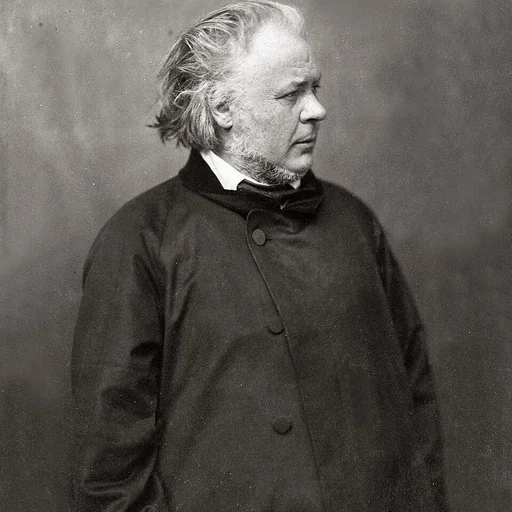
Honoré-Victorin Daumier was a French painter, sculptor, and printmaker, whose many works offer commentary on the social and political life in France, from the Revolution of 1830 to the fall of the Second French Empire in 1870.









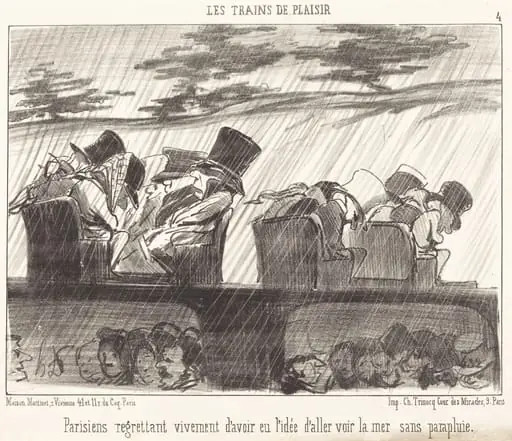 Parisiens regrettant vivement...
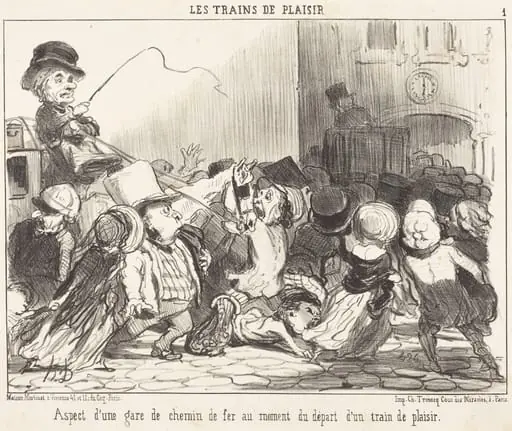 Aspect d'une gare de chemin de fer...
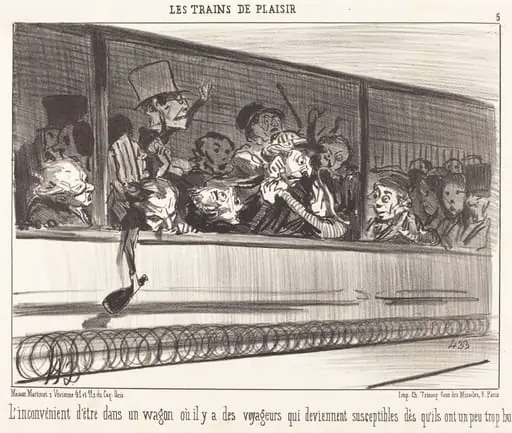 L'Inconvénient d'être dans un wagon...
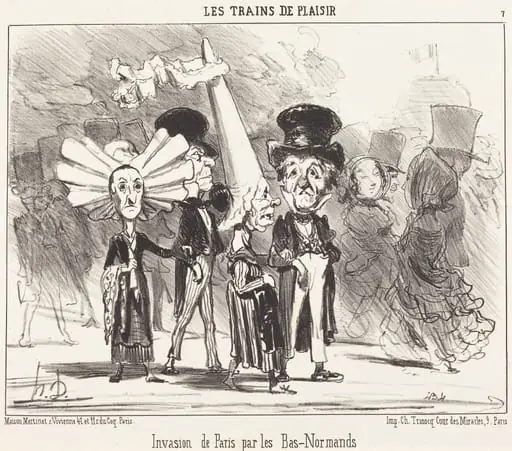 Invasion de Paris par les Bas-Normands
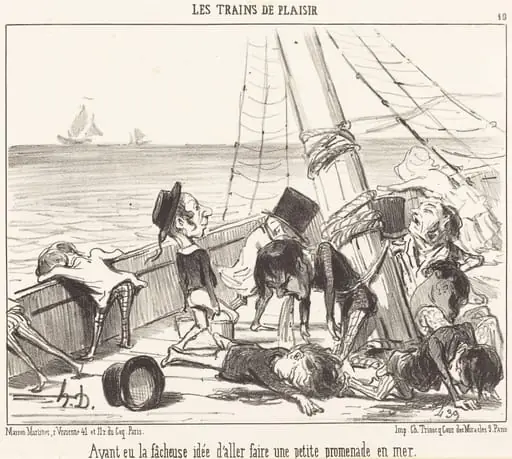 Ayant eu la facheuse idée d'aller... en mer
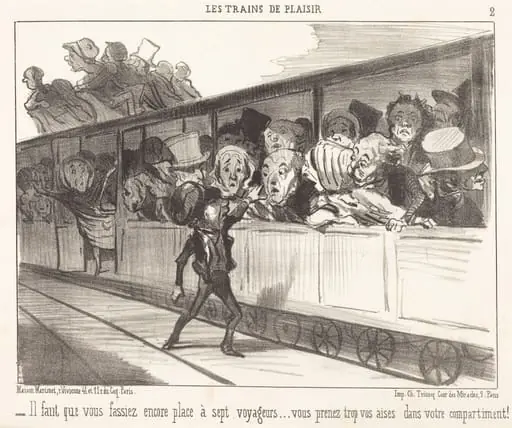 Il faut que vous fassiez encore place...
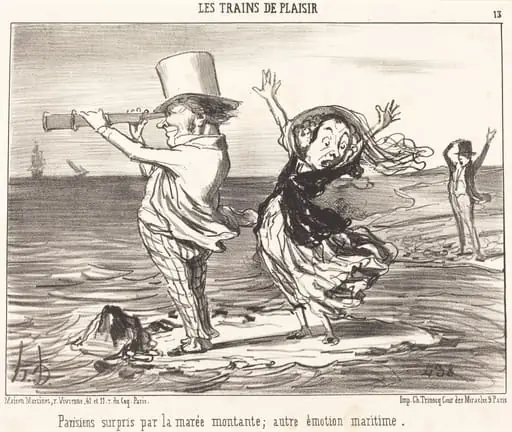 Parisiens surpris par la marée...
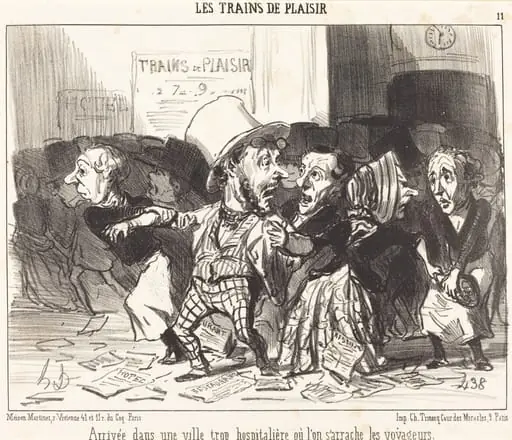 Arrivée dans une ville trop hospitalière...
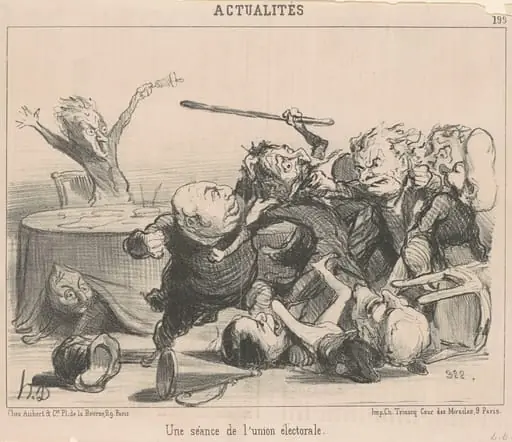 Une séance de l'union électorale