Artwork
Une Charge déplacée
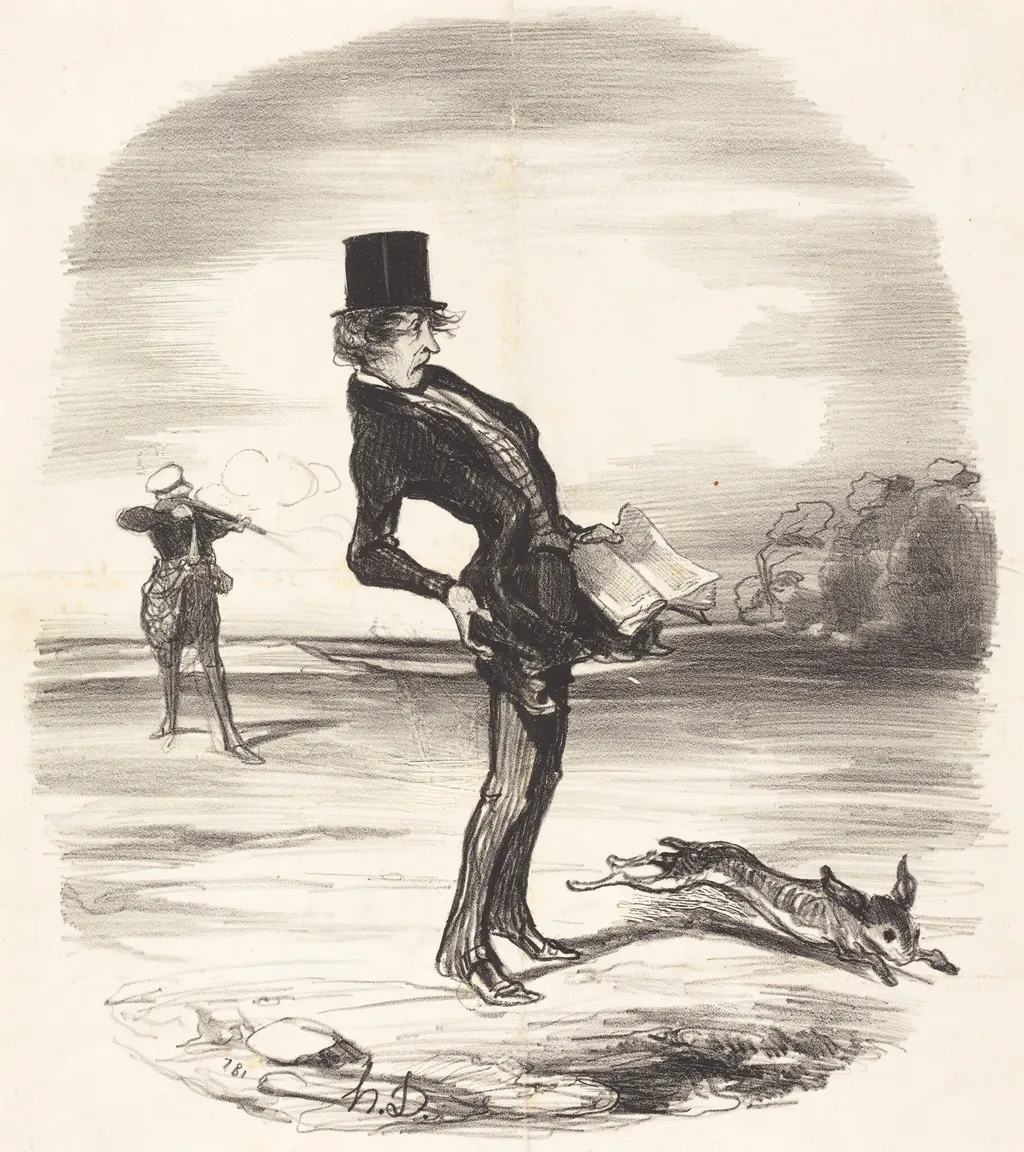
Une Charge déplacée is an ink print by the Romanticist artist Honoré Daumier. It dates from 1845 and is held in the collection of the National Gallery of Art.
About this work
Overview
Created in 1845, *Une Charge déplacée* is a lithograph by Honoré Daumier that captures a moment of social absurdity through rapid, expressive lines.
Created in 1845, *Une Charge déplacée* is a lithograph by Honoré Daumier that captures a moment of social absurdity through rapid, expressive lines. Executed in the medium of lithography, it reflects Daumier’s commitment to visual satire as a tool for public critique. The image’s unfinished appearance and loose handling align with his practice of translating journalistic wit into printed form, often published in periodicals targeting urban audiences.
Subject & Meaning
The scene depicts a man in formal attire, clutching an open book, while a dog pulls an unseen object on a leash. A woman in the background glances back, suggesting detachment or disapproval. The title, meaning 'a displaced burden,' implies the man carries an intellectual or moral weight he cannot manage. The dog’s action subverts the expected hierarchy between human and animal, hinting at the absurdity of societal pretensions.
Technique & Style
Daumier employed swift, gestural lines and tonal washes to convey motion and instability. The background is blurred, and water-like splashes suggest a transient, chaotic environment. Lithography allowed him to mimic the spontaneity of sketching, enhancing the immediacy of his critique. The lack of fine detail forces focus on posture and gesture, turning the image into a visual metaphor rather than a literal narrative.
History & Provenance
The print was produced during Daumier’s most active period of political satire, following his imprisonment for caricaturing King Louis-Philippe. Though not as widely circulated as his courtroom scenes or bourgeois parodies, *Une Charge déplacée* emerged from the same editorial circles that supported *Le Charivari*. Its survival in private and institutional collections reflects its status as a representative example of his printmaking output.
Context
In mid-1840s France, censorship tightened under Louis-Philippe’s regime, yet satirical prints thrived in underground publications. Daumier’s work responded to public disillusionment with elite institutions and the performative nature of education and authority. The book in the man’s hands may symbolize hollow intellectualism, while the dog’s drag hints at forces beyond human control—echoing broader anxieties about social order and responsibility.
Legacy
Daumier’s use of lithography to compress complex social critiques into single images influenced generations of illustrators and cartoonists. *Une Charge déplacée* exemplifies his ability to transform everyday scenes into layered commentary without overt symbolism. Its raw execution and psychological nuance remain benchmarks for visual satire, demonstrating how modest techniques could convey profound societal observation.
Artist & collection
Artist
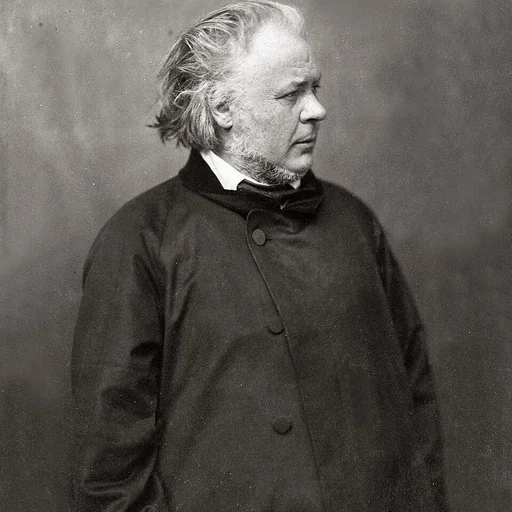
Honoré-Victorin Daumier was a French painter, sculptor, and printmaker, whose many works offer commentary on the social and political life in France, from the Revolution of 1830 to the fall of the Second French Empire in 1870.








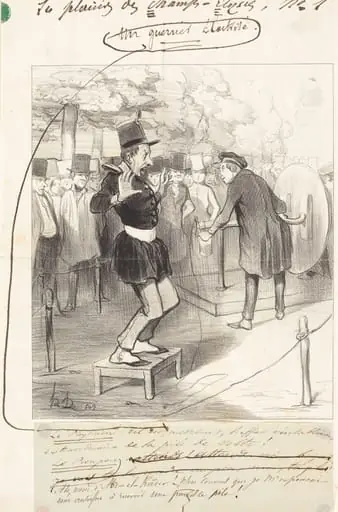 Une Guerrier électrisé
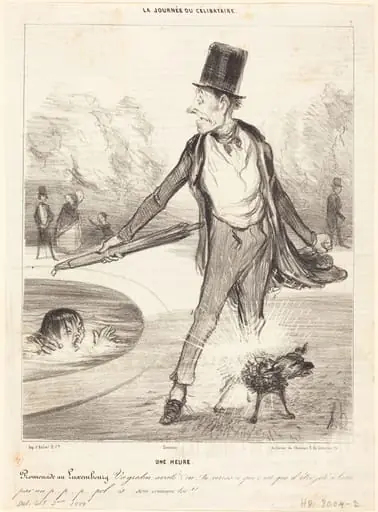 Une heure - Promenade au Luxembourg
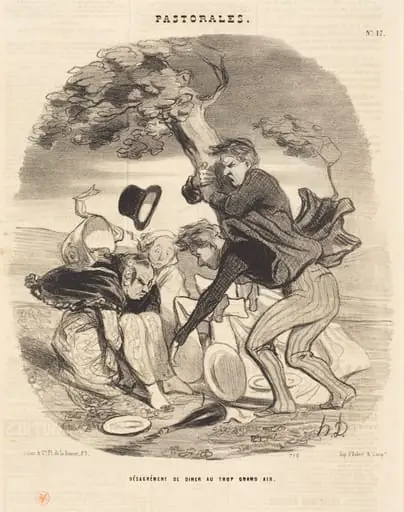 Désagrément de diner au trop grand air
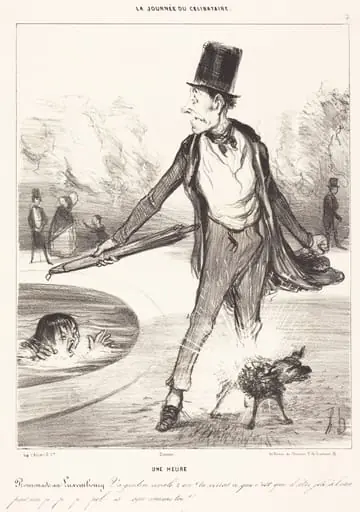 Une heure
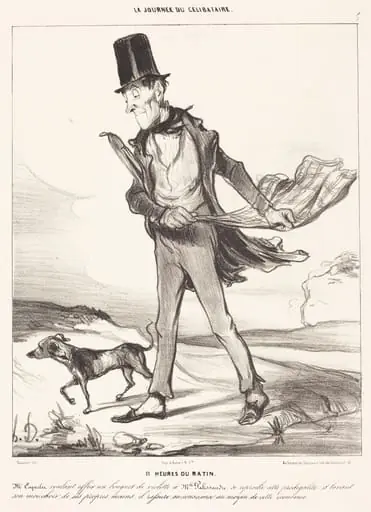 11 heures du matin
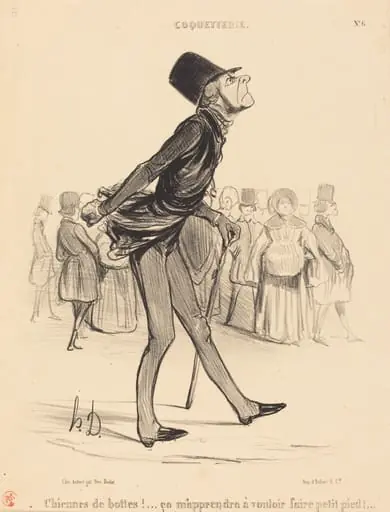 Chiennes de bottes!...
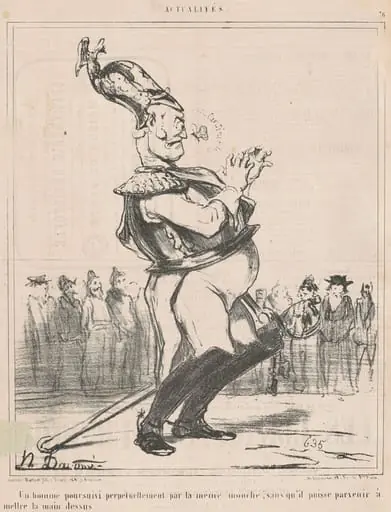 Un homme poursuivi ...
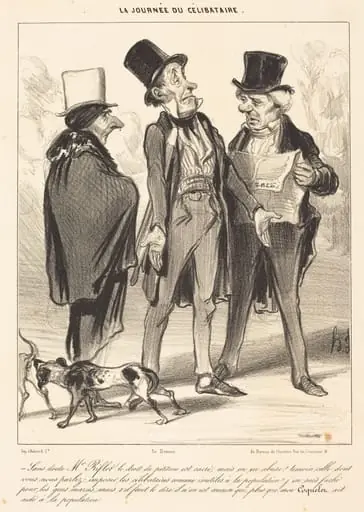 Sans doute M. Riflot le droit...
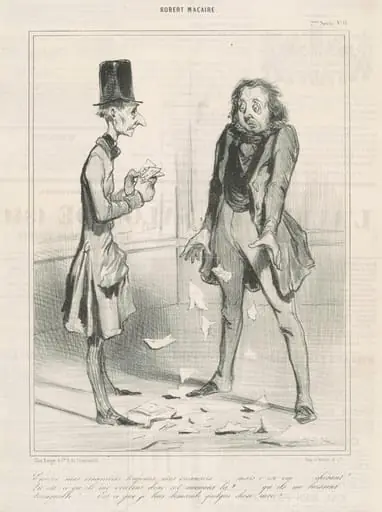 Encore mes créanciers, toujours ...
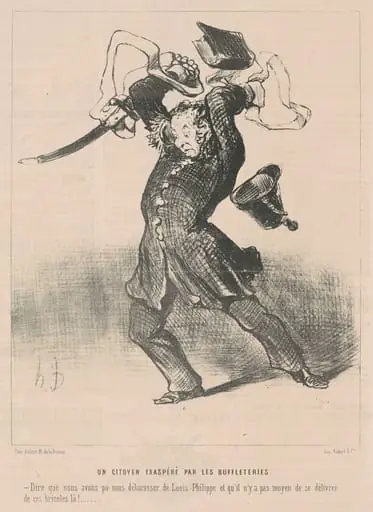 Un citoyen exaspéré par les buffleteries
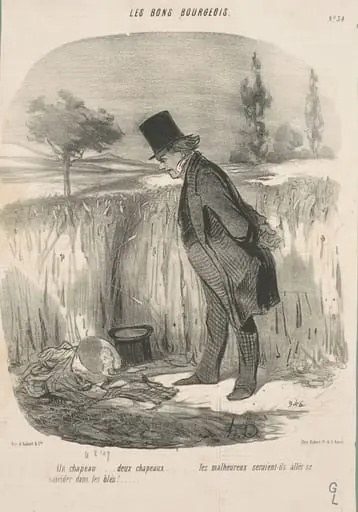 Un chapeau ... deux chapeaux ... les malheureux ...
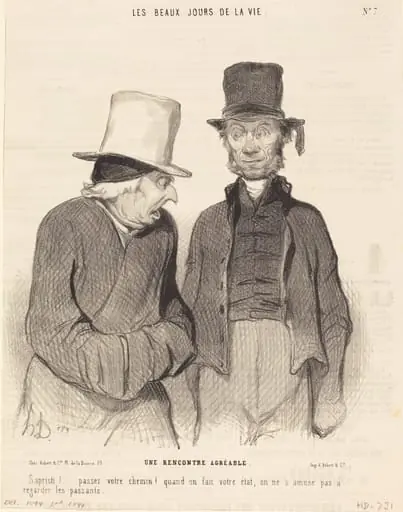 Une Rencontre agréable