Artwork
Une erreur excuable
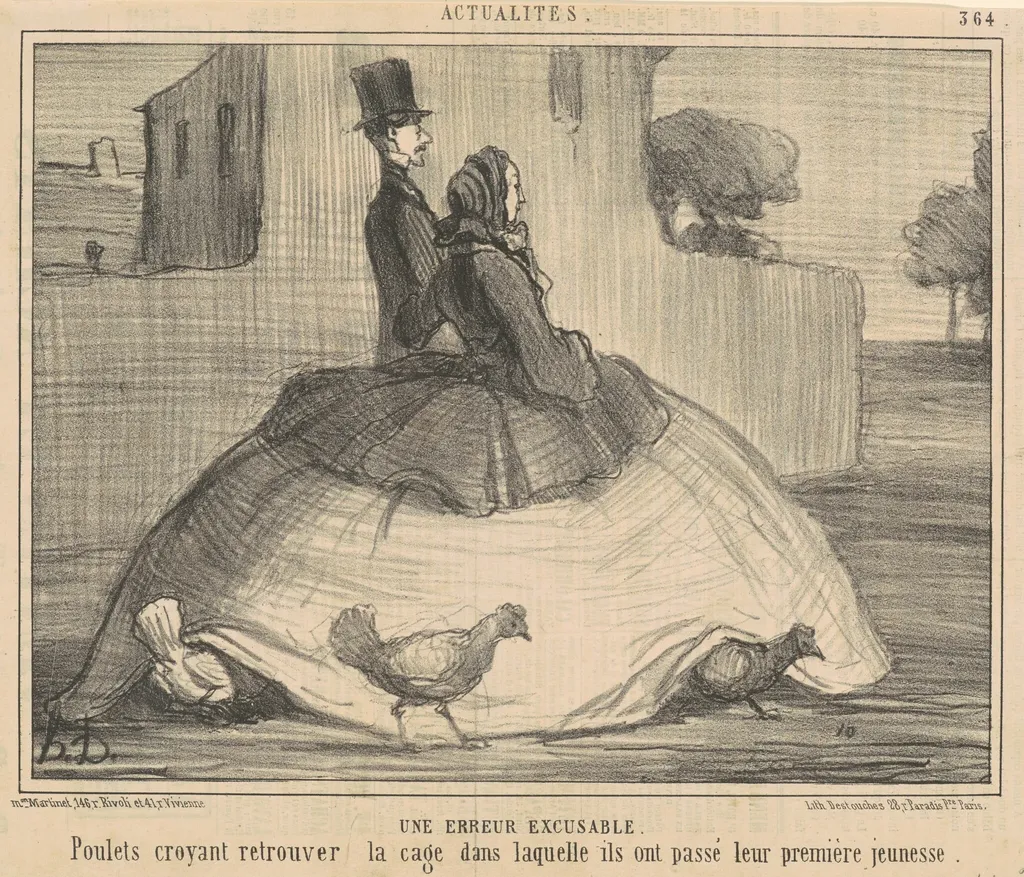
Une erreur excuable is an ink print by the Impressionist artist Honoré Daumier. It dates from 1857 and is held in the collection of the National Gallery of Art.
About this work
Overview
Honoré Daumier’s lithograph 'Une erreur excusable' captures a quiet domestic moment between two figures in a modest outdoor setting. The composition centers on a man and woman seated near each other, with chickens scattered around them. The scene’s simplicity and unembellished atmosphere reflect Daumier’s interest in everyday life, rendered without theatricality or idealization.
Subject & Meaning
The figures—an older man in a tall hat and a woman in a bonnet and full skirt—suggest a rural or lower-middle-class couple.
The figures—an older man in a tall hat and a woman in a bonnet and full skirt—suggest a rural or lower-middle-class couple. Their proximity implies intimacy, yet their lack of direct interaction introduces ambiguity. The presence of chickens, common in domestic settings, grounds the scene in practical reality. The title, suggesting a forgivable mistake, may hint at social missteps or unspoken tensions within their relationship.
Technique & Style
Daumier employed lithography to achieve fluid, expressive lines with minimal detail. The background is lightly sketched, suggesting trees and a distant structure without precision, allowing the figures to dominate. His use of tone and sparse shading emphasizes form over texture, characteristic of his graphic style. The technique enabled rapid reproduction, aligning with his broader practice of social commentary through accessible imagery.
History & Provenance
Created in the mid-19th century, this work belongs to Daumier’s extensive body of lithographs produced for periodicals and private collections. Though not part of a widely known series, it reflects his consistent focus on ordinary people during a period of rapid social change in France. Its survival in private and institutional collections attests to its enduring interest among collectors of 19th-century printmaking.
Context
Daumier worked amid France’s shifting class structures, where urbanization and industrialization altered traditional rural life. His prints often depicted the quiet struggles and peculiarities of common people. This scene, with its unremarkable setting and unglamorous figures, aligns with his broader project of documenting social reality without sentimentality, contrasting with the romanticized imagery popular in academic art of the time.
Legacy
Daumier’s lithographs, including this one, influenced later generations of realist and modernist artists who valued observational honesty over idealization. Though less celebrated than his political caricatures, works like 'Une erreur excusable' demonstrate his sensitivity to human behavior in mundane contexts. They remain important for understanding how printmaking served as a vehicle for quiet, persistent social observation in 19th-century France.
Artist & collection
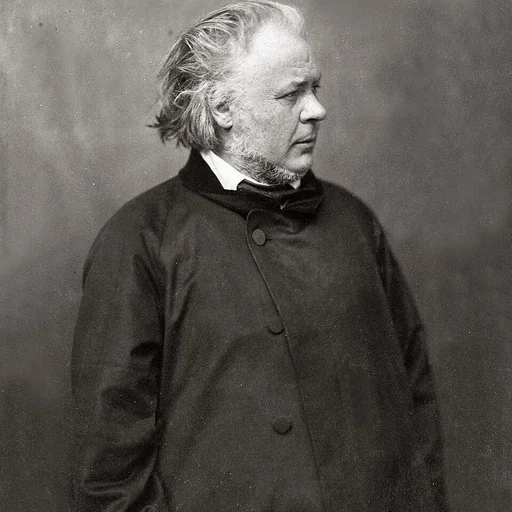
Artist
Honoré-Victorin Daumier was a French painter, sculptor, and printmaker, whose many works offer commentary on the social and political life in France, from the Revolution of 1830 to the fall of the Second French Empire in 1870.

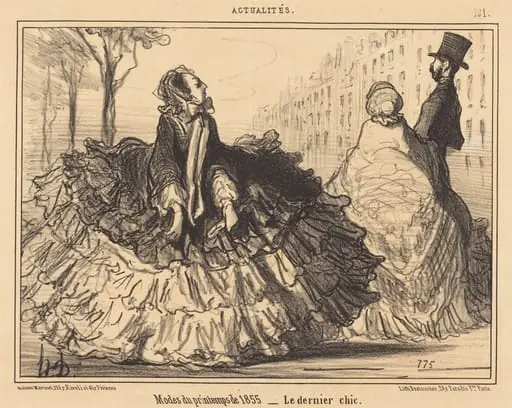 Modes du printemps de 1855
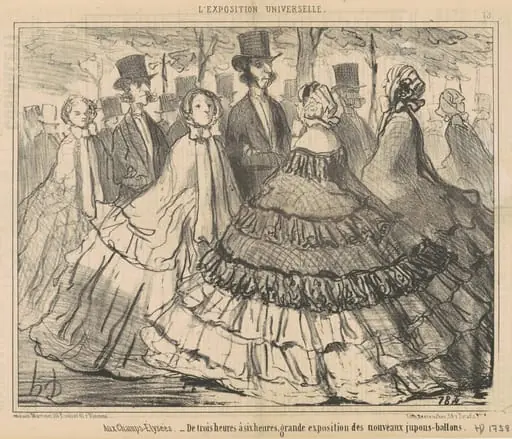 Aux Champs-Elysées...De trois a six heures
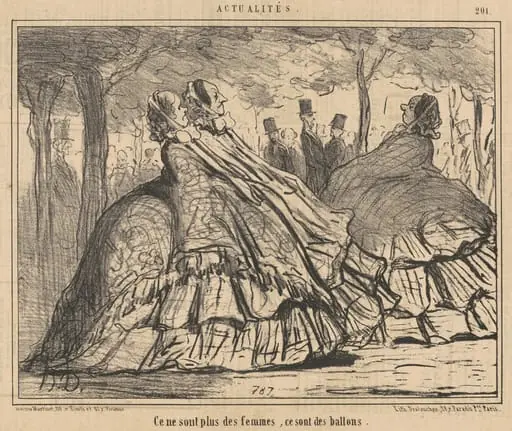 Ce ne sont plus des femmes, ce sont des ballons
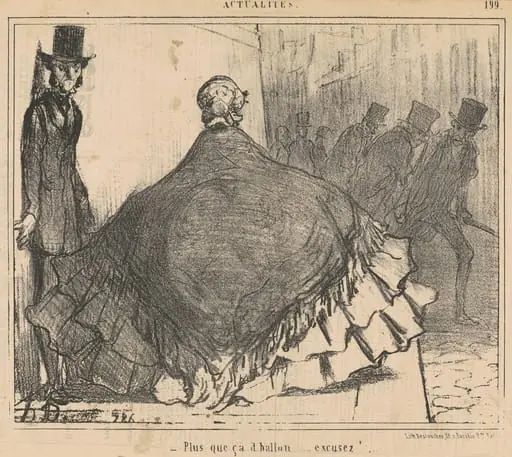 Plus que ca d'ballon ... Excusez! ...
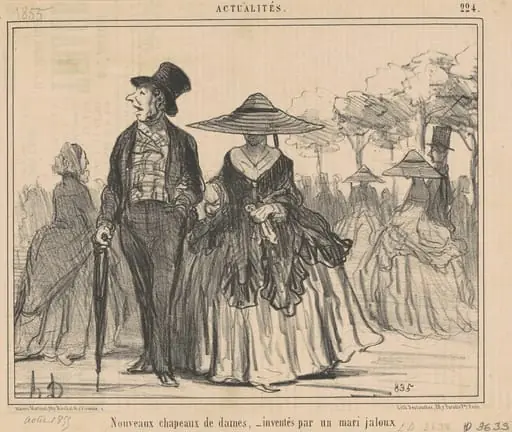 Nouveaux chapeaux de dames ...
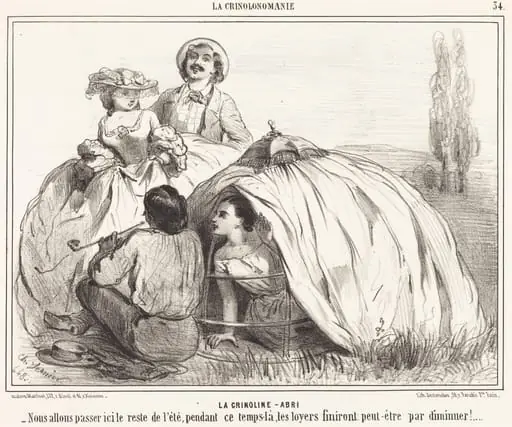 La Crinoline-Abri
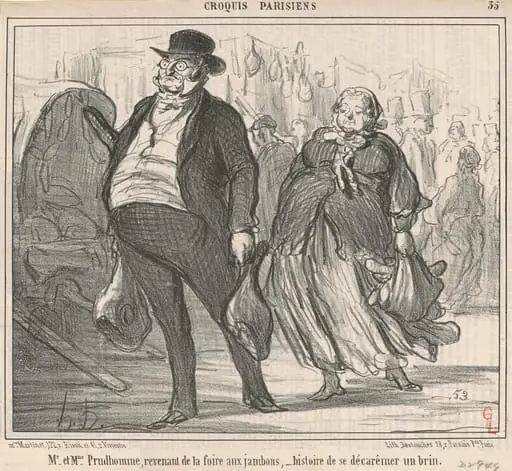 Mr et Mme Prudohomme revenant de la foire ...
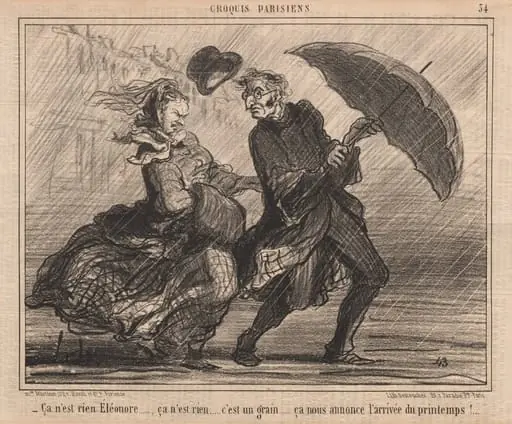 It's nothing Eleanor...
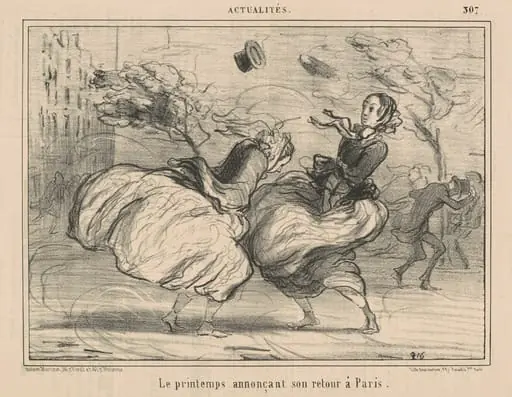 Le printemps annonçant son retour à Paris
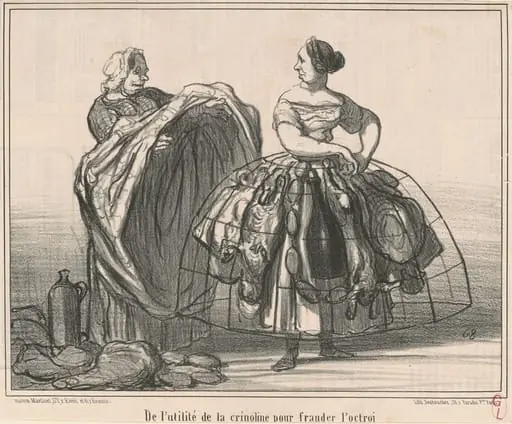 De l'utilité de la crinoline pour frauder l'octroi