Artwork
Une Gloire éteint l'autre
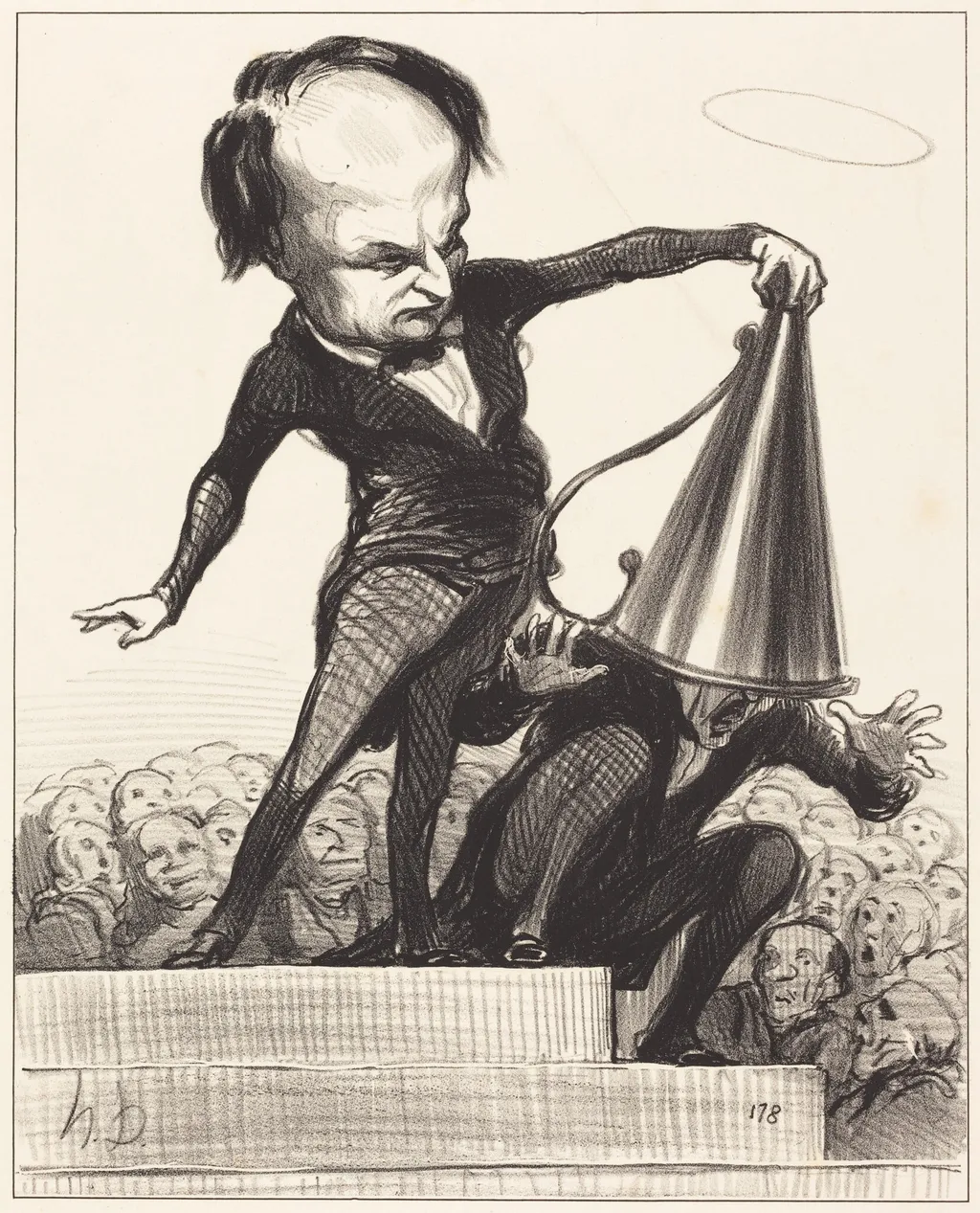
Une Gloire éteint l'autre is an ink print by the Romanticist artist Honoré Daumier. It dates from 1849 and is held in the collection of the National Gallery of Art.
About this work
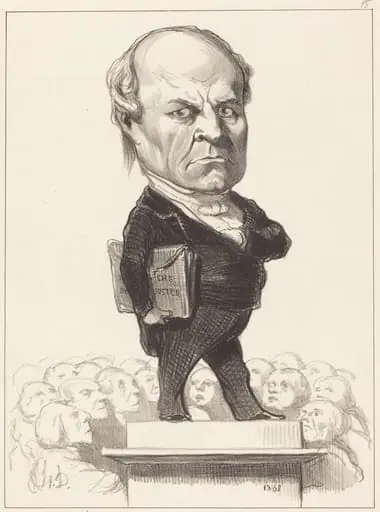
Below him, a crowd of small, blurry faces watches from a stage or platform, some reaching up in shock.
This sketch shows a big, exaggerated man in a suit, tipping over like a toppling tower. He’s holding a cone hat in one hand and kicking wildly with his legs. Below him, a crowd of small, blurry faces watches from a stage or platform, some reaching up in shock.
The artist used thick, dark lines to make the figure look unstable and silly. The date "1789" is scribbled in the corner, but that’s likely a mistake—this was made much later.
Want to know more? Check out lithography.
Overview
Created around 1849, this lithograph by Honoré Daumier, titled *Une Gloire éteint l’autre*, presents a caricature of a towering, exaggerated gentleman in a suit, teetering as if about to collapse. He clutches a conical hat and flails his legs, while a vague crowd of onlookers watches from a raised platform, their faces indistinct and their gestures startled.
Subject & Meaning
The work satirizes the pretensions of authority, portraying a figure of power rendered unstable and absurd. By juxtaposing the dominant, top‑heavy figure with a mass of indistinct spectators, Daumier underscores the fragility of hierarchical status and the public’s reaction to its potential downfall.
Technique & Style
Daumier employs bold, thick lines to emphasize the figure’s wobbling posture and to convey a sense of comic instability. The lithographic process allows for stark contrasts between dark outlines and lighter spaces, enhancing the visual irony and the exaggerated proportions that characterize his satirical style.
History & Provenance
Produced during a period of political turbulence in France, the print follows Daumier’s extensive output of socially critical images for newspapers such as *La Caricature* and *Le Charivari*. Although a date of “1789” appears in the margin, scholars consider it a later addition rather than an indication of the work’s actual creation date.
Context
The lithograph belongs to Daumier’s broader republican agenda, which consistently targeted the monarchy, aristocracy, and clergy. Its creation coincides with the aftermath of the 1848 revolutions and the waning years of the Second Empire, a time when the artist’s visual commentary on power structures resonated with contemporary public discourse.
Own this work as a print
Artist & collection
Artist
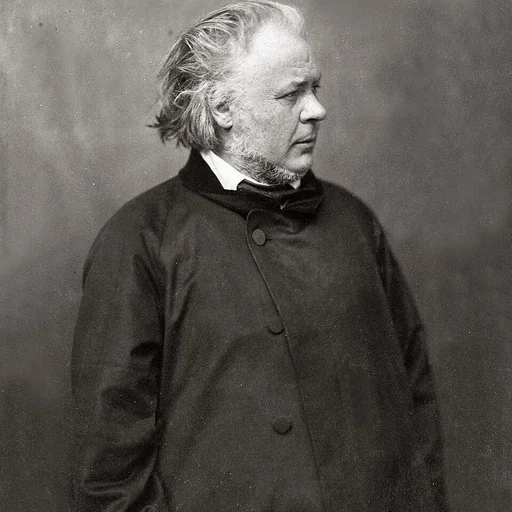
Honoré-Victorin Daumier was a French painter, sculptor, and printmaker, whose many works offer commentary on the social and political life in France, from the Revolution of 1830 to the fall of the Second French Empire in 1870.

 C.H. Odilon Barrot
 Alex. Thomas Marie
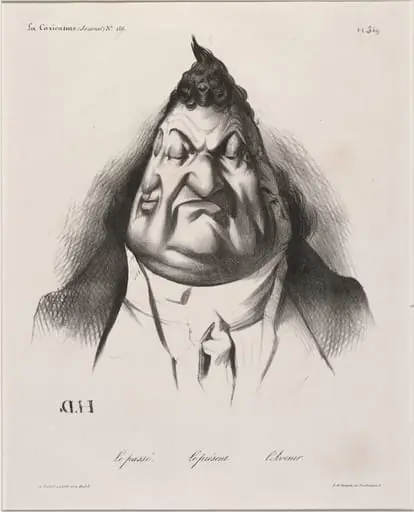 Le passé - Le présent - l'Avenir
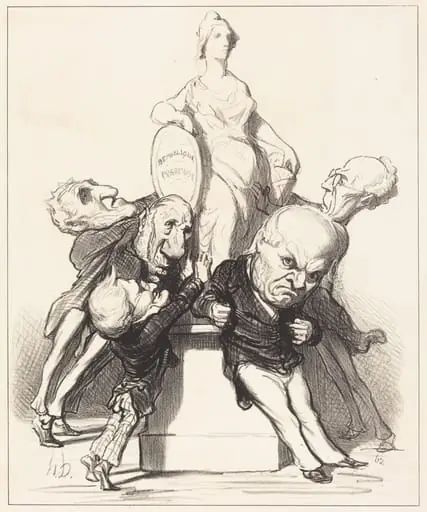 Ils prétendent qu'ils la soutiennent
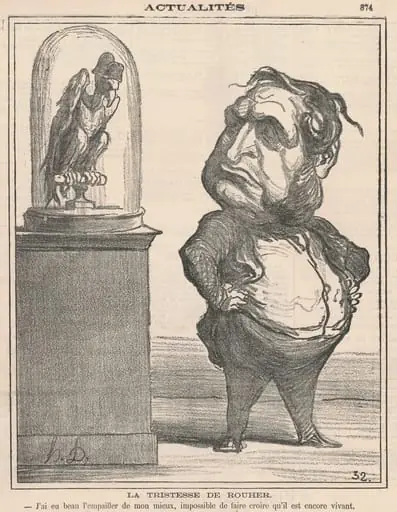 La Tristesse de Rouher
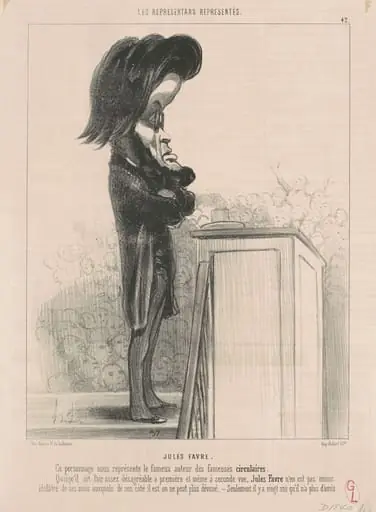 Jules Favre
 Quand un orateur ennuyeux monte a la tribune
 Achille Fould
 Un homme poursuivi ...
 Henri Monnier (Rôle de Joseph Prudhomme)
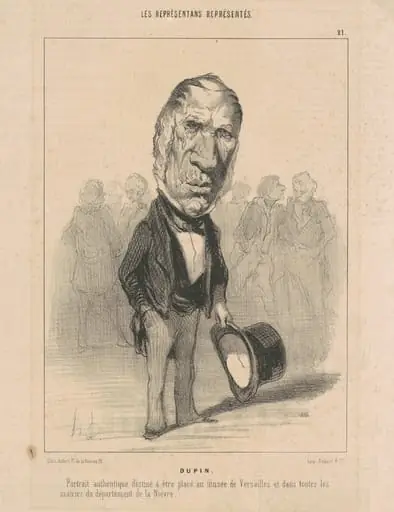 J. Jacques Dupin
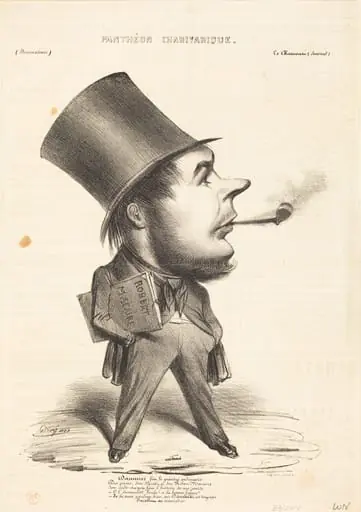 Daumier fut le peintre ordinaire...