Artwork
Une mine d'or qui dort
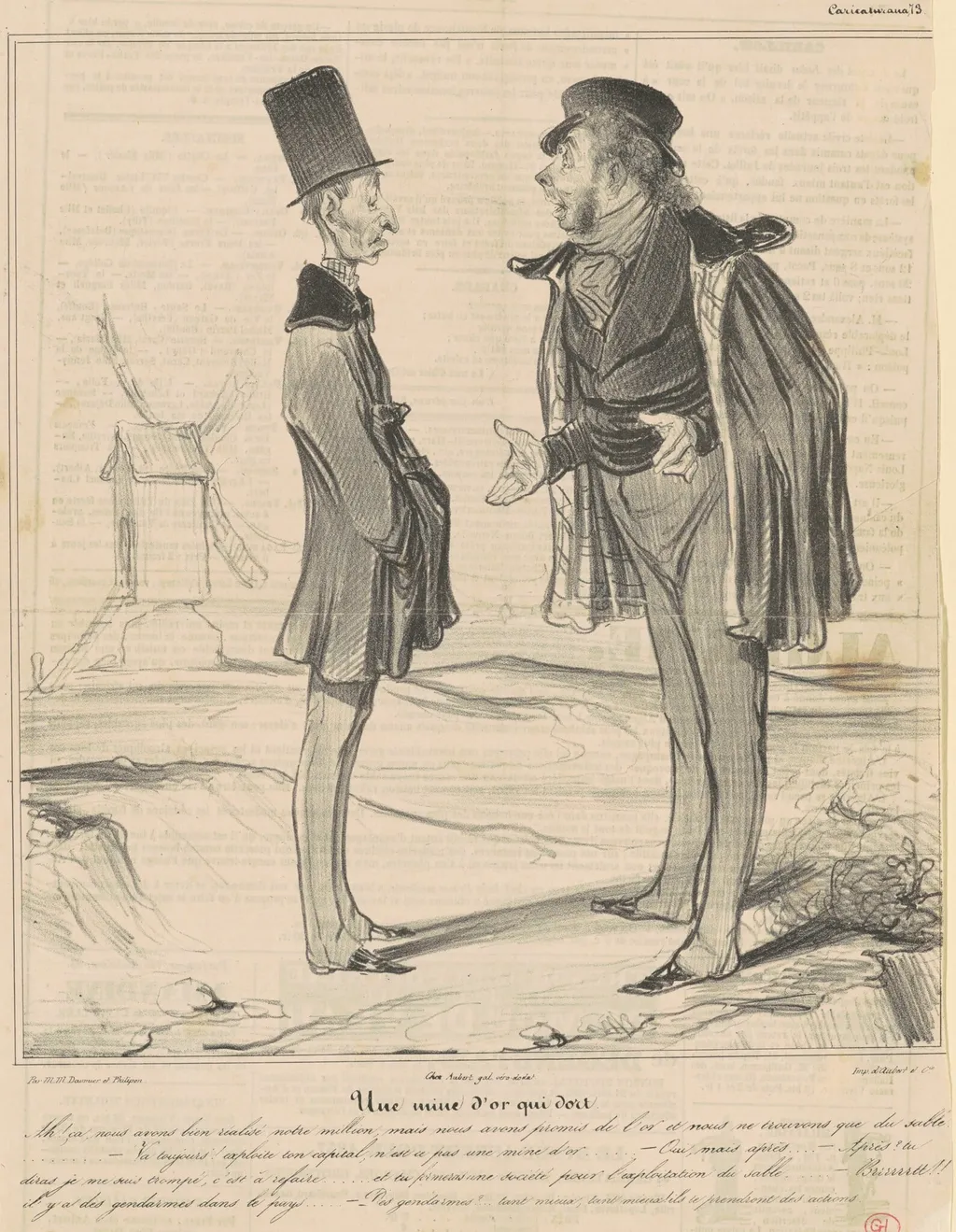
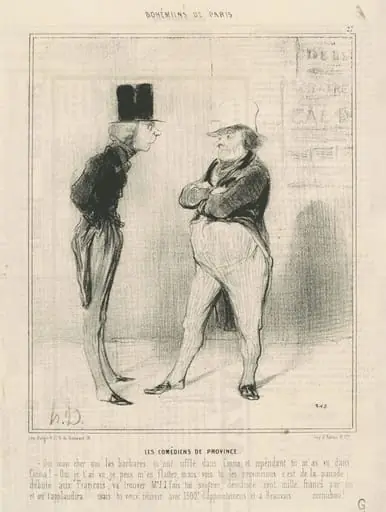
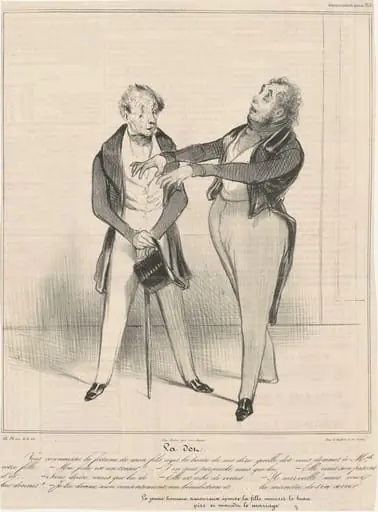
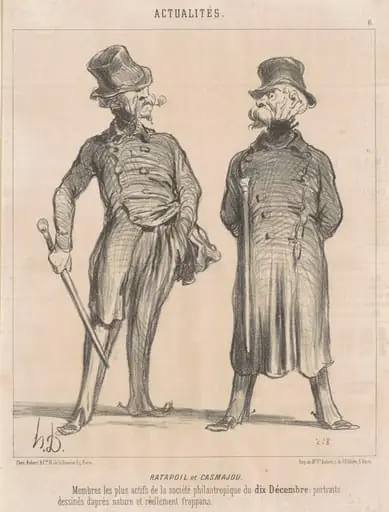
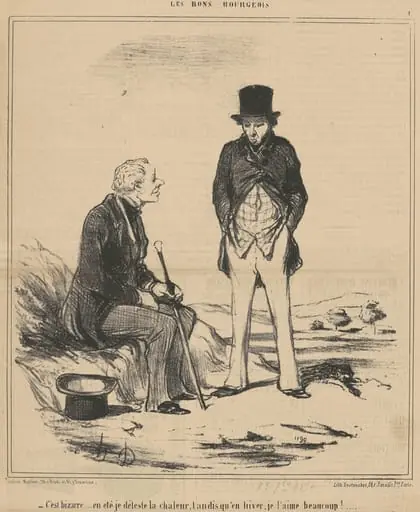
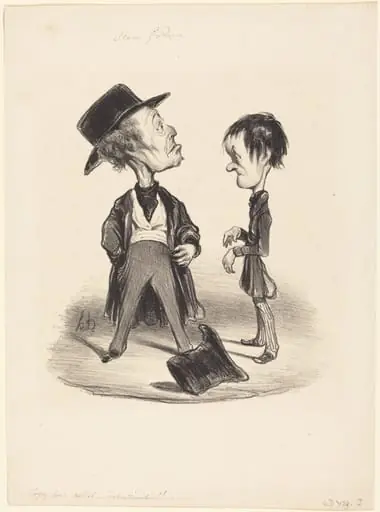
Une mine d'or qui dort is an ink print by the Romanticist artist Honoré Daumier. It dates from 1838 and is held in the collection of the National Gallery of Art.
About this work
Overview
Une mine d'or qui dort is a lithograph print by Honoré Daumier, depicting a full-body conversation between two individuals with distinct appearances, conveying social commentary through their attire and expressive gestures.
Subject & Meaning
The lithograph captures an interaction between two figures of apparent differing social statuses, as evidenced by their clothing and animated body language, offering insight into the societal dynamics of the time.
Technique & Style
Daumier employs lithography to blend humor with social critique, characteristic of his style, where the contrast in the subjects' gestures and dress underscores the commentary.
Context
Created during a period when social satire was gaining prominence, Daumier's use of humor to address social issues was innovative, reflecting the artist's ability to engage audiences with nuanced commentary.
Legacy
Une mine d'or qui dort contributes to Daumier's legacy as a pioneer in using lithography for social commentary, influencing future artists in blending humor with critique to reflect societal realities.
Artist & collection

Artist
Honoré-Victorin Daumier was a French painter, sculptor, and printmaker, whose many works offer commentary on the social and political life in France, from the Revolution of 1830 to the fall of the Second French Empire in 1870.