Artwork
Une récompense artistique
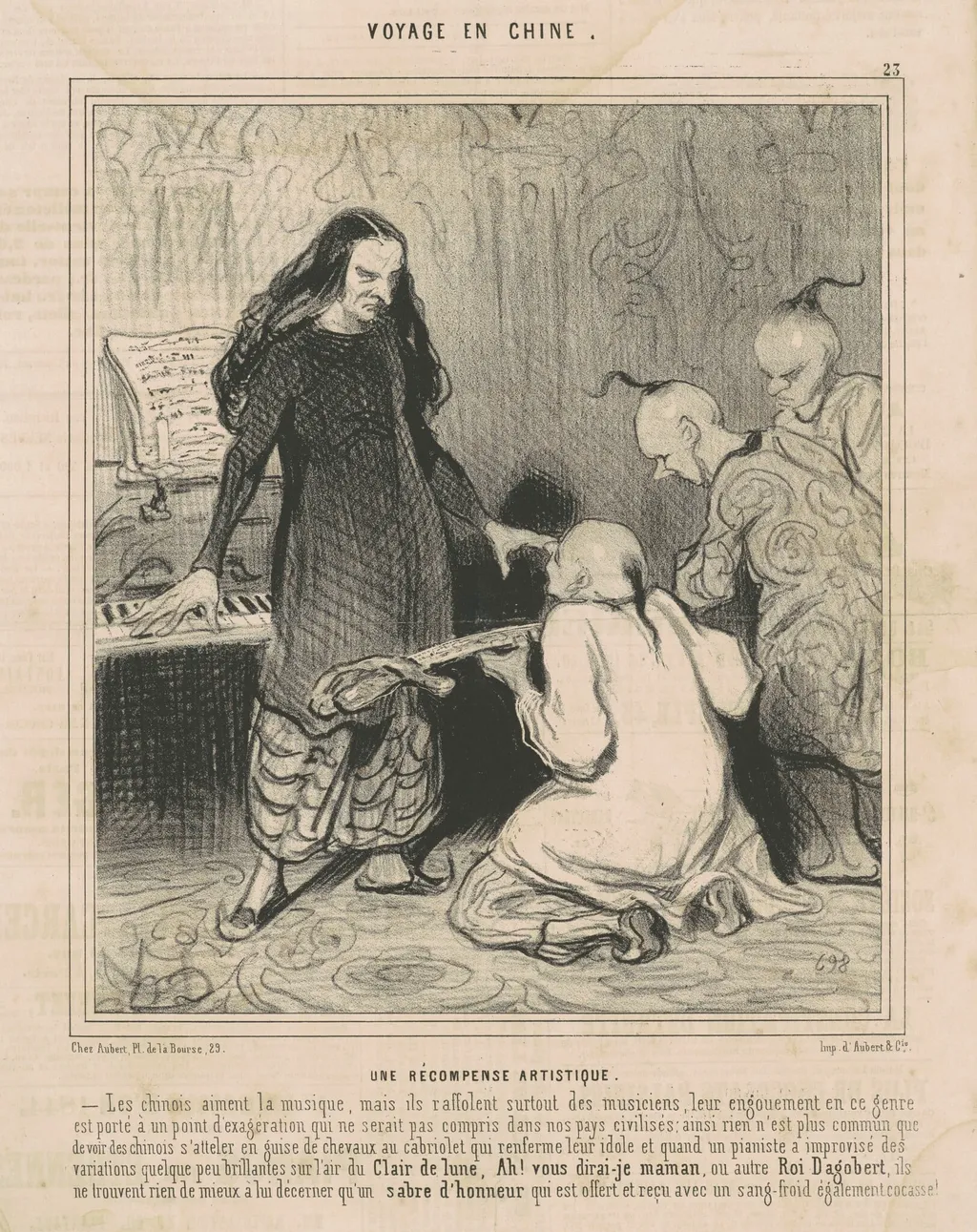
Une récompense artistique is an ink print by the Romanticist artist Honoré Daumier. It dates from 1844 and is held in the collection of the National Gallery of Art.
About this work
Overview
The medium—lithography—allows for fluid tonal contrasts, enhancing the scene’s quiet intensity without overt narrative clarity.
This lithograph by Honoré Daumier captures a formal, almost ritualistic moment in a domestic setting. A single standing figure, dressed with refinement, stands near a piano, while three others kneel in attendance. The composition conveys a sense of ceremony, though the context remains deliberately ambiguous. The medium—lithography—allows for fluid tonal contrasts, enhancing the scene’s quiet intensity without overt narrative clarity.
Subject & Meaning
The central figure, elevated by posture and attire, appears to be receiving an honor, suggested by the sword offered by one of the kneeling attendants. The piano implies a connection to music or culture, possibly symbolizing artistic achievement. The absence of identifiable symbols or setting leaves the reward open to interpretation—perhaps recognition within a private circle, not a public accolade. The tone is solemn, not celebratory.
Technique & Style
Daumier employed lithography to achieve subtle gradations of gray, using ink washes and line work to define form without heavy outlines. The background dissolves into abstract, smudged shapes that frame the figures without distracting from them. This technique heightens the theatrical atmosphere, focusing attention on the gestures and spatial relationships between the characters, while avoiding literal detail.
History & Provenance
Created in the mid-19th century, this print likely originated as part of Daumier’s broader engagement with social and cultural themes through print media. It was not part of a widely distributed series, and its early ownership is undocumented. Its survival as a standalone work suggests it was valued for its compositional restraint rather than its political or satirical content, which marked much of his other output.
Context
Daumier worked during a period when lithography enabled artists to reach broader audiences beyond elite patrons. While many of his prints critiqued law, politics, or class, this piece departs into quieter territory—perhaps reflecting personal or intimate scenes of cultural recognition. The absence of caricature or satire aligns it with his lesser-known, more contemplative works.
Legacy
This lithograph remains a quiet example of Daumier’s ability to convey dignity and ritual through minimal means. It is not widely reproduced or studied compared to his satirical works, but it illustrates his command of mood and composition. Its understated power continues to inform interpretations of how everyday ceremonies can be rendered with emotional weight in graphic art.
Artist & collection
Artist
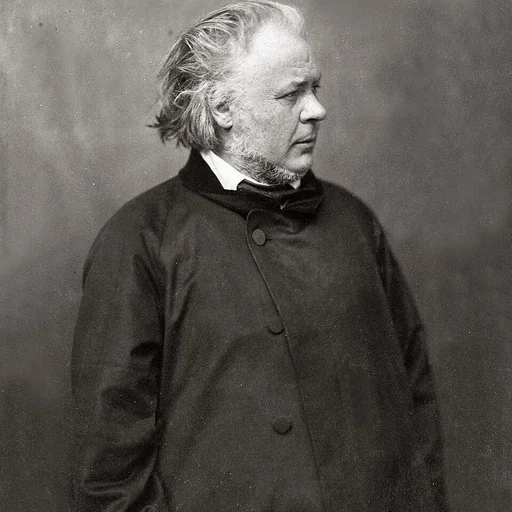
Honoré-Victorin Daumier was a French painter, sculptor, and printmaker, whose many works offer commentary on the social and political life in France, from the Revolution of 1830 to the fall of the Second French Empire in 1870.