Artwork
Vue prise a Argenteuil (Octobre 1856)
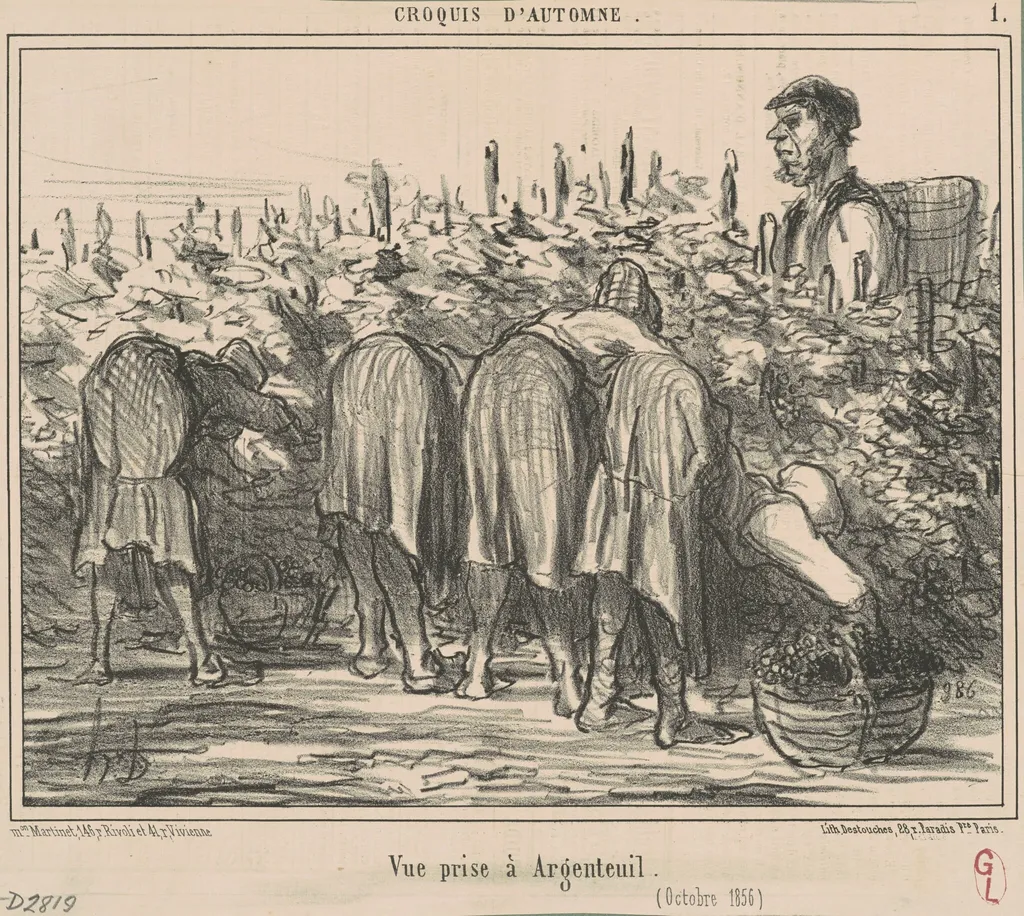
Vue prise a Argenteuil (Octobre 1856) is an ink print by the Impressionist artist Honoré Daumier. It dates from 1856 and is held in the collection of the National Gallery of Art.
About this work
The painting gives us a glimpse into a simpler time, where people worked the land and lived off its produce.
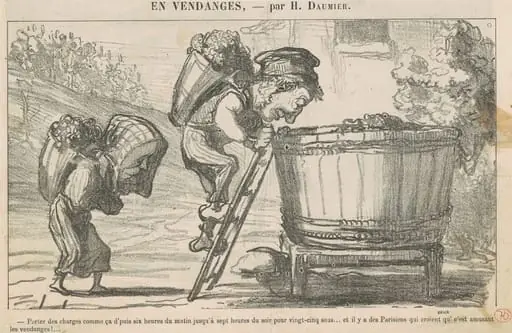
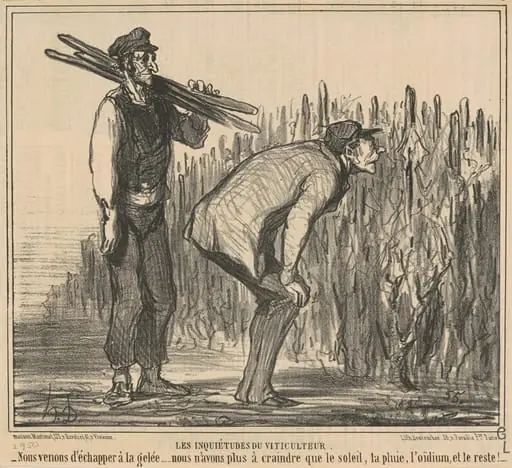
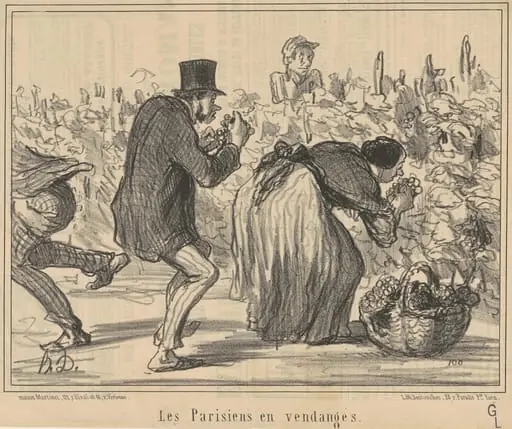
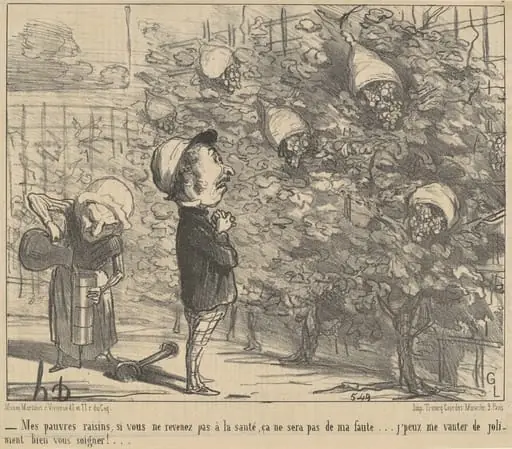
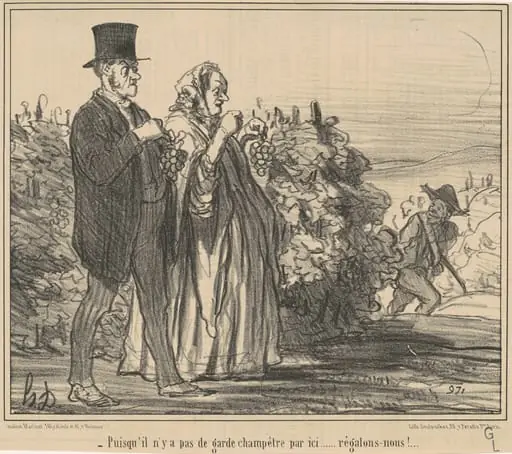
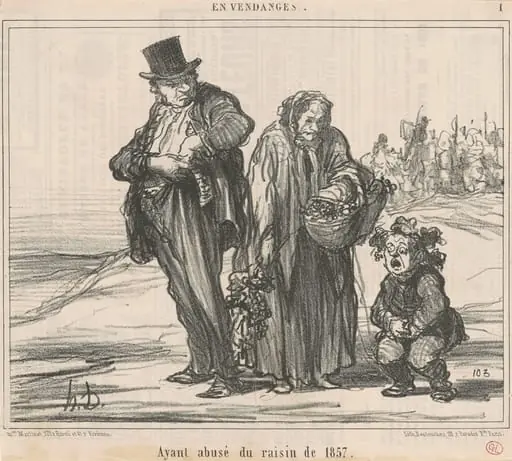
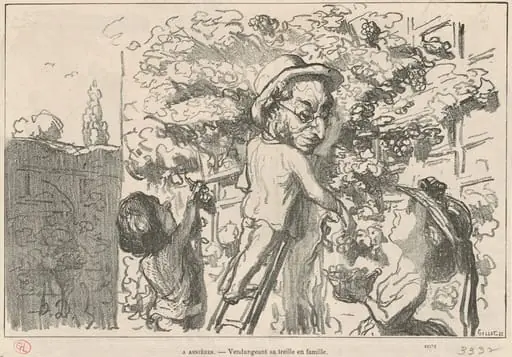
The painting shows a group of laborers in a vineyard.
They are working together, some pruning vines and others harvesting grapes.
This scene is interesting because it highlights the daily life of rural workers in France during the 19th century, showing how people relied on each other for survival.
The painting gives us a glimpse into a simpler time, where people worked the land and lived off its produce.
To learn more about this style of printmaking, look up the technique: lithography.
Overview
Vue prise a Argenteuil (Octobre 1856) is a lithograph by Daumier, created in 1856. It is a print that captures a scene of rural labor.
Subject & Meaning
The print depicts a group of laborers working together in a vineyard, some pruning vines while others harvest grapes. The scene conveys a sense of community and cooperation among the workers, highlighting their reliance on each other and the land.
Technique & Style
The work is a lithograph, a printmaking technique that allows for mass production of images. This medium was chosen for its ability to widely disseminate the image, making it accessible to a broader audience.
Artist & collection
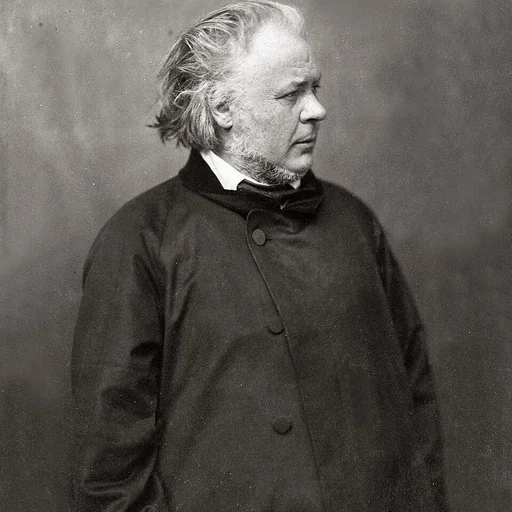
Artist
Honoré-Victorin Daumier was a French painter, sculptor, and printmaker, whose many works offer commentary on the social and political life in France, from the Revolution of 1830 to the fall of the Second French Empire in 1870.