Artwork
De vadermoorders, ‘Het wil al muizen wat van katten komt’
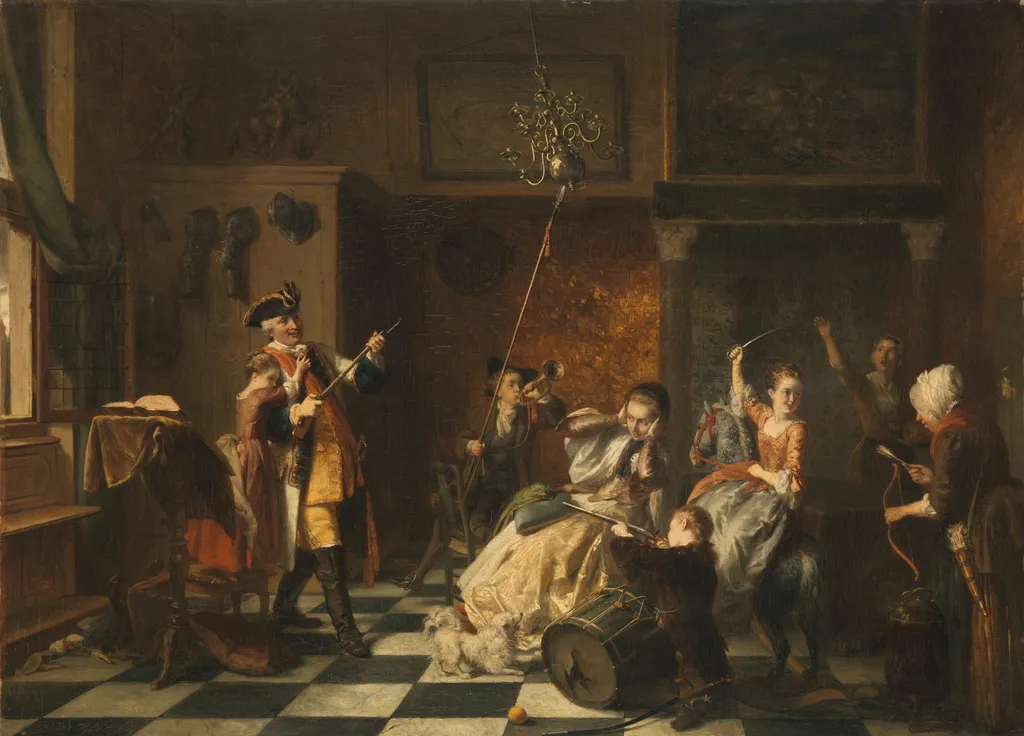
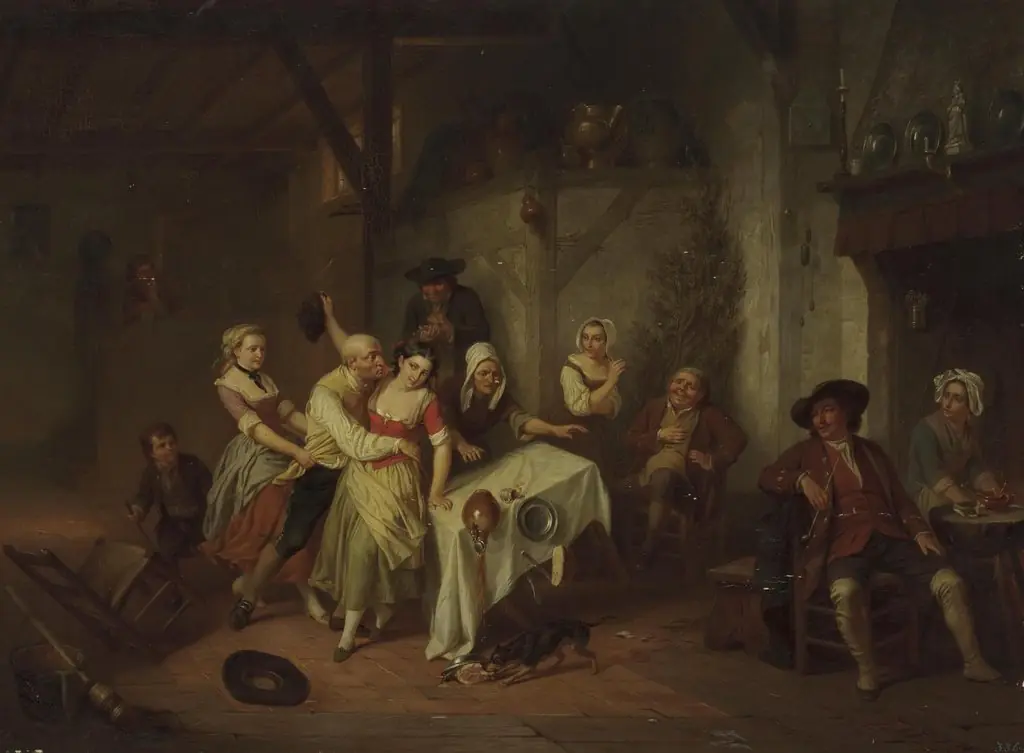
De vadermoorders, ‘Het wil al muizen wat van katten komt’ is an unspecified painting by the Dutch Golden Age artist David Bles. It dates from 1869 and is held in the collection of the Rijksmuseum. The work titled De vadermoorders, ‘Het wil al muizen wat van katten komt’ presents an interior domestic scene in which a family is gathered.
About this work
Overview
The work titled De vadermoorders, ‘Het wil al muizen wat van katten komt’ presents an interior domestic scene in which a family is gathered. A boy dressed in a soldier’s cap brandishes a stick as if it were a sword, while another child cheers him on. The mother and the youngest child sit apart, reading a Bible, creating a quiet counterpoint to the play.
Subject & Meaning
The composition contrasts the energetic mimicry of the older children, who imitate their father’s military role, with the calm demeanor of the mother and youngest child, who engage with a religious text. This juxtaposition suggests a commentary on the varied inheritances within a household, where different members reflect distinct parental influences.
Technique & Style
The artist renders the scene with careful attention to interior details, using a muted palette that distinguishes the lively foreground figures from the subdued background. Fine brushwork delineates the textures of clothing and the wooden lectern, while the lighting subtly highlights the children’s actions against the stillness of the adults.
History & Provenance
The painting is attributed to Bles, a Dutch painter known for genre scenes. Its title, referencing a proverb about cats and mice, underscores the thematic link between parental behavior and child imitation. The work has been part of the Rijksmuseum’s collection, where it is displayed among other domestic genre pieces.
Context
Created during a period when Dutch genre painting often explored family life and moral instruction, the piece reflects contemporary interests in the social roles of fathers and mothers. The inclusion of a Bible on a lectern reinforces the era’s emphasis on piety and the moral grounding of the household.
Legacy
The painting continues to be cited as an example of how everyday domestic moments can convey broader social observations. Its nuanced portrayal of familial dynamics contributes to the understanding of 17th‑century Dutch attitudes toward gender roles and child rearing.
Own this work as a print
Artist & collection