Artwork
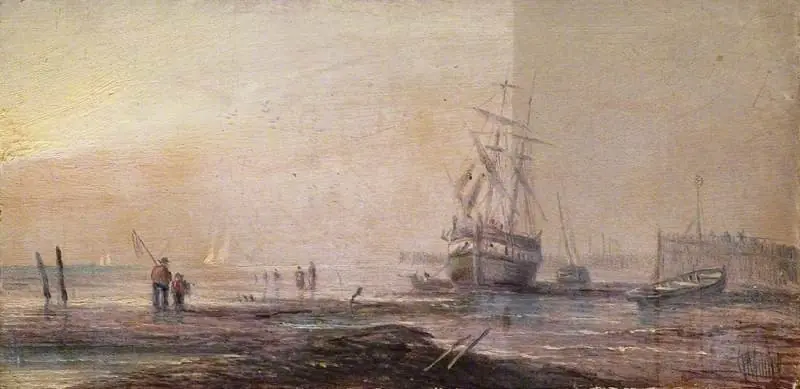
Coast scene near Hastings
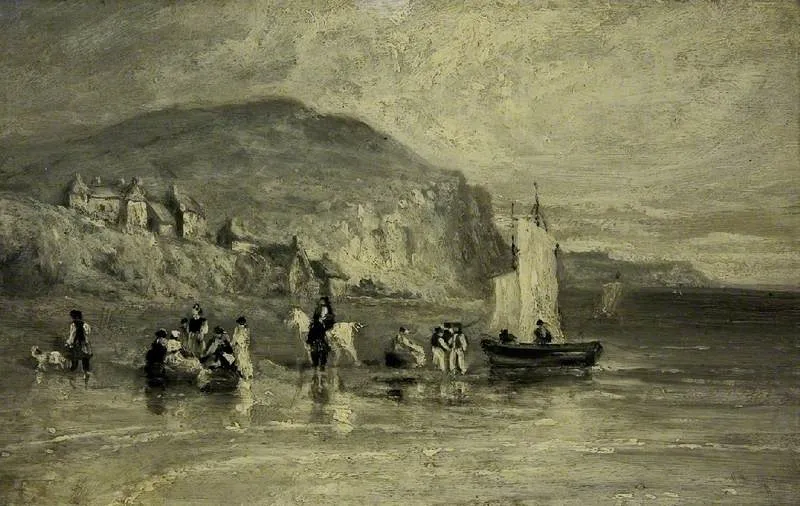
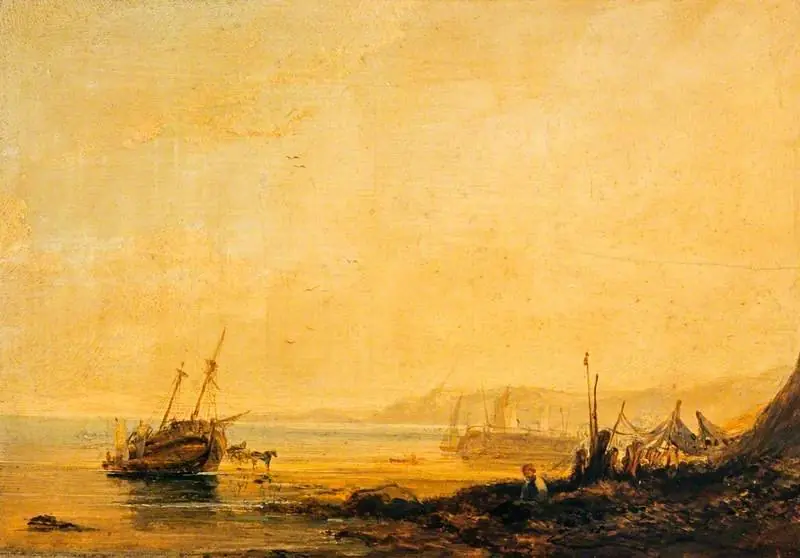
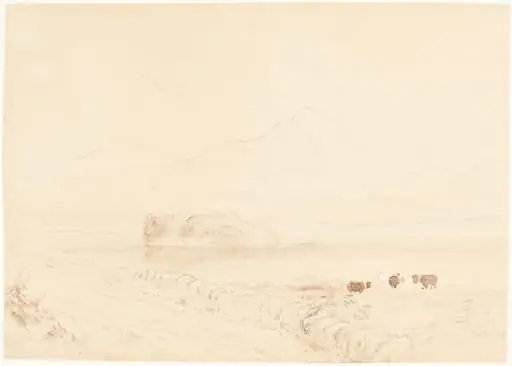
Coast scene near Hastings is an unspecified painting by the British Romanticist artist David Cox. It dates from 1812 and is held in the collection of the Fitzwilliam Museum.
About this work
Overview
This watercolour reflects his early commitment to observing nature directly, a practice that would later influence broader shifts in British landscape painting.
David Cox painted *Coast scene near Hastings* in 1812, capturing a quiet stretch of the English coastline. Working within the British Romantic tradition, he focused on everyday natural environments rather than dramatic or idealized landscapes. This watercolour reflects his early commitment to observing nature directly, a practice that would later influence broader shifts in British landscape painting.
Subject & Meaning
The scene portrays a modest coastal settlement near Hastings, with a single small boat on calm water and a few figures near the shore. Buildings line the edge of the land, suggesting local life without grandeur. The absence of narrative or symbolic elements emphasizes quiet observation, aligning with Cox’s interest in the ordinary rhythms of nature and human presence within it.
Technique & Style
Cox employed loose, visible brushwork to suggest form and atmosphere, avoiding fine detail in favor of tonal suggestion. His muted palette—dominated by soft grays, browns, and pale blues—enhances the subdued mood. The texture of the paper and the transparency of the watercolour medium are integral to the effect, revealing his command of the medium’s capacity for atmospheric nuance.
History & Provenance
Created during Cox’s formative years as a landscape artist, the work predates his later oil paintings and public recognition. It likely originated from one of his sketching trips along the south coast, common among artists of the period seeking direct study of nature. The painting remained in private hands for much of the 19th century before entering institutional collections.
Context
In the early 1800s, British landscape painting was shifting from idealized compositions toward more personal, observational approaches. Cox, associated with the Birmingham School, contributed to this change by prioritizing local scenery and transient effects of light and weather. His work stood apart from the grandeur of Turner or Constable, favoring intimacy over spectacle.
Legacy
Cox’s emphasis on direct observation and expressive brushwork influenced later generations of watercolourists and, indirectly, early Impressionist practices. Though less celebrated than his contemporaries, his quiet, unembellished approach to landscape helped redefine the possibilities of the medium, paving the way for a more spontaneous and naturalistic tradition in British art.
Artist & collection
Artist
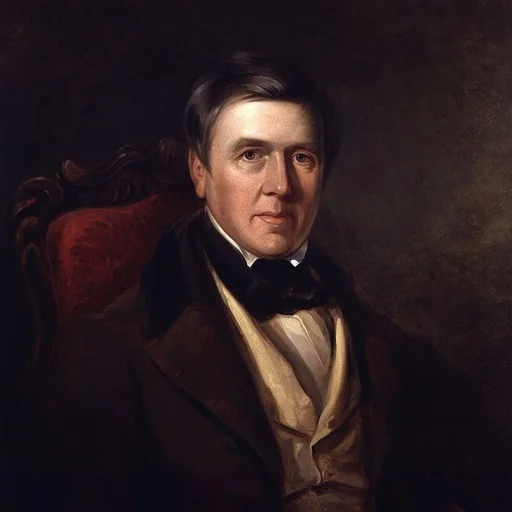
David Cox (29 April 1783 – 7 June 1859) was an English landscape painter, one of the most important members of the Birmingham School of landscape artists and an early precursor of Impressionism.

![Trees [verso], by David Cox](https://artifactworldgallery.com/img/david-cox--trees-verso--2f59ba73e183df09-w320.webp)
![Chatsworth [recto], by David Cox](https://artifactworldgallery.com/img/david-cox--chatsworth-recto--3f4d97adb21a8333-w320.webp)