Artwork
Bernkastel on the Moselle
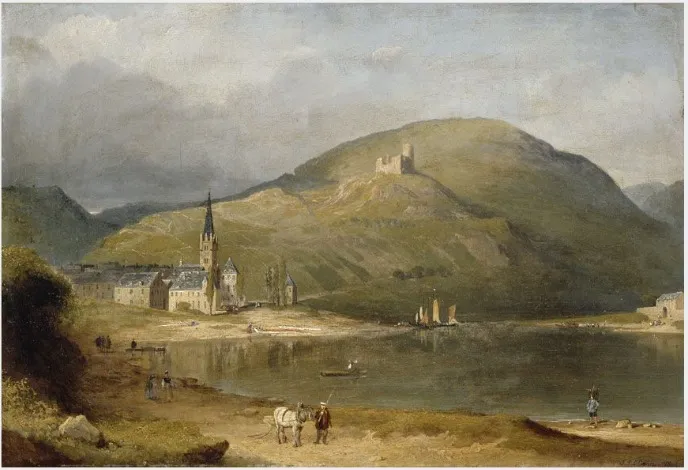
Bernkastel on the Moselle is an oil painting by the British Romanticist artist James Arthur O'Connor. It dates from 1834 and is held in the collection of the National Gallery of Ireland. Painted in 1834, this oil landscape by James Arthur O’Connor presents the Moselle River valley at Bernkastel-Wittlich.
About this work
Overview
Painted in 1834, this oil landscape by James Arthur O’Connor presents the Moselle River valley at Bernkastel-Wittlich. The composition balances the built environment of the town with the surrounding topography, situating human activity within a broader natural setting. The work belongs to the collection of the National Gallery of Ireland.
Subject & Meaning
The scene centers on Bernkastel, its church spire punctuating the skyline as the riverbank unfolds below. Small figures and a horse-drawn cart occupy the foreground, suggesting everyday rural life. O’Connor’s depiction emphasizes harmony between settlement and landscape, portraying the region as both inhabited and untouched.
Technique & Style
O’Connor employs muted tonalities and delicate brushwork to evoke atmospheric depth. Light falls selectively across the town, while distant hills dissolve into a hazy backdrop, reinforcing spatial recession. The restrained palette and softened contours align with early nineteenth-century Romantic landscape conventions, prioritizing mood over precise detail.
History & Provenance
Completed in 1834, the painting entered the National Gallery of Ireland’s holdings at an undocumented date. No record of prior ownership or exhibition history survives within the institution’s archives. Its creation coincides with O’Connor’s active period in Britain and Ireland, though specific circumstances of its commission remain unknown.
Context
The work reflects the era’s growing interest in regional landscapes as subjects for artistic representation. During the 1830s, European painters increasingly turned to local scenery, often imbuing it with quiet grandeur. O’Connor’s treatment of the Moselle Valley aligns with this trend, capturing a specific locale while invoking universal themes of nature and human presence.
Artist & collection

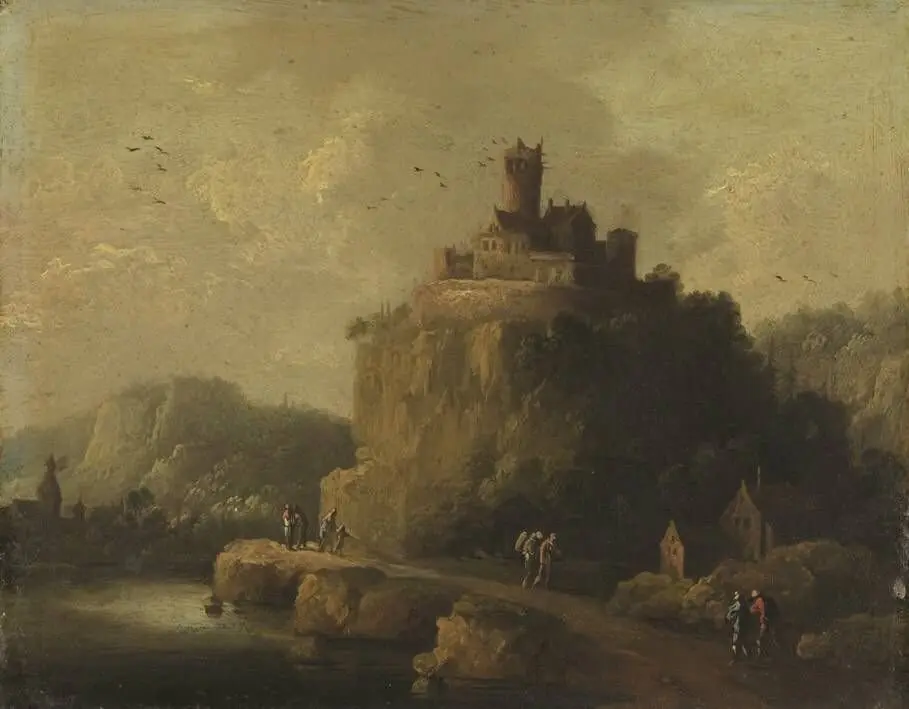 Landschaft mit einem Schloss auf einem Felskegel
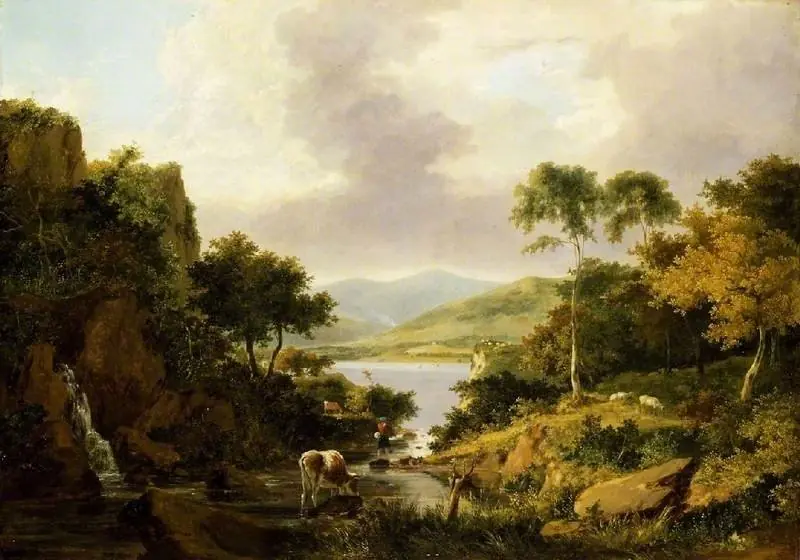 Loch Etive, Argyllshire
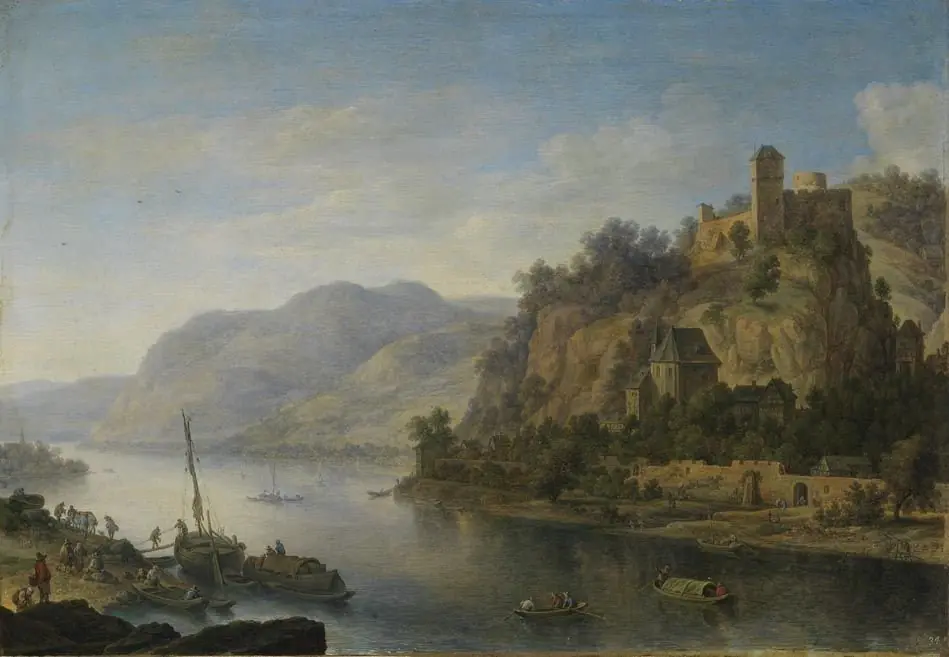 Rhine view at Heimbach am Rhein (Niederheimbach)
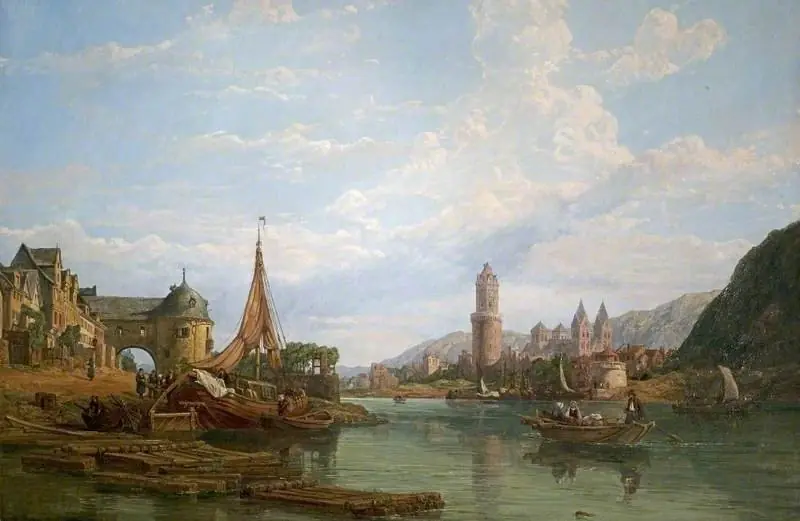 Andernach on the Rhine, Germany
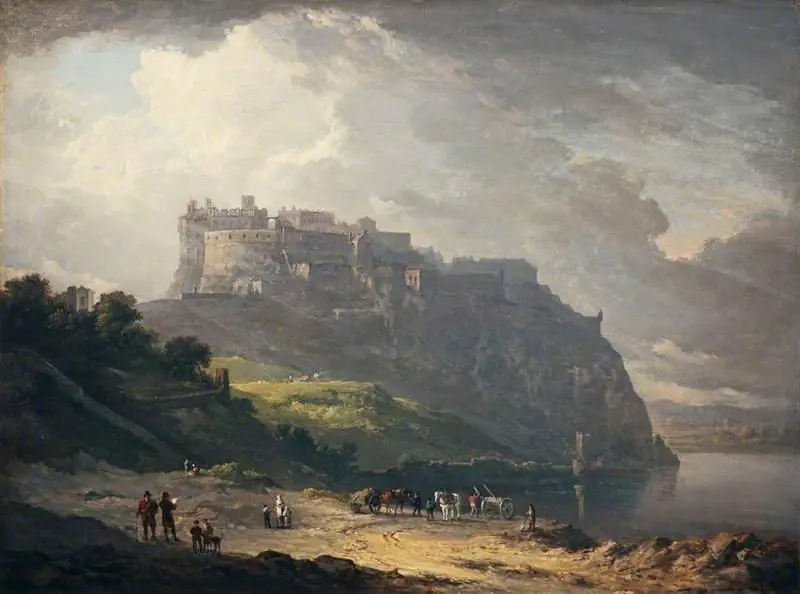 Edinburgh Castle and the Nor' Loch
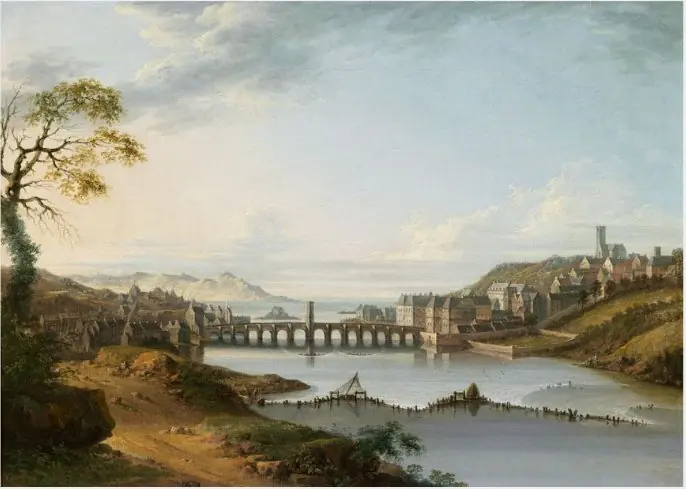 A View of Ballyshannon, County Donegal
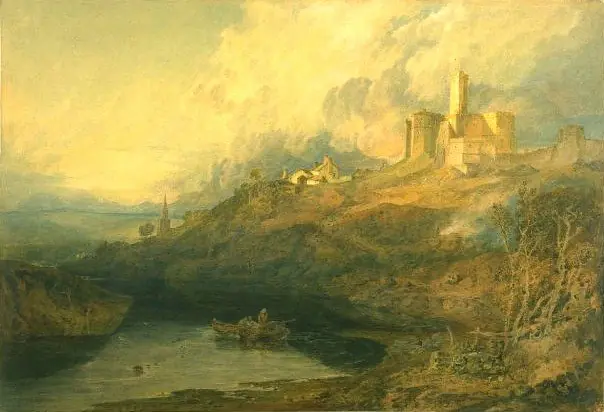 Warkworth Castle, Northumberland
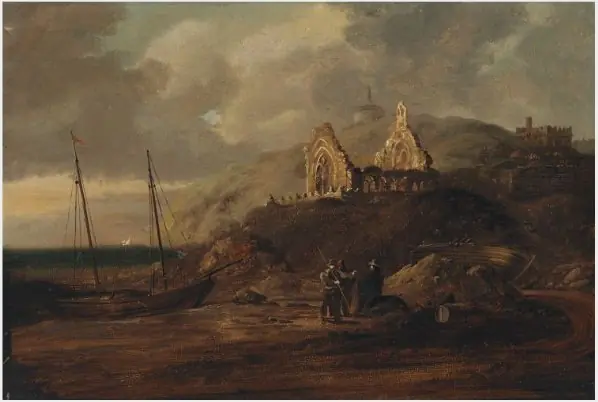 A View of Howth Abbey
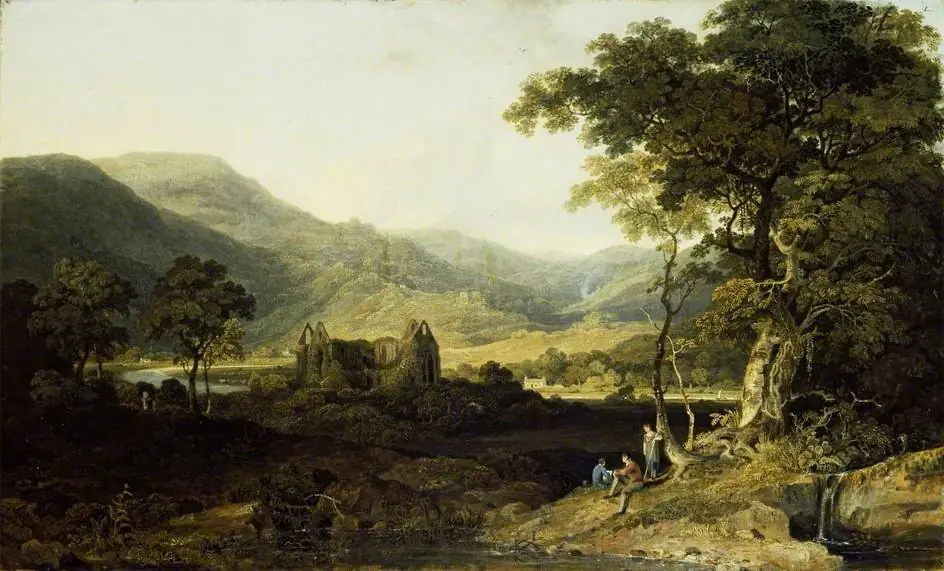 Tintern Abbey
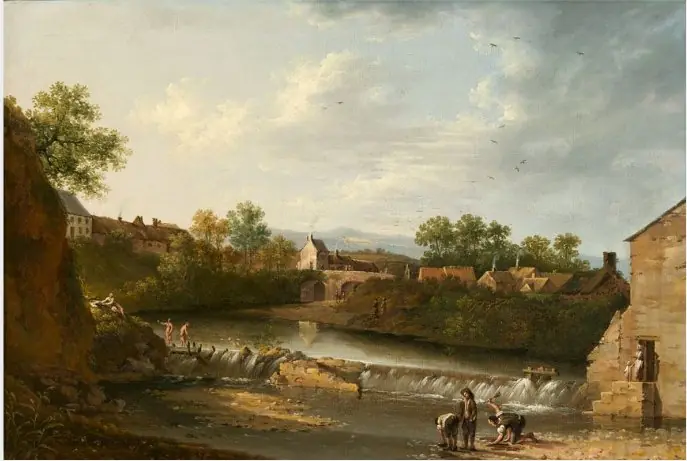 A View of Clonskeagh, County Dublin with Figures Bathing
 On the Clyde
 View on the Rhine