Artwork
Democritus
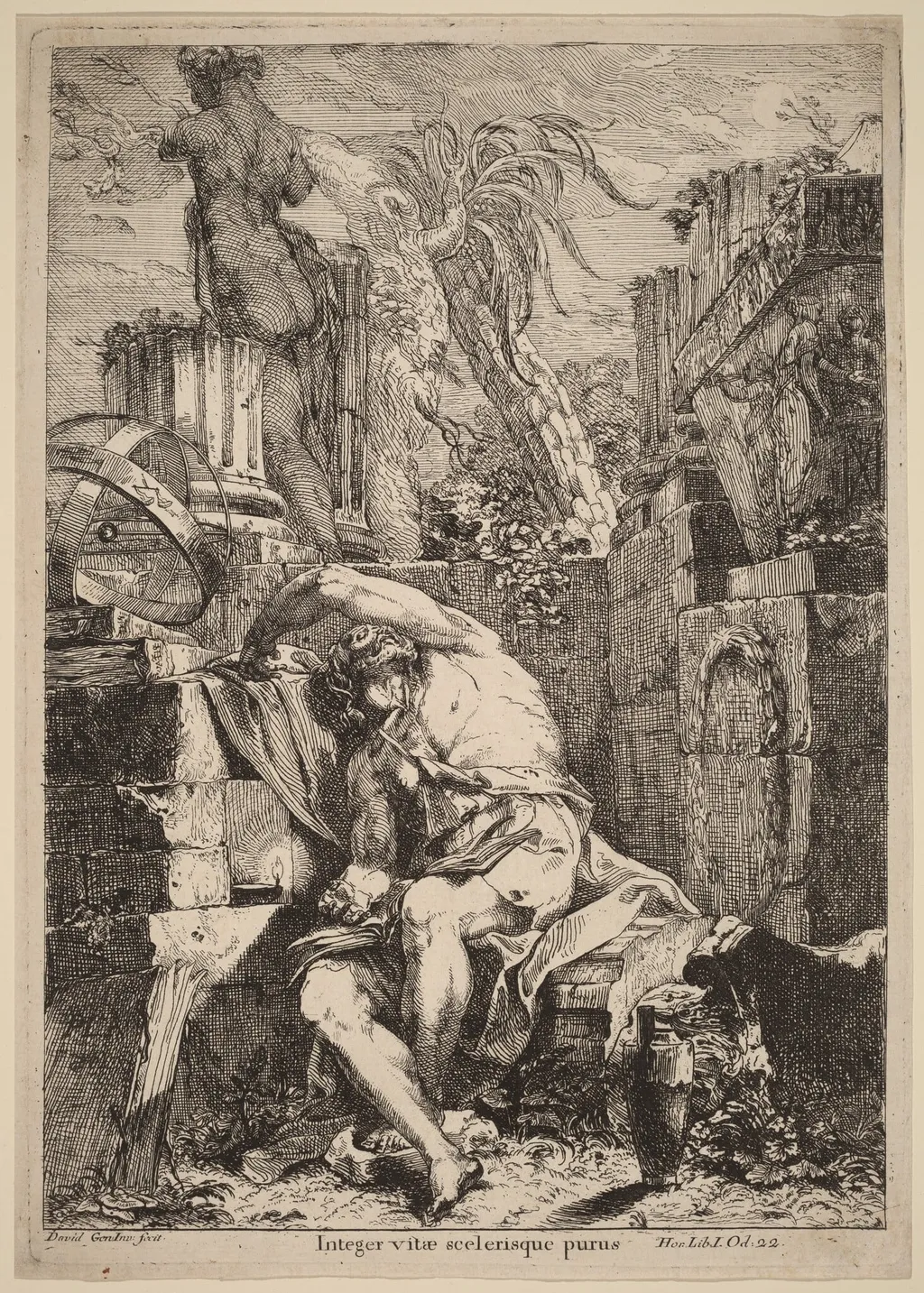
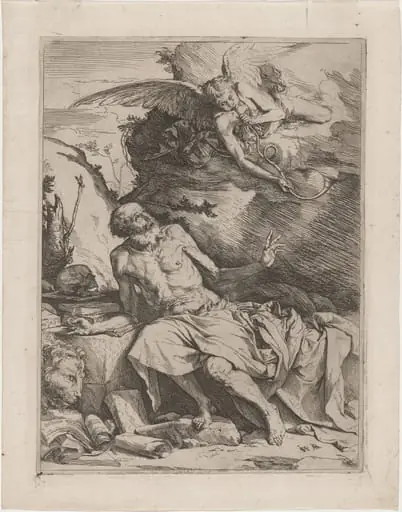
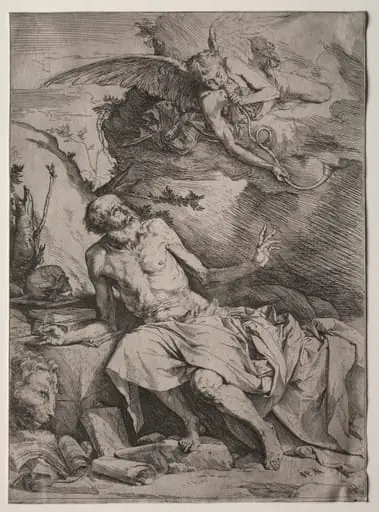
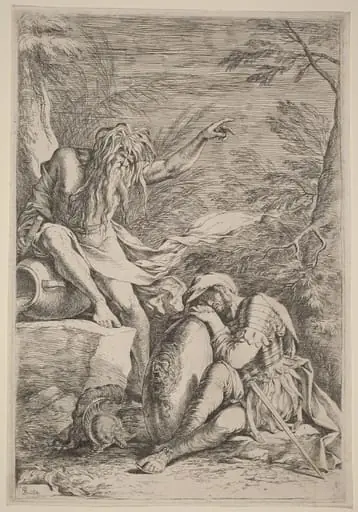
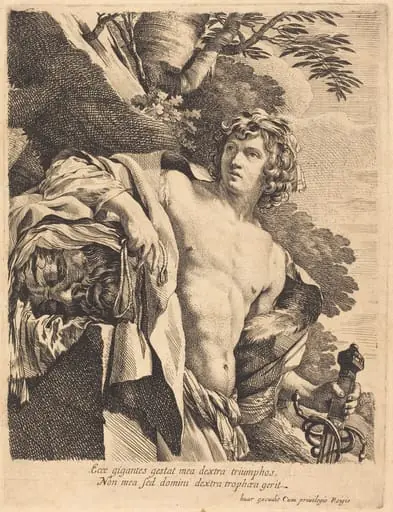
Democritus is an ink print by the Romanticist artist Giovanni David. It dates from 1775 and is held in the collection of the National Gallery of Art.
About this work
Overview
Created in 1775, this print by Giovanni David is an etching executed on laid paper. The work bears the title Democritus and presents a solitary figure seated upon a rock amid the remnants of classical architecture. The composition balances the figure’s introspective pose with surrounding ruins, suggesting a dialogue between the individual and the past.
Subject & Meaning
The central figure, clad in a simple toga, appears absorbed in thought, his gaze directed inward while he holds a small object in his hand. Scattered books and scrolls at his feet reinforce themes of scholarship and contemplation, echoing the philosophical legacy of Democritus, the ancient thinker associated with atomistic theory and reflective inquiry.
Technique & Style
The overall aesthetic aligns with late‑Baroque sensibilities, anticipating Romantic interest in antiquity and the solitary genius.
David employed the traditional intaglio process, incising lines into a metal plate before transferring the image onto laid paper. The etching demonstrates fine cross‑hatching and varied line weight to model light and shadow, rendering the textures of stone, fabric, and parchment with precision. The overall aesthetic aligns with late‑Baroque sensibilities, anticipating Romantic interest in antiquity and the solitary genius.
History & Provenance
The print originates from the late eighteenth century, a period when European artists frequently revisited classical subjects. While specific ownership records are limited, the work is catalogued among David’s known prints and has appeared in several collections of 18th‑century graphic art, illustrating the continued fascination with ancient philosophers during the Enlightenment.
Artist & collection


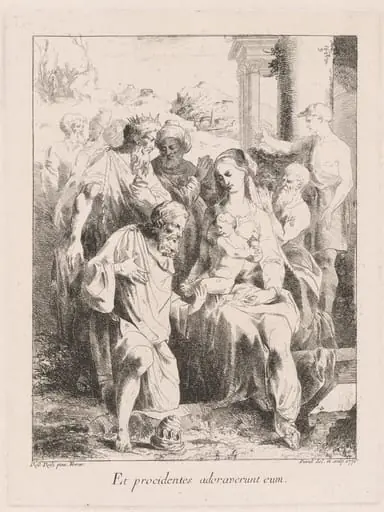 Adoration of the Magi
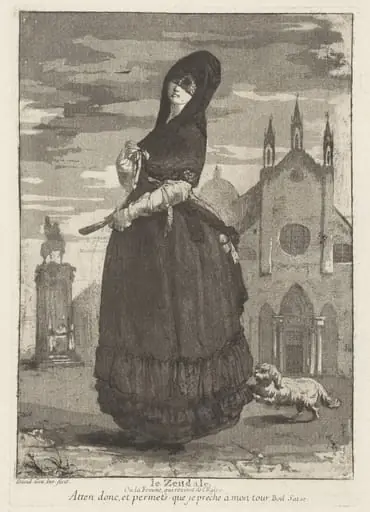 Le Zendale (Woman in a Hood, or the Woman Returning from Church)
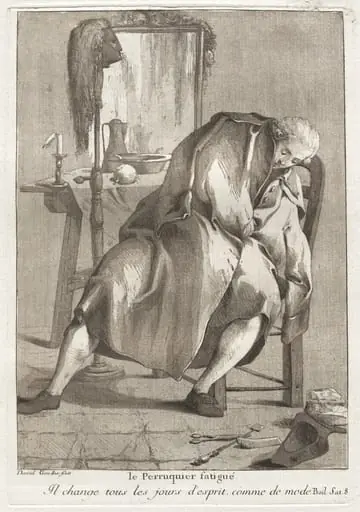 Le Perruquier fatigué (The Tired Wigmaker)
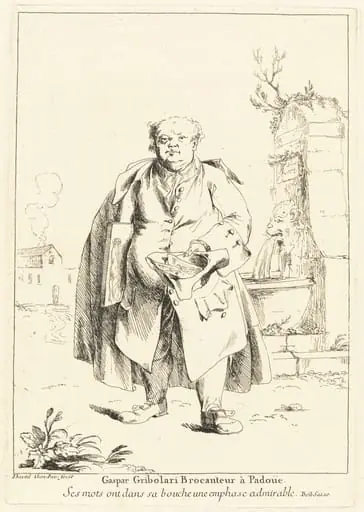 Gaspar Gribolari Brocanteur à Padoüe (Gaspar Gribolari, Secondhand Dealer in Padua)
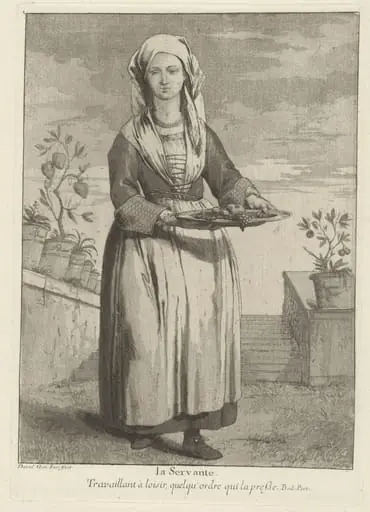 La Servante (The Servant)
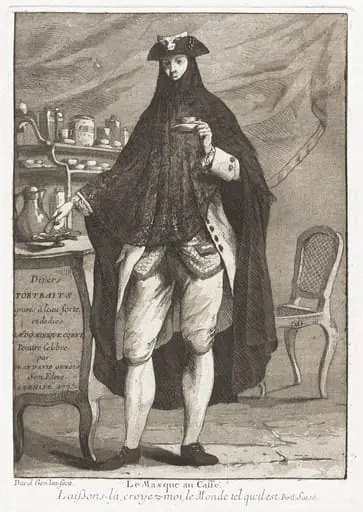 Le Masque au caffé (The Masked Man Taking Coffee)
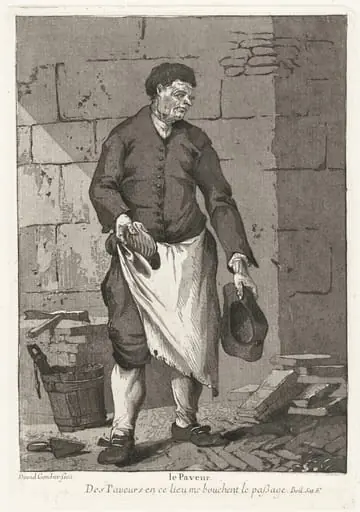 Le Paveur (The Road Paver)
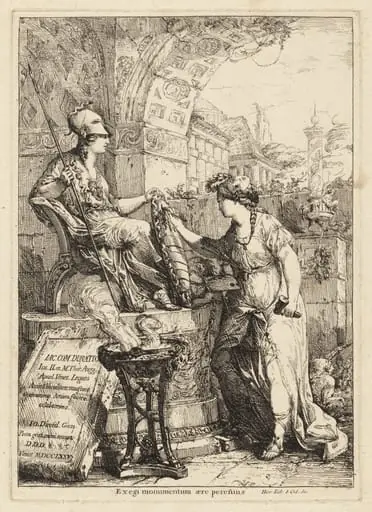 Exegi Monumentum (Art Inscribing Minerva's Shield)