Artwork
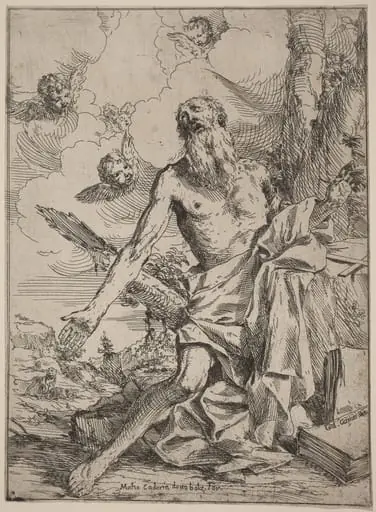
Saint Jerome Hearing the Trumpet of the Last Judgment
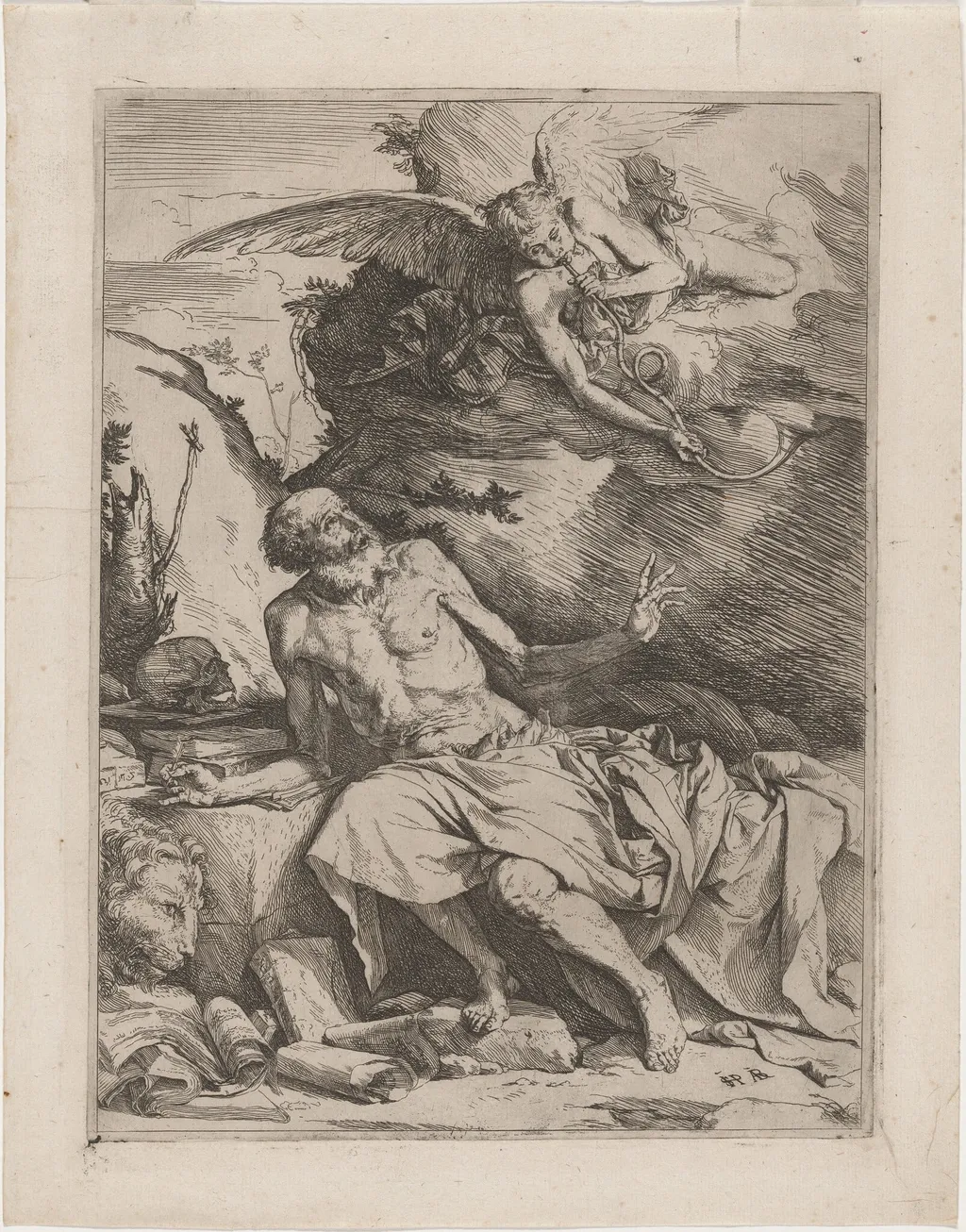
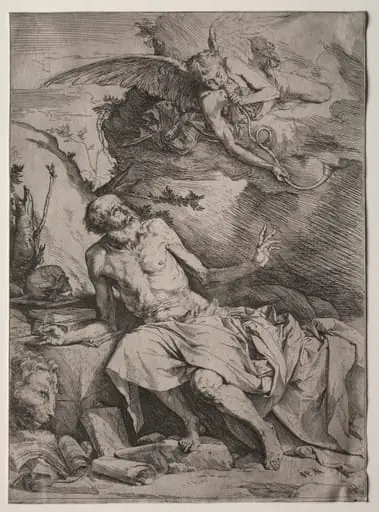
Saint Jerome Hearing the Trumpet of the Last Judgment is an ink print by the Baroque artist Jusepe de Ribera. It dates from 1621 and is held in the collection of the National Gallery of Art.
About this work
Overview
Created around 1621 by Jusepe de Ribera, this print combines etching and engraving on laid paper to capture a moment of divine revelation. Ribera, active in Naples, was a key figure in the Spanish Baroque tradition, known for his intense religious imagery and mastery of graphic techniques. The work reflects his skill in translating dramatic narrative into the nuanced tonal range of printmaking.
Subject & Meaning
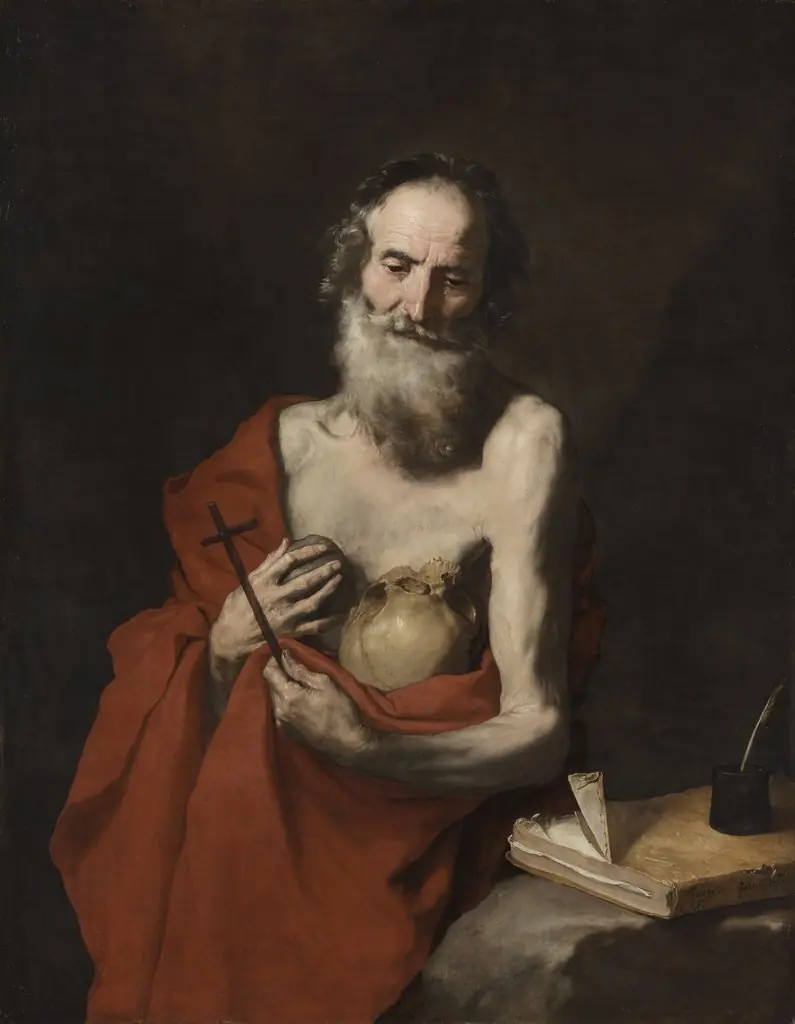
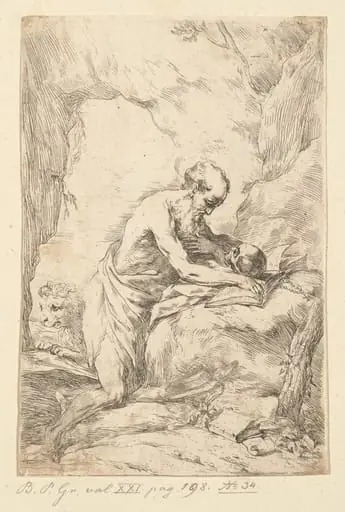
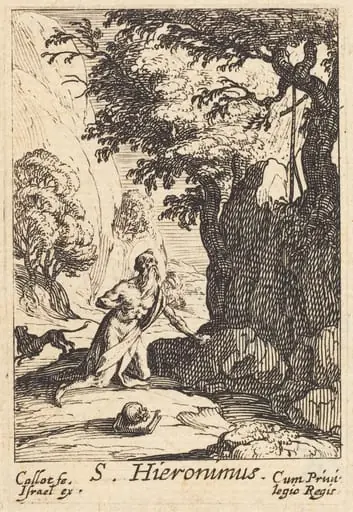
The image portrays Saint Jerome, the scholar-saint, in a moment of spiritual awakening as he hears the trumpet signaling the Last Judgment. Seated on the earth, his posture conveys both shock and contemplation. The scattered skull and open book emphasize his lifelong engagement with mortality and scripture, reinforcing the theme of penitence central to Counter-Reformation spirituality.
Technique & Style
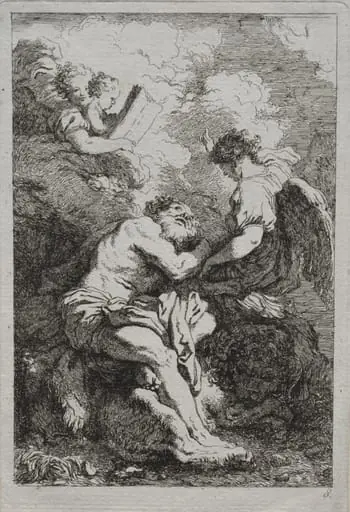
Ribera employed fine etched lines and bold engraving to model form through stark contrasts of light and shadow. The background angel, rendered with delicate precision, emerges from darkness to anchor the composition. Textures of fabric, stone, and parchment are rendered with meticulous detail, showcasing the expressive potential of printmaking to convey emotional gravity without color.
History & Provenance
The print was produced during Ribera’s mature period in Naples, where he enjoyed patronage from religious institutions and collectors.
The print was produced during Ribera’s mature period in Naples, where he enjoyed patronage from religious institutions and collectors. Though few early impressions survive, the work circulated widely among clergy and connoisseurs, reflecting its resonance within Counter-Reformation devotional culture. Its survival in multiple institutional collections attests to its enduring recognition among print collectors.
Context
In early 17th-century Naples, religious imagery served both devotional and didactic ends. Ribera’s depiction aligns with broader trends in Spanish and Italian Baroque art that emphasized visceral human responses to divine revelation. His focus on Jerome, a model of scholarly piety, resonated with reform-minded clergy seeking to reinforce the value of contemplative faith amid theological upheaval.
Legacy
This print exemplifies Ribera’s influence on the development of Baroque graphic art, particularly in its fusion of emotional intensity with technical precision. Later artists and printmakers studied his use of chiaroscuro and compositional focus, cementing his reputation as a pivotal figure in the transition from Mannerist formality to Baroque immediacy in printmaking.
Artist & collection
Artist
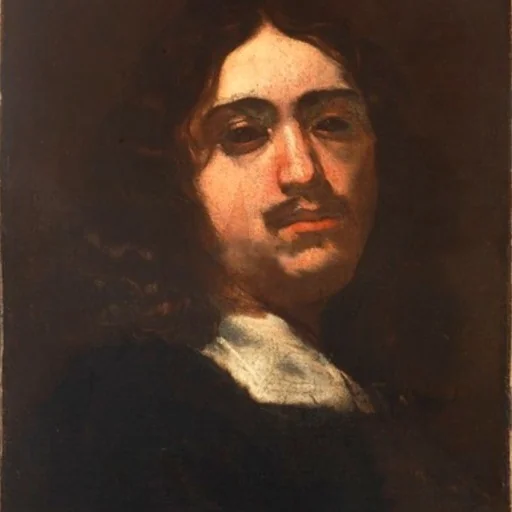
Jusepe de Ribera (Valencian: ; baptised 17 February 1591 – 3 November 1652) was a Spanish painter and printmaker.