Artwork
The Dream of Aeneas
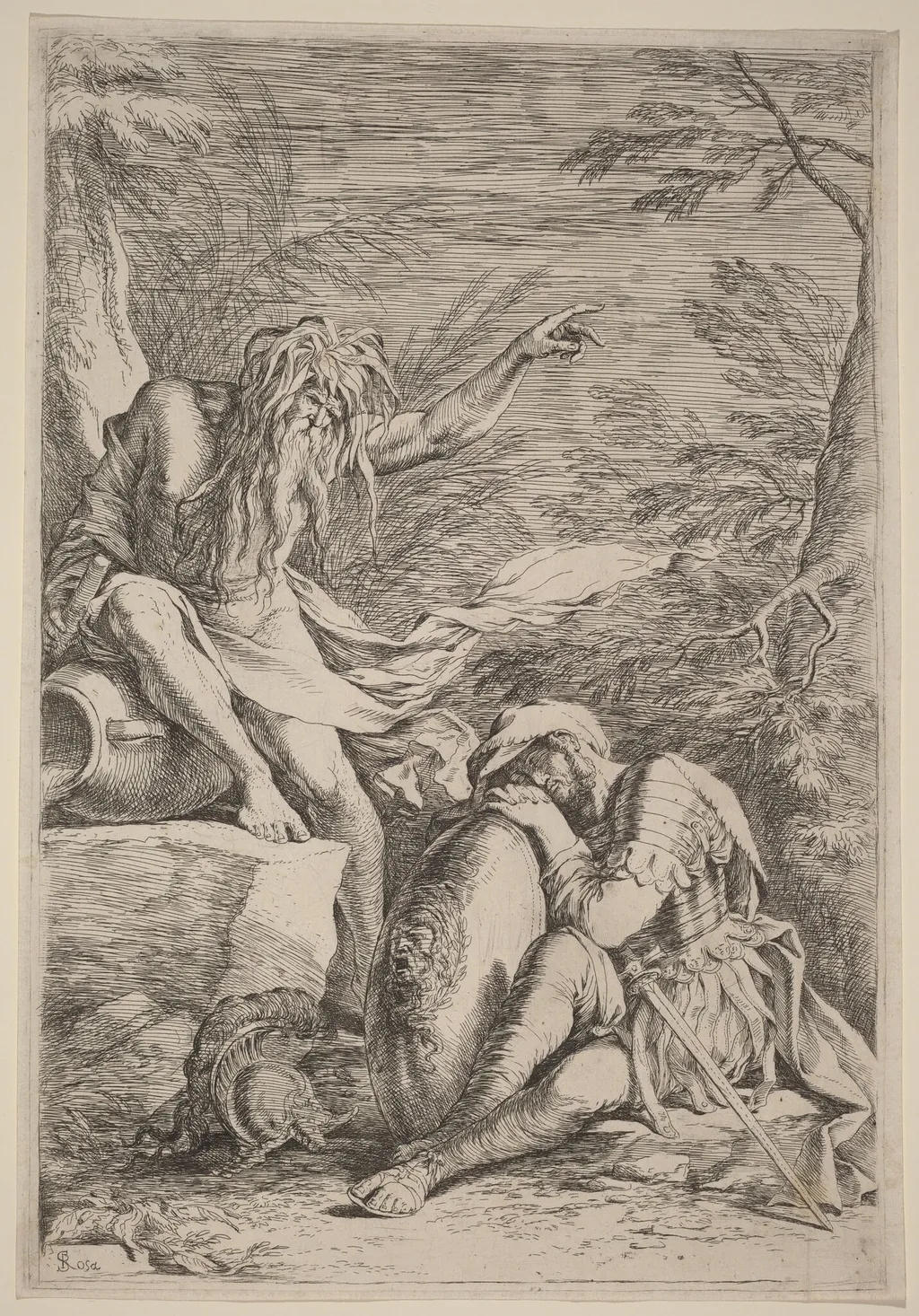
The Dream of Aeneas is an ink print by the Baroque artist Salvator Rosa. It dates from 1644 and is held in the collection of the National Gallery of Art.
About this work
Overview
Created in 1644, *The Dream of Aeneas* is an etching by the Italian artist Salvator Rosa. Though celebrated chiefly for his large‑scale Baroque paintings, Rosa also produced prints that echo his fascination with dramatic narratives set against rugged, untamed landscapes. This work exemplifies his tendency to blend mythic storytelling with a stark, natural environment.
Subject & Meaning
The composition presents two figures amid craggy terrain: a seated man gesturing upward, and a kneeling companion gazing downward. The gestures suggest a moment of revelation or prophetic vision, aligning with the legend of Aeneas receiving a divine warning in his dream. The stark setting amplifies the sense of urgency and the weight of the foretold event.
Technique & Style
Rosa employed the fine line work characteristic of etching to render intricate textures—folded garments, bark, and rocky ground—through varied hatching and cross‑hatching. The tonal contrasts achieved by delicate shading give the scene depth and a chiaroscuro effect, reinforcing the dramatic mood typical of his broader Baroque repertoire.
History & Provenance
The print emerged during Rosa’s active period in Naples, Rome, and Florence, where his outspoken personality and satirical writings often attracted controversy. While the original plate’s ownership history is not fully documented, the work circulated among collectors of 17th‑century prints, contributing to Rosa’s reputation as a versatile artist beyond his canvases.
Own this work as a print
Artist & collection
Artist
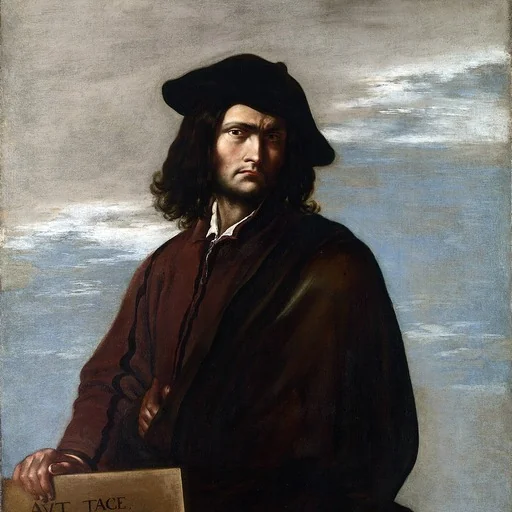
Salvator Rosa (1615 – 15 March 1673) is best known today as an Italian Baroque painter, whose romanticised landscapes and history paintings, often set in dark and untamed nature, exerted considerable influence from the 17th century into…

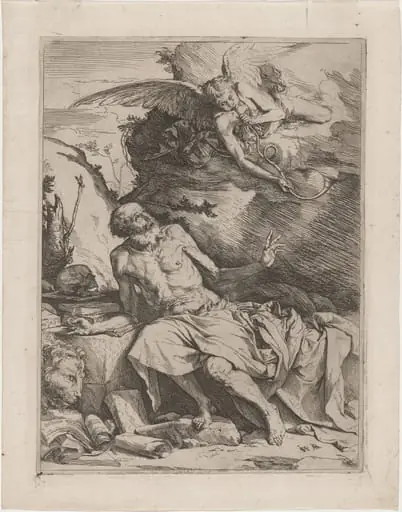 Saint Jerome Hearing the Trumpet of the Last Judgment
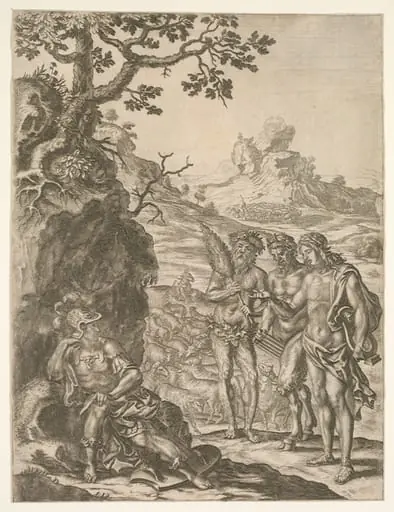 Aeneid
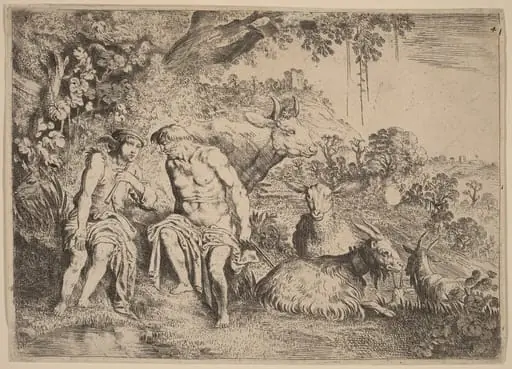 Mercury Lulling Argus to Sleep
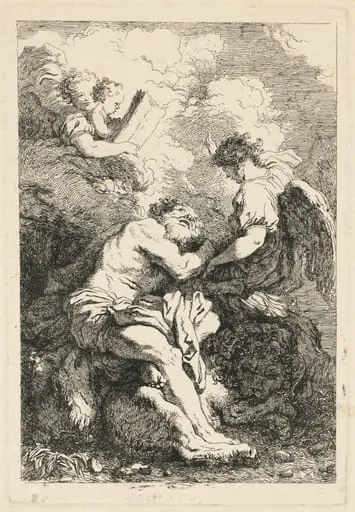 The Vision of Saint Jerome
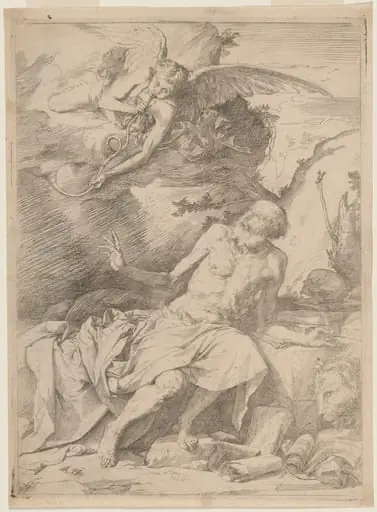 Saint Jerome Hearing the Trumpet of the Last Judgement
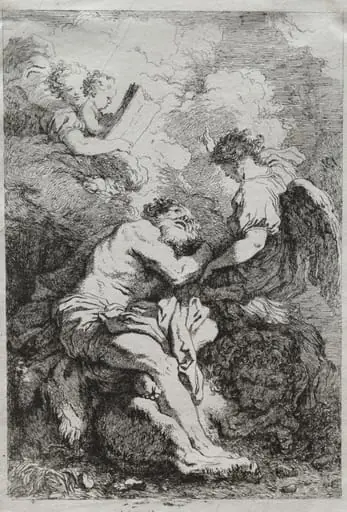 Saint Jerome
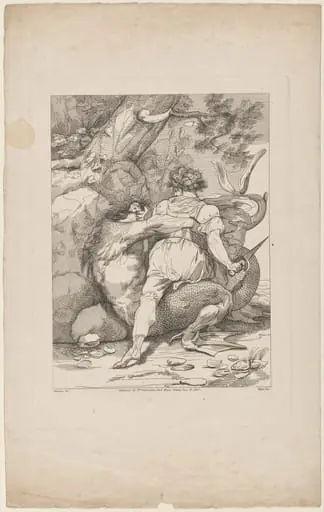 Man Attacking a Monster
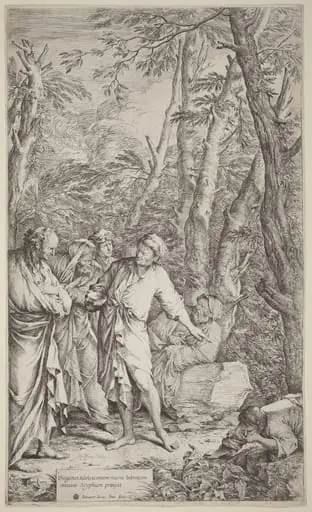 Diogenes Casting Away His Bowl
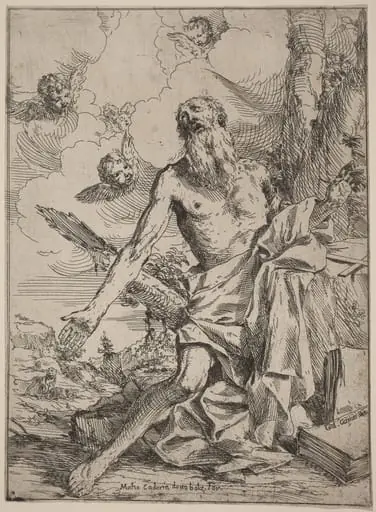 Saint Jerome
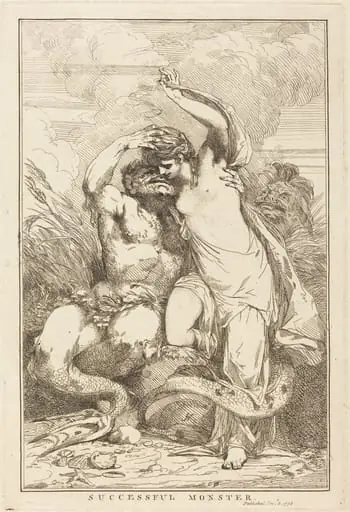 Successful Monster
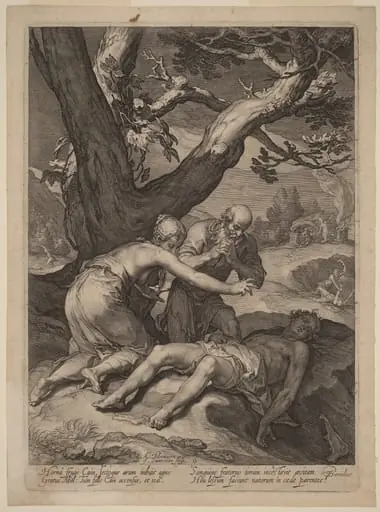 Adam and Eve Lamenting over the Corpse of Abel
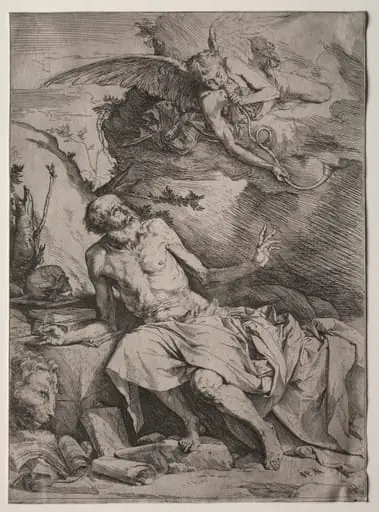 Saint Jerome