Artwork
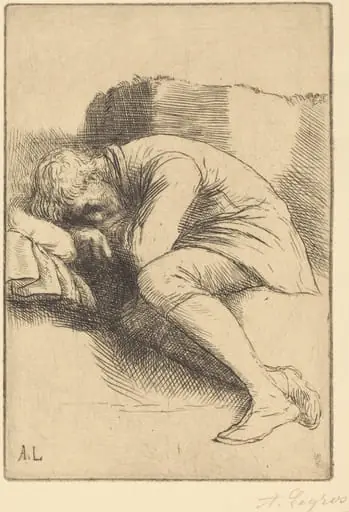
Le Perruquier fatigué (The Tired Wigmaker)
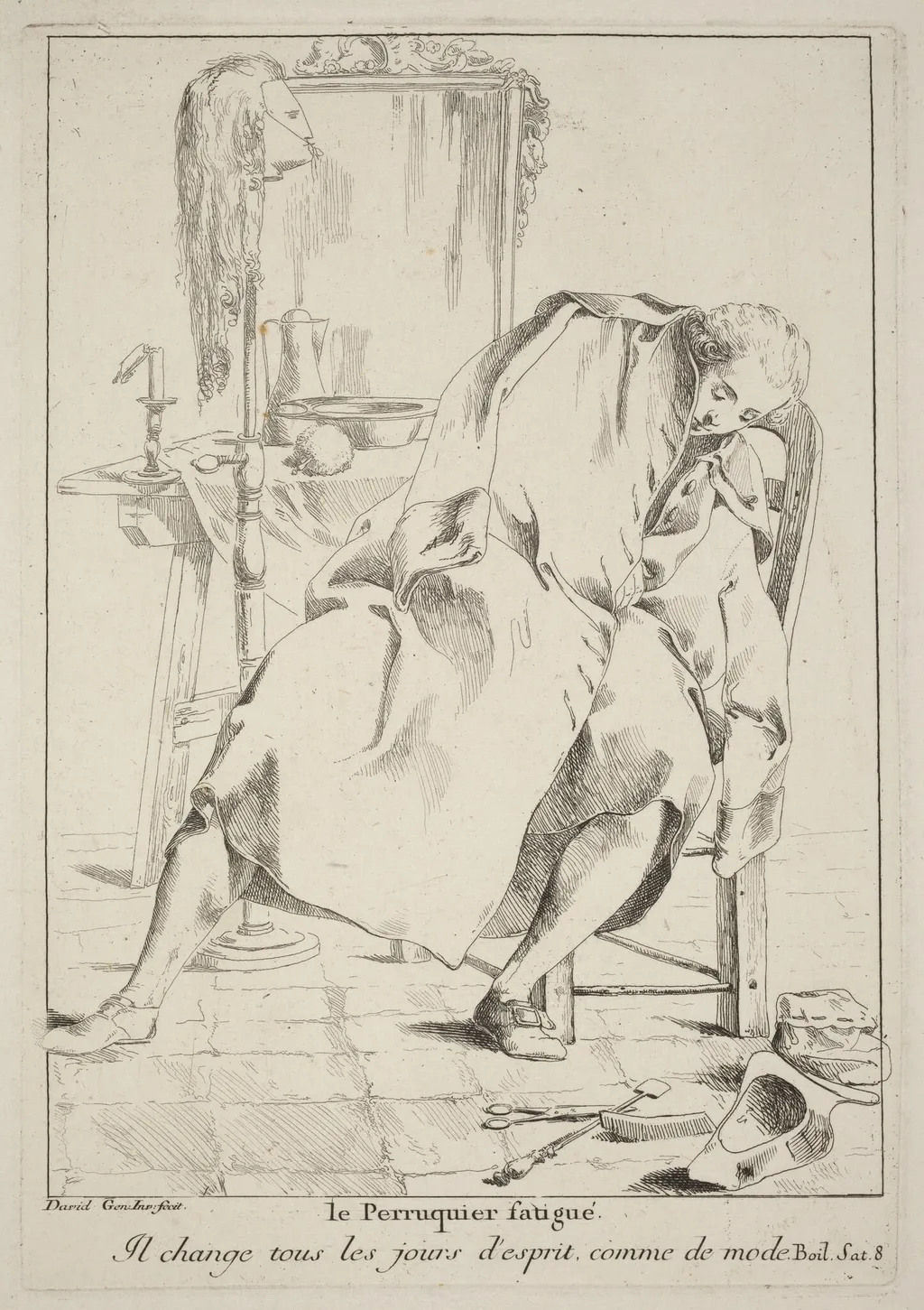
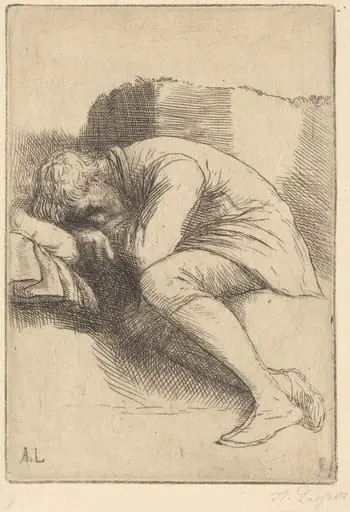
Le Perruquier fatigué (The Tired Wigmaker) is an ink print by the Romanticist artist Giovanni David. It dates from 1775 and is held in the collection of the National Gallery of Art.
About this work
Overview
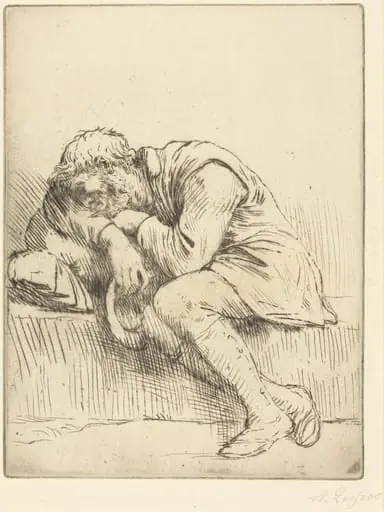
Created in 1775 by Giovanni David, this etching depicts a wigmaker in the quiet exhaustion of late-night labor. Rendered on laid paper, the work captures a fleeting moment of domestic toil rather than a formal portrait. The composition emphasizes fatigue through posture and dim lighting, grounding the image in the daily reality of artisanal work during the 18th century.
Subject & Meaning
The wigmaker, bent over his table, holds a partially styled wig while his other hand rests wearily on his hip. A discarded wig lies on the floor, and his reflection in the mirror mirrors his exhaustion. The title underscores the physical toll of a trade once vital to aristocratic fashion, revealing the unseen labor behind elite aesthetics and questioning the cost of such societal standards.
Technique & Style
David employed etching to achieve a loose, spontaneous line quality that mimics a quick sketch. The uneven ink lines and subtle tonal variations suggest dim candlelight and cluttered space without overrefinement. The absence of polished detail invites the viewer to observe the scene as an unposed moment, enhancing its sense of immediacy and authenticity.
History & Provenance
The print emerged during a period when etching was increasingly used for genre scenes rather than grand historical subjects. Though David’s career is less documented than his contemporaries, this work survives in institutional collections, suggesting it was circulated among collectors interested in everyday life. Its survival reflects a growing 18th-century interest in the lives of artisans.
Context
Wigmaking was a skilled, labor-intensive trade essential to European elite dress, yet its practitioners often worked long hours in poor conditions. This image aligns with emerging Enlightenment-era attention to the dignity and hardship of common laborers. Unlike idealized portraits, it presents work as physical endurance, reflecting broader cultural shifts toward social observation.
Legacy
The print contributes to a quiet tradition of 18th-century printmaking that elevated ordinary labor as worthy of artistic attention. Its unembellished realism influenced later genre scenes in print and painting, particularly those focused on the working class. Though not widely known today, it remains a quiet testament to the unseen hands shaping fashionable society.
Artist & collection


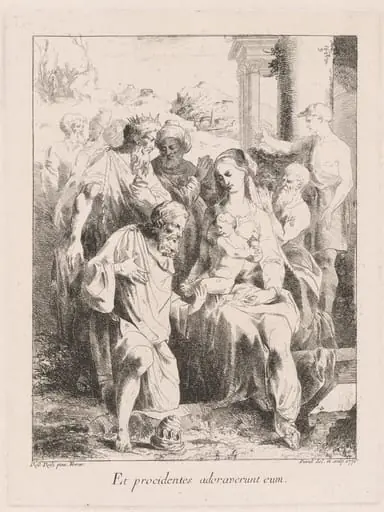 Adoration of the Magi
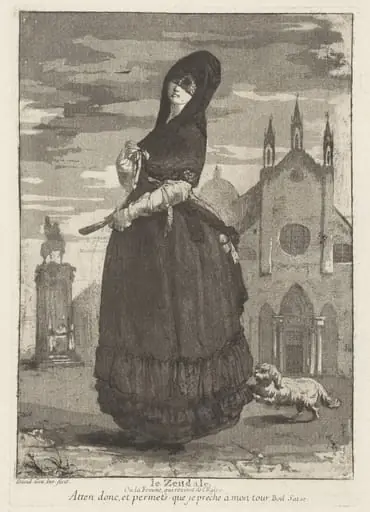 Le Zendale (Woman in a Hood, or the Woman Returning from Church)
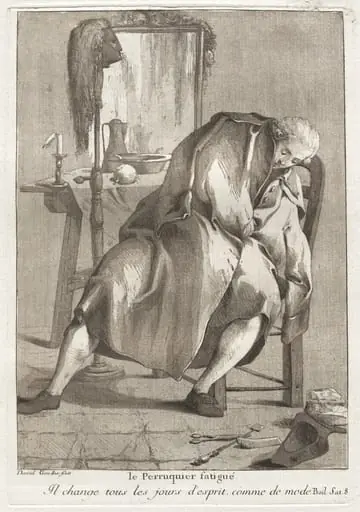 Le Perruquier fatigué (The Tired Wigmaker)
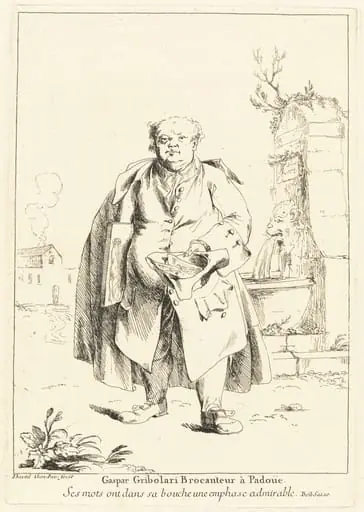 Gaspar Gribolari Brocanteur à Padoüe (Gaspar Gribolari, Secondhand Dealer in Padua)
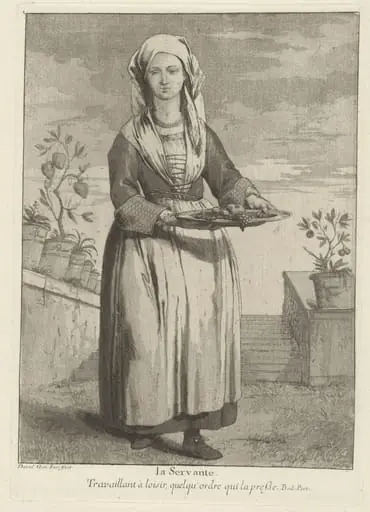 La Servante (The Servant)
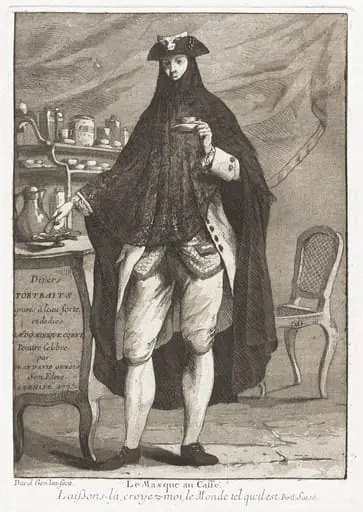 Le Masque au caffé (The Masked Man Taking Coffee)
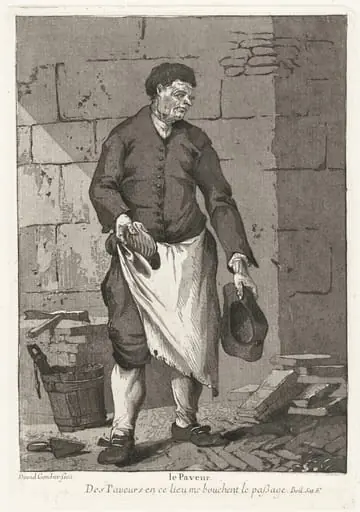 Le Paveur (The Road Paver)
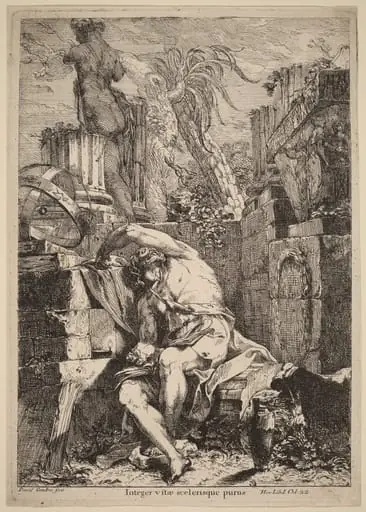 Democritus