Artwork
Atlas and One of the Hesperides
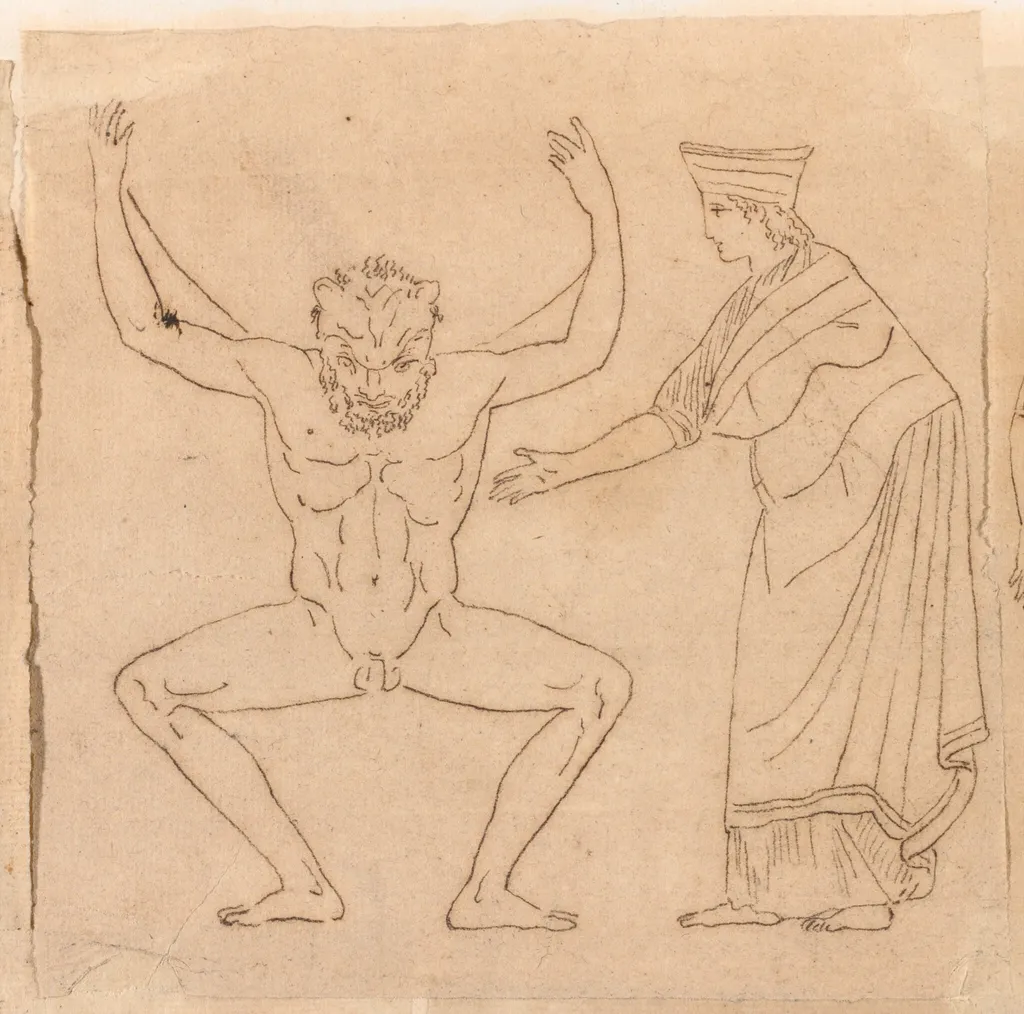
Atlas and One of the Hesperides is an oil drawing by the Neoclassicist artist Jacques-Louis David. It dates from 1778 and is held in the collection of the National Gallery of Art.
About this work
Overview
Created in 1778, it is not an oil painting as sometimes misstated, but a preparatory study.
This drawing, executed in transfer tracing on oiled laid paper, depicts a male figure identified as Atlas alongside a female figure believed to be one of the Hesperides. Created in 1778, it is not an oil painting as sometimes misstated, but a preparatory study. The composition centers on a dynamic pose of the male figure, his posture suggesting burden and strength, while the female figure reaches toward him, establishing a narrative connection between the two.
Subject & Meaning
The figures draw from classical mythology: Atlas, condemned to hold up the heavens, and one of the Hesperides, nymphs tasked with guarding golden apples. Their interaction implies a moment of exchange or supplication, possibly referencing the myth in which Heracles seeks the apples. The drawing captures a transitional moment between divine duty and human intervention, reflecting Enlightenment-era interest in myth as moral allegory.
Technique & Style
The artist employed transfer tracing to reproduce a compositional sketch onto oiled paper, enhancing its durability and tonal depth. The figures are rendered with precise, linear definition, emphasizing anatomical structure and drapery. The oiled surface allows subtle gradations of shadow, lending volume without the opacity of oil paint. The style is academic, rooted in classical ideals, yet anticipates the emotional gravity of later Romantic sensibilities.
History & Provenance
Created during Jacques-Louis David’s formative years in Rome, the work stems from his study of antiquity and Renaissance masters. It was likely made as a preparatory study for a larger, unrealized project. The drawing remained in David’s possession until his death, later entering a private collection before being acquired by a public institution. Its survival is notable, as many of David’s early studies were lost or destroyed.
Context
In 1778, David was immersed in the Roman Academy’s rigorous training, absorbing classical themes and sculptural forms. While the work predates his revolutionary Neoclassical style, it reveals his early engagement with mythological narratives and anatomical precision. The drawing reflects a moment before his political turn, when artistic ambition was still tethered to scholarly tradition rather than public ideology.
Legacy
Though not widely exhibited, this drawing offers insight into David’s development as a draftsman and his early fascination with mythic weight and human endurance. It stands as a bridge between academic training and the expressive potential he later channeled into historical painting. Its survival provides a rare glimpse into the private process behind one of the era’s most influential artists.
Artist & collection
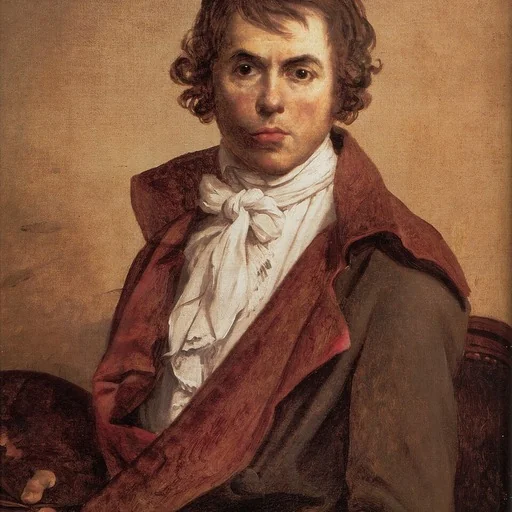
Artist
Jacques-Louis David was born in Paris on 30 August 1748 into a bourgeois family; his father died in a duel when the boy was nine, and a maternal uncle guided his education.

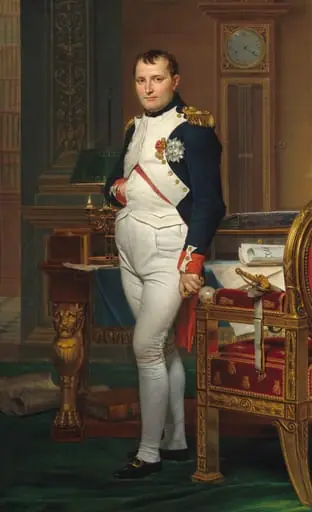 The Emperor Napoleon in His Study at the Tuileries
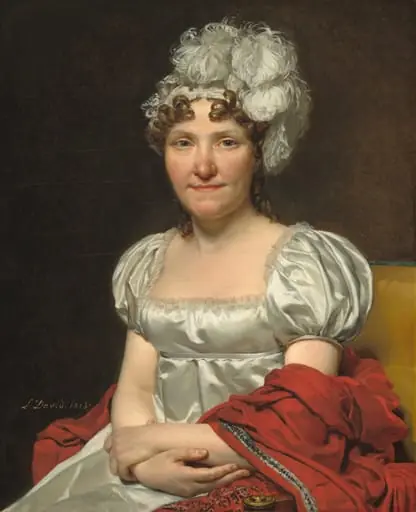 Madame David
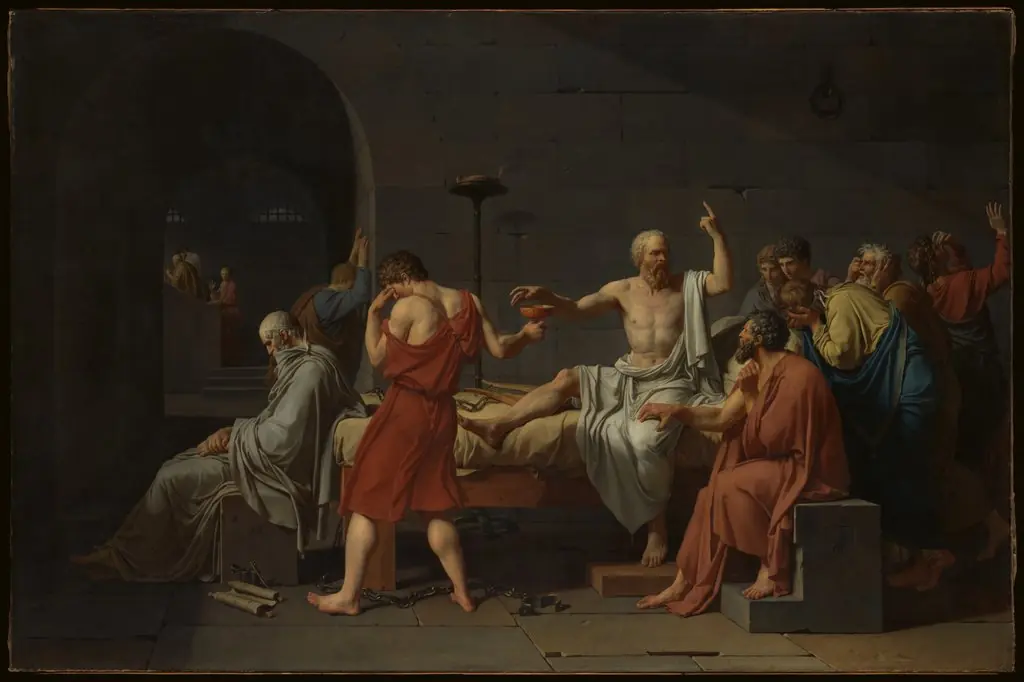 The Death of Socrates
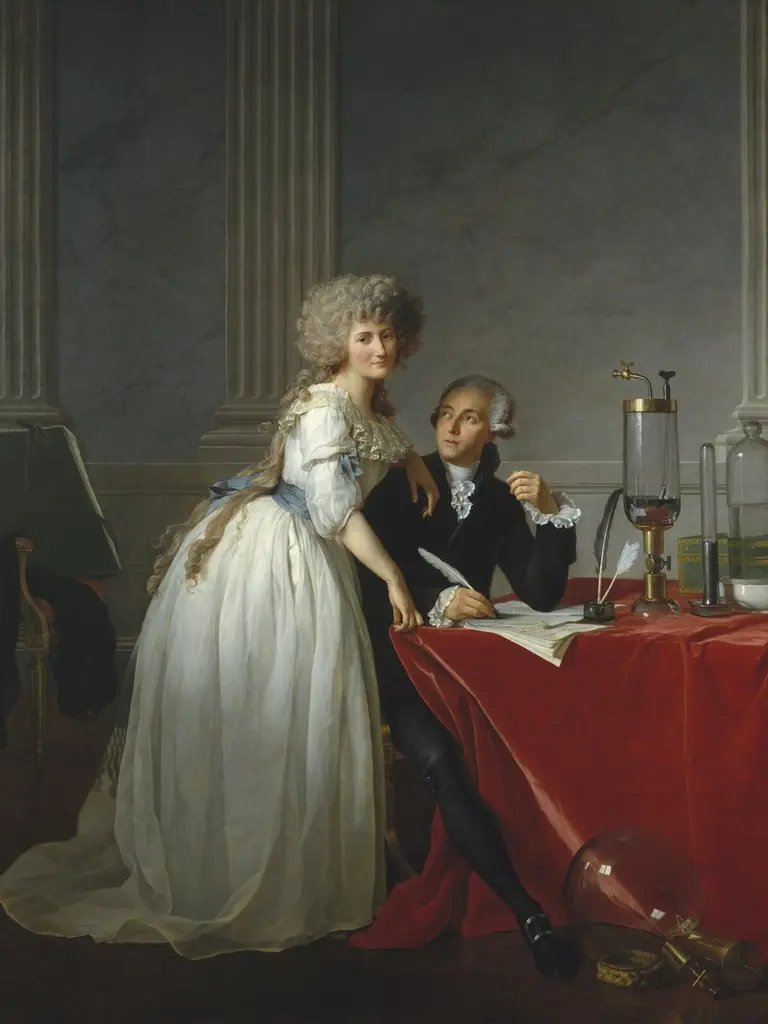 Portrait of Antoine-Laurent Lavoisier and his wife
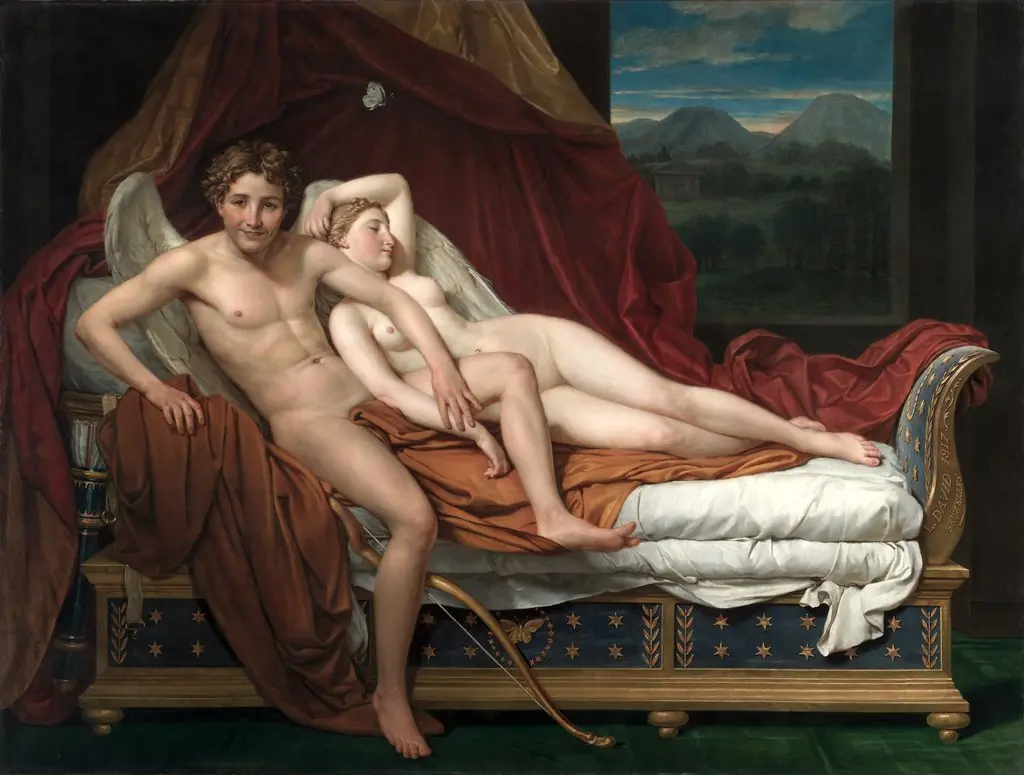 Cupid and Psyche
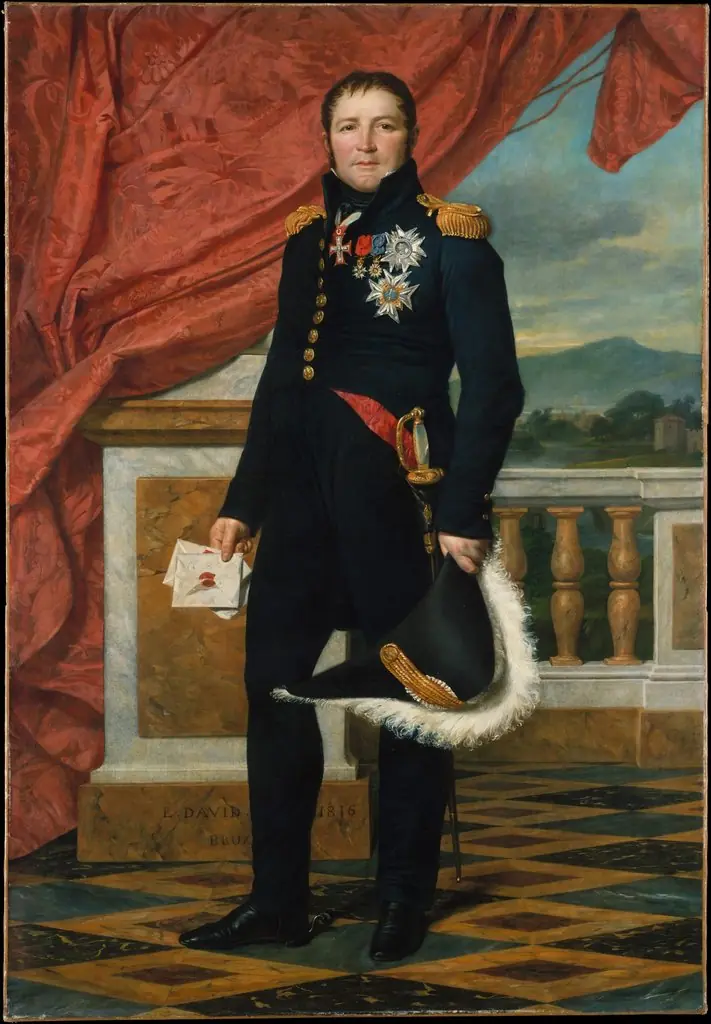 General Étienne-Maurice Gérard (1773–1852), Marshal of France
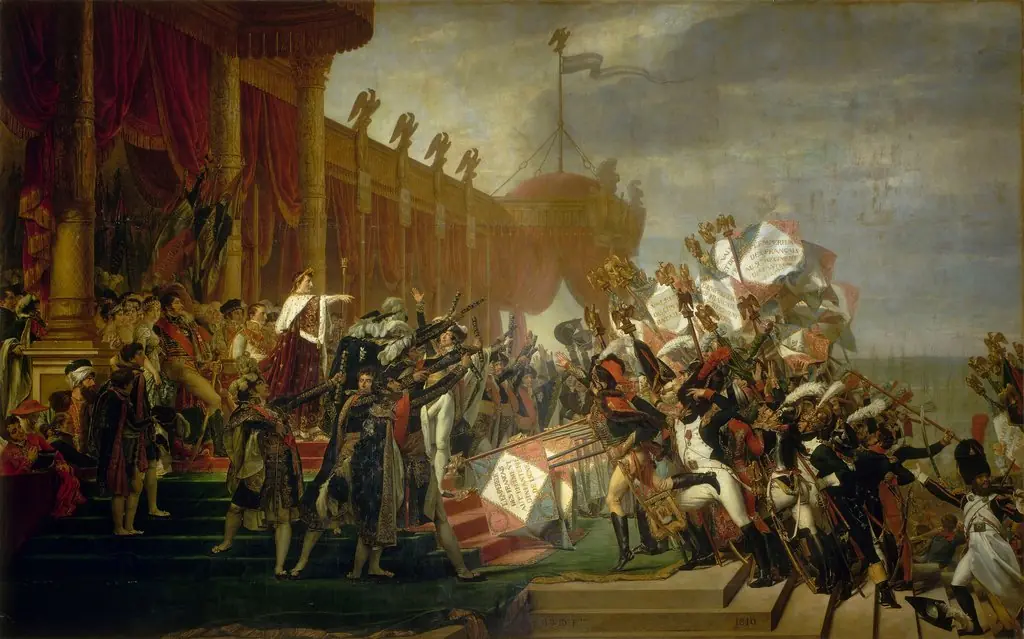 The Distribution of the Eagle Standards
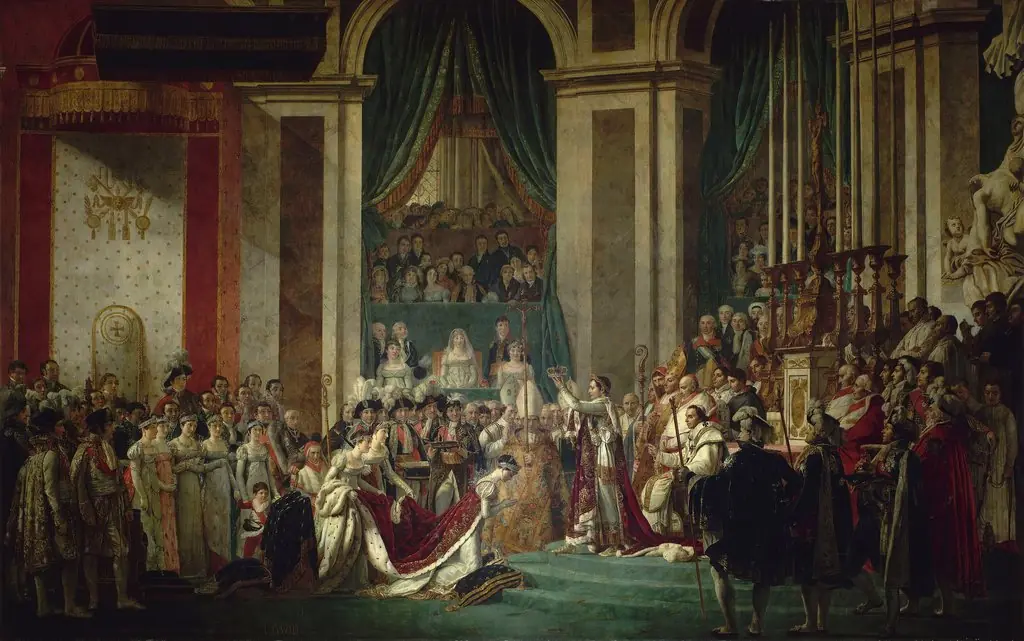 Coronation of Emperor Napoleon I and Coronation of the Empress Josephine
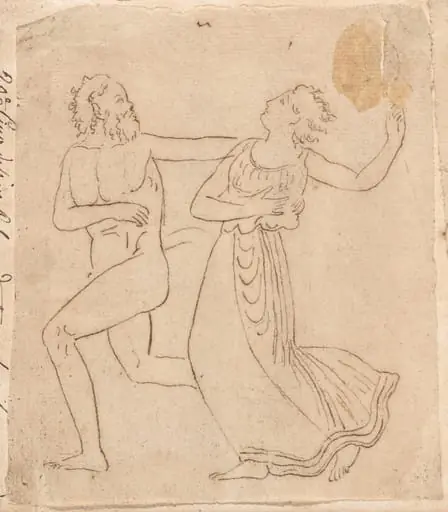 Satyr and Maenad, from Dance in Honor of Bacchus
 Rape II (Raub II, Weib halb)
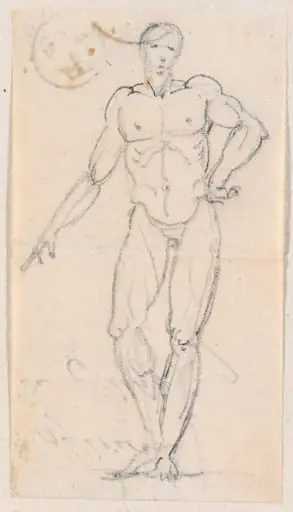 Statue of a Male Nude with Hand on Hip
![Head of a Woman and Studies of a Male Nude [verso], by Francesco Fontebasso](https://artifactworldgallery.com/img/francesco-fontebasso--head-of-a-woman-and-studies-of-a-male-nude-verso--bba81b0c130c2863-w320.webp) Head of a Woman and Studies of a Male Nude [verso]
Head of a Woman and Studies of a Male Nude [verso]![Male Nude Holding a Mirror [recto], by Albrecht Dürer](https://artifactworldgallery.com/img/albrecht-durer--male-nude-holding-a-mirror-recto--6c2ca7c869cbcffa-w320.webp) Male Nude Holding a Mirror [recto]
Male Nude Holding a Mirror [recto]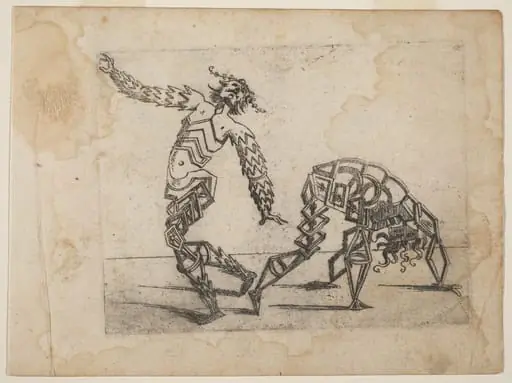 From "Bizzarie di varie Figure"
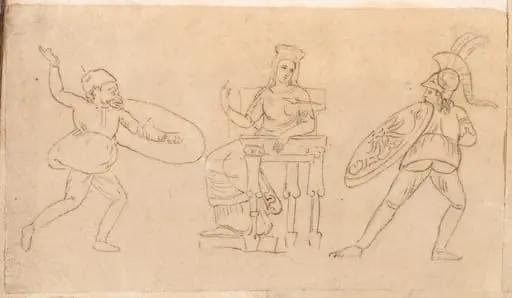 Comic Warrior, Seated Woman, and Figure with a Shield
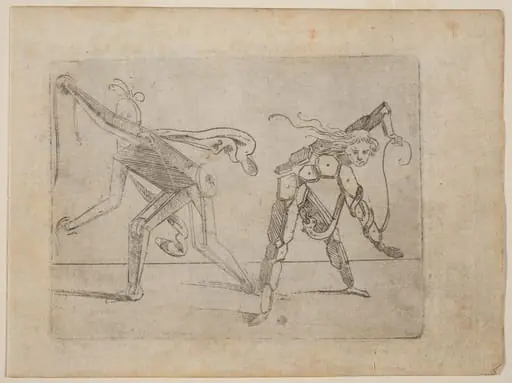 From "Bizzarie di varie Figure"
 From "Bizzarie di varie Figure"
 Jünglingsakt (Young Male Nude)
 Seated Woman and Man Sprawling on the Ground
 One of the Hesperides