Artwork
From "Bizzarie di varie Figure"
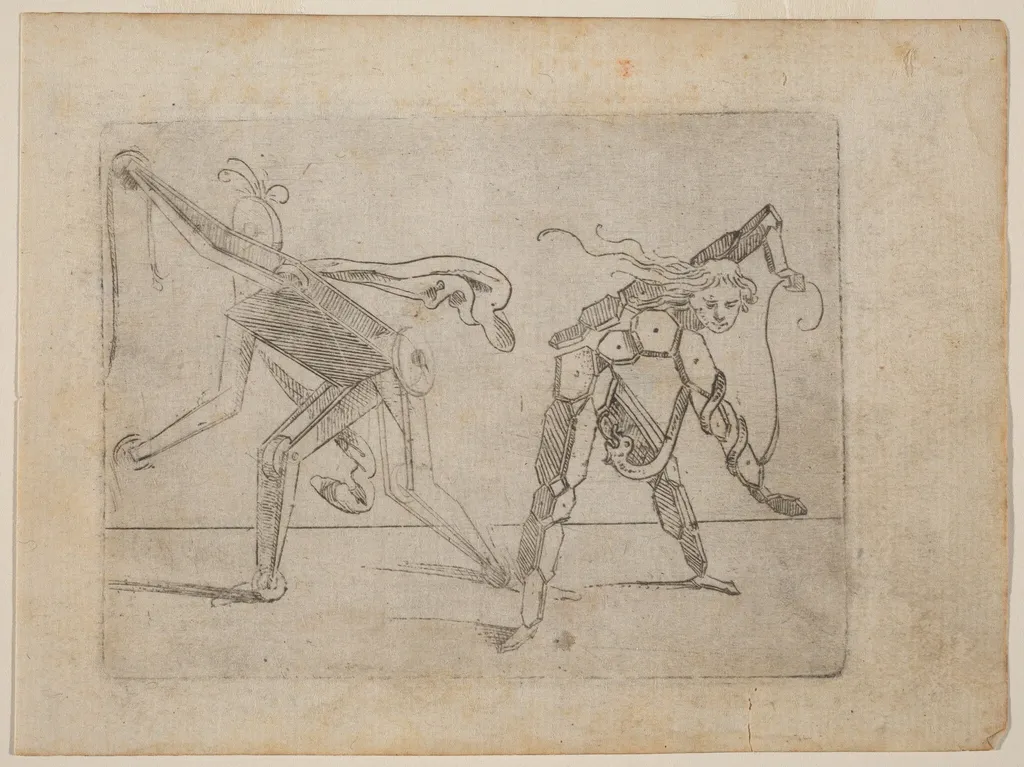
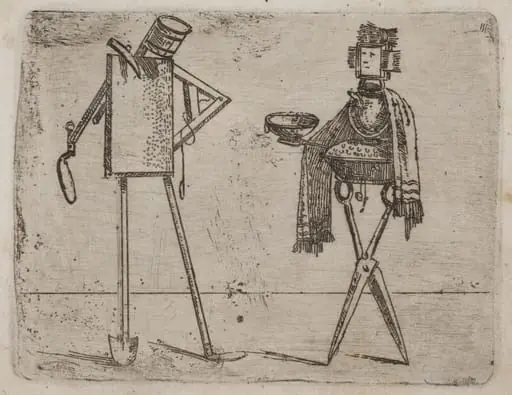
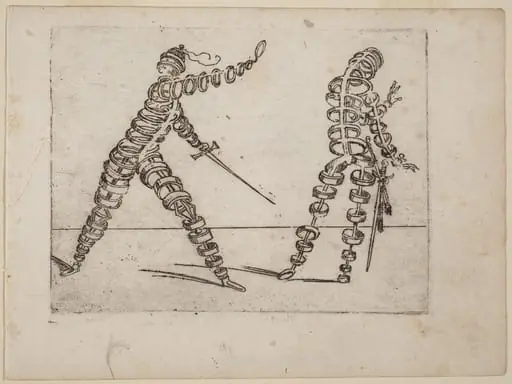
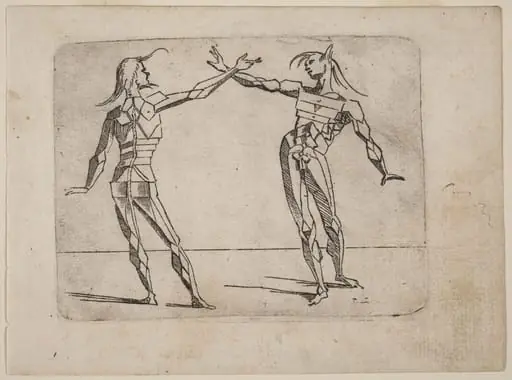
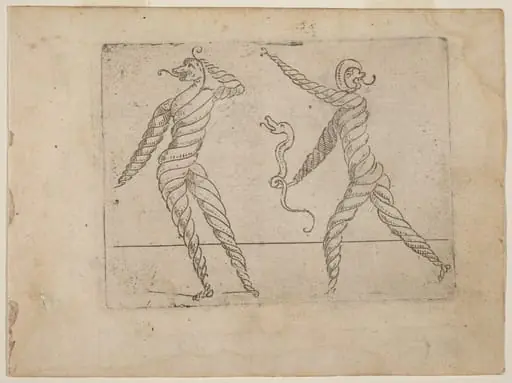
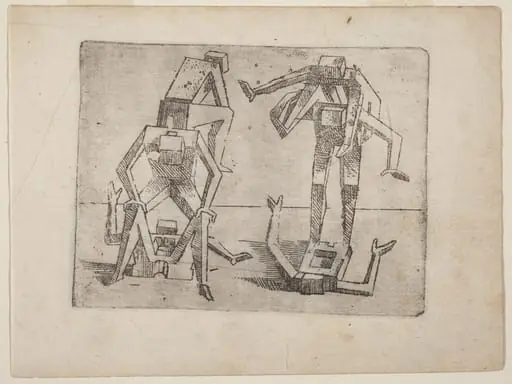
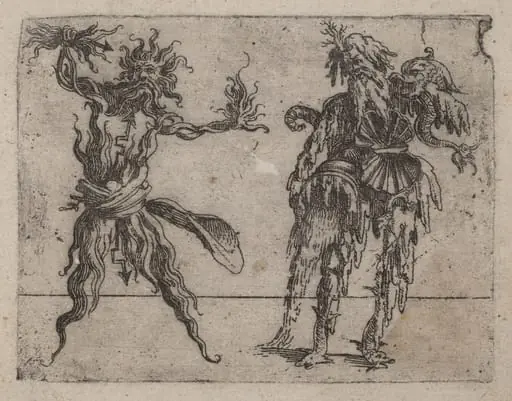
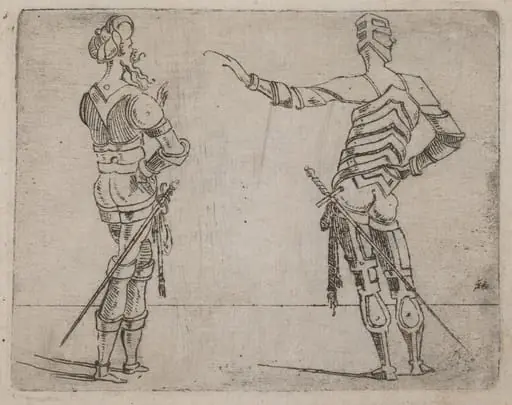
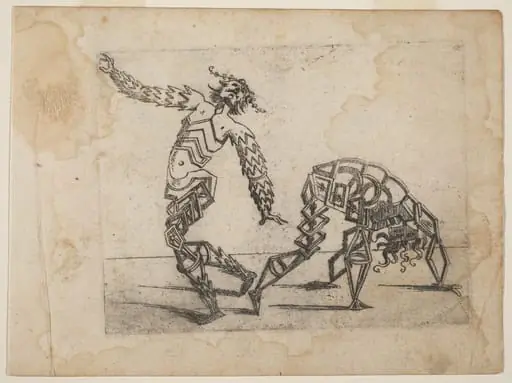
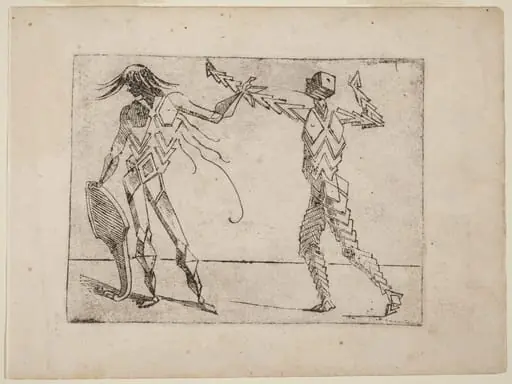
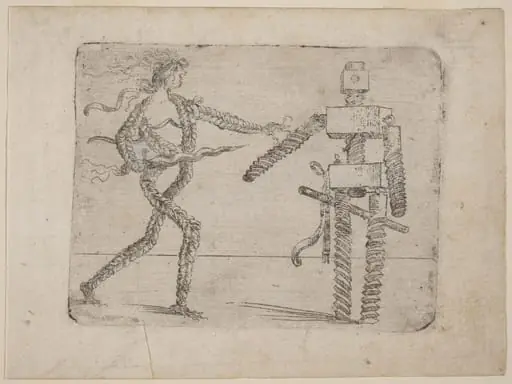
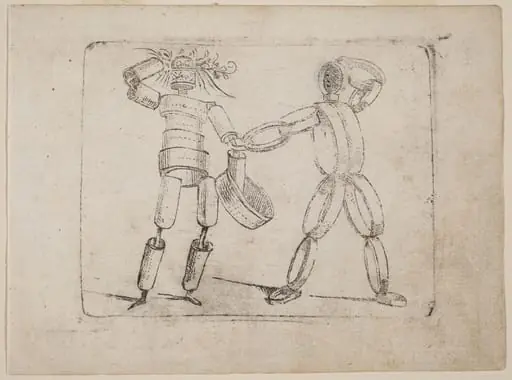
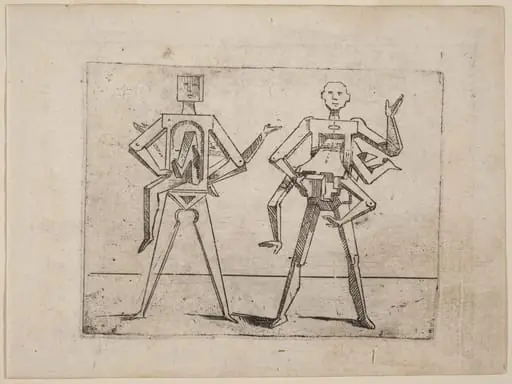
From "Bizzarie di varie Figure" is an ink print by the Baroque artist Giovanni Battista Bracelli. It dates from 1624 and is held in the collection of the National Gallery of Art.
About this work
Overview
Giovanni Battista Bracelli, an Italian printmaker active in the early 17th century, produced a series of etchings titled 'Bizzarie di varie Figure' around 1624.
Giovanni Battista Bracelli, an Italian printmaker active in the early 17th century, produced a series of etchings titled 'Bizzarie di varie Figure' around 1624. These works belong to a genre of graphic experimentation that merged the human form with abstract, mechanical, and animalistic traits. The prints reflect a fascination with the boundaries of bodily representation, using the precision of etching to explore imaginative hybrids beyond naturalistic depiction.
Subject & Meaning
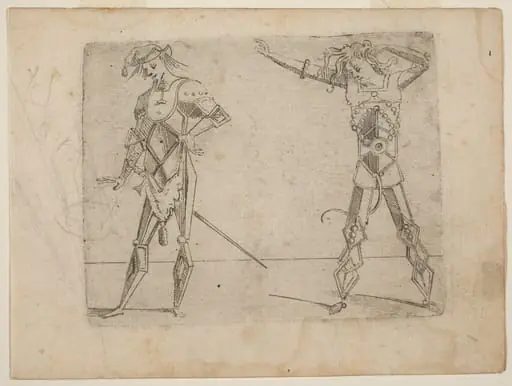
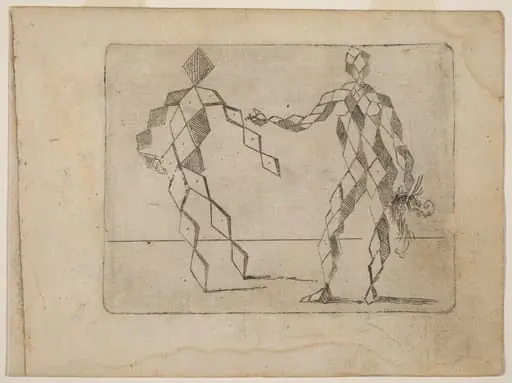
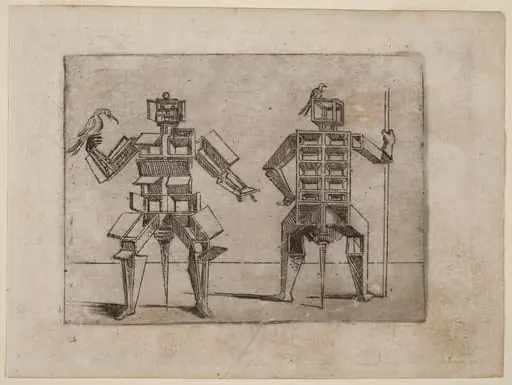
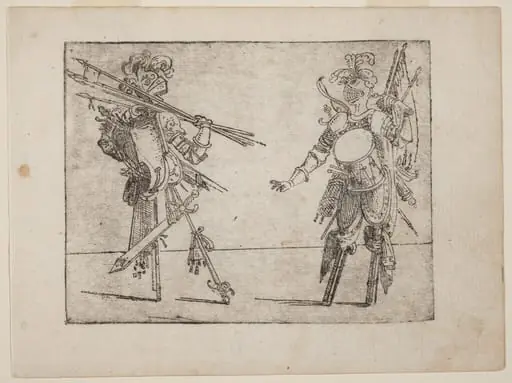
The print depicts two hybrid figures: one with a horse’s head and limbs, wielding a spear; the other, a human torso crowned with a bird’s head and wings, holding a shield. Their rigid, segmented bodies suggest constructed rather than organic forms. These figures evoke a sense of theatrical absurdity, possibly commenting on the instability of identity or the playful manipulation of classical ideals through visual distortion.
Technique & Style
Bracelli employed etching to achieve fine, fluid lines that convey both motion and strangeness. The sketchy, rapid strokes emphasize the figures’ unnatural postures and fragmented anatomy. The technique allowed for expressive freedom within the constraints of the metal plate, enabling a dynamic interplay between control and spontaneity that aligns with Baroque sensibilities toward visual intensity and inventive composition.
History & Provenance
The etching originates from a small, circulated series produced in central Italy during Bracelli’s active years between 1616 and 1649. While few records of individual prints survive, the series was likely intended for collectors interested in curiosities and artistic ingenuity. Its survival in institutional collections today suggests early appreciation for its unconventional imagery within elite print circles.
Context
In early 17th-century Italy, printmakers increasingly explored fantastical and Mannerist-inspired subjects as alternatives to religious or historical themes. Bracelli’s work aligns with a broader trend of visual playfulness, influenced by the popularity of emblem books and grotesque ornamentation. His hybrids resonate with contemporary interests in natural philosophy, wonder cabinets, and the blurring of human and non-human forms.
Legacy
Bracelli’s 'Bizzarie' series contributed to the development of imaginative printmaking in the Baroque era, influencing later artists who pursued the grotesque and the surreal. Though not widely known today, his work stands as an early example of how print media could serve as a vehicle for conceptual experimentation, bridging artistic curiosity with technical mastery in a pre-Enlightenment cultural landscape.
Artist & collection

Artist
Giovanni Battista Bracelli or Braccelli is the name of more than one engraver and painter active in central Italy in the Baroque period, between about 1616 and 1649.