Artwork
Woman with a Lyre
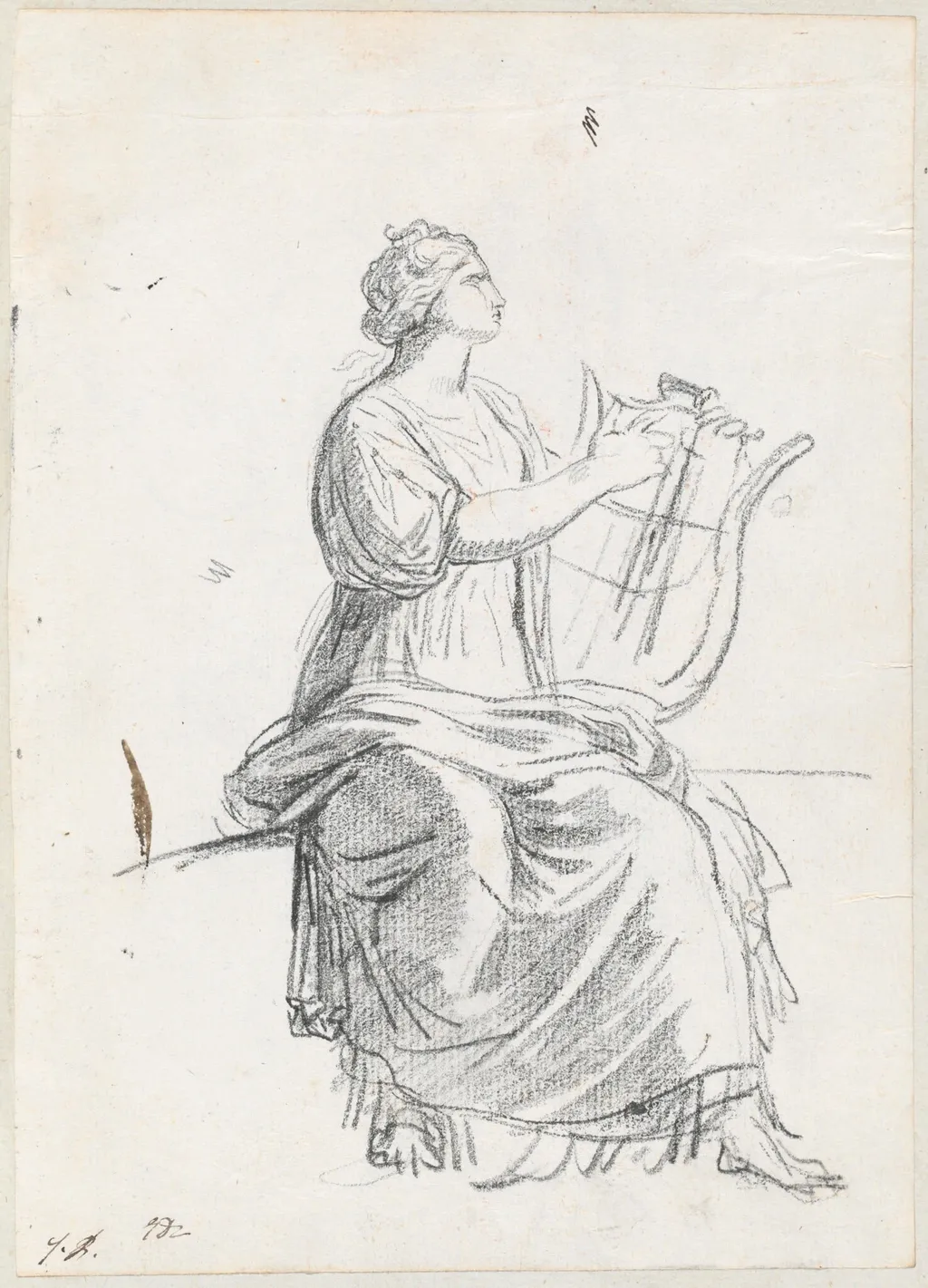
Woman with a Lyre is a chalk drawing by the Neoclassicist artist Jacques-Louis David. It dates from 1778 and is held in the collection of the National Gallery of Art.
About this work
Overview
The composition is spare, with no architectural or environmental details, focusing attention on the figure’s posture and the instrument.
Created in 1778 by Jacques-Louis David, this drawing depicts a seated woman holding a lyre, rendered in black chalk on laid paper. The composition is spare, with no architectural or environmental details, focusing attention on the figure’s posture and the instrument. The medium allows for fluid, responsive lines that convey both stillness and subtle motion, characteristic of David’s early explorations before his neoclassical turn.
Subject & Meaning
The woman, identified by the lyre—a symbol long associated with poetry and the Muses—suggests an idealized figure of artistic inspiration. Her loosely draped garment and restrained expression evoke classical antiquity, yet the drawing’s intimacy and emotional tone hint at emerging sensibilities beyond strict formalism. The absence of narrative context invites contemplation rather than storytelling, emphasizing inner resonance over external drama.
Technique & Style
David employed black chalk with deliberate variation in pressure, creating soft gradients and sharp, gestural contours. The lines are economical yet expressive, capturing the fall of fabric and the curve of the lyre with minimal strokes. The light, unmodeled background isolates the figure, enhancing the focus on line and form. This approach reflects a transitional phase between academic discipline and emerging Romantic sensitivity to individual expression.
History & Provenance
Executed during David’s time in Rome as a recipient of the Prix de Rome, the drawing likely served as a study for larger compositions or personal exploration. It remained in the artist’s possession until his death, later entering public collections through inheritance and institutional acquisition. Its survival offers insight into David’s preparatory process and private artistic interests outside official commissions.
Context
In 1778, David was immersed in classical studies but had not yet fully embraced the rigid formalism of his later neoclassical works. This drawing aligns with contemporary European interest in antiquity as a source of moral and aesthetic ideals, yet its emotional subtlety anticipates Romanticism’s focus on personal feeling. It stands apart from his public commissions, revealing a more introspective side of his practice.
Legacy
Though not widely exhibited during David’s lifetime, this drawing is now recognized as an early indicator of his evolving aesthetic. It illustrates how even artists associated with strict classical ideals engaged with emotional nuance and informal expression. Scholars view it as a bridge between Enlightenment rationalism and the Romantic emphasis on individual experience.
Artist & collection
Artist
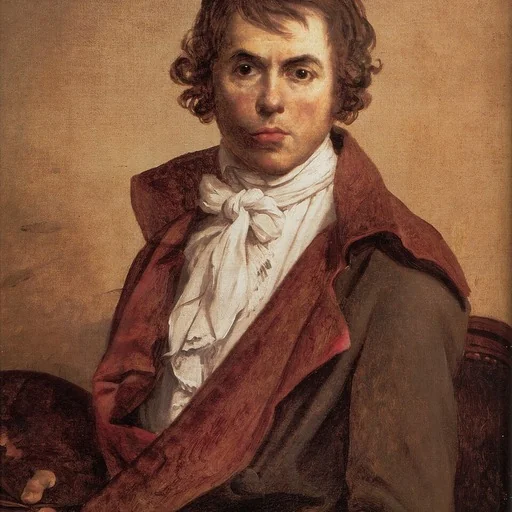
Jacques-Louis David was born in Paris on 30 August 1748 into a bourgeois family; his father died in a duel when the boy was nine, and a maternal uncle guided his education.

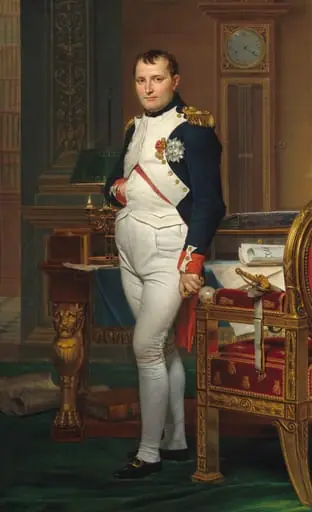 The Emperor Napoleon in His Study at the Tuileries
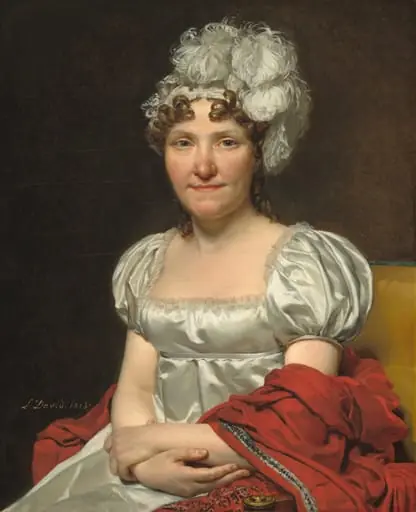 Madame David
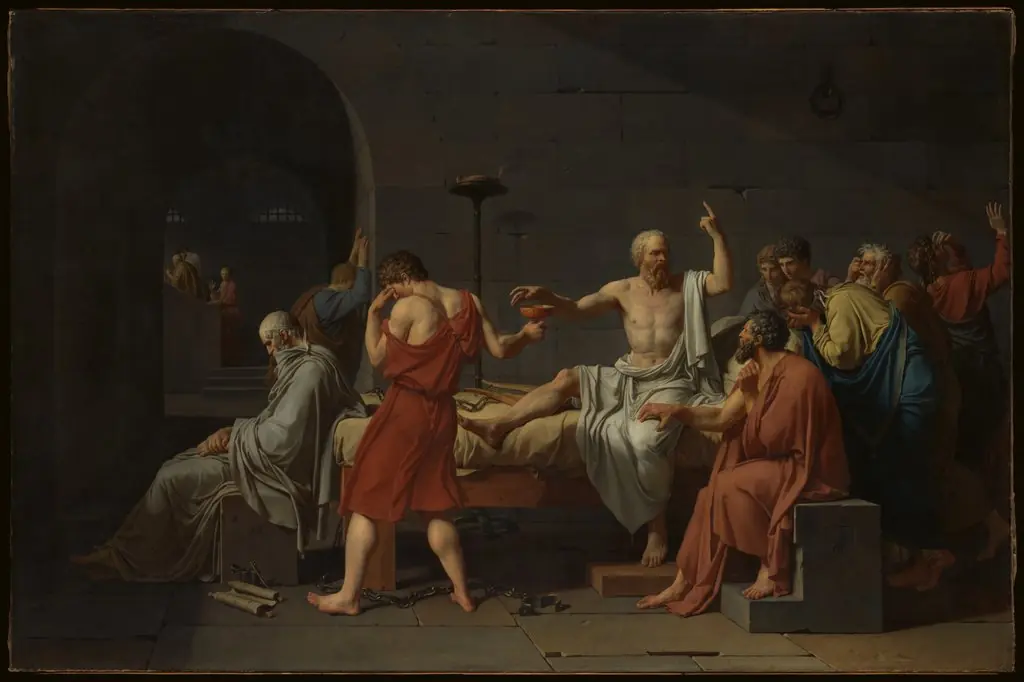 The Death of Socrates
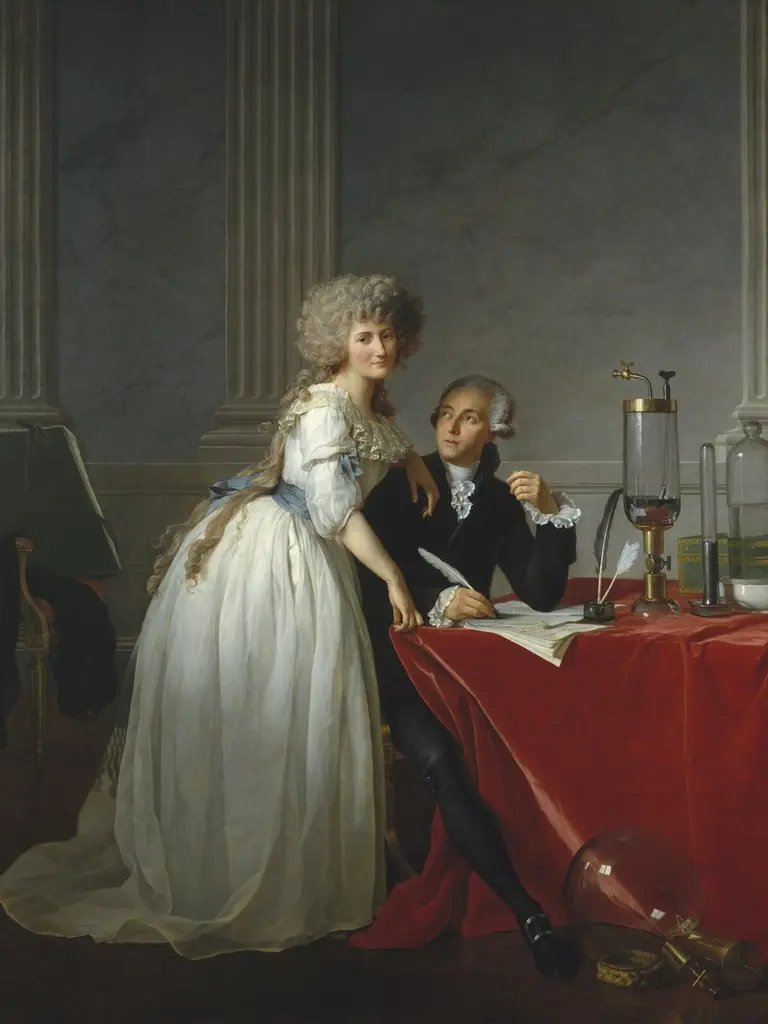 Portrait of Antoine-Laurent Lavoisier and his wife
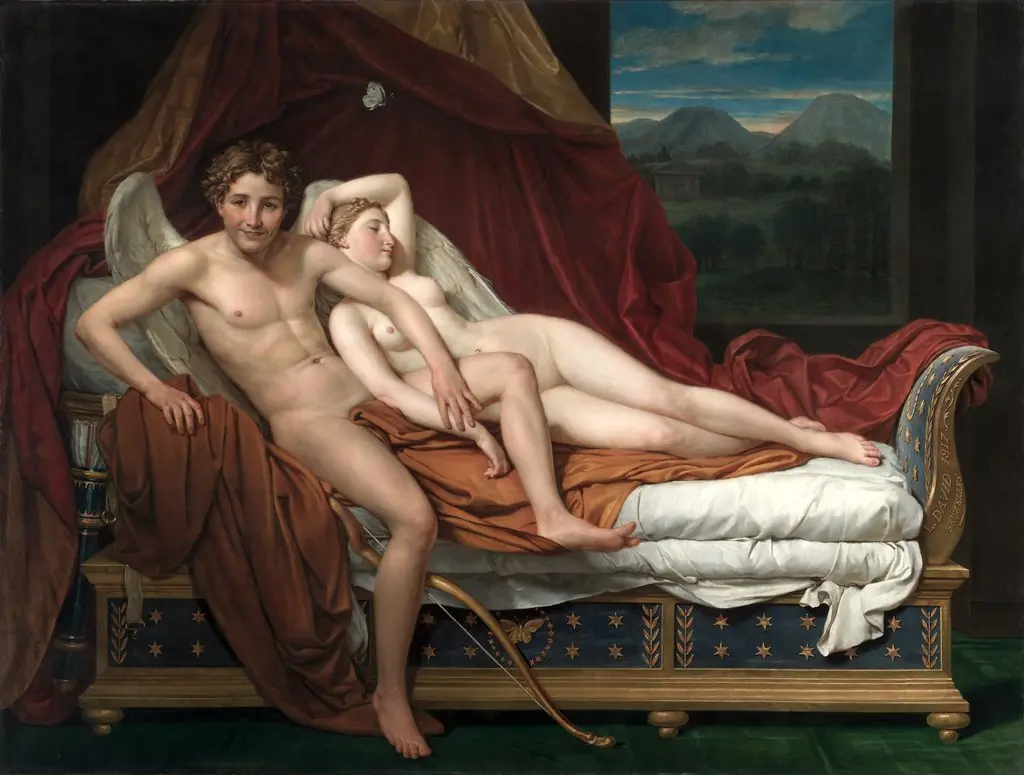 Cupid and Psyche
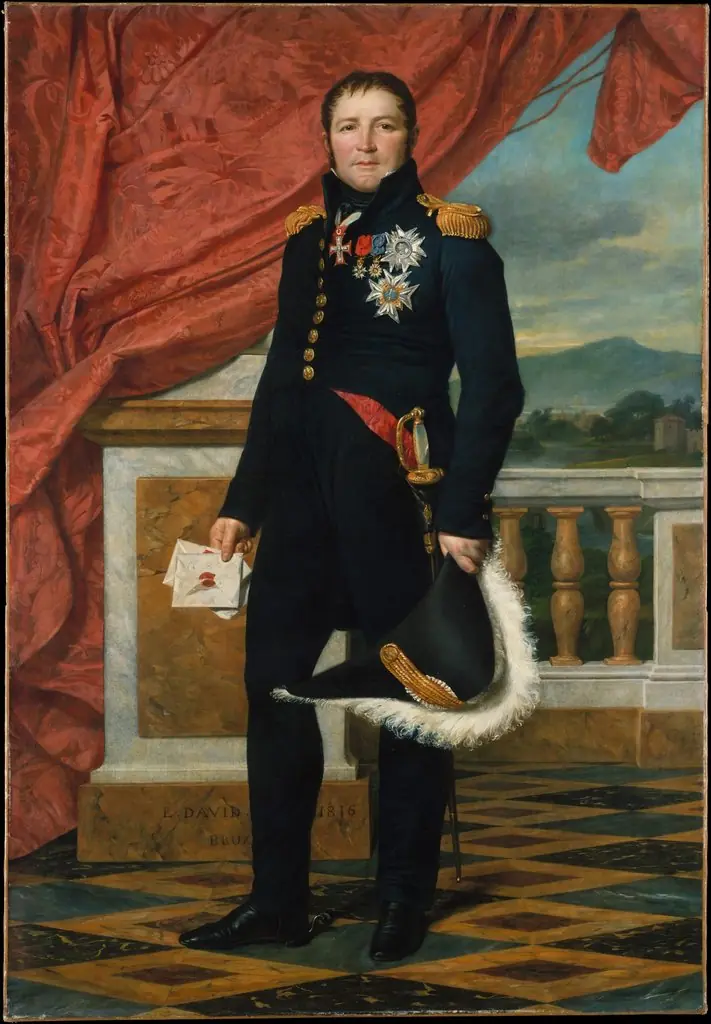 General Étienne-Maurice Gérard (1773–1852), Marshal of France
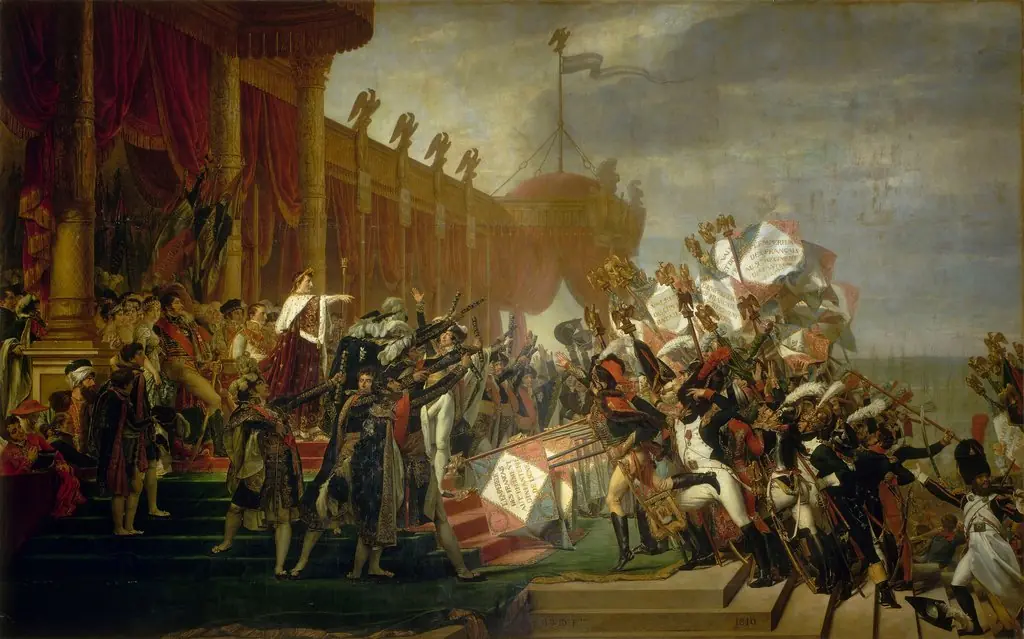 The Distribution of the Eagle Standards
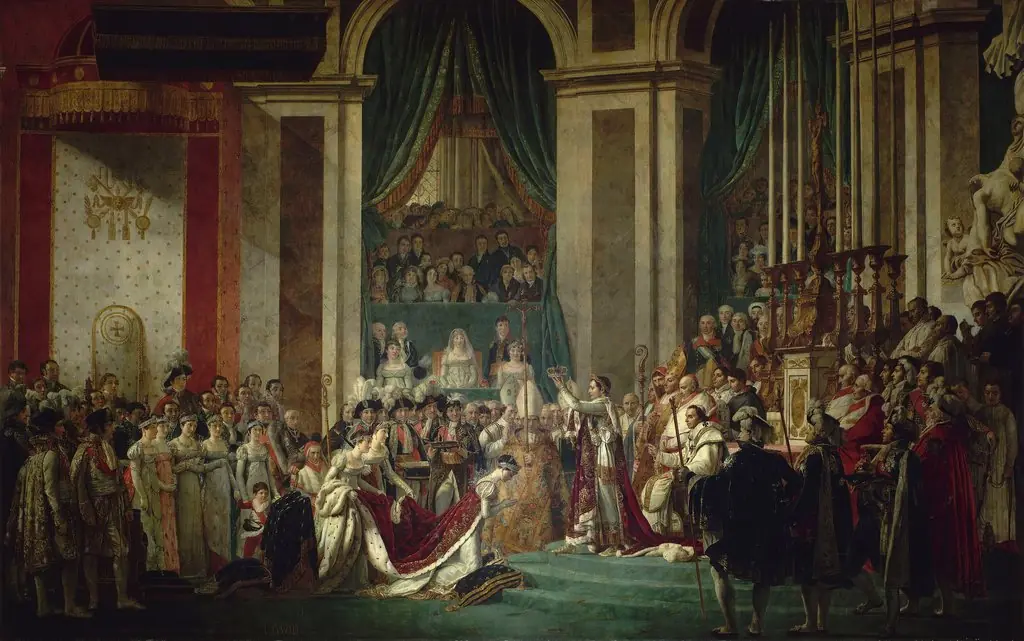 Coronation of Emperor Napoleon I and Coronation of the Empress Josephine
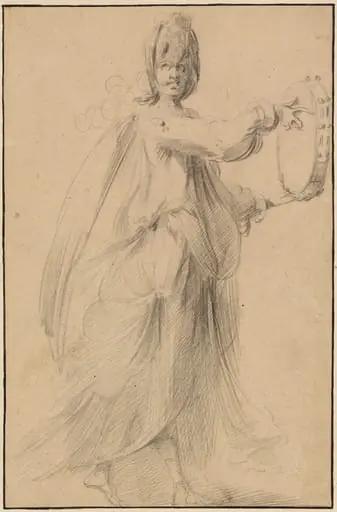 Dancer with a Tambourine
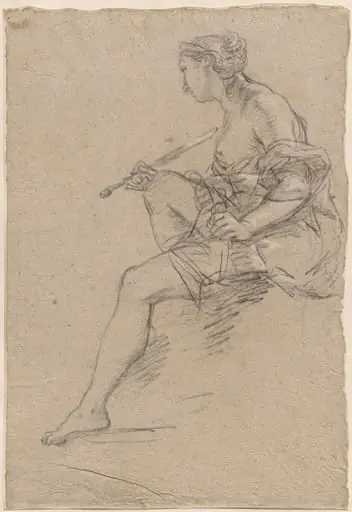 Study for an Allegory of Painting
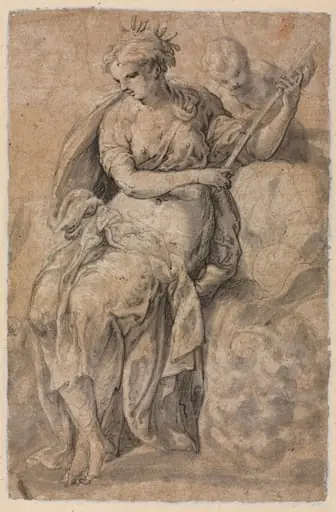 Allegorical Figure (verso)
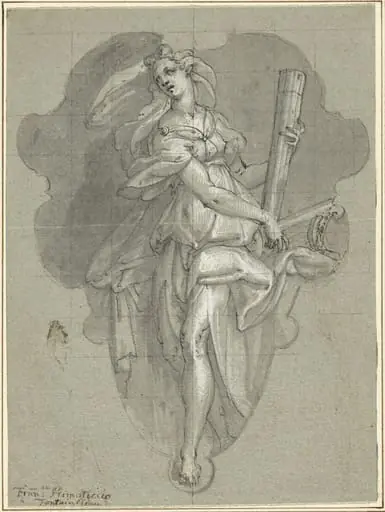 Euterpe (Personification of Music)
![Statue of Abundance [recto], by Hubert Robert](https://artifactworldgallery.com/img/hubert-robert--statue-of-abundance-recto--af10c767ab97b269-w320.webp) Statue of Abundance [recto]
Statue of Abundance [recto]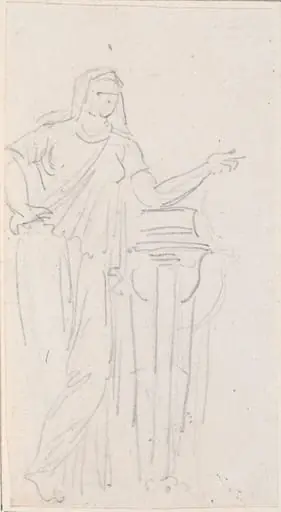 Statue of a Vestal Virgin
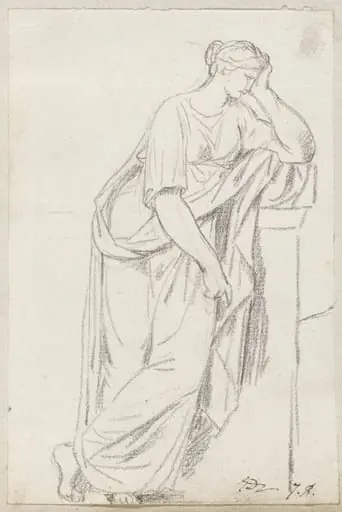 A Muse from the Sarcophagus of the Muses
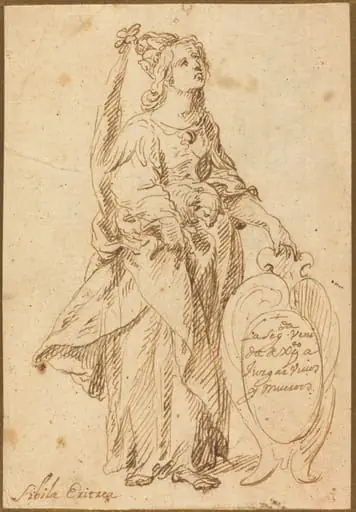 Eritrean Sibyl
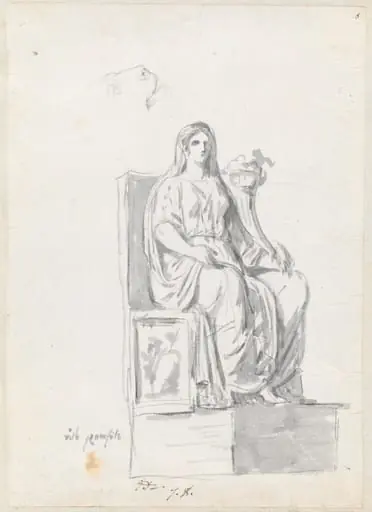 Abundance and the Face of a Lion, from the Villa Pamphili
![Woman in Toga [verso], by Hubert Robert](https://artifactworldgallery.com/img/hubert-robert--woman-in-toga-verso--1c4b04982206f60e-w320.webp) Woman in Toga [verso]
Woman in Toga [verso]![Seated Angel in a Landscape [recto], by Anicet Charles Gabriel Lemonnier](https://artifactworldgallery.com/img/anicet-charles-gabriel-lemonnier--seated-angel-in-a-landscape-recto--17dbd8d92a970c98-w320.webp) Seated Angel in a Landscape [recto]
Seated Angel in a Landscape [recto]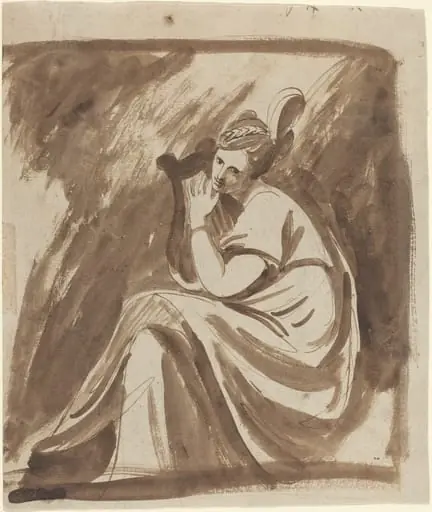 Lady Hamilton Playing a Lyre