Artwork
Eritrean Sibyl
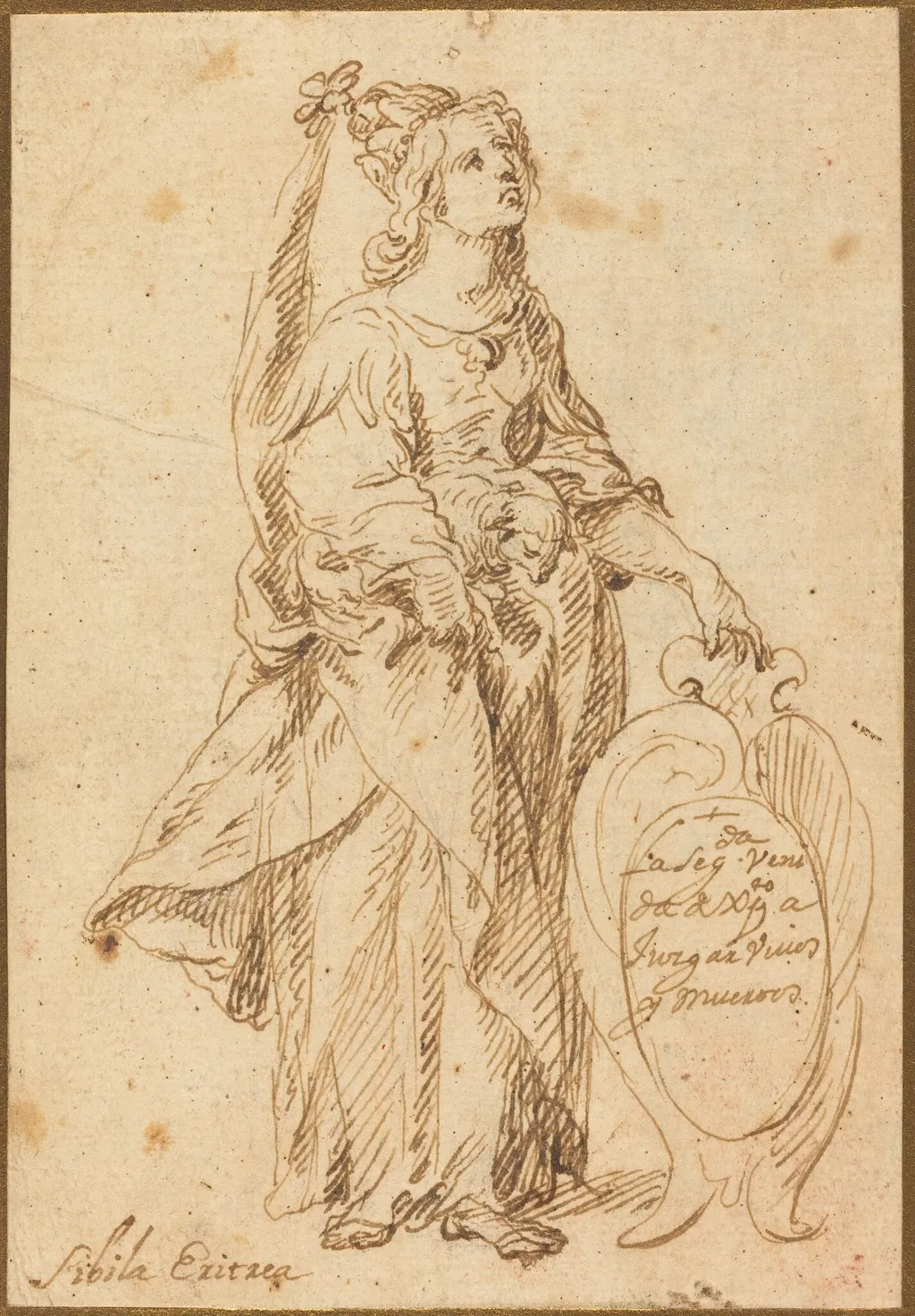
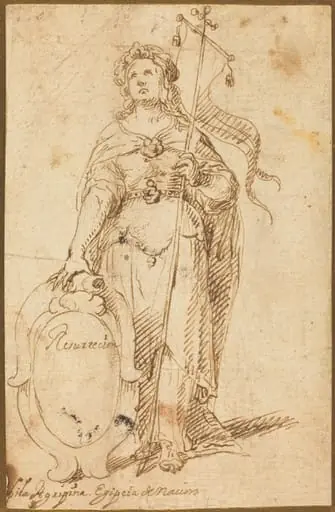
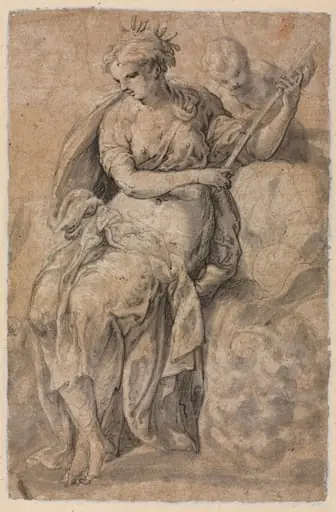
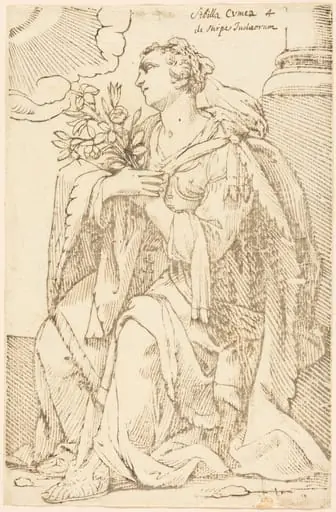
Eritrean Sibyl is an ink drawing by the Baroque artist Spanish 17th Century. It dates from 1634 and is held in the collection of the National Gallery of Art. This drawing, executed in pen and brown ink over faint black chalk, depicts a robed female figure holding a scroll.
About this work
Overview
The figure’s posture and the presence of text on the scroll hint at allegorical or prophetic themes common in Renaissance and Baroque iconography.
This drawing, executed in pen and brown ink over faint black chalk, depicts a robed female figure holding a scroll. Created on laid paper, the work bears signs of age, including discoloration and visible underdrawing. The loose, rapid linework suggests an impulsive, observational approach, typical of preparatory sketches from the 17th century. The figure’s posture and the presence of text on the scroll hint at allegorical or prophetic themes common in Renaissance and Baroque iconography.
Subject & Meaning
The figure is identified as an Eritrean Sibyl, a prophetic woman drawn from classical and Christian traditions that merged Mediterranean and Near Eastern oracles into Christian eschatology. Her downward gaze and hand resting on her chest convey introspection, while the scroll implies divine revelation. Though the text is illegible, its presence anchors her role as a conduit of sacred knowledge, reflecting the era’s fascination with ancient prophecy as a prefiguration of Christian truth.
Technique & Style
The artist employed swift, fluid pen strokes over delicate chalk underdrawing, allowing the initial contours to remain partially visible. Ink was applied with varying pressure, creating tonal gradations without heavy shading. Cross-hatching is minimal, suggesting a focus on outline and gesture rather than modeled volume. The paper’s texture and stains indicate the work was not intended as a finished piece, but as a study—likely for a larger composition or theological illustration.
History & Provenance
The drawing’s origin is tied to 17th-century European artistic circles where sibyls were frequently depicted in religious manuscripts and altarpieces. Its survival suggests it was preserved in a collector’s album or studio archive. While its exact provenance remains undocumented, the materials and style align with works produced in Italy or the Southern Netherlands, regions where such figural studies were commonly made for ecclesiastical commissions.
Context
During the 1600s, depictions of sibyls—especially those from non-Biblical traditions—were used to legitimize Christian doctrine through classical authority. Artists often included them alongside Old Testament prophets in church decorations. This sketch reflects a broader trend of reviving ancient mythologies within a Christian framework, blending humanist scholarship with devotional imagery in a period marked by Counter-Reformation visual rhetoric.
Legacy
Though not attributed to a major named artist, this drawing exemplifies the widespread practice of sketching prophetic figures as part of artistic training and theological visualization. Its preservation offers insight into how lesser-known draftsmen engaged with complex iconographic traditions. Such studies, often overlooked, were vital to the transmission of symbolic language in religious art across Europe during the early modern period.
Artist & collection

Artist
This artist worked in Spain in the early 1600s, making delicate pen and ink drawings.